

Rwanda offers one of Africa’s most rewarding road-trip experiences. The country combines clean cities, scenic mountain roads, wildlife-rich national parks, peaceful lakes, rainforests, and welcoming communities within a relatively compact area. For adventurous travelers, a Rwanda camping car rental roof-tent package provides the freedom to discover these attractions at a comfortable pace.
A roof-tent vehicle combines transportation and accommodation in one practical package. During the day, travelers can explore Rwanda in a reliable 4×4. At night, they can unfold the rooftop tent and sleep above the ground at an approved campsite. This travel style offers more flexibility than a fixed lodge itinerary and more protection than carrying a basic ground tent.
However, a successful Rwanda self-drive camping trip requires good preparation. Travelers must select the right vehicle, understand rental conditions, reserve campsites, plan realistic driving times, and follow national park rules. Weather, road conditions, border crossings, fuel availability, and camping equipment also deserve careful attention.
This complete guide explains how roof-tent car hire works in Rwanda. It covers vehicle choices, camping equipment, recommended destinations, road conditions, safety, costs, suggested routes, booking advice, and responsible travel practices.
What Is a Rwanda Camping Car Rental Roof-Tent Package?
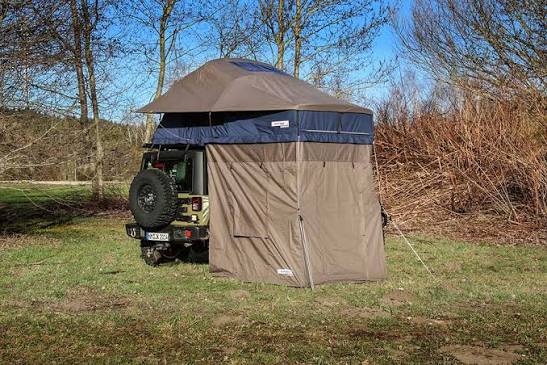
A Rwanda camping car rental roof-tent package normally includes a four-wheel-drive vehicle fitted with a folding tent on its roof. The tent remains closed inside a protective cover while the vehicle is moving. At the campsite, travelers open the cover, extend the tent, and use a ladder to enter the sleeping area.
Most rooftop tents include a foam mattress, screened windows, ventilation panels, and a waterproof outer cover. Depending on the rental package, the vehicle may also carry bedding, camping chairs, a table, cooking equipment, water containers, lighting, and basic recovery tools.
This setup allows travelers to drive between Kigali, Akagera National Park, Lake Kivu, Nyungwe Forest, Volcanoes National Park, and other destinations without depending entirely on hotel reservations. Nevertheless, roof-tent travelers should sleep only at authorized campsites or properties that have granted permission.
Roof-tent rentals are sometimes advertised under different names. Travelers may see terms such as:
- Rwanda 4×4 rental with rooftop tent
- Self-drive camping car hire Rwanda
- Roof-top tent rental Kigali
- Rwanda safari vehicle with camping equipment
- 4×4 camper rental Rwanda
- Rwanda overland vehicle hire
- Land Cruiser roof-tent rental
- Camping-equipped car rental Rwanda
- Rwanda self-drive safari rental
Although these expressions describe similar services, packages can differ significantly. Therefore, travelers should request a written list of the vehicle, insurance, equipment, mileage conditions, roadside support, and excluded costs before paying.
Why Choose a Roof-Tent Car Rental in Rwanda?
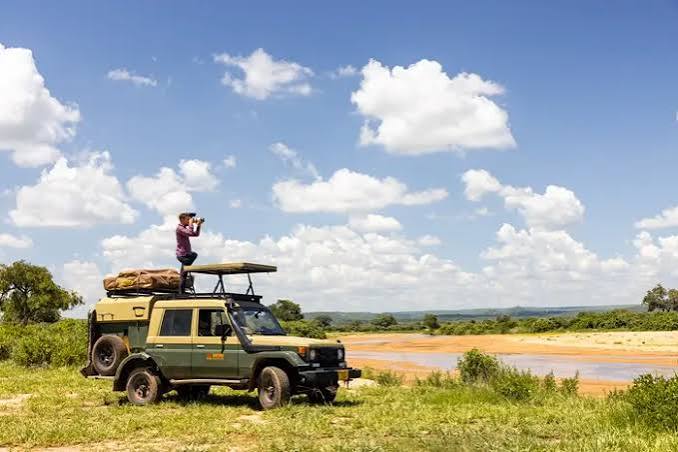
A rooftop camping vehicle provides independence. Instead of following a strict group-tour schedule, travelers can spend more time at viewpoints, coffee farms, lakeside towns, cultural sites, and wildlife areas. They can also adjust daily departure times within the limits of park rules and campsite reservations.
Rwanda is particularly suitable for a road trip because many major attractions are connected by a manageable road network. The country is small compared with several East African safari destinations. As a result, visitors can combine different landscapes without taking domestic flights.
A typical route may begin in Kigali, continue east to Akagera National Park, cross the country toward Nyungwe, follow Lake Kivu north, and finish near Volcanoes National Park. This circuit introduces travelers to savanna, wetlands, rainforest, mountains, lakes, and rural communities.
The official tourism platform describes Rwanda as a country of exceptional biodiversity, including volcanoes, montane rainforest, plains, primates, birds, and other wildlife. It also emphasizes the country’s responsible-tourism and environmental approach. Visit Rwanda
Greater Freedom During a Rwanda Road Trip
Travelers using a self-drive roof-tent vehicle can build an itinerary around their interests. Birdwatchers may want longer stops near wetlands. Photographers may prefer early departures and slower scenic drives. Families might include rest days, while experienced overland travelers may choose a longer Rwanda and Uganda circuit.
However, flexibility does not mean driving without a plan. Gorilla permits, chimpanzee permits, national park activities, and popular campsites can sell out. Therefore, the best approach combines a confirmed itinerary with enough free time between scheduled activities.
Transport and Accommodation in One Package
A roof-tent rental can reduce the need to reserve a lodge every night. This feature is useful for travelers who enjoy outdoor accommodation and want a more independent safari.
Still, camping is not automatically cheaper in every case. The final cost may include vehicle rental, campsite fees, park entrance, activities, fuel, food, insurance, cleaning fees, and camping equipment. Travelers should compare the complete package with a lodge-based self-drive safari rather than comparing only nightly accommodation prices.
A Closer Connection to Rwanda’s Landscapes
Sleeping at a campsite allows visitors to experience Rwanda beyond daytime sightseeing. At suitable campsites, travelers may hear birds in the morning, watch the light change over the hills, or enjoy clear views of the night sky.
This experience can feel more direct than returning to a large hotel after every activity. Nevertheless, campers must respect quiet hours, wildlife instructions, neighboring communities, and environmental regulations.
Who Should Book a Rwanda 4×4 With a Rooftop Tent?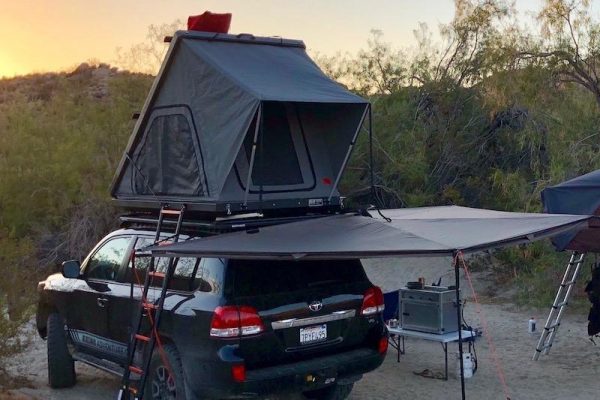
A Rwanda 4×4 camper is ideal for independent travelers who enjoy road trips and outdoor accommodation. Couples, friends, photographers, birdwatchers, and experienced campers often appreciate its flexibility.
It can also work for families when the vehicle and tent have enough space. Parents should confirm the tent’s weight limit, ladder design, sleeping capacity, and campsite facilities before booking.
First-time visitors can also rent a camping vehicle. However, they may benefit from a detailed route briefing, pre-booked campsites, offline maps, emergency contacts, and the option to contact the rental company during the journey.
A roof-tent safari may not suit every traveler. Someone who requires private bathrooms, daily housekeeping, climate-controlled rooms, or full restaurant service may feel more comfortable in lodges. Fortunately, Rwanda supports mixed itineraries. Travelers can camp for several nights and use hotels or lodges between camping sections.
Choosing the Best Vehicle for a Rwanda Roof-Tent Safari
The vehicle is the foundation of the entire trip. A low rental price has little value if the car is poorly maintained, uncomfortable, unsuitable for the route, or unsupported when a problem occurs.
Travelers should consider passenger capacity, luggage space, ground clearance, fuel use, transmission type, mechanical condition, and the weight of the camping setup.
Toyota RAV4 With a Roof Tent
A Toyota RAV4 can work for one or two travelers following mostly paved roads and maintained tracks. It usually consumes less fuel than a large Land Cruiser and can be easier to drive in Kigali.
However, not every RAV4 is suitable for a rooftop tent or difficult safari tracks. Travelers should confirm whether the vehicle has four-wheel drive, adequate roof capacity, good tires, sufficient ground clearance, and approval for the planned destination.
A compact vehicle also offers limited luggage space. Once cooking equipment, chairs, bedding, water, and personal bags are loaded, the interior can become crowded.
Toyota Land Cruiser Prado
The Toyota Land Cruiser Prado offers more space, comfort, and ground clearance. It is a popular choice for longer Rwanda road trips and cross-border journeys.
A Prado can carry more luggage and handle changing road conditions more confidently. Nevertheless, it normally costs more to rent and uses more fuel than a compact SUV.
For two to four travelers, the Prado often provides a useful balance between comfort and off-road ability. The exact capacity depends on the number and size of the rooftop tents.
Land Cruiser Safari Vehicle
A full-size Land Cruiser is suitable for travelers who prioritize durability, space, and stronger off-road performance. It may be the best option for extended East African routes, larger camping loads, or difficult tracks during wet conditions.
However, travelers must feel comfortable driving a large vehicle. Its turning radius, fuel consumption, height, and parking requirements differ from those of a small SUV.
Double-Cab Pickup With Roof Tent
A double-cab pickup separates much of the camping equipment from the passenger area. This can help keep the cabin organized. A covered rear section may hold food, water, chairs, and cooking equipment.
Before booking, travelers should check that the equipment is protected against rain and dust. They should also confirm that bags can be locked securely.
What Should a Roof-Tent Rental Package Include?
A complete package should provide more than a vehicle and a tent. The equipment must support safe sleeping, food preparation, water storage, vehicle recovery, and basic campsite organization.
The exact inventory differs between rental companies. Therefore, clients should request an itemized equipment list and report missing or damaged items before leaving Kigali.
Roof Tent and Sleeping Equipment
The roof tent should have a clean mattress, waterproof cover, secure ladder, working zips, and intact insect screens. Bedding may include sheets, pillows, sleeping bags, blankets, or duvets.
Rwanda’s temperatures vary by location and altitude. Kigali and Akagera can feel warm, while nights around Nyungwe, Lake Kivu, and Volcanoes National Park may feel much cooler. For that reason, the bedding must match the itinerary and season.
Travelers should ask the rental company to demonstrate how to open and close the tent. They should practice the process before departure and confirm that the tent locks securely for driving.
Cooking Equipment
A camping kitchen may include:
- Gas cooker
- Cooking gas
- Saucepan and frying pan
- Plates and bowls
- Cups and cutlery
- Knife and chopping board
- Kettle
- Bottle opener
- Washing basin
- Biodegradable soap
- Cooler box or portable refrigerator
Travelers should confirm whether cooking gas and fuel are included. They should also ask whether the vehicle provides a powered refrigerator or only an insulated cooler.
Open fires may be restricted at certain campsites. Therefore, campers should use only designated cooking areas and follow instructions from campsite or park staff.
Campsite Furniture and Lighting
Camping chairs and a folding table make cooking and dining much easier. A rechargeable lantern, headlamp, or portable light is also essential because many campsites have limited lighting.
Travelers should carry backup batteries or charging cables. However, lights should not disturb other campers or wildlife.
Water and Storage Equipment
A reliable package should provide safe water containers. The required volume depends on the number of travelers, daily route, weather, and campsite facilities.
Separate containers for drinking water and general washing can simplify campsite routines. Food should remain sealed to protect it from moisture, insects, animals, and dust.
Vehicle Safety and Recovery Equipment
The vehicle should carry a spare tire in good condition, jack, wheel spanner, warning triangle, and basic tools. Depending on the route, the operator may also provide a tow rope, tire compressor, recovery boards, or jump-start equipment.
Recovery equipment does not replace careful driving. If a road looks unsafe, travelers should stop and contact the rental company, park staff, or local guide before continuing.
Understanding Rooftop Tent Capacity
Rental companies may describe a rooftop tent as suitable for two or three people. However, advertised capacity does not always reflect comfortable sleeping space.
Travelers should ask for the actual mattress dimensions. They should also consider body size, luggage, weather, and the number of nights spent camping.
Two adults usually fit more comfortably in one standard tent than three adults. Families may require two tents or a large family rooftop tent. A ground annex can provide changing space, although it may not be designed for sleeping.
Every tent and roof rack has a weight limit. Travelers should never exceed the limits provided by the manufacturer or rental operator.
Best Places for Rwanda Camping Car Rental Roof-Tent Trips
Rwanda’s main tourism regions offer very different experiences. A strong itinerary combines destinations according to available time, interests, permits, and driving comfort.
Not every attraction allows camping inside its protected area. In some regions, travelers use private campsites, guesthouse grounds, or designated camping facilities outside the park boundary.
Rwanda Camping Car Rental Roof-Tent in Akagera National Park
Akagera National Park is one of the best destinations for a self-drive camping safari. Its landscape includes savanna, woodland, lakes, wetlands, and rolling hills. Wildlife experiences may include game drives, birdwatching, and boat excursions.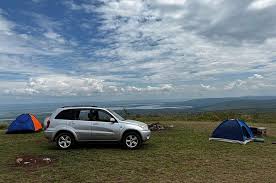
A 4×4 vehicle gives travelers the freedom to explore approved routes at a sensible pace. However, park rules, opening hours, speed limits, and wildlife guidance must always be followed.
Drivers should remain on authorized tracks and avoid approaching wildlife too closely. Animals always have the right of way. In addition, food must remain secured, and campers should never leave waste at a campsite.
Road conditions can change with rain. Some tracks may become slippery or temporarily unsuitable for certain vehicles. Therefore, visitors should request updated route guidance at the park entrance.
Two nights usually provide a better experience than a rushed day trip. Travelers can use the first afternoon for a short game drive or boat safari. Then, they can dedicate the following day to a longer wildlife drive.
Camping Near Lake Kivu
Lake Kivu is ideal for adding rest to a busy Rwanda self-drive itinerary. Popular bases include Rubavu, Karongi, and areas near Rusizi.
Travelers can combine camping with boat trips, coffee experiences, cycling, hiking, community visits, and quiet lakeside time. Private properties around the lake may accept rooftop-tent vehicles when arrangements are made in advance.
Campers should never assume that an empty lakeside area is available for overnight use. Much of the land is privately owned or managed by communities. Always request permission and use recognized camping facilities.
Weather near the lake can change quickly. Campers should close the tent properly when leaving the campsite and secure loose items before rain or strong wind.
Nyungwe Forest Camping and Self-Drive Travel
Nyungwe National Park protects a vast montane rainforest in southwestern Rwanda. The region attracts travelers for chimpanzee trekking, colobus monkey experiences, birdwatching, hiking, waterfalls, and the canopy walkway.
The roads leading through the region are highly scenic. However, bends, mist, rain, cyclists, pedestrians, and slow vehicles require patient driving.
Travelers should reserve primate activities before arrival. A roof-tent vehicle provides transport and accommodation flexibility, but it does not guarantee access to restricted park activities.
Nights around Nyungwe can be cool and wet. Waterproof bedding protection, warm clothing, and a well-maintained tent are especially important. Campers should use designated facilities outside or around the park unless their reservation clearly authorizes camping elsewhere.
Roof-Tent Camping Near Volcanoes National Park
Volcanoes National Park is Rwanda’s most famous destination for mountain gorilla trekking. It also offers golden monkey trekking, volcano hikes, cultural activities, and visits connected with gorilla conservation.
Most travelers stay around Musanze or near the park’s main visitor areas. Campsite choices may be more limited than traditional lodge accommodation, so advance booking is important.
Gorilla trekking begins early. Guests normally report for briefing in the morning before being assigned a trekking group. Therefore, the previous night’s campsite should be reasonably close to the meeting point.
Rain can occur in the mountain region at any time. Temperatures also drop at night. A warm sleeping system, waterproof outer tent, dry storage, and suitable trekking clothing are essential.
Rwanda’s official tourism information highlights Volcanoes National Park as one of the country’s four national parks and an important habitat for mountain gorillas. Visit Rwanda
Gishwati-Mukura and Rwanda’s Western Landscapes
Gishwati-Mukura National Park offers forest scenery, primates, birds, and conservation-focused experiences. It can be included in a longer route between Lake Kivu and northern Rwanda.
Travelers should check road conditions, activity schedules, guide requirements, and nearby accommodation or campsite options before arrival. Services may be more limited than in Kigali, Musanze, or Rubavu.
This quieter region suits travelers who enjoy nature, conservation, and less crowded routes. However, it rewards careful planning rather than spontaneous overnight camping.
Camping Around Kigali
Kigali often serves as the starting and finishing point for a Rwanda camping car rental roof-tent adventure. Travelers can collect the vehicle, buy food, exchange money, test the equipment, and receive a route briefing before leaving the capital.
A first night near Kigali can be useful after a late flight. It gives travelers time to rest and inspect the vehicle during daylight.
Visitors should not unfold a rooftop tent in an ordinary city parking area. Instead, they should use a recognized campsite, guesthouse, or private property that accepts camping vehicles.
Suggested 10-Day Rwanda Roof-Tent Road Trip
A ten-day route offers enough time to experience Rwanda without driving long distances every day. The itinerary below can be adjusted according to campsite availability, park permits, weather, and traveler interests.
Day 1: Arrive in Kigali and Collect the Vehicle
Meet the rental team for a detailed vehicle handover. Inspect the car, tent, bedding, kitchen equipment, spare tire, and emergency tools.
Afterward, buy drinking water and food. Spend the night at an approved campsite or suitable accommodation near Kigali.
Day 2: Kigali to Akagera National Park
Drive east toward Akagera. Enter the park during the approved hours and complete registration.
Depending on arrival time, take a short game drive or reserve a Lake Ihema boat safari. Set up the tent before dark.
Day 3: Full-Day Akagera Safari
Begin the day early and explore authorized game-viewing tracks. Carry enough water, food, sun protection, and a charged phone.
Return to the designated campsite before the required time. Follow all instructions concerning wildlife and food storage.
Day 4: Akagera to Kigali
Complete a final morning activity before leaving the park. Return to Kigali for supplies and vehicle checks.
Travelers can camp near the city or stay in a hotel for one night.
Day 5: Kigali to Nyungwe Region
Drive south through Rwanda’s cultural and agricultural landscapes. Depending on the schedule, stop in Huye for a museum or cultural visit.
Continue toward the Nyungwe area and arrive before dark.
Day 6: Nyungwe Forest Experience
Join a pre-booked chimpanzee trek, canopy walk, nature hike, or birding experience. Activity times and starting points should be confirmed in advance.
Spend a second night near Nyungwe.
Day 7: Nyungwe to Lake Kivu
Travel toward Lake Kivu and choose a base around Rusizi or Karongi. Enjoy a quiet afternoon at an approved lakeside campsite.
Day 8: Lake Kivu to Musanze
Follow the planned route north. Driving times can vary with road conditions and stops, so depart early.
Arrive near Volcanoes National Park and prepare for the following morning’s activity.
Day 9: Gorilla or Golden Monkey Trekking
Report for the scheduled park briefing. After the trek, return to the campsite or choose a lodge for additional comfort.
Travelers without a trekking permit can explore Musanze, visit a cultural project, enjoy a nature walk, or reserve another approved activity.
Day 10: Return to Kigali
Pack the tent carefully and return to Kigali. Allow enough time for fuel, vehicle inspection, equipment checking, and airport transfer.
Rwanda Roof-Tent Rental Road Conditions
Rwanda has many good paved roads between major towns and tourism areas. Nevertheless, travelers should expect steep hills, sharp bends, pedestrians, motorcycles, bicycles, livestock, construction, and changing weather.
National park tracks and rural access roads may be rough, dusty, muddy, or slippery. Conditions can change rapidly after heavy rain.
A planned distance that looks short on a map may take longer than expected. Therefore, road-trip itineraries should use realistic travel times and include breaks.
Driving During the Rainy Season
Rain can reduce visibility and change unpaved road conditions. Drivers should slow down, increase following distance, and avoid entering deep mud or water without reliable information.
If a track appears unsafe, turning back is often the best decision. Travelers should contact park staff or the rental company for an alternative route.
The rainy season can still provide a rewarding safari. Landscapes become green, the air may feel clearer, and some destinations receive fewer visitors. However, flexible planning becomes more important.
Driving at Night
Night driving is generally best avoided during a self-drive safari. Unlit vehicles, pedestrians, animals, road works, rain, and limited visibility increase the difficulty.
Travelers should aim to reach each campsite during daylight. Arriving early also makes it easier to inspect the site, unfold the tent, prepare food, and understand the facilities.
Navigation and Mobile Coverage
Online maps are useful, but they should not be the only navigation tool. Travelers should download offline maps and carry written directions for campsites and park entrances.
A local SIM card can support communication and navigation. Still, network coverage may weaken in remote areas.
The rental company should provide an emergency telephone number and clear instructions for breakdowns, accidents, tire problems, or route changes.
Safety Tips for a Rwanda Self-Drive Camping Safari
Rwanda camping can be comfortable and enjoyable when travelers prepare well. Good safety practices protect visitors, communities, wildlife, and rental equipment.
Complete a Detailed Vehicle Inspection
Before leaving, photograph the vehicle from all sides. Record existing scratches, tire condition, fuel level, roof-tent condition, windscreen marks, and equipment.
Check headlights, indicators, brakes, seat belts, mirrors, wipers, air conditioning, locks, and charging ports. Ensure that the spare tire and jack are usable.
Practice Opening the Roof Tent
Every traveler who may handle the tent should watch the setup demonstration. Open and close it at least once before departure.
Do not drive with loose straps, an unsecured ladder, or a partly closed cover. Also, check for branches above the vehicle before opening the tent.
Select Level Ground
Park on firm, level ground inside the assigned camping space. Avoid soft soil, drainage channels, steep slopes, unstable edges, and low areas that may collect rainwater.
Apply the parking brake and follow the operator’s instructions for securing the vehicle.
Keep Food Secure
Store food inside sealed containers or the vehicle. Never leave scraps, dirty cooking equipment, or open food outside overnight.
Food can attract animals and insects. Clean the cooking area immediately and place waste in approved bins or sealed bags.
Respect Wildlife
Never feed animals, block their movement, or approach them for photographs. Remain inside the vehicle where park rules require it.
At wildlife campsites, follow staff instructions about movement after dark. Rules may vary by location and can change according to animal activity.
Protect Valuables
Keep passports, money, permits, electronics, and vehicle documents secure. Do not leave valuable items visible inside an unattended car.
Make digital copies of important documents and store them separately from the originals.
Best Time for Rwanda Camping Car Rental Roof-Tent Adventures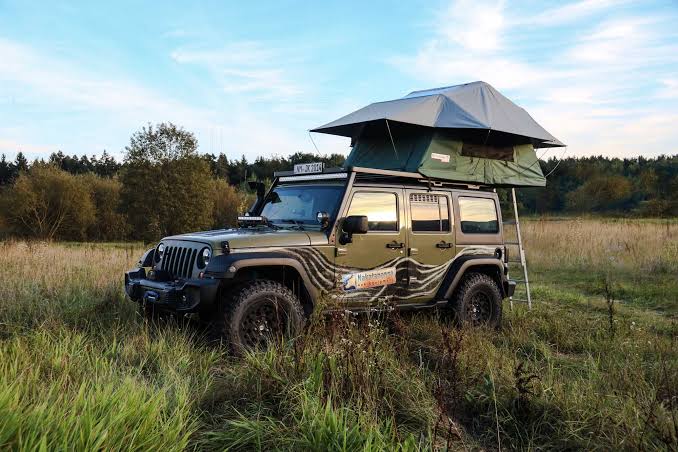
Rwanda can be visited throughout the year. However, each season changes the camping and driving experience.
Drier periods generally make unpaved roads easier to manage. They also reduce the chance of packing a wet tent. As a result, these months are popular for self-drive safaris and outdoor activities.
Rainy periods bring greener scenery and dramatic skies. However, travelers should expect wet tent fabric, muddy tracks, slower driving, and greater demand for waterproof storage.
Temperatures vary by altitude more than many first-time visitors expect. Akagera may feel warm, while higher areas around Volcanoes and Nyungwe can become cool at night.
No season guarantees completely dry weather. Campers should always carry rain protection and prepare for changing conditions.
How Much Does Roof-Tent Car Rental in Rwanda Cost?
The cost depends on the vehicle model, rental duration, season, number of tents, equipment, insurance, mileage, and whether the trip remains inside Rwanda.
A compact 4×4 may cost less than a Land Cruiser. However, choosing the cheapest vehicle can become a false saving if it lacks enough space or does not suit the planned roads.
Travelers should request a complete quotation covering:
- Daily vehicle rental
- Rooftop tent
- Bedding
- Kitchen equipment
- Camping table and chairs
- Insurance
- Mileage limits
- Roadside support
- Extra driver fees
- Cross-border authorization
- Airport delivery
- Security deposit
- Cleaning charges
- Taxes
Fuel, park fees, campsite charges, food, permits, guides, boat trips, and personal expenses are normally separate unless the quotation says otherwise.
Rwanda Camping Car Rental Roof-Tent Booking Checklist
Before confirming the rental, ask the company the following questions:
- Which vehicle model and production year will be supplied?
- Is the vehicle a genuine four-wheel-drive model?
- How many people can the rooftop tent sleep comfortably?
- What are the mattress dimensions?
- Which camping items are included?
- Is bedding included and suitable for mountain temperatures?
- Does the package have unlimited mileage?
- Which roads or countries are excluded?
- What does the insurance cover?
- How much is the security deposit?
- Is roadside assistance available throughout Rwanda?
- Can the vehicle enter Uganda or another neighboring country?
- Who pays for tire damage, towing, glass damage, or recovery?
- Are park reservations and campsites included?
- What happens if the vehicle breaks down?
- Can the rental company deliver the car to Kigali International Airport?
- Is an additional driver allowed?
- What documents must the renter provide?
- Is a refrigerator included?
- Must the vehicle be returned with a full fuel tank?
Written answers reduce misunderstandings. The final agreement should identify all major inclusions, exclusions, fees, and responsibilities.
Final Thoughts on Rwanda Camping Car Rental Roof-Tent Travel
A Rwanda camping car rental roof-tent adventure combines scenic driving, outdoor accommodation, wildlife experiences, and independent exploration. It allows travelers to move between savanna, rainforest, mountains, lakes, and cultural destinations without following a rigid group itinerary.
The best trips begin with a suitable vehicle and a reliable rental company. They also require confirmed campsites, realistic driving times, appropriate insurance, complete camping equipment, and respect for local regulations.
Travelers should avoid unauthorized wild camping, unnecessary night driving, overloaded tents, and rushed itineraries. Instead, they should reserve important activities early, arrive at campsites during daylight, follow park instructions, and leave every place clean.
With thoughtful planning, a roof-tent safari offers an exciting way to discover the Land of a Thousand Hills. Rwanda’s compact size makes it possible to experience remarkable landscape changes within a relatively short journey. Meanwhile, a well-equipped 4×4 provides the freedom to enjoy each destination at a personal pace.
Whether the itinerary includes Akagera’s savanna, Nyungwe’s rainforest, Lake Kivu’s shores, or the volcanic landscapes of northern Rwanda, a camping vehicle creates a memorable connection with the country. For couples, families, photographers, birdwatchers, and independent adventurers, it can turn a normal holiday into a complete East African road-trip experience.
Book Your Rwanda Roof-Tent Car Rental With Universal Ventures Rwanda
Universal Ventures Rwanda provides reliable Rwanda camping car rental roof-tent services for solo travelers, couples, families, and small groups. Our team can arrange a suitable 4×4 vehicle, rooftop camping equipment, route planning, campsite reservations, airport pickup, and safari activities across Rwanda.
We can also customize your self-drive journey to include Akagera National Park, Lake Kivu, Nyungwe National Park, Volcanoes National Park, Kigali, and selected cross-border destinations. Contact us for vehicle availability, rental rates, camping equipment details, and a personalized Rwanda road-trip itinerary.
Universal Ventures Rwanda
- Telephone and WhatsApp: +250 781 441 853
- Email: info@universalventuresrwanda.com
- Address: KK 15 Road, opposite IPRC Main Entrance, BGRD Building, Kigali, Rwanda
- Website: www.universalventuresrwanda.com
Contact Universal Ventures Rwanda today and begin planning a safe, flexible, and memorable roof-tent camping adventure through the Land of a Thousand Hills.
