Uganda Camping Car Rental Roof-Top Tent: The Complete Self-Drive Safari Guide
Uganda rewards travellers who enjoy exploring at their own pace. One day, you may wake beside an acacia-covered savannah, spend the afternoon watching elephants near the Nile and finish the evening under a sky filled with stars. A few days later, the same journey can take you through crater-lake country, tropical forests and the misty mountains inhabited by Uganda’s mountain gorillas.
A Uganda camping car rental roof-top tent package connects these different experiences in one memorable road trip.
This form of travel combines a capable four-wheel-drive rental vehicle, a rooftop tent and essential camping equipment. It gives you transport, accommodation and a basic outdoor kitchen in one mobile setup. It can also reduce the need to check into a lodge every night.
However, planning a successful Uganda self-drive safari involves more than selecting an attractive vehicle. Road conditions, insurance, park regulations, campsite reservations, fuel availability, emergency assistance and camping equipment must all be considered.
This complete guide explains how rooftop-tent car rental works in Uganda, who it suits, which vehicles to consider and what equipment should be included. It also covers suggested Uganda road-trip routes, national parks, campsites, driving safety, wildlife precautions, budgeting and responsible camping.
Use this guide to plan your journey, but always confirm current park fees, road conditions, entry requirements and protected-area regulations before travelling.
What Is a Uganda Camping Car Rental Roof-Top Tent Package?
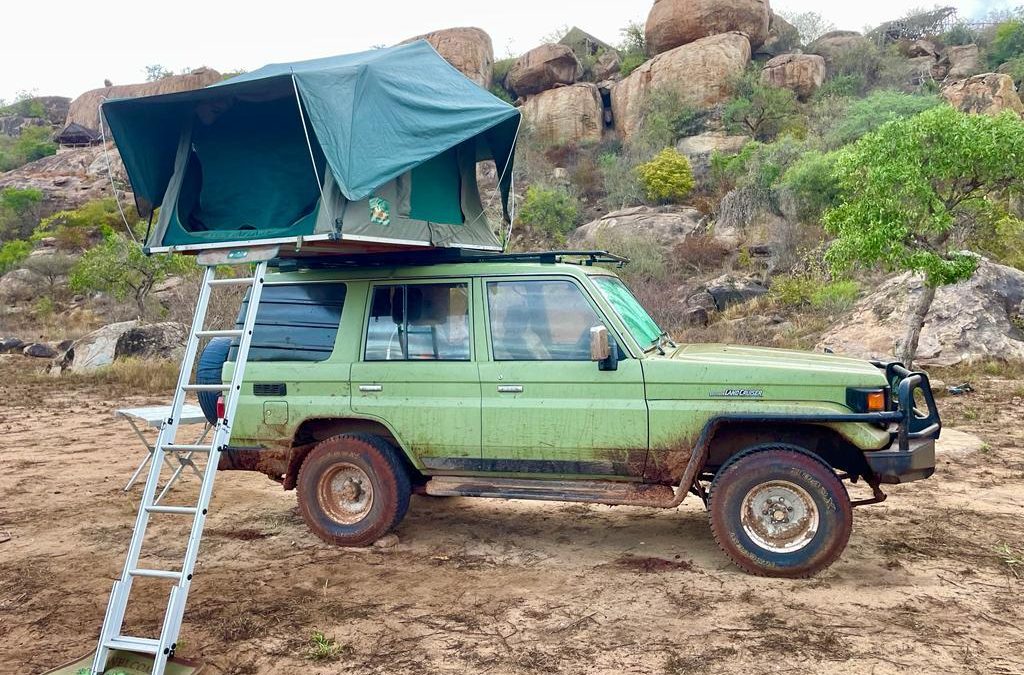
A rooftop-tent rental is a vehicle and camping package created for independent road trips. The tent remains folded inside a protective cover or shell on the vehicle’s roof rack while you drive.
When you reach your campsite, you park on level ground, release the tent’s fasteners, unfold the sleeping platform and extend the ladder. Most rooftop tents include a built-in mattress, screened windows, ventilation panels and a waterproof outer cover.
The rental vehicle is usually a four-wheel-drive Toyota Land Cruiser, Toyota Hilux or another safari-ready model. However, the exact package varies between Uganda car rental companies.
A basic rental may include only the vehicle and rooftop tent. A complete Uganda 4×4 rental with camping gear may also provide: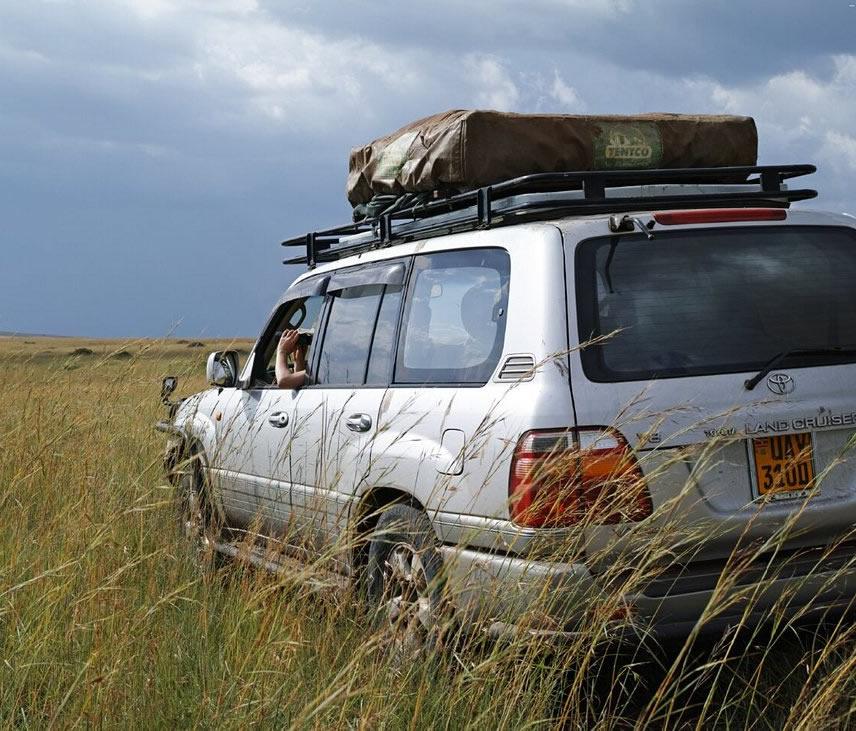
- Mattress and bedding
- Pillows and sleeping bags
- Camping chairs and table
- Gas stove and fuel cylinder
- Plates, cups and cutlery
- Saucepans and cooking utensils
- Refrigerator or cool box
- Water containers
- Interior storage drawers
- First-aid kit
- Fire extinguisher
- Spare tyre and recovery equipment
- Airport or hotel delivery
The term “camper rental” can therefore refer to several different products. It may describe a standard 4×4 carrying one tent for two people, a larger vehicle fitted with two rooftop tents or a fully equipped overland vehicle with a fridge, electrical system and organised storage compartments.
Always request a written equipment inventory and recent photographs of the vehicle category before confirming your booking.
Why the Uganda camping car rental roof-top tent concept is popular
The main advantage is freedom.
Travellers can combine wildlife parks, forests, lakes, community experiences and mountain destinations without changing their accommodation style every night. You can sleep near the following day’s activity, prepare a simple dinner and leave early the next morning.
Rooftop camping also places your sleeping platform above wet, muddy or uneven ground. After learning the correct procedure, setting up a rooftop tent is generally faster than pitching a large ground tent.
The elevated position provides ventilation and can offer excellent views across an established campsite. It may also feel more organised because bedding can often remain inside the folded tent during the journey.
However, having a rooftop tent does not allow travellers to camp wherever they want. Uganda’s protected areas permit camping only at designated sites. Campsites outside national parks also have rules concerning fires, noise, food storage, security and waste disposal.
Roof-tent rental, camper rental and ordinary car hire
An ordinary car rental supplies transportation only. A roof-tent vehicle adds a sleeping system, while a fully equipped camper includes the tools required for everyday camp life.
This difference affects both the rental price and what you need to pack. If bedding, cooking gas, cookware or refrigeration is not included, an inexpensive rental can become costly after arrival.
A pop-up safari roof is also different from a rooftop sleeping tent. A pop-up roof allows passengers to stand inside the vehicle and observe wildlife during game drives. It is not normally designed for sleeping.
Some vehicles can carry either a viewing roof or a rooftop tent, but not both on the same roof area. Confirm the exact configuration before booking, particularly if wildlife photography is an important part of your trip.
Why Choose a 4×4 Rooftop Tent Rental in Uganda?
Uganda has major paved highways, improving regional roads and many unsealed tracks. Although most of a journey may follow tarmac roads, the final approach to a national park, campsite or lodge can be rough.
Rain may turn an ordinary dirt road into a muddy and slippery track. Potholes, loose stones, deep ruts and road corrugations can also reduce driving speed.
A capable 4×4 provides: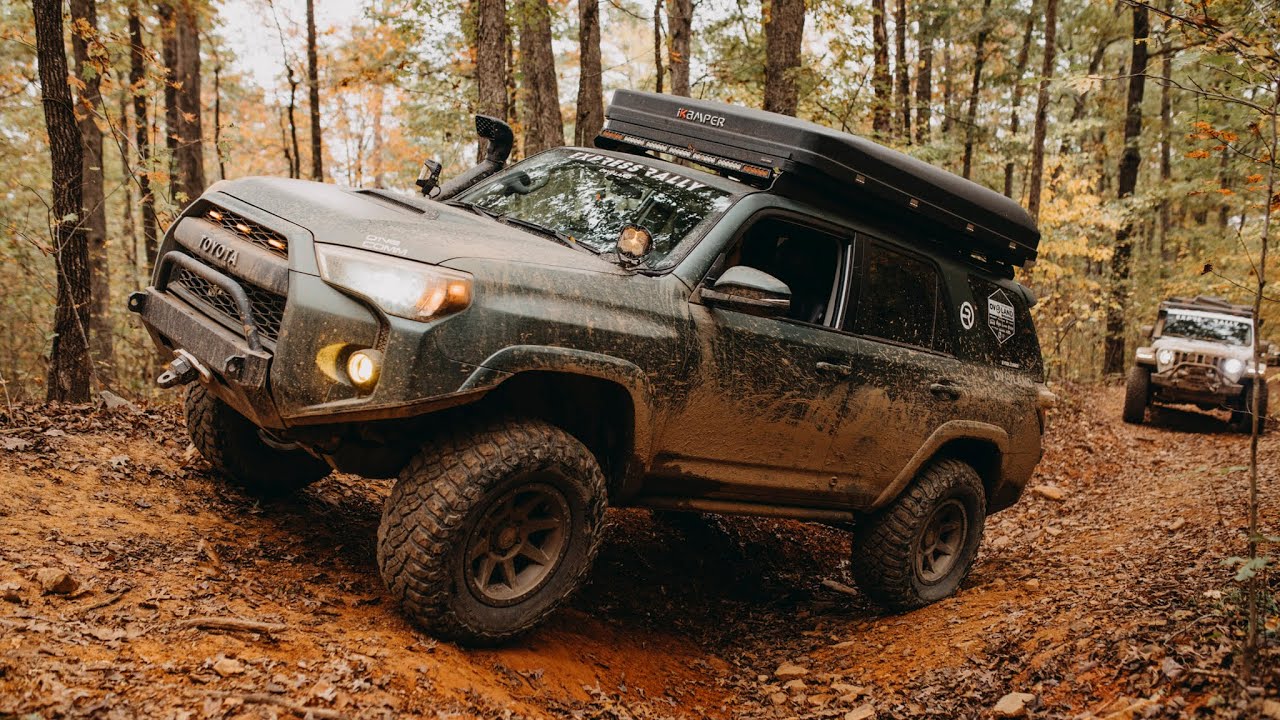
- Higher ground clearance
- Better traction
- Stronger tyres
- Improved performance on rough roads
- Greater luggage capacity
- Space for water and camping equipment
- Better suitability for remote safari destinations
The vehicle becomes the centre of your Uganda road trip. Your luggage remains in one place, the cooking equipment stays accessible and your accommodation travels with you.
This is particularly helpful on routes such as Lake Mburo–Bwindi–Queen Elizabeth–Kibale, where travellers frequently change destinations.
Freedom to design a flexible Uganda road trip
A self-drive holiday allows you to decide when to leave, where to stop for photographs and how much time to spend at a particular viewpoint.
You are not restricted by the fixed timetable of a group tour. If you enjoy a destination, you may be able to extend your stay, depending on campsite and activity availability. If rain affects a minor excursion, you can adjust your schedule without changing an entire guided itinerary.
Nevertheless, flexibility needs sensible boundaries.
Gorilla and chimpanzee activities normally require permits for specific dates. Popular campsites may become fully booked, particularly during busy travel periods. National parks have operating hours, and driving after dark presents additional risks.
Plan flexibility around confirmed reservations instead of leaving every part of the journey unplanned.
Close-to-nature accommodation
Camping makes the surrounding environment part of the safari experience. Morning bird calls, changing weather and evening sounds become important parts of the journey.
Preparing food outdoors can encourage travellers to slow down after a long day. At established campsites near wildlife areas, staff may also provide information about animal activity, waste disposal and safe movement around the camp.
This kind of atmosphere is difficult to reproduce in a conventional city hotel.
However, staying close to nature does not mean approaching wild animals. Never attract animals with food, leave waste accessible or move closer to wildlife for photographs.
Follow the instructions provided by national park rangers and campsite staff. If a ranger escort is required at a campsite, consider it an essential safety service.
Potential value for longer safaris
Camping can reduce accommodation expenses during a longer road trip. The greatest value is normally achieved when:
- The rental includes complete camping equipment
- Travellers prepare some of their own meals
- The itinerary avoids unnecessary one-way vehicle charges
- Several nights are spent camping
- The vehicle is appropriately sized for the group
- Fuel consumption is considered before booking
One rooftop tent can be practical for a couple. Families should compare the price and comfort of two rooftop tents with the cost of family lodge rooms.
Camping is not automatically inexpensive. Travellers must still budget for:
- National park entrance fees
- Vehicle entry fees
- Campsite charges
- Wildlife activities
- Gorilla or chimpanzee permits
- Fuel
- Food and drinking water
- Optional guides
- Insurance
- Border documentation
- Emergency expenses
A large Land Cruiser may also consume considerably more fuel than a smaller vehicle. Calculate the complete cost of the trip instead of comparing only the advertised daily rental price.
Who Should Book a Uganda Camping Car Rental Roof-Top Tent?
This style of travel is best suited to confident and adaptable travellers who enjoy road trips, outdoor accommodation and simple camp routines.
You do not need to be an experienced overland traveller. However, at least one person should feel comfortable driving an unfamiliar vehicle, keeping to the left side of the road and handling changing road surfaces.
Patience is important. In Uganda, road journeys are part of the travel experience. They should not be viewed simply as empty time between attractions.
Couples and groups of friends often find rooftop camping straightforward. Solo travellers gain independence but should be particularly disciplined about sharing their route, checking in regularly and avoiding unnecessary travel in isolated areas.
Families can also enjoy rooftop camping when the tent arrangement, ladder access, child supervision, luggage storage and driving schedule suit everyone.
Travellers with limited mobility should inspect the tent ladder, sleeping height and campsite bathroom accessibility before booking.
When a driver-guide may be the better choice
A rental with a professional driver-guide may be more suitable when:
- No traveller is comfortable driving in Uganda
- The itinerary is short and includes long distances
- Wildlife interpretation is a priority
- Travellers prefer not to navigate unfamiliar roads
- The route includes remote destinations
- The group wants assistance with park and campsite procedures
A professional guide can reduce navigation stress while providing information about wildlife, local communities, culture and road conditions.
Some companies provide the same camping vehicle with a driver-guide. In this case, confirm the driver’s accommodation, meals and fees in advance.
A hybrid safari can also work well. You can self-drive between major destinations and hire local guides for game drives, forest walks and cultural experiences. This preserves independence while adding professional knowledge where it is most valuable.
Choosing the Best 4×4 for Roof-Top Tent Car Hire Uganda
Vehicle selection should begin with four important considerations:
- Number of travellers
- Amount of luggage
- Planned route
- Travel season
A two-person safari following established western Uganda routes has different requirements from a four-person expedition to Kidepo Valley National Park.
The largest or most expensive vehicle is not automatically the best choice. Reliability, tyre condition, ground clearance, fuel range, storage and access to local repairs are more important than luxury features.
Toyota Land Cruiser Prado
The Toyota Land Cruiser Prado is widely used by East African car rental companies. Automatic versions can be comfortable on longer journeys and easier for drivers who are unfamiliar with manual transmission.
A Prado may carry one rooftop tent for two travellers. It usually provides a useful balance between highway comfort and four-wheel-drive ability.
Interior luggage space can vary significantly after a refrigerator, water containers, camping drawers and recovery equipment have been installed. Ask the rental company to provide a photograph showing how luggage is stored.
Older vehicles can still be dependable when maintained correctly. However, age alone does not reveal the condition of a car.
Before booking, ask about:
- Recent servicing
- Tyre condition and age
- Number of spare tyres
- Battery condition
- Suspension maintenance
- Four-wheel-drive operation
- Emergency support
During the vehicle handover, request a practical demonstration of all relevant controls.
Toyota Land Cruiser hardtop or 70 Series
Land Cruiser 70 Series and hardtop models are popular because of their strength, ground clearance and overland capability.
These vehicles can be suitable for:
- Remote routes
- Heavy camping equipment
- Larger groups
- Two rooftop tents
- Long-distance expeditions
- Rougher road conditions
Manual transmissions are common in these vehicles, and the ride can feel more functional than luxurious. Fuel consumption may also be higher.
For a long Uganda self-drive safari, the storage capacity of a hardtop can be particularly valuable. Organised drawers help separate food, tools, cooking equipment and personal luggage.
However, a heavily loaded vehicle with rooftop tents has a higher centre of gravity. Drivers should reduce speed around bends, avoid sudden steering movements and keep heavy equipment stored as low as possible.