


Choosing a 4×4 roof-top tent rental Nairobi package combines transport, accommodation and essential camping equipment in one vehicle. Your rooftop tent travels with you, allowing you to camp near Kenya’s famous wildlife areas without depending entirely on expensive safari lodges.
A self-drive safari offers one of the most flexible ways to experience Kenya. Instead of following a fixed group itinerary, you can collect a fully equipped four-wheel-drive vehicle in Nairobi, choose your route and travel through national parks, wildlife conservancies, mountain regions and Rift Valley landscapes at your own pace.
Nairobi is the ideal starting point. Kenya’s capital is the country’s main international gateway, a major vehicle-rental center and a practical place to buy food, water, fuel and last-minute equipment. From Nairobi, self-drive travelers can reach the Masai Mara, Amboseli, Lake Nakuru, Lake Naivasha, Samburu, Ol Pejeta, Mount Kenya, Tsavo and many other destinations.
A rooftop camping trip can be adventurous, comfortable and cost-effective. However, the quality of the experience depends heavily on the vehicle, tent, insurance, rental conditions and itinerary. A low advertised daily rate is not necessarily good value if the vehicle is poorly maintained, the equipment is incomplete or emergency support is unreliable.
This comprehensive guide explains how to select the right safari vehicle, compare roof tents, understand rental costs and inspect camping equipment. It also covers Nairobi pickup arrangements, driving rules, park access, wildlife safety, camping, fuel, water, suggested routes and cross-border travel.
Whether you are planning a seven-day Kenya road trip, a two-week wildlife safari or a longer East African overland journey, careful preparation will help you enjoy the independence of a rooftop-tent adventure safely.
What Is a 4×4 Roof-Top Tent Rental Nairobi Package?
A 4×4 roof-top tent rental Nairobi package normally includes a four-wheel-drive vehicle fitted with a tent that folds or closes onto the roof. When you reach a campsite, the tent opens into an elevated sleeping platform accessed by a ladder.
The vehicle may also include cooking utensils, a camping stove, gas supply, refrigerator, water containers, chairs, a table, bedding, lighting and recovery equipment. The exact package depends on the rental provider.
Most rooftop tents are designed for two adults. Families and small groups may need two tents, a larger family model or an additional ground tent.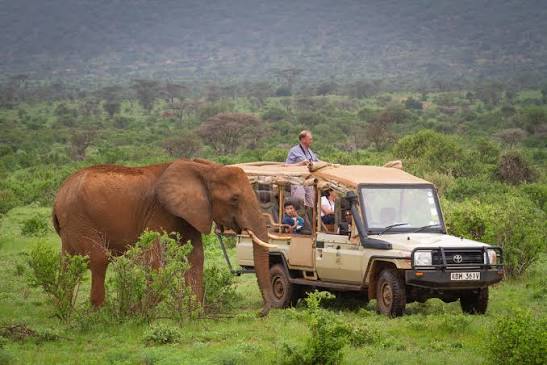
The rental vehicle is typically collected from an office, hotel or agreed meeting point in Nairobi. Some companies deliver to Jomo Kenyatta International Airport, Wilson Airport or city accommodation. Airport delivery may carry an additional charge.
Before departure, the company should demonstrate the tent, stove, refrigerator, four-wheel-drive system, jack and recovery tools. Travelers should personally practice opening and closing the tent instead of relying only on a verbal explanation.
The vehicle then serves as the center of the safari. Luggage, food, water and camping equipment remain securely stored while you travel between destinations.
At night, you stay at authorized public campsites, private campgrounds, community conservancies or designated wilderness sites. The facilities may range from hot showers and electricity to little more than a marked camping area.
This travel style provides considerable freedom, but it is not the same as renting an ordinary city car. The renter must manage equipment, monitor the vehicle and follow national park and campsite regulations.
Why Start a Kenya Rooftop-Tent Safari in Nairobi?
Nairobi is the most practical starting point for a Kenya self-drive safari because it combines international access with vehicle availability and good road connections.
Jomo Kenyatta International Airport receives flights from Africa, Europe, Asia, the Middle East and other regions. Wilson Airport handles many domestic safari flights.
The city has supermarkets, outdoor-equipment shops, pharmacies, banks, fuel stations and vehicle workshops. Travelers can buy provisions before entering remote areas where choices become limited.
Nairobi also sits within reach of several major attractions. Nairobi National Park lies beside the city, while Lake Naivasha and Hell’s Gate can be reached in a few hours under favorable traffic conditions.
Amboseli lies to the south, the Masai Mara to the southwest and Mount Kenya, Ol Pejeta and Samburu to the north. Tsavo is located along the broader route toward Mombasa and the coast.
Many specialist four-wheel-drive rental companies maintain their main fleets and workshops in Nairobi. This can improve vehicle availability and make replacement or technical support easier at the beginning of a trip.
The disadvantage is traffic. Crossing the city can take much longer than expected, particularly during weekday rush hours. Collection and departure times should account for congestion.
First-time visitors should avoid collecting a vehicle immediately after a long overnight flight and beginning a demanding drive. Spending the first night in Nairobi allows time to rest, inspect the vehicle and shop for supplies.
Advantages of 4×4 Roof-Top Tent Rental Nairobi
The greatest advantage is independence. You are not required to follow a group’s schedule or return to the same lodge after every activity.
If a wildlife sighting is rewarding, you may remain longer within park rules. If weather makes one route difficult, you can discuss alternatives with the rental provider and campsite.
Camping can also reduce accommodation expenses. Kenya has outstanding safari lodges, but properties inside major reserves can be expensive, especially during the migration season.
A rooftop tent provides a consistent sleeping space throughout the trip. You use the same mattress, bedding and setup rather than changing rooms every night.
The raised sleeping platform keeps you away from wet ground, surface insects and minor flooding. It also creates more storage space inside the vehicle because a separate ground tent and mattress may not be necessary.
Self-catering gives you control over meals. Early wildlife drives are easier when breakfast can be prepared quickly at camp. Travelers with dietary preferences can carry appropriate ingredients.
A private rental also supports mixed itineraries. You may camp inside or near national parks, stay in a lodge for one night and continue toward the coast without changing vehicles.
Road travel reveals parts of Kenya that are missed when flying. Towns, farms, escarpments, highlands and small roadside businesses become part of the journey.
Is Rooftop Camping Suitable for Everyone?
Rooftop camping works best for travelers who enjoy outdoor living and accept a degree of personal responsibility.
Every camp involves parking correctly, opening the tent, arranging bedding, preparing meals and organizing supplies. The process becomes quick with practice, but it still requires effort.
A ladder is used to enter the tent. People with significant mobility, balance or knee problems should test the ladder before booking.
Nighttime bathroom visits require climbing down carefully, checking the surrounding area and following campsite safety instructions. This can be inconvenient for some travelers.
The experience may also involve dust, rain, insects and changing temperatures. An excellent rooftop tent improves comfort but does not reproduce a hotel room.
Travelers who require daily housekeeping, permanent bathrooms or extensive personal service may prefer a lodge safari. Another option is a guided camping tour with support staff.
Self-driving also requires confidence behind the wheel. Drivers must cope with left-side traffic, rough roads, animals, motorcycles, pedestrians and unfamiliar navigation.
For adventurous couples, families and experienced campers, the independence can be highly rewarding. The key is selecting an arrangement that matches genuine ability and comfort rather than an idealized image of wilderness travel.
Choosing the Right 4×4 Roof-Top Tent Rental Nairobi Vehicle
The ideal vehicle depends on the route, travel season, group size and luggage. A company should recommend a vehicle only after understanding these factors.
Toyota Land Cruiser Rental
The Toyota Land Cruiser is widely used for East African safaris because of its strength, ground clearance and established mechanical support.
Different models offer different interior dimensions. Some are compact and functional, while extended models provide greater passenger and storage space.
A Land Cruiser with low-range four-wheel drive is suitable for rough park tracks, mud and remote roads when operated correctly. It is not invincible, and careless driving can still cause damage or leave it stuck.
Diesel versions are common. They often provide good torque and practical fuel economy for a heavy camping vehicle.
The rental price may be higher than for a compact SUV or pickup. Nevertheless, the durability and route capability may justify the additional expense.
Ask for the exact model, transmission, age and seating layout. “Land Cruiser or similar” can describe vehicles with very different specifications.
Toyota Hilux Rooftop Camper
A Toyota Hilux double-cab pickup is another strong choice. The rear cargo bed can be fitted with a lockable canopy and organized camping storage.
The rooftop tent may sit above the canopy, leaving the passenger cabin free from most luggage.
A Hilux often provides good road comfort while retaining low-range four-wheel drive. However, suspension characteristics change when the vehicle carries water, equipment and a tent.
Four adults may fit in a double cab, but space can feel limited on a long journey. A family with children may find it more comfortable.
The canopy should lock securely and seal reasonably well against dust. No safari vehicle remains completely dust-free on rough roads, but good seals make a significant difference.
Land Rover Defender Rental
The Land Rover Defender has strong off-road capability and an iconic safari appearance. Properly maintained examples can handle demanding routes.
Comfort, noise and interior design differ across generations. Older models may feel more agricultural than modern vehicles.
Mechanical condition matters more than appearance. Ask about service support and parts availability along the intended route.
Compact Four-Wheel-Drive Rental
Compact 4×4 vehicles can be appropriate for two travelers following established routes during relatively dry weather.
They usually cost less and consume less fuel. They are also easier to maneuver in Nairobi and crowded parking areas.
The main limitation is storage. A refrigerator, kitchen, water, chairs and luggage occupy considerable room.
Some compact vehicles use all-wheel drive without low-range gearing. This may be sufficient for ordinary gravel roads but less effective in deep mud, loose sand or steep terrain.
Request written confirmation that the chosen vehicle is allowed on every planned road and reserve.
Manual or Automatic 4×4?
Automatic vehicles reduce workload in Nairobi traffic and on long road days. They also allow the driver to concentrate on road conditions and wildlife.
Modern automatic four-wheel drives can perform well off-road when the correct mode is selected. The rental company should explain hill descent, traction control and low-range engagement.
Manual vehicles may cost less and provide direct gear control. They suit drivers already confident with clutch use.
A manual transmission can be tiring in city congestion. Poor clutch technique on steep or sandy ground can also cause mechanical damage.
Select the transmission you regularly use. A safari vehicle is larger and heavier than an ordinary car, so the trip should not double as a driving lesson.
Soft-Shell and Hard-Shell Roof Tents
The tent design affects setup time, sleeping space and vehicle height.
A soft-shell tent usually unfolds sideways. Part of the floor extends beyond the roof and is supported by the ladder.
This design can produce a relatively large sleeping platform. It is widely available and often more economical.
The travel cover must be removed and secured during setup. Closing the tent can take longer if bedding interferes with the hinges or cover.
A hard-shell tent opens from a rigid case. Setup and closing are often faster, which is helpful during frequent one-night stops.
The shell protects the tent while driving and may provide a cleaner aerodynamic profile. However, internal width can be limited.
Hard-shell tents generally cost more and may not be available on every vehicle.
Neither design is automatically better. A couple remaining two or three nights at each campsite may prioritize interior space. Travelers moving daily may value fast setup.
Inspecting the Roof Tent
The tent should be opened fully before you accept the vehicle.
Check the mattress for damage, moisture and cleanliness. Confirm whether bedding is new, freshly laundered or supplied in sealed storage.
Test every zipper and mesh panel. A small hole can allow mosquitoes and other insects inside.
Examine the fabric for tears, repairs and water damage. Look at seams and attachment points.
The ladder must lock securely. Confirm that its feet stand firmly on the ground and that it is long enough for the vehicle.
Ask about the maximum supported weight. Do not assume that a large tent can safely accommodate every combination of adults and children.
Inspect the travel cover, straps and buckles. Loose equipment can become dangerous at road speed.
Practice folding the tent without assistance. If it requires unusual force, ask the company to demonstrate the correct method again.
Take photographs at collection. Existing damage should be recorded in the rental report.
Equipment Included With a 4×4 Roof-Top Tent Rental Nairobi Package
A complete package should provide equipment for sleeping, cooking and basic roadside emergencies. Never rely on the word “fully equipped” without requesting an inventory.
Sleeping equipment may include a mattress, pillows, sheets, blankets or sleeping bags. Ask whether bedding is suitable for cold highland nights.
The kitchen normally includes a gas stove, cooking pots, frying pan, plates, bowls, cups, cutlery, knife and chopping board.
A refrigerator or powered cooler is extremely useful. Confirm its capacity and whether it operates from an auxiliary battery after the engine is switched off.
Furniture generally includes camping chairs and a folding table. Inspect their condition and confirm the number provided.
Water equipment may consist of containers, jerry cans or a fixed tank. Determine which water is intended for drinking.
Vehicle recovery equipment should include a jack, wheel spanner, tow strap, shovel and correctly inflated spare tire. Difficult routes may require traction boards and a second spare.
A first-aid kit, fire extinguisher, warning triangles and reflective vest should be included.
Electrical equipment can include USB ports, an inverter, a solar panel and camp lights. Ask how much power the system can safely supply.
Understanding Rental Prices
The daily cost of a 4×4 roof-top tent rental Nairobi depends on the vehicle, tent configuration, equipment, insurance and season.
A compact four-wheel drive with one tent generally costs less than a long-wheelbase Land Cruiser carrying two tents.
Rental demand increases during the Great Migration period and major holidays. July through October can be especially busy.
Longer hires may qualify for a reduced daily rate. The saving should be compared with increased fuel, food and campsite costs.
An advertised price may exclude taxes, camping equipment, insurance upgrades, airport delivery or an additional driver.
Request the total payable amount. The quotation should identify the deposit, security bond, insurance excess and any charges due at collection.
Fuel is normally excluded. A loaded four-wheel drive with a roof tent consumes more than an ordinary car.
National park entrance, camping and vehicle fees are also normally separate. These can form a major part of the trip budget.
One-way rentals between Nairobi and Mombasa may be available for an additional fee. International drop-offs are more complicated and rarely included.
What Influences the Total Safari Cost?
Vehicle rental is only one part of the budget.
Park conservation fees are usually charged per visitor and may apply for each day or 24-hour period according to the destination’s system.
Vehicle entry fees may be separate. Campsites also charge per person, vehicle or site.
Kenya Wildlife Service manages many national parks, while county governments and private conservancies manage other areas. Payment methods and pricing are not uniform.
Fuel costs depend on distance, vehicle weight, engine and road conditions. Game drives add considerable mileage even when the campsite is near the park.
Food can be economical when self-catering. However, a reliable refrigerator and thoughtful shopping plan are necessary to avoid waste.
Additional expenses may include boat trips, guided walks, conservancy activities, firewood, laundry, showers and charging.
Emergency equipment such as a satellite messenger may be rented separately.
A realistic budget should also include an emergency reserve. Delays, tire damage or unexpected route changes can create additional costs.
Rental Insurance and the Security Deposit
Insurance conditions require careful attention because repairing a four-wheel-drive safari vehicle can be expensive.
Standard insurance usually covers collision damage and third-party liability. However, most policies include an excess, which means the renter must pay an agreed amount when damage occurs.
Some companies offer additional insurance that reduces the excess. Nevertheless, the upgraded policy may not remove the renter’s financial responsibility completely.
Rental policies often exclude tires, windscreens, suspension components, rooftop equipment, water damage and damage beneath the vehicle. Therefore, read the exclusions before choosing a package.
The insurer may reject a claim if an unauthorized driver operates the vehicle, the renter enters a prohibited area or the driver ignores local traffic laws. Likewise, speeding, reckless driving and continuing after a mechanical warning can invalidate coverage.
Camping equipment may follow a separate damage policy. For example, the company may charge the renter for a broken tent zipper, missing chair or damaged cooking item.
Most rental companies also require a refundable security deposit. Before paying it, confirm the amount, payment method and expected release date. In addition, ask the company to document and explain any deduction.
Mileage and Route Restrictions
Although some rentals include unlimited mileage, the agreement may still restrict certain roads and regions.
For example, remote border areas, dry riverbeds, badly damaged roads and isolated northern routes may require written permission. During the rainy season, the rental company may also prohibit travel on tracks with a high risk of flooding or deep mud.
Always share your proposed itinerary before confirming the booking. Include every national park, conservancy, border crossing and remote destination.
If you decide to change the route during the safari, contact the rental provider first. Otherwise, an unauthorized detour could invalidate your insurance and roadside assistance.
Many rental companies install GPS trackers for security and emergency support. These systems may also record speeding or travel into restricted areas. Consequently, drivers should follow the agreed route and never interfere with the tracking equipment.
Collecting Your Vehicle in Nairobi
Vehicle collection should be scheduled during daylight and outside the busiest traffic period when possible.
Bring your passport, driving license, International Driving Permit if required, booking confirmation and payment method.
The company should review the rental agreement before handing over the keys. Use this opportunity to clarify insurance and roadside support.
Inspect the body, roof, windscreen, mirrors and lights. Photograph scratches and dents.
Check all tires, including the spare. Tire sidewalls should not show deep cuts, bulges or severe cracking.
Start the engine and look for warning lights. Test the brakes, indicators, horn, air conditioning and windscreen wipers.
Ask the company to show the fuel level and explain whether the vehicle must be returned full.
Test four-wheel drive and low range. Identify the correct recovery points.
Open the roof tent and check the equipment inventory. Start the refrigerator and stove.
Confirm the vehicle height. Rooftop tents may prevent entry into underground parking or areas with low branches.
Save the emergency contact number in multiple phones and on paper.
Shopping for a Nairobi Camping Safari
Nairobi is the best place to purchase most supplies before departure.
Large supermarkets sell dry food, fresh vegetables, meat, drinking water, cleaning products and personal items.
Buy only the amount that can be stored safely. Overloading the refrigerator reduces airflow and cooling performance.
Simple meals are more practical than complex recipes. Rice, pasta, beans, eggs, vegetables and grilled food are easy to prepare with limited equipment.
Carry quick breakfasts for early game drives. Fruit, bread, cereal, tea and coffee require little preparation.
Pack food in reusable sealed containers. This limits dust and reduces scents that attract animals.
Do not leave Nairobi without sufficient drinking water. Additional supplies can be purchased in towns, but availability becomes less predictable in remote areas.
Buy charcoal or firewood only if the selected campsites allow it. Open fires are prohibited in many places.
Leaving Nairobi Safely
Nairobi traffic can be intense and navigation may direct visitors onto unsuitable shortcuts.
Use major roads for the first stage of the journey. Avoid experimenting with unfamiliar residential routes in a large loaded vehicle.
Motorcycles may pass on both sides, while minibuses can stop suddenly. Maintain space and drive defensively.
Keep doors locked and windows closed in slow traffic. Do not leave phones or cameras visibly unattended.
Avoid displaying luggage when stopping for shopping. Use supervised parking areas.
Try to clear the city before darkness. Highway hazards become more difficult to see at night.
If the first destination requires more than four or five hours of driving, consider spending the initial night closer to Nairobi.
Driving Rules in Kenya
Vehicles drive on the left side of the road.
All occupants should wear seat belts. Children need suitable restraints.
Speed limits depend on the road, area and vehicle class. Follow posted signs and official regulations.
Speed bumps are common near towns, villages and schools. Some are poorly marked.
Avoid using a handheld phone while driving. Stop in a safe location before checking navigation.
Never drink and drive. Kenya Wildlife Service also prohibits driving under the influence inside national parks.
Carry the driving license, rental agreement, insurance documents and vehicle authorization.
Police checks may occur. Remain polite and provide the required documents.
Do not offer unofficial payments. Contact the rental provider if a dispute develops.
National Park Driving Rules
A national park is a protected wildlife habitat, not an off-road driving course.
Remain on authorized tracks. Driving across vegetation damages the ecosystem and can result in penalties.
Respect gate opening and closing times. Kenya Wildlife Service park information commonly states that gates open at 6:00 a.m. and close at 6:00 p.m., but exact rules should be confirmed for every destination.
Drive slowly and quietly near animals. Do not hoot, rev the engine or chase wildlife.
Give elephants a wide escape route. Never position the vehicle between a mother and calf.
Do not block predators or surround them with other vehicles. If a sighting becomes crowded, wait patiently or move away.
Remain inside the vehicle unless you are at an authorized picnic site, campsite or activity area.
Do not feed animals. Baboons and monkeys can become aggressive after learning to associate vehicles with food.
Remove all waste. Kenya’s national parks emphasize plastic-free and responsible visitor behavior.
Choosing Campsites
The right campsite can improve the entire self-drive experience. Therefore, compare location, access, facilities, wildlife exposure and security before making a reservation.
A low-cost campsite far from a park entrance may increase fuel consumption and reduce game-viewing time. By contrast, camping inside a protected area can provide faster access to wildlife routes, although facilities may remain basic.
Public campsites usually accommodate several groups and may offer toilets, showers and shared cooking areas. Meanwhile, special campsites provide greater privacy but often lack water, electricity and permanent buildings.
Private campgrounds outside national parks may offer hot showers, restaurants, electricity, Wi-Fi and secure vehicle parking. Similarly, community-owned campsites can provide comfortable facilities while directing tourism income toward local residents and conservation projects.
Before booking, confirm whether the campsite accepts rooftop vehicles and requires advance payment. Also ask about nighttime wildlife, fire regulations, water availability and emergency procedures.
Setting Up Camp
Reach the campsite before dark. Daylight makes it easier to select safe ground and understand the surroundings.
Choose a level surface that is not part of a drainage channel. Rainwater can move quickly through apparently dry depressions.
Look for dead branches above the vehicle. Avoid parking directly beneath unstable trees.
Do not camp close to water. Rivers and waterholes attract hippos, elephants, buffaloes and predators.
Apply the parking brake and use wheel chocks where necessary.
Open the tent according to the demonstration. Lock the ladder and check its footing.
Organize the kitchen away from dry grass. Keep fuel sources upright and stable.
Store food inside the vehicle after cooking. Remove rubbish and wash dishes promptly.
Keep shoes, torches and essential items in known locations. A disorganized camp becomes difficult to manage after dark.
Wildlife Safety at Camp
The roof tent’s height does not remove the need for wildlife awareness.
Ask campsite staff which animals move through the area. Conditions differ between locations.
Never leave food outside overnight. Monkeys, baboons, hyenas and other animals can damage equipment while searching for it.
Do not keep food inside the tent. Use sealed containers within the vehicle.
After dark, avoid walking beyond the immediate camp. Use a strong light and follow escort procedures.
Before descending the ladder, listen and inspect the ground.
Hippos may travel considerable distances from water at night. They can appear in campsites that seemed safe during daylight.
Elephants may approach quietly. Remain calm and do not shine strong lights directly into their eyes.
If an animal enters the site, stay inside the tent or vehicle unless staff provide different instructions.
Do not attempt to photograph dangerous wildlife on foot.
Water and Fuel Planning
Carry enough drinking water for the planned route and an additional emergency supply. Because temperatures rise considerably in Samburu, Tsavo and northern Kenya, travelers usually consume more water in these areas.
Use separate containers for drinking and washing. Furthermore, ask whether campsite water is safe before refilling bottles. When its quality remains uncertain, use an appropriate filtration or purification system.
Fuel stations operate throughout Nairobi and along Kenya’s main highways. However, they become less dependable near remote parks and northern destinations. For that reason, fill the tank before leaving a major town.
A properly secured jerry can can provide an emergency fuel reserve on approved routes. Nevertheless, store fuel only in a suitable container outside the passenger compartment.
Confirm whether the vehicle uses petrol or diesel before leaving Nairobi. Filling the tank with the wrong fuel can seriously damage the engine and may invalidate insurance.
Finally, monitor fuel consumption during the first two days. Rooftop equipment, heavy supplies, rough tracks and slow game drives can increase consumption considerably.
Navigation and Emergency Communication
Download offline maps before leaving Nairobi.
Do not trust every digital route. Navigation software may recommend private roads, damaged tracks or shortcuts that are unsuitable for a loaded 4×4.
Carry a paper map as backup. Mark park gates, fuel stations, campsites and major towns.
Ask rangers about track conditions. Recent local knowledge is more valuable than an old online review.
Share your route with the rental company and a trusted contact.
A Kenyan SIM card provides useful mobile coverage, but service disappears in some parks and remote regions.
For northern or isolated travel, consider a satellite messenger. Understand the emergency function before departure.
Store the rental company, insurer, police and medical-assistance contacts offline.
4×4 Roof-Top Tent Rental Nairobi for the Masai Mara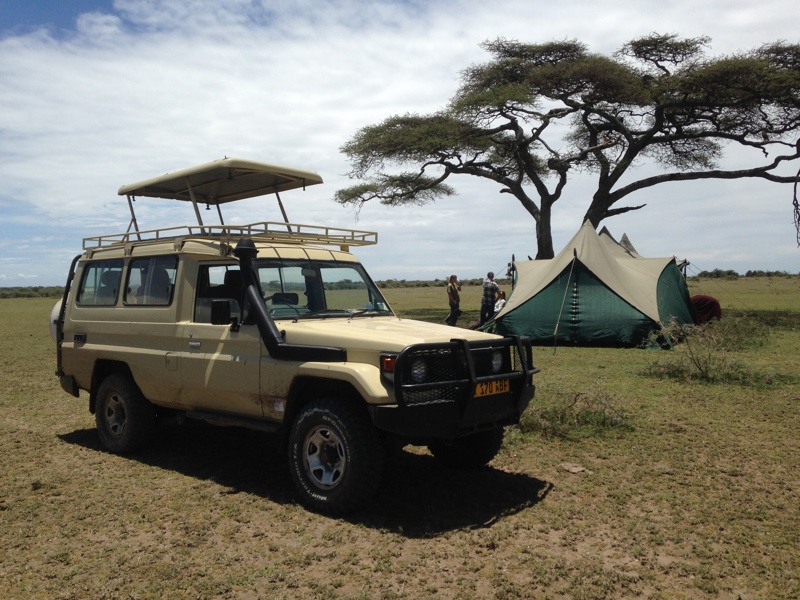
The Masai Mara is a leading destination for a Nairobi self-drive safari. It offers excellent opportunities to see lions, elephants, buffaloes, leopards, cheetahs and large antelope herds.
The annual migration may bring wildebeest and zebras into the reserve between approximately July and October. Exact timing depends on rainfall and grazing.
Different roads connect Nairobi with the reserve’s gates. Travel time varies considerably with traffic and road conditions.
The final approaches may be rough or heavily corrugated. Rain can turn black-cotton soil into deep, slippery mud.
A true four-wheel drive is strongly recommended. Drivers should understand low-range use and recovery procedures.
Masai Mara entry arrangements differ from KWS national parks because county authorities manage the reserve. Fees and payment systems must be verified before travel.
Reserve campsites early during migration months. Camps outside the reserve may reduce costs but require daily travel to the gate.
Spend at least three nights when possible. Two full game-drive days provide a better experience than arriving one evening and leaving the following morning.
4×4 Roof-Top Tent Rental Nairobi for Amboseli
Amboseli National Park lies south of Nairobi near the Tanzanian border. It is celebrated for elephant herds and views of Mount Kilimanjaro.
The mountain is often most visible in the early morning. Camping nearby allows travelers to enter or begin exploring when the light is best.
Amboseli’s wetlands support elephants, buffaloes, hippos and birds. Open areas contain zebras, wildebeest, gazelles and predators.
Dry conditions create dust. Close food containers and protect cameras.
Rain can make tracks muddy. Ask rangers which areas remain passable.
Two or three nights provide enough time for different game-drive circuits and changing mountain views.
Amboseli can be combined with Tsavo West and Tsavo East for a longer southern circuit.
4×4 Roof-Top Tent Rental Nairobi for Tsavo
Tsavo East and Tsavo West form an enormous wildlife region between Nairobi and Mombasa.
Tsavo East is known for open landscapes, the Galana River and red-dust elephants. Tsavo West contains volcanic terrain, hills, springs and denser vegetation.
Distances inside both parks are significant. Plan the campsite around the intended gate and activities.
Fuel availability must be confirmed. Carry enough water and food for delays.
Some tracks are remote, and assistance may take time. Avoid routes that the rental provider has not approved.
The Tsavo circuit works particularly well for travelers continuing to Kenya’s coast.
A one-way vehicle return in Mombasa may save time, subject to availability and additional charges.
Lake Naivasha and Hell’s Gate Road Trip
Lake Naivasha is one of the easiest first destinations after collecting a vehicle in Nairobi.
Commercial campsites around the lake may provide showers, power, restaurants and grassy parking.
Hippos inhabit the water and graze on shore at night. Campers must follow site instructions and avoid unsupervised nighttime walking.
Boat trips provide birdwatching and lake views. Nearby private areas offer additional wildlife experiences.
Hell’s Gate National Park is known for cliffs, volcanic scenery and cycling or walking in authorized sections.
The Naivasha region is an excellent place to become familiar with the vehicle before entering more remote parks.
Lake Nakuru National Park
Lake Nakuru is a compact Rift Valley park known for rhinos, buffaloes, giraffes, lions and birdlife.
Flamingo concentrations vary with water and food conditions, so visitors should not expect a fixed spectacle.
The park combines easily with Naivasha and the Masai Mara.
One full day may cover its main routes, though an additional night provides more relaxed wildlife viewing.
Confirm camping availability and current KWS procedures before arrival.
Samburu and Northern Kenya
Samburu National Reserve offers dry landscapes and wildlife associated with northern Kenya.
Visitors may see Grevy’s zebras, reticulated giraffes, gerenuks, Beisa oryx, elephants and Somali ostriches.
The Ewaso Ng’iro River attracts animals and supports riverine vegetation.
Temperatures can be high, making water and shade essential.
Samburu can be combined with Buffalo Springs, Shaba, Ol Pejeta and Mount Kenya. Each protected area has separate fees and access rules.
Longer expeditions toward Marsabit and Lake Turkana require greater preparation, written rental approval and reliable communication.
Ol Pejeta and Mount Kenya
Ol Pejeta Conservancy is known for rhinos and a broad wildlife population. It also hosts a chimpanzee sanctuary.
The conservancy’s self-drive, camping and activity policies should be confirmed directly.
Mount Kenya provides a cooler contrast to the savannah. Visitors can enjoy forest walks, mountain views and longer guided climbs.
Highland campsites can become cold at night. Pack suitable bedding and warm clothing.
The region combines naturally with Samburu and Laikipia.
Nairobi National Park
Nairobi National Park provides a convenient safari close to the city.
Rhinos, lions, giraffes, buffaloes and antelopes may be seen against a distant urban skyline.
The park can be visited before beginning a longer road trip or after returning to Nairobi.
Traffic between the park, rental office and airport must be considered carefully.
KWS generally lists gate hours from 6:00 a.m. to 6:00 p.m. for Nairobi National Park. Always confirm current information before arrival.
Seven-Day Nairobi Self-Drive Safari
A practical seven-day route can combine Lake Naivasha, Lake Nakuru and the Masai Mara.
Collect the vehicle in Nairobi and spend the first night near Naivasha. This reduces pressure after the handover.
Explore Hell’s Gate or Lake Naivasha before continuing to Lake Nakuru.
After a night near Nakuru, drive toward the Masai Mara and spend three nights at a confirmed campsite.
Use two full days for wildlife viewing. Return toward Nairobi on the sixth day and stay outside the city.
Return the vehicle on day seven with enough time for inspection before the flight.
This route limits extreme distances and provides several contrasting experiences.
Ten-Day Southern Kenya Camping Route
A southern route can combine Nairobi, Amboseli, Tsavo West, Tsavo East and the coast.
Collect the vehicle and remain near Nairobi on the first night.
Spend two or three nights near Amboseli. Continue to Tsavo West for wildlife, volcanic scenery and Mzima Springs.
Drive into Tsavo East for another two nights before continuing to Mombasa or the coast.
Spend the final nights at a secure coastal campground or lodge.
Return the vehicle in Mombasa if the rental company permits a one-way arrangement. Otherwise, allow enough time to drive back to Nairobi.
Fourteen-Day Kenya Self-Drive Safari
Two weeks allow a broader circuit without changing camps every day.
Begin with Mount Kenya or Ol Pejeta, then continue north toward Samburu.
Return through the Rift Valley for Lake Nakuru and Naivasha.
Spend at least three nights in the Masai Mara.
Finish with Amboseli before returning to Nairobi.
This itinerary covers dry northern landscapes, highlands, lakes and famous savannahs.
Do not add Tsavo unless you are comfortable with longer drives. A route that looks impressive on paper can become exhausting in practice.
Family 4×4 Roof-Top Tent Rental Nairobi
Families should prioritize space, safe sleeping arrangements and shorter daily drives.
Ask for the tent’s exact dimensions. Marketing descriptions such as “family size” are not precise enough.
Two tents may be necessary for older children. The vehicle must be designed to carry the additional roof weight.
Children should practice using the ladder under supervision.
A private or commercial campground with toilets and showers is a sensible choice for the first nights.
Parents should confirm child-seat availability before paying the deposit.
Carry familiar food, medication and activities for long road sections.
Children must never leave the vehicle during game drives or move around an unfenced campsite without an adult.
Rooftop-Tent Rental for Couples
One rooftop tent generally works well for two adults.
Couples can choose a smaller vehicle if the route and season allow it, reducing fuel and rental costs.
Divide camp responsibilities. One traveler can open the tent while the other arranges cooking equipment.
Both people should understand four-wheel drive, tire changing and emergency communication.
For a honeymoon, combine remote camps with occasional lodge nights. This preserves the adventure while providing opportunities for rest, laundry and special meals.
Solo Rooftop-Tent Travel
Solo self-driving offers complete freedom but requires additional caution.
The traveler must handle navigation, driving, tent setup, cooking and recovery without assistance.
Choose established routes and campsites with staff or other guests.
Provide regular updates to the rental company or trusted contacts.
Avoid taking risky tracks because no second person is available to guide wheels or assist with recovery.
A satellite messenger is valuable on remote routes.
Solo rental costs are higher per person, but the flexibility appeals to photographers and experienced overlanders.
Adding a Driver-Guide
Travelers can often hire the equipped vehicle with a professional driver-guide.
This option removes the pressure of navigation and vehicle management while preserving the camping experience.
A guide improves wildlife sightings by recognizing tracks, calls and animal behavior.
The quotation must include the guide’s meals, accommodation and park fees. Some campsites provide staff facilities, while others require an additional ground tent.
Confirm whether the guide handles cooking or whether a separate camping assistant is necessary.
A driver-guided rooftop safari is valuable for first-time visitors, families and photographers.
Cross-Border Travel From Nairobi
A Kenya rental vehicle may be allowed into Uganda, Rwanda or Tanzania only with written authorization.
The rental company must supply the required registration documents, permission letter and regional insurance.
Border-crossing fees may apply. Some agreements permit Uganda and Rwanda but prohibit Tanzania.
The renter must also meet immigration requirements for every country.
Kenya currently operates an electronic travel authorization system for many foreign travelers. Requirements and exemptions should be checked through the official Kenya eTA portal.
One-way international drop-off is rarely practical. Most vehicles must return to Nairobi.
Cross-border routes should include sufficient time for customs and immigration. Avoid reaching the border near closing time.
Vehicle Breakdowns and Roadside Assistance
Even a well-maintained vehicle can develop a problem.
If a warning light appears, stop safely and consult the manual or rental company.
Do not continue driving an overheating engine. Serious damage can occur quickly.
For a puncture, move away from traffic and wildlife before changing the wheel.
Inside a national park, contact a ranger when the location is unsafe.
The rental company should provide a 24-hour emergency number and explain its assistance procedure.
Remote recovery may take several hours or longer. Carry food, water and warm clothing.
Do not authorize expensive repairs without approval unless immediate action is necessary for safety.
Keep receipts, photographs and written communication.
Driving in Mud
Black-cotton soil becomes extremely slippery when wet. A track that was easy in the morning may become difficult after a storm.
Engage four-wheel drive before entering a challenging section.
Maintain controlled momentum without spinning the wheels.
Follow existing tracks only when they are not excessively deep.
Avoid sharp steering and sudden acceleration.
If the vehicle begins losing traction, stop before it becomes deeply stuck.
Use traction boards or a shovel according to the rental company’s instructions.
Do not attach recovery straps to bumpers or suspension components. Use rated recovery points.
Driving in Sand
Soft sand requires smooth momentum and appropriate tire pressure.
The rental company should provide recommended pressures for the specific vehicle and tires.
Reduce pressure only when necessary and reinflate before returning to a high-speed road.
Avoid sudden braking and aggressive steering.
Follow established tracks where permitted.
If forward movement stops, do not continue spinning the wheels. Clear sand and use recovery equipment.
Driving on beaches or dunes may be prohibited by the rental agreement even if the vehicle is capable.
Water Crossings
Water can conceal holes, rocks and soft surfaces. A vehicle’s air intake and electrical systems have depth limits.
Do not enter floodwater without reliable information.
A route used by another vehicle may not be safe minutes later.
Never walk into water where crocodiles, hippos or strong currents may be present.
If the depth or bottom is uncertain, turn around.
Water damage is frequently excluded from insurance. The financial consequences can be severe.
Rooftop Camping in Rain
Rain does not automatically ruin a camping safari. Good equipment and sensible camp selection make a significant difference.
Do not park in a depression or dry drainage channel.
Orient the tent so that strong wind does not strike its largest surface.
Keep wet shoes and clothing away from bedding.
Ventilate the tent to reduce condensation.
Close windows only as much as necessary for rain protection.
Dry the fabric before packing when conditions permit. If it must be closed wet, reopen it at the next opportunity.
Keep recovery equipment accessible rather than buried beneath luggage.
Rooftop Camping in Cold Conditions
Kenya’s equatorial location does not mean every night is warm.
Nairobi, Naivasha, Mount Kenya, Laikipia and highland regions can become cold after sunset.
A thin mattress may also allow heat loss through the tent floor.
Bring an appropriate sleeping bag or warm duvet. Wear dry layers and socks.
Avoid using fuel-burning heaters inside the tent. They create fire and carbon-monoxide risks.
Close unnecessary ventilation while maintaining enough airflow to control condensation.
A hot drink and warm meal help before sleeping.
Food Storage and Camp Cooking
Store food in sealed containers inside the vehicle.
A refrigerator should be connected to an auxiliary battery, not directly to the starter battery without protection.
Raw meat must remain properly chilled.
Keep cooking areas clean and remove scraps immediately.
Do not feed monkeys, baboons, birds or other animals.
Use the gas stove outdoors on a stable surface.
Keep the fire extinguisher nearby.
Never cook in the rooftop tent.
Open fires should be used only in approved fireplaces and when conditions permit.
Carry reusable utensils to reduce waste.
Responsible Self-Drive Tourism
Respect for wildlife and communities should guide every decision.
Remain on authorized tracks and established campsites.
Keep noise low and avoid bright lights that disturb animals.
Carry rubbish until it can be disposed of correctly.
Do not burn plastic or bury non-biodegradable waste.
Use water carefully, particularly in dry areas.
Ask permission before photographing people.
Buy food, fuel, guiding services and crafts from local businesses where practical.
Choose community-run campsites and conservancies that provide transparent local benefits.
Never pressure a ranger or guide to break wildlife-viewing rules.
Common Rental Mistakes
Choosing the cheapest vehicle without checking condition is a major mistake.
Another is underestimating luggage and equipment space.
Travelers sometimes plan excessive distances, leaving no time for game drives or rest.
Some ignore the insurance exclusions until damage occurs.
Others fail to practice opening the tent or engaging four-wheel drive.
Arriving at an unreserved campsite during peak season can cause serious delays.
Poor water and fuel planning is another avoidable problem.
Driving after dark increases risk substantially.
Finally, many travelers treat four-wheel drive as permission to enter every difficult track. Good judgment is more valuable than vehicle capability.
Best Time to Rent a Rooftop Camper in Nairobi
The long dry season from June through October is popular for wildlife safaris.
Road conditions are generally easier, though dust can be intense.
The migration may reach the Masai Mara during this period, depending on rainfall.
January and February are also relatively dry in many regions.
The long rains commonly occur from March to May. Some park tracks become muddy or temporarily impassable.
Short rains can occur around October through December.
Rainy-season travel offers green landscapes, fewer vehicles and excellent birding.
Peak-season rentals should be reserved many months in advance.
Automatic Land Cruisers and vehicles with two tents often sell out first.
Nairobi Arrival and eTA Planning
Many international travelers must obtain approval through Kenya’s electronic travel authorization system before departure.
The official application guidance lists documents such as a valid passport, photograph, contact details, travel itinerary and accommodation confirmation. Travelers should check current rules directly because exemptions and requirements can change. Kenya eTA
Do not use unverified websites that imitate official application services.
Your first accommodation booking may be required for the application. A Nairobi hotel or licensed campground can provide the necessary confirmation.
Ensure that the name on the rental agreement matches the driver’s identification.
Carry printed and electronic copies of important documents.
Packing for a Nairobi Rooftop-Tent Safari
Bring lightweight neutral-colored clothing, long trousers, a warm layer and a waterproof jacket.
A sun hat, sunglasses and sunscreen are necessary.
Closed shoes protect against insects and sharp ground around camps.
A headlamp is more useful than a handheld torch during cooking and tent setup.
Carry insect repellent and personal medication.
Binoculars improve wildlife viewing, while cameras need dust protection and spare batteries.
A power bank provides backup for navigation and communication.
Reusable water bottles reduce plastic waste.
Dry bags protect passports, phones and electronics.
Pack soft luggage that fits storage compartments more easily than rigid suitcases.
Frequently Asked Questions About 4×4 Roof-Top Tent Rental Nairobi
How much does a 4×4 rooftop-tent rental cost in Nairobi?
The rate depends on vehicle type, season, rental length, tent configuration, equipment and insurance.
Request a personalized quotation showing every mandatory fee. Park, campsite and fuel expenses are usually separate.
Where can I collect the vehicle?
The rental company may deliver the vehicle to its Nairobi office, your hotel, Jomo Kenyatta International Airport or another agreed location.
Airport delivery and after-hours handover may cost extra.
Can I collect the vehicle immediately after landing?
Yes, but resting first is often safer after a long flight.
A proper handover can take one or two hours. Nairobi traffic and the drive to the first campsite must also be considered.
Is a Toyota Land Cruiser necessary?
A Land Cruiser is recommended for difficult and remote routes. A smaller 4×4 may suit established circuits during dry weather.
The right vehicle depends on the complete itinerary.
Do rentals include unlimited mileage?
Some do, but route restrictions still apply.
Ask whether any roads, regions or countries are prohibited.
Is camping equipment included?
Packages vary. A tent may be included without bedding, cooking equipment or a refrigerator.
Request a full inventory before booking.
Can two adults sleep comfortably in one roof tent?
Most standard models are designed for two adults.
Ask for the mattress dimensions, particularly if either traveler is tall.
Are family rooftop tents available?
Some companies provide wider tents or vehicles with two separate tents.
Weight limits and vehicle stability must be considered.
Can I hire a vehicle without camping equipment?
Yes. Many companies offer an ordinary 4×4 for lodge-based self-drive safaris.
This option may cost less and reduce roof height.
Can I drive inside the Masai Mara?
Self-driving is generally possible in authorized areas, subject to current reserve rules and payment.
Road conditions can become difficult after rain.
Are national park fees included?
They are usually excluded.
Fees must be paid according to the park, reserve or conservancy’s current system.
Can I camp inside the national parks?
Yes, where authorized campsites are available and properly booked.
Facilities range from developed public sites to basic wilderness camps.
Is wild camping allowed?
Do not camp randomly without authorization.
Use recognized campsites or obtain clear permission from the landowner and relevant authorities.
Is a roof tent safe around lions?
A properly closed roof tent provides separation, but it is not a fortress.
Follow campsite instructions, keep food secured and do not walk around at night.
Are campsites fenced?
Some are fenced, while many wilderness sites are open to wildlife.
Confirm the setup before booking.
Can I cook at the campsite?
Cooking is generally possible at authorized sites using safe equipment.
Fire restrictions must be respected.
Is Wi-Fi available?
Commercial campgrounds may provide Wi-Fi. Remote camps usually do not.
Download maps and documents in advance.
What happens if I get a puncture?
The vehicle should include a spare tire, jack and wheel tools.
Contact the rental provider if the location is unsafe or if more than one tire is damaged.
Can I take the rental into Tanzania?
Only if the rental company authorizes the border crossing and supplies the necessary documents.
Some companies do not permit their vehicles in Tanzania.
Can I drive from Nairobi to Rwanda or Uganda?
Cross-border travel may be allowed with advance written permission, insurance and vehicle documentation.
The route is long and should be planned as a multi-week journey.
Can I return the vehicle in Mombasa?
Some companies offer one-way rental for an additional charge.
Confirm availability before booking flights.
Should I hire a driver-guide?
A driver-guide is recommended for travelers who are uncomfortable with road conditions or want stronger wildlife interpretation.
It also allows every guest to concentrate on the safari rather than navigation.
When should I book?
Reserve early for July through October, Christmas and New Year.
Booking six months or more ahead provides better vehicle choice.
How to Reserve 4×4 Roof-Top Tent Rental Nairobi
Start by sending the rental company your travel dates, group size and proposed route. Then explain whether you prefer a manual or automatic vehicle and state how many rooftop tents you need.
Next, request a complete equipment inventory and a written quotation. The quotation should clearly show taxes, insurance, mileage, security deposit, excess, delivery costs and optional equipment.
After reviewing the price, study the route restrictions and insurance exclusions. If your journey includes remote areas or international borders, obtain written authorization before paying the deposit.
Once the company confirms the vehicle, reserve your campsites and national park activities. You should also provide your flight information when requesting airport collection.
Finally, retain copies of the rental agreement, receipts, insurance documents and emergency contacts. Store digital copies online and keep printed versions inside the vehicle.
Why Plan Your Kenya Self-Drive Safari With Universal Ventures Rwanda?
Universal Ventures Rwanda creates customized East African safaris for couples, families, private groups and solo travelers.
We can assist with Kenya self-drive planning, suitable four-wheel-drive selection, camping logistics, safari routes and cross-border arrangements.
Your journey can combine Kenya’s Masai Mara, Amboseli, Tsavo, Samburu and Rift Valley destinations with Uganda or Rwanda.
Travelers continuing to Uganda can add chimpanzee tracking in Kibale, gorilla trekking in Bwindi and game drives in Queen Elizabeth National Park.
Those entering Rwanda can explore Kigali, Volcanoes National Park, Lake Kivu, Nyungwe and Akagera National Park.
A driver-guide can be added for guests who prefer professional navigation and wildlife knowledge.
We can also combine camping with lodge accommodation, creating a more comfortable journey without removing the freedom of an overland safari.
Final Thoughts
Choosing 4×4 roof-top tent rental Nairobi gives travelers the freedom to experience Kenya from the road while carrying a practical sleeping and cooking system.
Nairobi provides a convenient starting point, but the journey should begin with a careful vehicle inspection and realistic route.
The Masai Mara is ideal for big cats and seasonal migration. Amboseli offers elephants and Kilimanjaro views. Tsavo creates a vast wilderness route toward the coast.
Lake Nakuru, Lake Naivasha and Hell’s Gate fit naturally into a Rift Valley circuit. Samburu, Ol Pejeta and Mount Kenya introduce northern wildlife and cooler highlands.
The vehicle must match the route. A compact 4×4 may suit an established dry-season circuit, while remote or muddy travel requires stronger capability and recovery equipment.
A rooftop tent adds convenience, but safe camping still depends on authorized sites, secure food storage and respect for wildlife.
Travelers should understand insurance, route restrictions, fuel capacity and emergency support before departure.
A successful self-drive safari is not measured by the number of destinations visited. It is defined by the quality of the route, time available for wildlife and confidence that the equipment can handle the journey.
With good planning and a reliable rental vehicle, 4×4 roof-top tent rental Nairobi can open the door to an unforgettable Kenyan camping adventure.
Contact Universal Ventures Rwanda
Universal Ventures Rwanda
Telephone and WhatsApp: +250 781 441 853
Email: info@universalventuresrwanda.com
Address: Kigali, Rwanda
Website: www.universalventuresrwanda.com
