


Choosing Uganda self-drive roof-tent safari car hire gives you transport and mobile accommodation in one practical package. Instead of following a fixed group itinerary, you can travel at a comfortable pace, select your preferred campsites and spend more time in destinations that interest you.
Uganda offers everything an adventurous road traveler could want. Misty rainforests protect mountain gorillas, open savannahs support abundant wildlife, and volcanic highlands create spectacular driving scenery. Furthermore, the country’s national parks can be connected through an exciting independent road trip.
Nevertheless, a successful self-drive safari requires careful preparation. Uganda’s roads range from modern highways to steep mountain tracks, gravel routes and muddy national park roads. Therefore, you need a reliable 4×4, suitable insurance, complete camping equipment and dependable roadside assistance.
This comprehensive guide explains how rooftop-tent vehicle rental works in Uganda. In addition, it covers vehicle selection, rental costs, camping gear, insurance, national parks, gorilla trekking, driving conditions and suggested itineraries.
What Is Uganda Self-Drive Roof-Tent Safari Car Hire?
Uganda self-drive roof-tent safari car hire is a rental arrangement that provides a traveler with a safari-ready vehicle fitted with one or more tents on its roof. During the day, the tent remains folded inside a protective cover. After reaching a campsite, you unfold it and use a ladder to enter the sleeping area.
Most rooftop tents accommodate two adults. However, larger safari vehicles can carry two tents for three or four travelers. Some rental companies may also combine a rooftop tent with a separate ground tent.
A typical rental package includes a Toyota Land Cruiser, rooftop tent and essential camping equipment. Depending on the company, the package may also provide bedding, cooking utensils, a gas stove, camping furniture and an electric refrigerator.
Even so, the term “fully equipped” does not have a standard meaning. One company may include bedding and a fridge, while another may charge extra for the same items. Consequently, travelers should request a written inventory before paying a deposit.
Why Choose a Uganda Self-Drive Roof-Tent Safari?
Enjoy greater freedom
A self-drive safari gives you more control over your daily program. For example, you can leave camp early for a morning game drive, stop at scenic viewpoints or spend an additional night near a favorite national park.
Although you still need to respect park hours and activity schedules, you are not tied to a large group’s timetable. As a result, the journey feels more personal and flexible.
Combine transportation and accommodation
A rooftop-tent vehicle performs two important functions. First, it carries you between Uganda’s attractions. Second, it provides a raised sleeping space at authorized campsites.
Therefore, the package can offer excellent value for travelers planning a longer road trip. Nevertheless, the final price must include fuel, food, campsite charges, park fees and activities.
Experience Uganda’s natural surroundings
Sleeping at a recognized campsite allows you to experience Uganda beyond a lodge room. In Lake Mburo, for instance, you may wake to birds calling across the savannah. Meanwhile, campsites near Bwindi provide cool highland air and views of forested hills.
A rooftop tent also keeps the sleeping area above wet or uneven ground. However, it does not remove the need to follow campsite safety instructions.
Reach remote safari destinations
Many important Ugandan attractions lie far from Kampala and Entebbe. Moreover, final access roads can become rough, slippery or steep after heavy rain.
A strong 4×4 offers better ground clearance, suspension and traction than an ordinary city car. Consequently, it is a sensible choice for Bwindi, Queen Elizabeth, Kidepo Valley and other wildlife destinations.
Create a cross-border itinerary
Some companies permit their vehicles to enter Rwanda, Kenya or Tanzania. Thus, travelers can combine Uganda’s gorilla trekking and wildlife parks with a broader East African road trip.
However, international travel requires written permission, suitable insurance and valid vehicle documents. Never cross a border unless the rental provider has approved that country.
Who Should Choose a Rooftop-Tent Safari?
A Uganda rooftop-tent road trip is particularly suitable for:
- Couples seeking an independent safari
- Friends who can share driving responsibilities
- Wildlife photographers carrying specialized equipment
- Birdwatchers who prefer slower travel
- Families with practical camping experience
- Visitors combining Uganda and Rwanda
- Long-term travelers exploring East Africa
- Repeat safari visitors seeking greater flexibility
Conversely, a self-drive camping safari may not suit everyone. Travelers who dislike unfamiliar roads, have limited driving experience or prefer full-service accommodation may feel more comfortable with a driver-guide.
In addition, visitors following a very short schedule may benefit from professional driving support. A local driver understands road conditions, park entrances and travel times. Therefore, adding a driver can reduce pressure without removing the camping experience.
Best Vehicles for Uganda Self-Drive Roof-Tent Safari Car Hire
Selecting the right vehicle is essential. Although several 4×4 models are available, each has different strengths, fuel requirements and passenger capacities.
Before choosing, consider:
- Number of passengers
- Amount of luggage
- Travel season
- Planned national parks
- Rental duration
- Preferred transmission
- Fuel consumption
- Number of rooftop tents
- Need for a refrigerator
- Cross-border plans
Toyota Land Cruiser Prado
The Toyota Land Cruiser Prado is one of the most popular rooftop-tent vehicles in Uganda. It combines genuine four-wheel-drive ability with comfortable road performance.
For two travelers, a Prado with one rooftop tent is often sufficient. Furthermore, it usually provides enough interior space for moderate luggage and camping equipment.
Prado models may have petrol or diesel engines. Likewise, both automatic and manual versions are available. Therefore, confirm the specifications of the actual vehicle before making payment.
Best for:
- Couples
- Solo travelers
- Western Uganda itineraries
- Bwindi and Queen Elizabeth
- One rooftop tent
- Moderate amounts of luggage
Toyota Land Cruiser GX or LX
A Land Cruiser GX or LX provides strength, space and good off-road performance. Depending on its configuration, it may support one or two rooftop tents.
This vehicle works well for longer safaris because it can carry more food, water and camping gear. In addition, its stronger suspension can be useful on rough roads.
However, a vehicle that technically seats five people may not comfortably carry five passengers plus camping equipment. For that reason, ask for photographs showing the vehicle when fully loaded.
Best for:
- Two to four travelers
- Longer camping safaris
- Rough park roads
- Uganda–Rwanda journeys
- Travelers with photography equipment
Toyota Land Cruiser V8
The Land Cruiser V8 offers power, comfort and good off-road capability. It is especially popular among travelers who prefer an automatic vehicle.
Moreover, some V8 models can carry two rooftop tents. The cabin may also offer more comfortable long-distance travel than older hardtop vehicles.
Fuel consumption is the principal consideration. Because a V8 can use more fuel, travelers should compare total journey costs rather than the rental rate alone.
Best for:
- Couples seeking additional comfort
- Small families
- Two-tent configurations
- Long-distance road travel
- Automatic-transmission users
Land Cruiser hardtop
A Land Cruiser hardtop is designed for demanding conditions. Therefore, it can be an excellent choice for remote journeys and extended overland safaris.
Its large storage area is useful for camping equipment, water and luggage. Nevertheless, cabin comfort differs among modified vehicles.
Some hardtops have side-facing seats, whereas others have forward-facing safari seats. Consequently, travelers should review the exact interior arrangement before booking.
Best for:
- Remote routes
- Kidepo Valley
- Long expeditions
- Larger equipment loads
- Experienced overland travelers
Toyota RAV4
A Toyota RAV4 is smaller and generally more affordable. It performs well on paved roads and selected light tracks.
However, not every RAV4 is suitable for a rooftop tent or challenging safari route. Furthermore, ground clearance, four-wheel-drive systems and roof-load limits differ between models.
Before renting one, confirm that the vehicle is approved for your itinerary. A RAV4 may suit Entebbe, Jinja, Lake Bunyonyi and easier routes, but it should not automatically be chosen for remote or muddy roads.
Safari vehicle comparison
| Vehicle | Recommended group | Main advantage | Main consideration |
|---|---|---|---|
| Land Cruiser Prado | 1–2 | Balanced comfort and capability | Storage space can become limited |
| Land Cruiser GX/LX | 2–4 | Strong and spacious | Check fuel use and tent configuration |
| Land Cruiser V8 | 2–4 | Power and automatic comfort | Usually consumes more fuel |
| Land Cruiser hardtop | 2–4 | Excellent on demanding roads | Comfort varies by modification |
| Toyota RAV4 | 1–2 | Affordable and economical | Not appropriate for every safari route |
| Extended Land Cruiser | 4 or more | More passenger and luggage room | Requires confident handling |
One Rooftop Tent or Two?
Most standard rooftop tents sleep two adults. Therefore, a couple normally needs only one tent.
Three or four travelers may require two rooftop tents. Alternatively, the rental company may provide one rooftop tent and one ground tent.
Before confirming a setup, ask:
- What is the tent’s sleeping capacity?
- How wide is the mattress?
- What is the approved rooftop load?
- How are two tents secured?
- Does each tent have a ladder?
- Is bedding included for every traveler?
- Can bedding remain inside when folded?
- Is there enough luggage space?
- Is a ground tent available?
- How long does setup take?
The vehicle’s carrying capacity is just as important as the tent’s size. Therefore, the rental provider should confirm that the complete setup complies with safe load limits.
Soft-Shell Versus Hard-Shell Rooftop Tents
Soft-shell rooftop tents
A soft-shell tent normally folds sideways and is covered by waterproof material while the car is moving. Because these tents use roof space efficiently, they often provide a relatively large sleeping area.
Advantages include:
- Spacious sleeping platform
- Wide availability
- Competitive rental cost
- Suitable design for two people
- Covered ladder area on certain models
However, soft-shell tents may take longer to open and close. In addition, travelers must secure the cover carefully before driving.
Hard-shell rooftop tents
A hard-shell model opens vertically or at an angle. As a result, setup can be quicker.
Other benefits may include: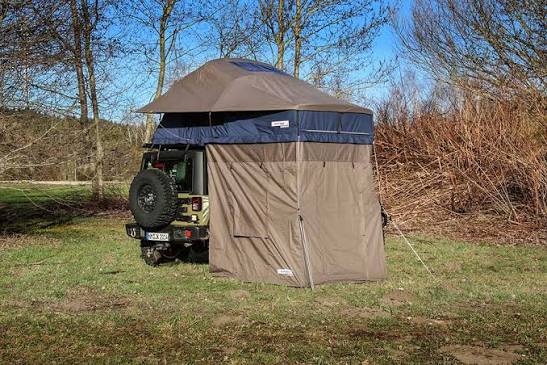
- Fast opening and closing
- Strong external shell
- Streamlined traveling profile
- Good protection when properly closed
- Fewer loose components
Nevertheless, hard-shell tents are not always widely available. Some also provide less internal space than folding alternatives.
Ultimately, installation quality matters more than the tent category. A professionally installed and well-maintained soft-shell tent is preferable to a damaged hard-shell model.
Equipment Included with a Uganda Rooftop-Tent Vehicle
A dependable Uganda self-drive roof-tent safari car hire package should contain equipment for sleeping, cooking, storage and basic emergencies.
Sleeping equipment
The sleeping kit may include:
- Rooftop tent
- Foam mattress
- Mattress protector
- Fitted sheet
- Sleeping bags
- Blankets
- Pillows
- Mosquito screens
- Interior light
- Ladder
- Ground mat
Uganda’s highlands can become cool at night. For example, Bwindi, Mgahinga, Kabale and Kisoro are noticeably cooler than Murchison Falls or Kampala. Therefore, confirm whether the bedding is suitable for the coldest destination on your itinerary.
Cooking equipment
A practical kitchen set should provide:
- Gas cooker
- Gas cylinder
- Lighter or matches
- Cooking pots
- Frying pan
- Kettle
- Plates
- Bowls
- Cups
- Cutlery
- Sharp knife
- Chopping board
- Cooking spoon
- Washing basin
- Dish towel
- Rubbish bags
Before leaving, check that the gas cylinder contains enough fuel. In addition, ask where it can be refilled if your safari is particularly long.
Camp furniture
At a minimum, the package should contain a chair for each traveler and one stable table. Since loose joints can make camp furniture unsafe, inspect everything during the handover.
Refrigerator or cool box
A refrigerator is extremely useful for a long Uganda camping safari. However, not all quoted packages include one.
Ask whether the vehicle provides:
- An electric refrigerator
- An unpowered cool box
- A refrigerator at an additional daily rate
- An auxiliary battery
- A battery monitor
- A charging socket
Ideally, the fridge should use a secondary battery. Otherwise, leaving it powered overnight could drain the vehicle’s starting battery.
Water storage
Some packages include water containers. Nevertheless, travelers should determine whether the supplied water is intended for drinking or general campsite use.
Carry sufficient safe drinking water between reliable supply points. At the same time, avoid adding unnecessary weight to the vehicle.
Vehicle-recovery equipment
A suitable 4×4 should carry:
- Spare tire
- Jack
- Wheel spanner
- Tow strap
- Jumper cables
- Tire-pressure gauge
- Air compressor
- Warning triangle
- Reflective vest
- Basic tools
- Fire extinguisher
- First-aid kit
More equipment does not automatically guarantee successful recovery. Therefore, travelers should request instructions and avoid using tools they do not understand.
Uganda Self-Drive Roof-Tent Safari Car Hire Costs
Rental prices depend on the season, vehicle, number of tents, equipment and rental duration. In addition, automatic vehicles or double-tent arrangements may cost more.
Marketed rates for rooftop-tent Land Cruisers commonly begin at approximately US$85 to US$120 per day. However, newer, larger or comprehensively equipped vehicles can exceed that range.
These figures are only general market indicators. Universal Ventures Rwanda prepares quotations according to current availability and the traveler’s requested route.
What affects the rental price?
Several factors influence the daily rate:
- Vehicle make and model
- Vehicle age
- Manual or automatic transmission
- Petrol or diesel engine
- One or two tents
- Camping equipment
- Refrigerator
- Rental duration
- Travel season
- Pickup location
- Return location
- Cross-border permission
- Insurance level
- Mileage policy
Long-term bookings may qualify for a lower daily rate. Conversely, one-way drop-offs and cross-border arrangements may add fees.
Costs commonly excluded
Unless the quotation says otherwise, budget separately for:
- Fuel
- Campsite accommodation
- Food
- National park entrance fees
- Vehicle park fees
- Gorilla permits
- Chimpanzee permits
- Boat safaris
- Ranger services
- Border charges
- Toll or road charges
- Personal travel insurance
- Flights
- Visa expenses
- Optional activities
Rental-cost checklist
| Cost item | Often included? | What to confirm |
|---|---|---|
| 4×4 vehicle | Yes | Exact model and transmission |
| Rooftop tent | Usually | Number and sleeping capacity |
| Camping furniture | Sometimes | Chairs and table |
| Bedding | Sometimes | Sheets, blankets and pillows |
| Cooking equipment | Sometimes | Full itemized list |
| Refrigerator | Varies | Included or charged daily |
| Standard insurance | Often | Excess and exclusions |
| Fuel | No | Fuel-return policy |
| Campsites | No | Per-person or per-site fee |
| Park fees | No | Visitor and vehicle charges |
| Roadside assistance | Usually | Coverage and recovery rules |
| Extra driver | Varies | Registration charge |
| Airport delivery | Varies | Delivery and collection fees |
| Security deposit | Required | Amount and refund process |
Request a Complete Written Quotation
A useful quotation should show more than one daily price. In particular, it should identify the exact services, taxes and possible additional charges.
Before making payment, request written confirmation of:
- Vehicle model
- Transmission type
- Fuel type
- Rental dates
- Pickup and return locations
- Number of tents
- Camping inventory
- Daily rate
- Mileage policy
- Insurance conditions
- Security deposit
- Cancellation policy
- Cross-border charges
- One-way fee
- Roadside assistance
- Replacement-vehicle policy
Consequently, comparing quotations becomes much easier. A lower advertised price may exclude several items included by another company.
Understanding Car-Rental Insurance
Insurance deserves careful attention because rental terms vary considerably. Although a provider may advertise comprehensive cover, several types of damage can remain excluded.
Ask for written information about:
- Collision damage
- Third-party liability
- Vehicle theft
- Insurance excess
- Windscreen damage
- Tire and wheel damage
- Underbody damage
- Roof damage
- Rooftop-tent damage
- Water damage
- Towing costs
- Recovery expenses
- Cross-border protection
- Single-vehicle accidents
What is an insurance excess?
The insurance excess is the amount the renter may have to pay before insurance covers the remaining eligible damage. For example, if the excess is US$1,000, the renter may remain responsible for up to that amount.
However, certain excluded damage may not be limited to the ordinary excess. Therefore, read the contract instead of relying on a verbal summary.
Actions that may invalidate insurance
Coverage may be affected if a traveler:
- Allows an unauthorized person to drive
- Drives without a valid license
- Drives after dark against the contract
- Enters an unauthorized country
- Uses a prohibited road
- Overloads the vehicle
- Crosses deep water
- Ignores dashboard warnings
- Drives recklessly
- Fails to report an accident
- Operates the tent incorrectly
- Continues driving after serious damage appears
Whenever a warning light appears, stop safely and contact the rental company. Continuing to drive could turn a manageable problem into severe mechanical damage.
Driver’s License and Travel Documents
Every approved driver should carry a valid national driving license. Depending on nationality and company policy, an International Driving Permit may also be required or strongly recommended.
Keep the following documents accessible:
- Passport
- National driving license
- International Driving Permit, if applicable
- Rental contract
- Vehicle registration copy
- Insurance evidence
- Park reservations
- Activity permits
- Campsite confirmations
- Emergency telephone numbers
- Cross-border authorization
Digital copies are helpful. However, paper copies remain valuable when internet coverage is unavailable.
Vehicle Handover and Inspection
Allow at least one or two hours for the handover. Although experienced travelers may feel confident, every vehicle and tent system operates differently.
Whenever possible, inspect the vehicle during daylight.
Exterior inspection
Walk around the vehicle and record:
- Scratches
- Dents
- Windscreen chips
- Damaged mirrors
- Broken lights
- Tire condition
- Roof-rack condition
- Tent-cover condition
- Bumper damage
- Number plates
- Fuel level
Take clear photographs or a continuous video. Afterwards, ensure that the inspection form lists every existing defect.
Tire checks
Examine the tread and sidewalls, including the spare tire. Furthermore, ask the rental representative to demonstrate how to access the spare and where to position the jack.
A spare wheel is useful only when it is inflated and the tools fit the vehicle. Therefore, verify these details before leaving the rental station.
Mechanical orientation
The representative should explain:
- Starting procedure
- Four-wheel-drive controls
- Low-range selection
- Differential lock, if fitted
- Parking brake
- Warning lights
- Headlights
- Indicators
- Wipers
- Air conditioning
- Fuel-cap operation
- Bonnet release
- Oil check
- Coolant check
- Refrigerator system
- Auxiliary battery
Do not wait until a difficult road to learn how low-range four-wheel drive works.
Tent demonstration
Open and close the rooftop tent completely. During the demonstration, inspect:
- Hinges
- Ladder
- Mattress
- Tent fabric
- Windows
- Insect screens
- Support poles
- Protective cover
- Fastening straps
- Zips
- Interior light
Finally, repeat the setup yourself while the representative watches. This short practice session can prevent confusion at the first campsite.
Driving Conditions in Uganda
Uganda has paved highways between many major cities. Nevertheless, wildlife itineraries also use gravel roads, mountain approaches and national park tracks.
Drivers may encounter:
- Potholes
- Roadworks
- Speed humps
- Gravel
- Corrugations
- Mud
- Steep slopes
- Narrow bridges
- Motorcycles
- Pedestrians
- Livestock
- Slow trucks
- Wildlife
Because travel speed changes constantly, distance alone cannot predict journey time. A route of 250 kilometers may take much longer than expected.
Drive defensively
Maintain enough distance from the vehicle ahead. Likewise, reduce speed near towns, markets, schools and busy roadside areas.
Motorcycles may move unexpectedly, while pedestrians may walk close to the roadway. Consequently, constant attention is necessary.
Avoid driving at night
Where possible, complete every journey before sunset. Night driving can involve poor visibility, pedestrians, livestock, unlit vehicles and hidden potholes.
Additionally, some rental companies restrict driving after dark. Breaking this condition may affect insurance coverage.
Use realistic journey times
Online navigation tools are useful but not always accurate. For that reason, ask the rental company, campsite or park staff about current travel times.
Plan regular breaks and add extra time for:
- Fuel
- Food
- Roadworks
- Photography
- Rain
- Border formalities
- Wrong turns
- Park registration
Arriving early also allows you to open the tent and prepare dinner before dark.
Fuel Planning
Fuel is widely available in larger towns. However, remote stations may temporarily run out of petrol or diesel.
Accordingly, fill the tank before entering isolated areas. On longer routes, refuel when the tank reaches halfway rather than waiting until it is nearly empty.
Important fuel practices include:
- Confirm the correct fuel type
- Use established stations
- Monitor the fuel gauge
- Keep receipts
- Compare actual consumption
- Ask before carrying extra fuel
- Never store fuel in the passenger compartment
- Follow the rental company’s fuel policy
A refrigerator, rooftop tent and camping supplies increase vehicle weight. As a result, fuel consumption may be higher than during ordinary highway driving.
Driving in Rain and Mud
Rain can transform a firm gravel road into a slippery track. Therefore, slow down and avoid sharp steering or sudden braking.
Before entering a flooded or muddy section:
- Stop at a safe distance
- Examine the conditions
- Ask local or park staff for advice
- Consider turning back
- Contact the rental company if uncertain
- Never assume another vehicle’s route is safe for yours
Four-wheel drive improves traction, but it cannot overcome every hazard. In fact, overconfidence is one of the most common causes of avoidable recovery situations.
Driving Inside Uganda’s National Parks
Self-driving through a national park is a major part of the adventure. However, visitors must follow Uganda Wildlife Authority rules and ranger instructions.
Responsible behavior includes:
- Remaining on authorized tracks
- Respecting speed limits
- Giving wildlife the right of way
- Keeping a safe distance
- Avoiding excessive noise
- Never feeding animals
- Not leaving the vehicle where prohibited
- Avoiding vegetation damage
- Carrying all rubbish out
- Following park opening times
- Leaving before gates close
If an animal blocks the road, wait patiently. Do not sound the horn, rev the engine or drive too close.
Safe Rooftop-Tent Camping in Uganda
Stay at recognized campsites
A rooftop tent does not allow travelers to camp anywhere. Instead, use authorized campsites, lodge camping grounds and designated park facilities.
Recognized campsites may offer:
- Security
- Toilets
- Showers
- Water
- Cooking space
- Electricity
- Restaurant access
- Rubbish facilities
- Campfire areas
- Wildlife safety briefings
Facilities vary greatly. Consequently, confirm what each campsite provides before arrival.
Choose a level parking area
A stable parking position improves both comfort and safety. Select an approved area away from drainage channels, soft ground and unstable branches.
Additionally, avoid blocking campsite roads or other vehicles. If wildlife uses a particular path, follow the camp manager’s instructions and park elsewhere.
Store food carefully
Wild animals may be attracted by food smells. Therefore, store groceries inside the vehicle or in the location recommended by campsite staff.
Never leave rubbish, cooking utensils or food scraps outside overnight. Even small animals can damage equipment while searching for food.
Follow campfire rules
Some campsites permit fires in designated areas, whereas others prohibit them. Ask before lighting anything.
Where a fire is allowed, supervise it continuously. Afterwards, extinguish it completely before entering the tent.
Listen to wildlife instructions
Animals may move near certain campsites. Consequently, visitors should not walk after dark where staff have advised against it.
Keep a torch accessible and follow every safety briefing. If wildlife approaches, remain calm and contact camp staff when possible.
Best Places for a Uganda Rooftop-Tent Safari
Lake Mburo National Park
Lake Mburo National Park is a convenient first stop on a western Uganda circuit. Since it is closer to Kampala and Entebbe than many other parks, it provides a manageable introduction to safari driving.
The park protects zebras, buffaloes, impalas, elands and numerous bird species. Furthermore, its combination of woodland, wetlands and open savannah creates beautiful scenery.
Possible activities include:
- Game drives
- Boat trips
- Guided nature walks
- Birdwatching
- Cycling in approved areas
- Horse-riding experiences
After collecting the vehicle, consider spending the first night outside Entebbe before driving to Lake Mburo. This approach allows adequate rest and vehicle familiarization.
Bwindi Impenetrable National Park
Bwindi is one of Uganda’s most important safari destinations. Its ancient rainforest protects mountain gorillas and supports exceptional biodiversity.
Gorilla trekking takes place in four principal sectors:
- Buhoma
- Ruhija
- Rushaga
- Nkuringo
Your campsite must be located near the sector shown on your permit. Although all four areas belong to Bwindi, the roads between them can take several hours.
Therefore, never book accommodation using the words “near Bwindi” alone. Instead, confirm the exact sector and estimated driving time to the briefing point.
Arrive one day before the trek. This schedule provides time to manage unexpected delays and confirm the following morning’s reporting location.
Mgahinga Gorilla National Park
Mgahinga lies near Kisoro in southwestern Uganda. Although it is Uganda’s smallest national park, it protects mountain gorillas, golden monkeys and dramatic volcanic landscapes.
The region’s elevation can produce cool nights. Consequently, warm bedding and waterproof clothing are important.
Activities may include:
- Gorilla trekking
- Golden monkey tracking
- Volcano hiking
- Birdwatching
- Cultural experiences
- Forest walks
Availability can change, so reserve important activities before traveling.
Queen Elizabeth National Park
Queen Elizabeth National Park fits naturally between Bwindi and Kibale. It combines savannah, wetlands, crater landscapes and the Kazinga Channel.
Travelers commonly enjoy:
- Kasenyi game drives
- Kazinga Channel boat safaris
- Birdwatching
- Crater exploration
- Ishasha game drives
- Wildlife photography
The Ishasha sector is famous for the possibility of seeing tree-climbing lions. Nevertheless, wildlife sightings are never guaranteed.
Check road conditions before traveling between Ishasha and Bwindi. Heavy rain can make some routes considerably slower.
Kibale National Park
Kibale National Park is famous for chimpanzee trekking and primate diversity. In addition, the surrounding Fort Portal region offers crater lakes, community walks and scenic countryside.
Reserve chimpanzee trekking in advance. On the activity morning, arrive at the reporting center at the specified time.
Do not combine an early chimpanzee briefing with a long same-morning drive from Queen Elizabeth. Instead, spend the previous night near Kibale.
Murchison Falls National Park
Murchison Falls is Uganda’s largest national park. Here, the Nile passes through a narrow gorge before continuing across a broad wildlife-rich landscape.
A complete visit can include:
- Morning game drives
- Nile boat safari
- Falls viewpoint
- Birdwatching
- Multiple nights near the park
Because the conservation area is extensive, campsite location matters. Confirm the correct gate, river side and access road before traveling.
Kidepo Valley National Park
Kidepo Valley is remote, scenic and rewarding. Wide plains, mountain ranges and the wildlife-rich Narus Valley create a distinctive wilderness experience.
However, Kidepo requires more preparation than the western safari circuit. Travelers should plan for long distances, limited fuel options and reduced communication coverage.
Before departure, check:
- Tire condition
- Spare tire
- Fuel range
- Drinking water
- Food supplies
- Road conditions
- Emergency contacts
- Campsite booking
- Mechanical support
Allow several nights rather than making a rushed visit. Otherwise, long transfer days may dominate the experience.
Lake Bunyonyi
Lake Bunyonyi offers beautiful highland scenery and a relaxing stop before or after gorilla trekking. Campsites and lodges are available around the lake and on some islands.
However, access varies. Certain properties require a boat transfer, while others can be reached by road.
Ask for precise arrival instructions. Otherwise, online navigation may direct you toward a steep or unsuitable route.
Jinja and the Nile
Jinja is a popular addition to a Uganda road trip. Travelers visit for Nile scenery, boat excursions and adventure activities provided by licensed operators.
Several properties offer camping facilities. Nevertheless, book in advance during holidays and high-demand periods.
Suggested 7-Day Self-Drive Uganda Safari
A seven-day itinerary should focus on southwestern Uganda.
Day 1: Arrival in Entebbe
Collect the vehicle, inspect the camping equipment and complete the rooftop-tent demonstration. Afterwards, stay overnight near Entebbe.
Day 2: Entebbe to Lake Mburo
Drive west with rest stops along the way. After arriving, check into an authorized campsite and join an afternoon activity if time permits.
Day 3: Lake Mburo to Bwindi
Continue toward the sector stated on the gorilla permit. Most importantly, arrive before dark and confirm the next morning’s briefing point.
Day 4: Gorilla trekking
Attend the required briefing and complete the guided trek. Later, return to the campsite for a second night.
Day 5: Bwindi to Queen Elizabeth
Travel toward Queen Elizabeth National Park using the route recommended for your Bwindi sector.
Day 6: Queen Elizabeth safari
Take an early game drive. In the afternoon, join a pre-booked Kazinga Channel boat safari.
Day 7: Return toward Entebbe
Because the return can be long, avoid scheduling an early international flight. Ideally, add another night near Entebbe.
Suggested 10-Day Uganda Rooftop-Tent Safari
Day 1: Entebbe
Vehicle collection, supplies and overnight rest.
Day 2: Lake Mburo
Drive west and enjoy an afternoon safari activity.
Day 3: Bwindi
Continue to the correct gorilla sector.
Day 4: Gorilla trekking
Complete the trek and rest near the forest.
Day 5: Queen Elizabeth
Travel through Ishasha or another suitable route.
Day 6: Queen Elizabeth exploration
Combine a game drive with a Kazinga Channel boat safari.
Day 7: Kibale
Drive toward Kibale and settle into camp.
Day 8: Chimpanzee trekking
Join the reserved chimpanzee experience. Afterwards, explore the crater-lake region.
Day 9: Return toward Entebbe
Break the drive with suitable stops.
Day 10: Vehicle return
Refuel, complete the inspection and proceed to the airport.
Suggested 14-Day Uganda Camping Safari
A two-week route offers a more comfortable pace.
- Day 1: Arrive in Entebbe
- Day 2: Drive to Murchison Falls
- Day 3: Murchison game drive and boat safari
- Day 4: Additional Murchison exploration
- Day 5: Travel to Kibale
- Day 6: Chimpanzee trekking
- Day 7: Fort Portal and crater lakes
- Day 8: Drive to Queen Elizabeth
- Day 9: Game drive and Kazinga Channel cruise
- Day 10: Continue to Bwindi
- Day 11: Gorilla trekking
- Day 12: Travel to Lake Bunyonyi or Lake Mburo
- Day 13: Continue toward Entebbe
- Day 14: Return the vehicle and depart
Rather than adding Kidepo to this already full itinerary, extend the safari. Its remote location deserves separate travel days.
Gorilla Trekking During a Self-Drive Safari
Gorilla trekking is often the main reason travelers visit Uganda. Therefore, it should shape the rest of the itinerary.
Book the permit early
Permits have limited daily availability. Consequently, check availability before confirming non-refundable vehicle and campsite reservations.
Confirm the trekking sector
A Bwindi permit is associated with a particular sector. Thus, your campsite and driving route must match that location.
Arrive the previous afternoon
Road delays can result from rain, construction or navigation problems. By arriving one day early, you reduce the risk of missing the trek.
Pack appropriate clothing
Useful trekking items include:
- Hiking boots
- Long trousers
- Long-sleeved shirt
- Rain jacket
- Gardening-style gloves
- Small backpack
- Drinking water
- Packed lunch
- Camera protection
- Required documents
During the activity, always follow ranger instructions.
Cross-Border Uganda and Rwanda Road Trips
Combining Uganda and Rwanda can create an excellent regional safari. For example, travelers may connect Bwindi or Mgahinga with Kigali, Lake Kivu, Volcanoes National Park or Akagera.
Nevertheless, not every rental vehicle is authorized to leave Uganda.
Request written confirmation of:
- Approved countries
- Insurance validity
- Vehicle documentation
- Cross-border fees
- One-way charges
- Emergency assistance
- Border-crossing points
- Return procedures
- Replacement-vehicle policy
- Required entry documents
Immigration requirements depend on nationality and may change. Therefore, verify current rules through official government sources.
Starting the safari in Kigali
Kigali can be a convenient starting point for southwestern Uganda. In particular, it offers relatively direct access to Kisoro, Mgahinga and parts of Bwindi.
One possible route is:
Kigali → Uganda border → Mgahinga → Bwindi → Queen Elizabeth → Kibale → Lake Mburo → Entebbe.
Alternatively, return to Kigali after exploring Uganda. The best arrangement depends on vehicle availability, border authorization and one-way charges.
Uganda Camping Safari Packing List
Essential documents
Pack:
- Passport
- Driving license
- International Driving Permit where applicable
- Rental agreement
- Travel insurance
- Activity permits
- Campsite reservations
- Emergency contacts
- Cross-border paperwork
- Copies of important documents
Clothing
Uganda requires clothing for both warm and cool conditions.
Bring:
- Lightweight shirts
- Long trousers
- Warm sweater or fleece
- Waterproof jacket
- Hiking boots
- Comfortable camp shoes
- Sun hat
- Sleepwear
- Extra socks
- Quick-drying towel
Personal supplies
Consult a qualified medical professional for destination-specific travel-health advice.
Useful personal items include:
- Regular medicines
- Insect repellent
- Sunscreen
- Hand sanitizer
- Personal first-aid supplies
- Toiletries
- Reusable water bottle
- Prescription documentation
Electronics
Consider packing:
- Headlamp
- Spare batteries
- Power bank
- Vehicle charger
- Camera batteries
- Memory cards
- Universal adapter
- Offline maps
- Waterproof electronic cases
Since electricity may be limited at basic campsites, charge devices whenever a dependable supply is available.
Food Planning
Buy major supplies in Entebbe, Kampala or another large town. Later, fresh food can be purchased in places such as Mbarara, Fort Portal, Kabale and Kasese.
Simple camping foods include:
- Rice
- Pasta
- Oats
- Bread
- Eggs
- Fruit
- Vegetables
- Tinned beans
- Peanut butter
- Tea
- Coffee
- Long-life milk
- Snacks
- Safe drinking water
Avoid purchasing more fresh food than the refrigerator can store safely. Furthermore, combine camp cooking with occasional restaurant meals to make the journey easier.
Best Time for Uganda Self-Drive Roof-Tent Safari Car Hire
Uganda is a year-round destination. However, weather can influence driving conditions and campsite comfort.
Drier months
Drier periods generally provide easier conditions on unpaved roads. Consequently, these months are popular for self-drive safaris.
Demand may also be higher. Therefore, book rooftop-tent vehicles, campsites and gorilla permits early.
Wetter months
Wetter periods bring green landscapes, dramatic clouds and excellent birding. Conversely, rain can create slippery roads and longer transfer times.
During wetter travel periods:
- Choose a capable vehicle
- Inspect tire tread
- Carry waterproof bags
- Pack warm bedding
- Avoid long daily distances
- Request road updates
- Arrive before dark
- Keep extra time before flights
Seasonal patterns are never guaranteed. Thus, prepare for rain even during traditionally drier months.
Common Uganda Self-Drive Mistakes
Booking the cheapest vehicle
Price matters, but reliability, insurance and support matter more. A cheap vehicle can become expensive if it is poorly maintained or unsuitable.
Creating an overloaded itinerary
Too many parks lead to long, exhausting transfer days. Instead, allow at least two nights in major destinations.
Ignoring the Bwindi sector
Staying in the wrong sector can make it impossible to reach the briefing on time. Always match the campsite to the permit.
Driving after an overnight flight
Fatigue affects judgment and reaction time. Therefore, rest near Entebbe before beginning a long journey.
Skipping the tent demonstration
Even a simple tent can have model-specific fasteners and supports. Practice opening and closing it before departure.
Depending entirely on online navigation
Navigation applications may recommend shortcuts that are unsuitable for a loaded rental vehicle. Confirm remote routes with local experts.
Arriving after dark
Late arrival makes it harder to find the campsite, inspect the parking space and prepare food. Plan to arrive during daylight.
Assuming all damage is insured
Insurance exclusions often apply to tires, glass, the underbody and roof equipment. Read the agreement carefully.
Camping outside approved sites
Unauthorized camping can be unsafe and may violate park or local rules. Use recognized facilities.
Forgetting activity reservations
Gorilla trekking, chimpanzee trekking and popular boat safaris can sell out. Reserve them before finalizing the itinerary.
How to Choose a Reliable Rental Company
A professional company should provide clear information throughout the reservation process.
Look for:
- Verifiable business details
- Prompt communication
- Written quotations
- Clear rental conditions
- Actual vehicle photographs
- Equipment inventory
- Insurance explanation
- Secure payment process
- Structured vehicle handover
- Emergency telephone support
- Realistic travel advice
- Transparent deposit rules
Warning signs
Be cautious if a provider:
- Refuses to provide rental terms
- Cannot identify the vehicle
- Claims insurance covers everything
- Pressures you to pay immediately
- Cannot explain the security deposit
- Offers no breakdown procedure
- Encourages unauthorized border crossing
- Provides unrealistic driving times
- Uses unclear payment details
- Offers a suspiciously low price
A formal invoice should show the company name, service, dates and payment terms.
Why Book with Universal Ventures Rwanda?
Universal Ventures Rwanda organizes customized travel throughout Rwanda and Uganda. Services include gorilla safaris, wildlife tours, cross-border journeys, transport and self-drive arrangements.
Depending on availability, the team can help with:
- Choosing a suitable 4×4
- Arranging rooftop tents
- Preparing a realistic itinerary
- Planning Uganda and Rwanda routes
- Organizing airport delivery
- Reserving gorilla permits
- Arranging chimpanzee permits
- Selecting campsites
- Booking lodges
- Adding a driver-guide
- Coordinating border documentation
- Providing regional travel support
Because every safari is different, quotations are prepared according to dates, travelers, destinations and vehicle requirements.
Responsible Self-Drive Travel
Reduce waste
Carry reusable bottles, shopping bags and food containers. In addition, dispose of rubbish only at recognized collection points.
Respect wildlife
Keep a safe distance, remain on approved tracks and never feed animals. Likewise, avoid loud behavior around wildlife.
Support local communities
Buy food, crafts and services from legitimate local businesses. However, ask before photographing people.
Conserve water
Use campsite water carefully, especially in remote regions. Short showers and responsible washing can reduce unnecessary consumption.
Follow campsite rules
Every campsite has its own procedures. Therefore, respect instructions about fires, food, noise and nighttime movement.
Frequently Asked Questions
Is self-driving allowed in Uganda?
Yes. International visitors can rent vehicles when they meet the company’s age, license, documentation and insurance requirements.
Do I need a 4×4?
A 4×4 is strongly recommended for national parks, Bwindi access roads, remote routes and rainy-season travel. Although some paved journeys can be completed in a smaller car, a 4×4 provides greater flexibility.
Is Uganda self-drive roof-tent safari car hire suitable for beginners?
It can be suitable for confident drivers who prepare carefully. However, travelers uncomfortable with unfamiliar roads should consider adding a driver-guide.
How many people sleep in one rooftop tent?
Most models accommodate two adults. Nevertheless, always confirm the approved capacity.
Can four travelers use one vehicle?
Yes, provided the vehicle has an approved two-tent arrangement or an additional ground tent. Luggage space must also be considered.
Is fuel included?
Usually, fuel is excluded. The rental contract should explain how much fuel must be returned with the vehicle.
Are campsites included?
Campsite charges are normally separate unless the quotation specifically includes them.
Is camping equipment provided?
Many packages include equipment. Even so, request a complete inventory because inclusions differ.
Can I collect the vehicle at Entebbe Airport?
Airport delivery may be available. Depending on the provider and collection time, an extra charge may apply.
Are automatic vehicles available?
Yes, automatic Land Cruisers are available from some companies. Because supply may be limited, reserve early.
Can I cross from Uganda into Rwanda?
Cross-border travel may be possible with written authorization, appropriate insurance and valid documents.
Can I continue to Kenya or Tanzania?
Some companies permit wider East African travel. However, each country must be approved individually.
Does the car have a refrigerator?
Some vehicles include an electric fridge, whereas others provide a cool box. Confirm this before booking.
Is unlimited mileage included?
Policies vary. Certain rentals include unlimited mileage, while others apply daily limits or route restrictions.
Is roadside assistance available?
Reputable companies generally provide emergency telephone support. Nevertheless, the contract should explain towing, recovery and replacement-vehicle conditions.
Can I book gorilla permits through Universal Ventures Rwanda?
Universal Ventures Rwanda can assist with permit arrangements, subject to official availability and payment requirements.
Where does gorilla trekking take place?
Uganda gorilla trekking takes place in Bwindi Impenetrable National Park and Mgahinga Gorilla National Park.
How early should I reserve a gorilla permit?
Reserve as early as possible, especially for popular travel periods. Permit availability can determine the entire itinerary.
Is wild camping allowed?
Travelers should use authorized campsites. A rooftop tent does not provide permission to camp on private land or anywhere inside a protected area.
Is rooftop-tent camping safe?
It can be safe when travelers stay at recognized campsites, store food correctly and follow local instructions.
Can I combine lodges with camping?
Yes. In fact, many travelers use campsites for most nights and select a lodge after gorilla trekking or a long transfer.
What vehicle is best for two people?
A Land Cruiser Prado with one tent is often a practical choice. Nevertheless, luggage, route and comfort preferences should guide the final decision.
What vehicle is best for four people?
A larger Land Cruiser with two properly installed tents may work well. Ask for actual photographs and confirm luggage capacity.
How far should I drive each day?
Plan by travel time rather than distance. On safari routes, 200 kilometers can take considerably longer than expected.
What should I do if the vehicle breaks down?
Stop in a safe location and contact the rental company. Do not authorize major repairs unless the company approves them.
Can I drive after dark?
Night driving is not recommended and may be restricted by the rental agreement. Therefore, schedule every arrival before sunset.
What information is required for a quotation?
Send:
- Travel dates
- Number of travelers
- Pickup location
- Return location
- Preferred transmission
- Planned destinations
- Number of tents
- Rental duration
- Cross-border plans
- Permit requirements
- Driver-guide preference
Book Uganda Self-Drive Roof-Tent Safari Car Hire
A successful self-drive safari begins with a dependable vehicle and a realistic plan. Furthermore, the correct camping equipment, insurance and roadside support provide essential peace of mind.
Rather than choosing a rental based only on price, compare the complete service. Check the vehicle, practice opening the tent and understand every important rental condition.
With proper preparation, Uganda self-drive roof-tent safari car hire offers an unforgettable way to explore the Pearl of Africa. You can travel from savannah parks to primate forests, camp close to nature and control the pace of your journey.
For a customized rooftop-tent vehicle, Uganda camping safari or Uganda–Rwanda road trip, contact:
Universal Ventures Rwanda
Telephone/WhatsApp: +250 781 441 853
Email: info@universalventuresrwanda.com
Address: KN 15 Road, opposite IPRC Entrance, 1st Floor, SANGWA Plaza, Kigali, Rwanda
Website: Universal Ventures Rwanda
