


A roof-tent Land Cruiser rental Kenya gives adventurous travellers the freedom to experience Africa on their own schedule. Instead of following a fixed group itinerary, you can drive through open savannahs, stop at dramatic viewpoints, camp near wildlife areas and decide how long to remain at each destination. Your vehicle becomes both your means of transport and your mobile safari camp.
Kenya is one of Africa’s greatest road-trip destinations. It combines world-famous wildlife reserves, highland forests, lakes, mountains, deserts and a spectacular Indian Ocean coastline. A single journey can take you from Nairobi to Amboseli National Park, across the Great Rift Valley, into the Masai Mara and onward to the beaches of Diani or Watamu.
However, a successful self-drive safari requires more than an ordinary rental car. Long distances, corrugated roads, muddy tracks and remote campsites demand a capable and dependable vehicle. A properly maintained Toyota Land Cruiser fitted with a rooftop tent, recovery equipment, cooking gear, water storage and a refrigerator offers the strength and independence required for such an expedition.
This complete guide explains how to choose a roof-tent Land Cruiser rental in Kenya, what equipment should come with the vehicle, how much the experience may cost and where you can travel. It also covers road conditions, campsite planning, fuel management, safety, border crossings and the best self-drive itineraries in Kenya.
Why Choose a Roof-Tent Land Cruiser Rental in Kenya?
A self-drive camping safari offers an entirely different experience from a conventional lodge-based tour. You are not limited by a rigid programme or a large group’s schedule. Instead, you can leave camp early, spend extra time photographing wildlife and adjust your route when conditions or interests change.
The Toyota Land Cruiser has earned an excellent reputation across East Africa because of its durability, strong suspension and off-road ability. Many safari companies, conservation organisations and field researchers rely on Land Cruisers in areas where ordinary vehicles may struggle.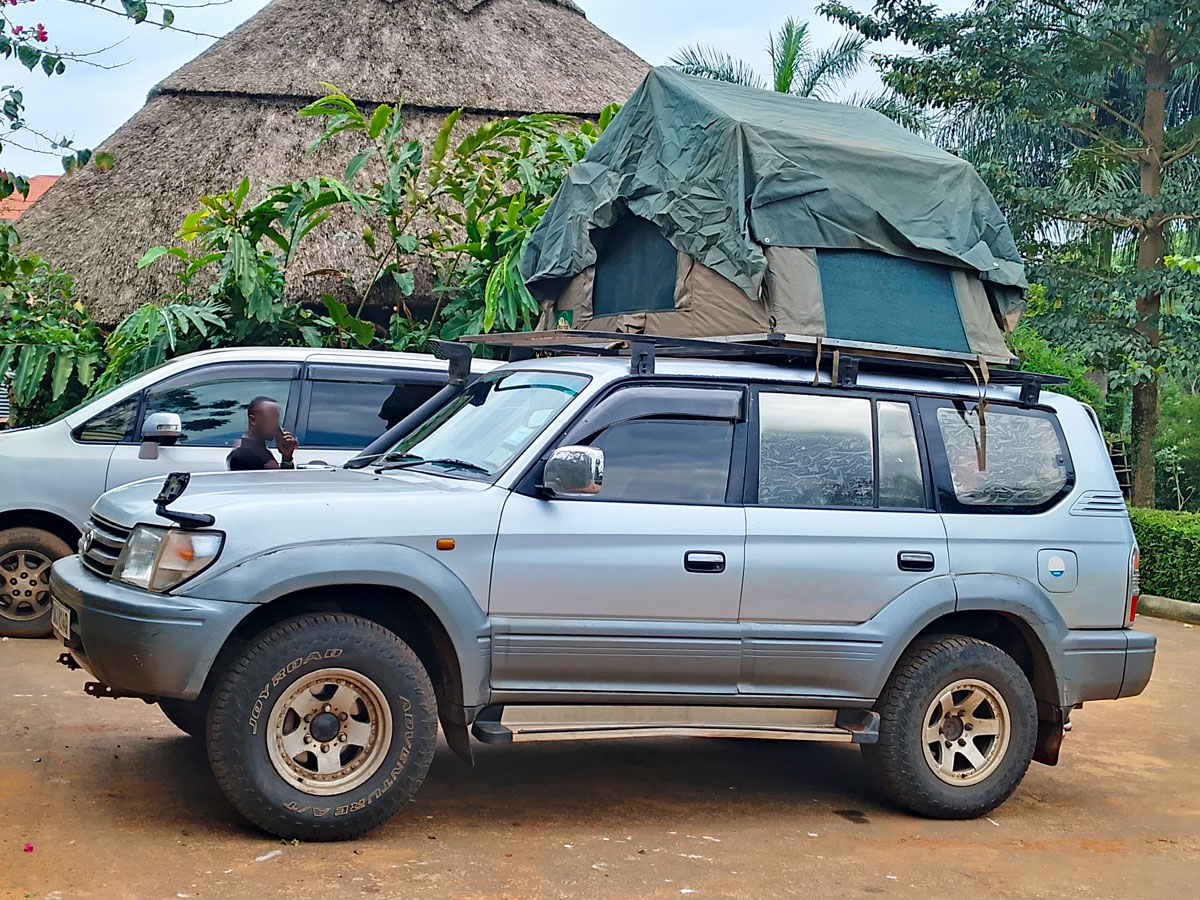
Adding a rooftop tent transforms the vehicle into a practical mobile camp. At the end of the day, you can park at a designated campsite, unfold the tent and prepare dinner beside the vehicle. In the morning, you can pack the equipment and continue your journey without returning to a hotel.
This arrangement also creates a closer connection with the landscape. You may hear lions calling in the distance, wake to birdsong or watch the sun rise over Mount Kilimanjaro. Although permanent lodges offer comfort and service, rooftop camping provides privacy, flexibility and a stronger sense of adventure.
A roof-tent Land Cruiser rental in Kenya works particularly well for couples, photographers, experienced campers, small families and travellers planning extended East African journeys. It can also reduce accommodation expenses, although travellers should calculate park fees, campsite charges, fuel and equipment carefully before assuming that camping will always be the cheapest option.
What the Leading Kenya 4×4 Rental Competitors Offer
An analysis of leading search results shows that most competing pages focus heavily on vehicle models, daily rental prices and brief equipment lists. The most visible operators promote Land Cruiser GX, LX, Prado, V8, 76 Series, 78 Series and 79 Series vehicles. Single, double and family rooftop tents appear frequently, together with refrigerators, kitchen equipment, chairs, tables and sleeping gear.
Several competitors advertise entry prices between approximately USD 100 and USD 180 per day. Nevertheless, these advertised rates may apply only to particular vehicles, seasons or minimum rental periods. Insurance, camping gear, cross-border documents, unlimited mileage, park entry, airport delivery and one-way return fees may change the final amount. Travellers should therefore request a written quotation instead of choosing a rental solely from the headline price. Current competitor pages illustrate these variations in vehicles, equipment and advertised starting rates. Self Drive East Africa, Black Leopard 4×4 Hire and Kenya 4×4 Offroad Safaris provide examples.
The leading pages perform well because they target several related searches, including “4×4 self-drive Kenya,” “Land Cruiser with rooftop tent,” “Kenya camping safari” and “car rental with camping gear.” They also display fleet photographs and direct booking options.
However, many pages provide limited guidance about campsite reservations, realistic driving times, insurance exclusions, vehicle inspections, recovery procedures and seasonal road conditions. Some also mix self-drive vehicles with chauffeured safari vehicles, which can confuse travellers. This guide addresses those gaps by explaining the complete rental and trip-planning process.
What Is a Roof-Tent Land Cruiser?
A roof-tent Land Cruiser is a four-wheel-drive Toyota Land Cruiser fitted with one or more foldable tents on a strong roof rack. The tent normally includes a mattress, protective cover, internal windows, mosquito screens and an access ladder.
When closed, the tent remains secured above the vehicle. At camp, the traveller removes the protective cover, unfolds the tent and lowers the ladder. Depending on the design, setting up a soft-shell rooftop tent may take five to fifteen minutes. A hard-shell model can often open more quickly.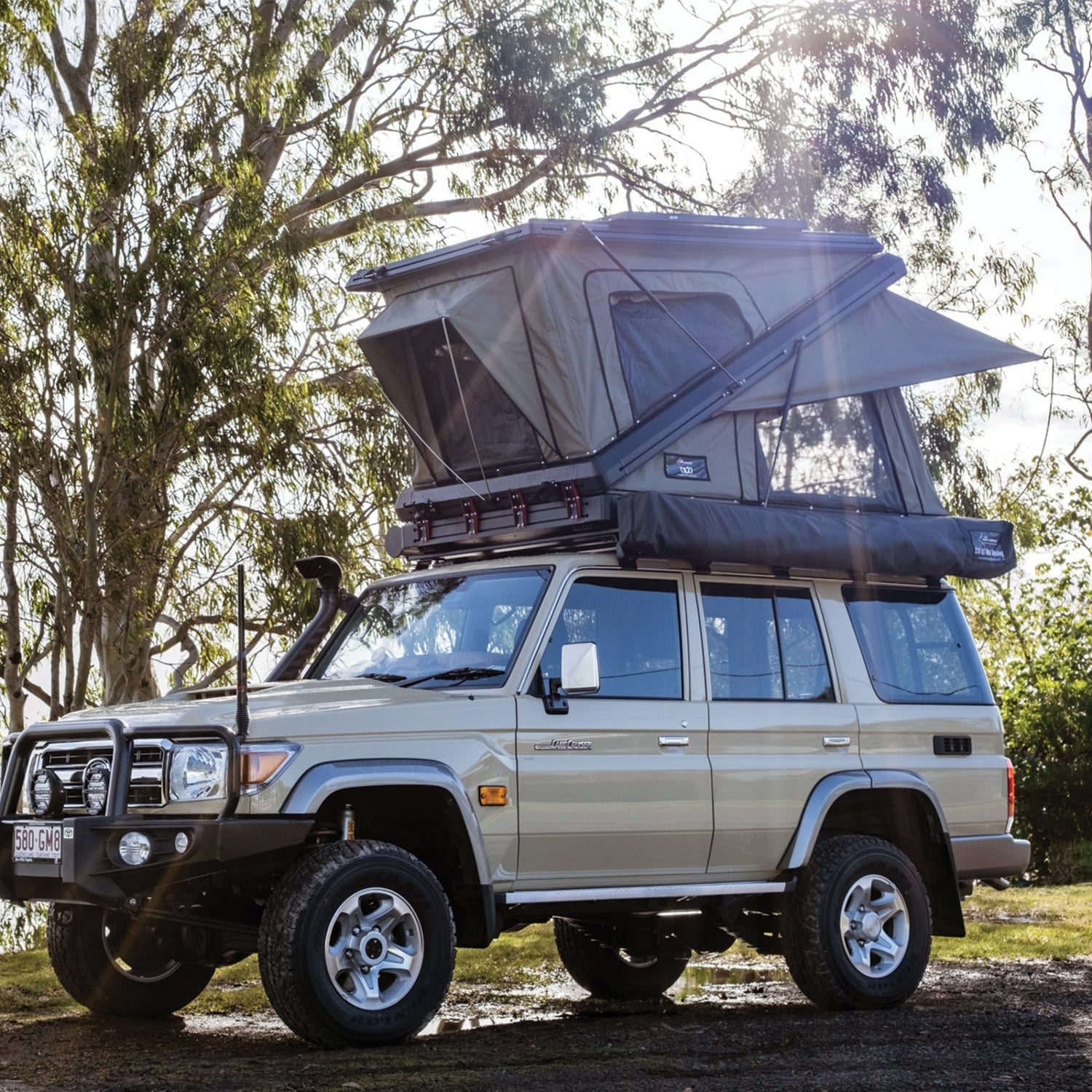
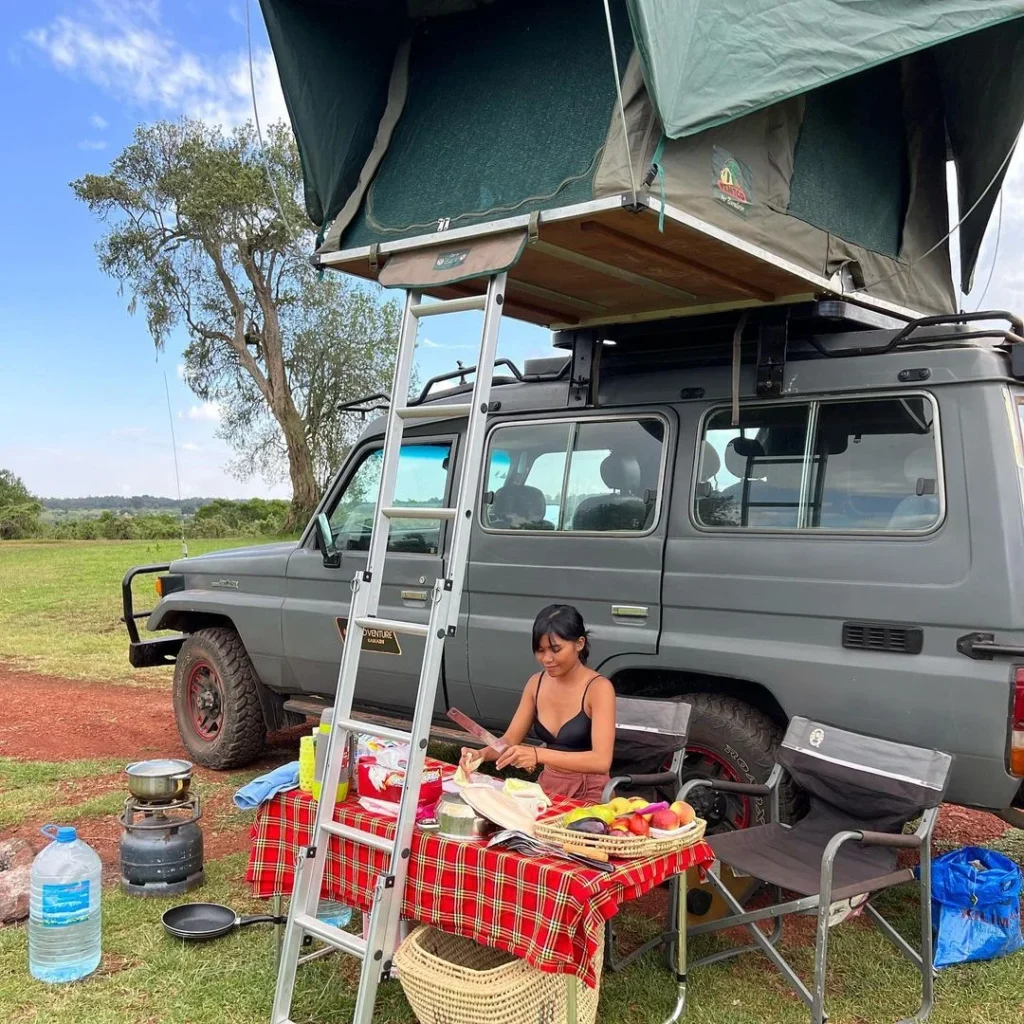
Most roof-tent safari vehicles carry additional camping and recovery equipment. Common features include a refrigerator or cooler, gas stove, cooking utensils, chairs, a table, bedding, water containers, spare tyres, a jack, a tow rope and basic tools.
The exact design differs between operators. Some vehicles carry a single tent for two adults. Others have two tents or an extended family tent. A double-cab Land Cruiser may accommodate four or five passengers during the day, but luggage and camping equipment reduce the practical space available.
Always choose the vehicle according to sleeping capacity, seating comfort, luggage volume and route difficulty rather than the maximum number of passengers shown in an advertisement.
Best Land Cruiser Models for a Kenya Camping Safari
Toyota produces several Land Cruiser configurations suitable for East African travel. Each model offers different advantages, so the right choice depends on the route, number of travellers, driving experience and budget.
Land Cruiser Prado with Rooftop Tent
The Toyota Land Cruiser Prado offers a comfortable balance between city driving and moderate off-road performance. Many Prado models have automatic transmission, air conditioning and a more refined interior than traditional safari hardtops.
A Prado with one rooftop tent suits a couple travelling between established parks and campsites. It can handle gravel roads and many national park tracks when conditions are reasonable. Nevertheless, its luggage area can become crowded after adding food, water and camping equipment.
A Prado may not be the best option for travellers tackling exceptionally rough northern routes, deep mud or demanding remote expeditions. Before booking, confirm its ground clearance, tyre condition, recovery points, spare-wheel arrangement and whether the rental contract permits travel on your intended roads.
Land Cruiser GX or LX
Land Cruiser GX and LX safari vehicles remain popular for self-drive holidays across Kenya, Uganda, Rwanda and Tanzania. They generally provide strong engines, good ground clearance and enough internal storage for two travellers.
Many GX vehicles use reliable diesel engines and manual transmissions. Their rugged design makes them suitable for longer expeditions, although drivers unfamiliar with manual vehicles should practise before leaving Nairobi.
These models often carry one or two rooftop tents. Ask how the roof load affects handling and whether the suspension has been upgraded for camping equipment.
Land Cruiser 76 Series
The Land Cruiser 76 Series combines a robust body with an enclosed luggage area. It is a strong choice for remote travel because equipment remains protected from dust and rain.
This model normally handles corrugated roads, rocky tracks and difficult park conditions better than softer urban SUVs. It may feel less luxurious than a modern Prado, but its practical design makes it attractive to serious overland travellers.
A 76 Series vehicle can work for a couple, small family or group of three, depending on the tent and seating configuration. Confirm that everyone has a proper seat belt and sufficient luggage space.
Land Cruiser 78 Series Troop Carrier
The Land Cruiser 78 Series, commonly called a Troop Carrier or Troopy, is one of the most recognisable African expedition vehicles. Its long body creates space for camping equipment, water, food and recovery gear.
Some vehicles use a rooftop tent, while others have custom camper conversions. A well-equipped Troopy is excellent for long journeys through Kenya’s remote northern regions or multi-country East African routes.
Because it is tall and heavy, drivers must take care on corners and uneven surfaces. Travellers should also check whether the vehicle has power steering, air conditioning and an appropriate transmission for their driving ability.
Land Cruiser 79 Series Double Cab
The 79 Series double cab has two rows of seats and a separate rear load area. Rental companies often add a canopy, drawer system, water tank, refrigerator and one or two rooftop tents.
This configuration offers excellent storage and can accommodate a small family or group. It also works well for longer expeditions because cooking equipment and dusty gear remain separate from the passenger cabin.
However, the vehicle’s long wheelbase requires careful manoeuvring on narrow tracks. Its weight also affects fuel consumption. Even so, the 79 Series remains one of the strongest options for travellers seeking a capable Kenya overland vehicle.
Soft-Shell and Hard-Shell Rooftop Tents
Soft-shell rooftop tents fold outward and usually create a sleeping area larger than the vehicle roof. They are widely available, relatively spacious and often more affordable. Most include a canvas cover that travellers must remove and secure during setup.
Hard-shell tents have a solid top that lifts vertically or opens at an angle. They generally deploy faster, resist wind well and create less noise while driving. However, they may cost more and offer less sleeping space than a large folding tent.
For a short safari, either design can work well. Travellers who move camp every day may appreciate the convenience of a hard-shell tent. Families may prefer a larger soft-shell or double-tent arrangement.
Before accepting the vehicle, open and close the tent yourself. Check the ladder, hinges, mattress, zips, mosquito screens, rain cover and mounting brackets. A beautiful vehicle cannot compensate for a damaged or leaking tent.
How Many People Can Sleep in a Roof-Tent Land Cruiser?
A standard rooftop tent normally sleeps two adults. A wider family tent may accommodate two adults and one or two young children, but comfort depends on the mattress size and combined weight.
Two separate rooftop tents can accommodate four adults more comfortably. However, their additional weight raises the vehicle’s centre of gravity and may reduce roof space for other equipment.
Groups should never rely only on an advertised sleeping capacity. Request the actual mattress measurements and photographs of the installed tents. A tent described as suitable for three people may feel crowded when all occupants are adults.
Families should also consider ladder safety. Young children may require assistance when entering or leaving the tent, particularly at night. Travellers with reduced mobility may find a ground tent or lodge more practical.
Equipment Included with a Roof-Tent Land Cruiser Rental Kenya Package
A fully equipped rental should provide the main items required for sleeping, cooking, food storage and minor roadside recovery. Nevertheless, there is no universal equipment standard. One company may include everything in the base rate, while another charges separately for bedding, a refrigerator or additional camping chairs.
Ask for an itemised inventory before paying a deposit. The following items are commonly supplied:
- Rooftop tent with mattress, ladder and rain protection
- Sleeping bags, blankets or duvets
- Pillows and clean linen
- Camping chairs and table
- Gas stove and gas cylinder
- Pots, pans, plates, cups and cutlery
- Chopping board, knife and basic utensils
- Refrigerator, freezer or cooler box
- Water containers
- Interior or portable camp lighting
- Electrical charging points
- Spare wheel and tyre-changing equipment
- Tow rope, shovel and basic recovery gear
- Fire extinguisher and first-aid kit
- Vehicle documents and emergency contacts
Although this list is useful, quality matters more than quantity. Four old tyres and an incomplete jack create a much greater problem than a missing wine glass. Give priority to mechanical safety, shelter, water storage, food refrigeration and recovery equipment.
Essential Extras Worth Requesting
A second spare tyre is valuable when travelling through remote northern Kenya or along sharp, rocky tracks. A tyre-pressure gauge and portable compressor also allow drivers to manage tyre pressure when road conditions change.
A strong recovery strap, rated shackles, shovel, traction boards and appropriately positioned recovery points can help in sand or mud. However, equipment does not replace knowledge. Never attach a recovery strap to an unsuitable bumper component, and avoid attempting dangerous extractions without experience.
Travellers may also benefit from a power inverter, USB charging ports, solar panel, portable shower, awning and additional water containers. A satellite communicator offers added security on very remote routes where mobile coverage disappears.
Ask whether the refrigerator runs from an auxiliary battery. If it relies on the main starter battery, leaving it on overnight could prevent the vehicle from starting.
Roof-Tent Land Cruiser Rental Kenya Prices
Rental prices depend on the vehicle model, age, transmission, tent configuration, season, rental duration and included equipment. Advertised rates found across competitor websites often begin at around USD 100 per day and rise beyond USD 180 per day for larger or more comprehensively equipped vehicles. These figures are examples rather than guaranteed market prices. Request an updated personalised quotation for your dates.
A lower rate may apply during a long rental, while short hires can cost more per day. Peak travel periods around July to October and the Christmas season may also increase demand.
The final quotation may include or exclude:
- Vehicle hire
- Rooftop tent
- Camping equipment
- Comprehensive insurance
- Mileage
- Airport or hotel delivery
- Additional driver
- Cross-border paperwork
- One-way drop-off
- Mechanical assistance
- Refrigerator
- Child seat
- Driver or safari guide
Fuel, national park entry fees, conservancy fees, campsite charges, food, tolls, fines and personal travel insurance usually remain the renter’s responsibility.
A quotation that appears expensive may offer better value if it includes quality equipment, unlimited mileage, reliable emergency support and clear insurance. Conversely, an attractive base price can become costly after mandatory extras are added.
Questions to Ask Before Comparing Rental Prices
Do not compare two rental offers until you understand precisely what each one covers. Ask the operator to provide the full cost in writing, including taxes and compulsory charges.
Confirm whether mileage is unlimited and whether any roads or regions are prohibited. Some insurance policies exclude damage caused while driving after dark, crossing rivers, entering prohibited areas or using unapproved roads.
Ask about the security deposit, accepted payment method and refund procedure. You should also understand the cancellation policy, breakdown policy and responsibility for tyre, windscreen, underbody and water damage.
Finally, request the vehicle’s approximate year, transmission, fuel type, tank capacity, tent capacity and maintenance history. The cheapest Land Cruiser is not necessarily the most economical choice if poor maintenance causes delays during the safari.
Choosing Between Self-Drive and a Land Cruiser with Driver
A self-drive rental offers maximum privacy and flexibility. You control the departure time, meal stops, photography breaks and daily pace. Experienced overland travellers often enjoy the independence and problem-solving involved.
However, a driver-guide adds local knowledge. An experienced guide understands road conditions, wildlife behaviour, park rules and the best game-viewing areas. The guide also handles navigation, minor mechanical problems and communication at gates or campsites.
First-time visitors should consider a driver when their itinerary includes challenging routes, tight schedules or unfamiliar border crossings. Families and photographers may also appreciate having someone else concentrate on the road.
Some operators offer a middle option: self-drive for straightforward sections and a local guide for specific parks. For example, you could drive independently from Nairobi to a campsite and hire a resident guide for a morning game drive.
The best arrangement depends on confidence, budget and travel style. Choosing a guide does not remove the adventure; instead, it can create more time for observing wildlife and enjoying the landscape.
Is Self-Driving in Kenya Safe?
Thousands of visitors explore Kenya safely each year, but a self-drive safari demands preparation and good judgement. Major highways connect the country’s principal towns and tourist regions, while road quality becomes more variable inside parks and remote areas.
Drive during daylight whenever possible. Night driving increases the risk of collisions with animals, pedestrians, motorcycles, unlit vehicles and road obstacles. It also makes mechanical problems more difficult to solve.
Avoid displaying valuables and keep the doors locked in busy urban traffic. Ask the rental company or accommodation team about safe parking in Nairobi, Mombasa and other large towns.
Inside wildlife areas, remain in the vehicle unless you are at an authorised location. Never block animals, drive off designated tracks or approach dangerous wildlife too closely.
Weather can transform road conditions quickly. A dry track may become muddy and impassable after heavy rain. Seek local advice before entering remote areas, and never cross deep or fast-moving water simply because another vehicle has attempted it.
Understanding Kenyan Road Conditions
Kenya has modern paved highways as well as gravel roads, corrugated tracks, rocky mountain routes and sandy desert sections. Your route may include several surfaces in a single day.
The road between Nairobi and major centres is generally manageable, but traffic, roadworks and slow vehicles can extend journey times. Park roads vary considerably by season and maintenance level.
Corrugations can damage tyres, suspension and camping equipment. Slow down, monitor the vehicle and stop if you hear unusual noises. Drivers should never maintain unsafe speeds merely because the surface feels smoother at a particular pace.
Mud presents another challenge during the rainy seasons. Engage four-wheel drive before the vehicle becomes stuck, maintain controlled momentum and avoid aggressive steering. If conditions appear unsafe, turn back or wait for assistance.
Deep sand requires gentle acceleration and steady movement. Lowering tyre pressure can improve traction, but drivers must reinflate the tyres before returning to high-speed roads.
Driving Rules and Good Road Behaviour
Kenya drives on the left side of the road. Vehicles normally have the steering wheel on the right. International visitors should carry a valid driving licence and confirm whether they also need an International Driving Permit based on their licence and rental-company requirements.
Wear seat belts and follow posted speed limits. Reduce speed near settlements, schools, livestock and pedestrians. Speed bumps may appear suddenly and are not always clearly marked.
Police checks occur on major roads. Keep your driving licence, passport copy, rental agreement, insurance documents and vehicle records accessible.
Never drink alcohol before driving. In addition to legal consequences, impaired driving is particularly dangerous on unfamiliar roads and wildlife tracks.
When another driver signals or flashes headlights, do not assume the meaning matches your home country. Slow down, observe carefully and proceed only when the road is clearly safe.
Best Time for a Kenya Self-Drive Camping Safari
Kenya is a year-round destination, but road conditions, wildlife movement and campsite availability change with the seasons.
The long dry season from approximately June to October is one of the most popular periods. Wildlife often gathers near permanent water, vegetation becomes thinner and many unpaved roads remain easier to navigate. July to October also overlaps with the famous wildebeest migration season in the greater Mara ecosystem, although the timing varies each year.
January and February are generally warm and relatively dry in many safari regions. These months can offer good driving conditions and rewarding wildlife viewing.
The long rains usually occur between March and May, while shorter rains often arrive around October to December. Rain can produce beautiful green landscapes, dramatic skies and lower visitor numbers. However, muddy roads may make some areas more challenging.
Climate patterns vary across the country, and seasonal timing is not completely predictable. Always ask campsites, park authorities and the rental company about current conditions shortly before departure.
Where to Camp with a Roof-Tent Land Cruiser in Kenya
Kenya offers public campsites, private camps, community conservancy sites and lodge-affiliated camping areas. Facilities range from basic bush clearings to organised sites with hot showers, toilets, electricity and restaurants.
Public campsites inside or near parks usually provide a convenient base for wildlife viewing. Special campsites may offer greater privacy but often require advance booking and may have limited facilities.
Private campsites outside protected areas can be easier to access and sometimes provide better amenities. They are useful before an early park entry or after a long driving day.
Wild camping should never be assumed legal or safe. Land in Kenya may belong to communities, private owners, conservancies or government agencies. Always obtain permission before camping outside an official site.
When booking, ask about security, water, toilets, showers, cooking restrictions, firewood, electricity, wildlife presence and gate-opening times. Find out whether the quoted campsite fee includes park or conservancy charges.
Masai Mara Roof-Tent Camping Safari
The Masai Mara is Kenya’s most famous wildlife destination. Its open grasslands support lions, cheetahs, elephants, giraffes, hyenas and large herds of plains animals. During parts of the year, migrating wildebeest and zebras move through the wider Mara-Serengeti ecosystem.
Driving from Nairobi to the Mara can take much longer than the map suggests. Traffic, road conditions and the location of your chosen gate all affect the journey. Avoid planning an ambitious game drive immediately after a tiring arrival.
Several campsite options exist around the reserve and neighbouring conservancies. Some are basic, while others offer restaurants, showers and guided activities.
A high-clearance 4×4 becomes particularly valuable during wet weather. Black-cotton soil can become extremely slippery after rain. Even a Land Cruiser may get stuck if the driver enters deep mud without assessing the track.
Respect reserve rules and remain on authorised routes. Off-road access differs between the national reserve and private conservancies, so follow local instructions carefully.
Amboseli National Park Self-Drive Camping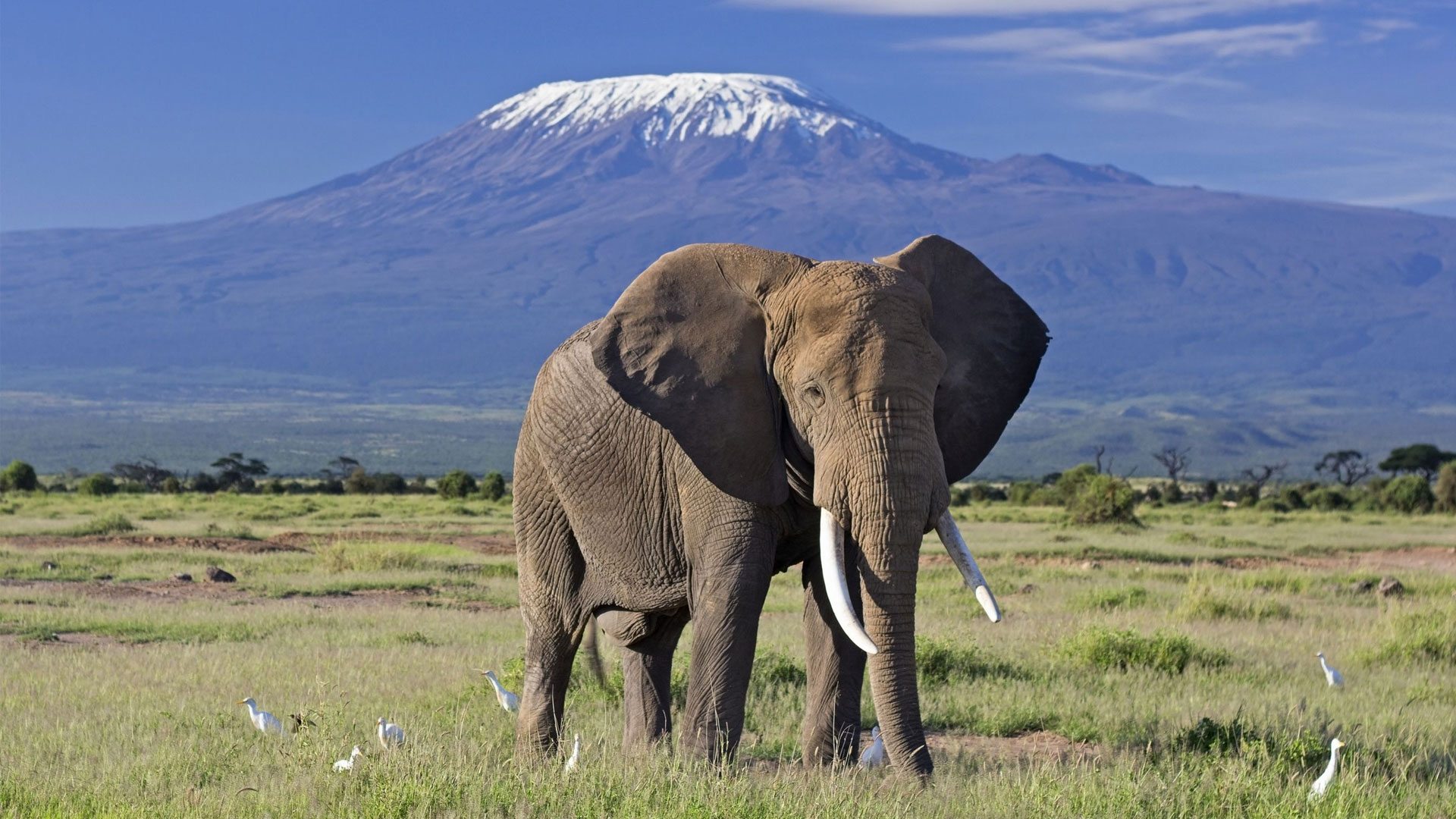
Amboseli is famous for its elephant herds and views of Mount Kilimanjaro. On a clear morning, the mountain creates one of East Africa’s most memorable safari landscapes.
The park lies within practical driving distance of Nairobi, making it a strong first destination for a Kenya camping itinerary. The route allows visitors to become familiar with the vehicle before attempting more isolated regions.
Roads inside the park can become dusty during dry periods and muddy after rain. Some lakebed surfaces may look firm but conceal softer ground, so remain on permitted tracks.
Book a campsite near the park or at an authorised location inside the protected area. Rise early for cooler temperatures, better light and a greater chance of clear mountain views.
Tsavo East and Tsavo West
Together, Tsavo East and Tsavo West form one of the world’s largest protected wilderness landscapes. Their immense scale makes them ideal for travellers who want fewer vehicles and a strong sense of isolation.
Tsavo East is known for broad plains, red soil and elephants coated in rust-coloured dust. Tsavo West offers volcanic landscapes, springs, hills and varied habitats.
Distances within the Tsavo ecosystem can be substantial. Carry sufficient drinking water, fuel and food, and avoid relying on unrealistic map estimates. Confirm which gates are open and calculate whether your fuel range comfortably covers the route.
A roof-tent Land Cruiser rental in Kenya is particularly useful here because it enables travellers to stay close to the wilderness rather than rushing between distant lodges.
Lake Nakuru National Park
Lake Nakuru is a convenient stop on a Great Rift Valley circuit. The park supports rhinos, buffaloes, giraffes and numerous bird species. Water levels and flamingo numbers change over time, so visitors should not base the entire trip on a single expected wildlife spectacle.
The park is relatively compact compared with the Mara or Tsavo. It works well as a one-night stop between Nairobi and other Rift Valley destinations.
Established accommodation and campsite options make planning easier for travellers taking their first Kenya self-drive safari. However, maintain normal wildlife precautions and store food securely.
Samburu, Buffalo Springs and Shaba
Northern Kenya introduces drier landscapes and wildlife species that visitors may not encounter in southern parks. Samburu and neighbouring protected areas are known for Grevy’s zebra, reticulated giraffe, gerenuk, Somali ostrich and Beisa oryx.
The journey north requires careful fuel and time planning. Temperatures can become intense, making shade, water and a dependable refrigerator important.
A well-equipped Land Cruiser is strongly recommended. Check road conditions before departure and avoid arriving at an unfamiliar campsite after dark.
Community conservancies around northern Kenya can offer excellent guiding and cultural experiences. Book through legitimate operators and respect local customs, land-use rules and photography preferences.
Laikipia and Ol Pejeta Conservancy
Laikipia combines wildlife conservancies, ranches and dramatic views of Mount Kenya. Ol Pejeta Conservancy is particularly well known for rhino conservation and varied wildlife experiences.
Camping options differ across the region. Some conservancies require advance reservations and may limit independent driving. Others offer organised activities alongside private camping.
The region fits naturally into a route connecting Nairobi, Mount Kenya, Samburu and the Rift Valley. Because many properties operate under individual rules, contact each one directly before arrival.
Hell’s Gate and Lake Naivasha
Hell’s Gate National Park offers dramatic cliffs, geothermal scenery and opportunities to cycle or walk in authorised areas. It provides a different experience from parks dominated by vehicle-based game viewing.
Nearby Lake Naivasha offers boat excursions, birdwatching and various campsites. The area is relatively close to Nairobi and works well for a short self-drive holiday or the beginning of a longer circuit.
Campers should watch for hippos near lakeshore areas and follow the campsite’s safety instructions. Never walk close to the water at night unless the camp confirms that the route is secure.
Mount Kenya and the Central Highlands
Mount Kenya creates a striking contrast to the savannah. Travellers can combine scenic drives, forest walks and highland camps with wildlife destinations farther north.
Temperatures can become cold at higher elevations, particularly at night. Pack warm clothing and suitable bedding even when Nairobi or the coast feels hot.
Some mountain roads become slippery during rain. A 4×4 provides confidence, but drivers should still ask about local conditions and avoid unknown tracks after dark.
Coastal Kenya with a 4×4 Camper
A Kenya road trip does not need to end at a wildlife reserve. Travellers can continue toward Diani, Watamu, Malindi or other coastal destinations.
The coast offers beaches, marine activities, Swahili culture and historic sites. However, rooftop tents become hotter in humid conditions than in the highlands. Choose a campsite with shade, showers and good airflow.
Salt, sand and humidity can affect equipment. Keep the tent clean, avoid packing wet bedding and rinse equipment when appropriate. Use authorised campsites rather than parking casually on isolated beaches.
Combining the coast with Tsavo creates a rewarding bush-and-beach itinerary. Ensure that the rental company permits coastal travel and confirm the one-way return cost if you do not plan to drive back to Nairobi.
Northern Kenya and Lake Turkana Expeditions
Northern Kenya offers some of the country’s most dramatic landscapes, but it requires serious preparation. Routes toward Marsabit, Loiyangalani and Lake Turkana may involve heat, isolation, rough roads and long distances between reliable services.
This region is not ideal for an inexperienced first-time self-driver travelling alone. Conditions can change, and some routes may require updated local security advice.
Travellers should use a well-maintained expedition vehicle with two spare tyres, substantial water capacity, recovery equipment, emergency communication and a realistic fuel range. A convoy or experienced local guide can significantly improve safety.
Share the route and expected arrival times with a reliable contact. Obtain current advice from the rental company, accommodation providers and authorities rather than relying only on old travel reports.
A Seven-Day Kenya Roof-Tent Land Cruiser Itinerary
A seven-day journey should remain geographically focused. Trying to include the Masai Mara, Amboseli, Samburu and the coast in one week creates excessive driving.
A balanced route could begin in Nairobi before continuing to Lake Naivasha. After an overnight campsite stay, travellers can visit Hell’s Gate and proceed to Lake Nakuru. Two or three nights in the Masai Mara then allow enough time for meaningful wildlife viewing. The journey can finish with a final Rift Valley stop before returning to Nairobi.
This route combines manageable distances with several landscapes. It also keeps travellers within established tourism regions where fuel, food and mechanical assistance are relatively accessible.
Allow flexibility for weather, traffic and wildlife. A successful safari is not measured by the number of parks visited but by the quality of time spent in each destination.
A Ten-Day Kenya Camping Safari Itinerary
With ten days, travellers can combine central and southern Kenya without making every day a long transfer.
Begin with vehicle collection and an orientation night near Nairobi. Continue to Amboseli for two nights, allowing one full day in the park. Drive toward Tsavo West and spend two nights exploring volcanic landscapes, springs and wildlife areas.
Proceed to Tsavo East for another two-night stay before travelling toward the coast. Finish with two nights near Diani or Watamu, depending on the return arrangement.
Alternatively, combine Lake Naivasha, Lake Nakuru, the Masai Mara and Amboseli. This version includes Kenya’s best-known safari areas but requires careful scheduling between the Mara and Amboseli.
A Fourteen-Day Kenya Self-Drive Safari
Two weeks provide enough time for a broader circuit. Travellers can leave Nairobi for Mount Kenya or Laikipia, continue north to Samburu and then return through the Great Rift Valley.
After Lake Nakuru and Naivasha, spend three nights in the Masai Mara. Continue south through Nairobi or an intermediate stop before visiting Amboseli. The final section can include Tsavo and the coast.
Avoid scheduling a long drive every day. Include at least one slower morning for rest, laundry, shopping and vehicle checks. Roof-tent camping remains enjoyable when the itinerary allows time to appreciate camp rather than constantly packing and moving.
Nairobi Vehicle Collection and Inspection
Most Kenya 4×4 rentals begin in Nairobi. Some companies deliver vehicles to Jomo Kenyatta International Airport, Wilson Airport or a city hotel. Others require collection from their depot.
Do not schedule a long drive immediately after an overnight international flight. Fatigue, unfamiliar traffic and a detailed vehicle handover create unnecessary risk. Spend the first night in or near Nairobi if possible.
During collection, inspect the body, windows, tyres, lights and interior. Photograph existing scratches and damage. Check the fuel level and confirm the required return level.
Open every rooftop tent and examine the equipment. Count the chairs, sleeping bags, utensils and tools against the inventory. Test the refrigerator, lights, charging sockets, stove and water system.
Ask the staff to demonstrate four-wheel drive, differential locks, jack points, spare-wheel removal and tent setup. Save the emergency contact numbers in more than one phone.
Tyres, Spares and Mechanical Condition
Tyres deserve close attention because they absorb the punishment of rough roads. Inspect the tread depth, sidewalls and manufacturing age. Avoid accepting tyres with cracks, bulges or obvious damage.
Confirm that the spare wheel is inflated and that the jack can lift the fully loaded vehicle. A wheel spanner, warning triangle and reflective vest should also be present.
Check the engine oil, coolant, brake fluid and visible leaks. Start the engine and listen for unusual sounds. Test the brakes, steering, indicators, headlights and windscreen washers.
A rental company should provide clear instructions for breakdowns. Ask whether you must obtain approval before arranging repairs and how reimbursement works.
Fuel Planning for Kenya Road Trips
Land Cruisers consume more fuel than small cars, particularly when carrying rooftop tents and camping equipment. Rough roads, low-range driving, headwinds and heavy loads further increase consumption.
Ask for the vehicle’s typical fuel economy and tank capacity. Use conservative calculations rather than assuming perfect highway performance.
Refuel before entering remote regions, even if the gauge shows more than half a tank. Reliable fuel stations may be widely spaced, and power failures or supply interruptions can occur.
If the vehicle carries jerry cans, confirm that they are approved, secure and safe. Never store leaking fuel containers beside food or sleeping equipment.
Keep receipts where required and use reputable stations. If uncertain about fuel quality in a remote area, ask local guides or accommodation staff for advice.
Food, Water and Cooking
A refrigerator greatly improves a camping safari by keeping vegetables, dairy products and drinks cool. Nevertheless, travellers should also carry non-perishable food in case of delays.
Nairobi has large supermarkets where you can buy groceries, drinking water and basic supplies. Smaller towns offer fresh produce and staples, although specialised items may be unavailable.
Plan simple meals that do not require extensive preparation. Pasta, rice, eggs, vegetables, canned beans, bread and fruit work well. Store food in sealed containers to protect it from dust, insects and animals.
Carry enough safe drinking water for the planned route plus an emergency reserve. Water for washing or cooking should be clearly separated if it is not suitable for drinking.
Never leave food outside overnight. Monkeys, baboons, hyenas and other animals can enter campsites. Follow all instructions provided by camp staff.
Wildlife Safety While Camping
Sleeping in a rooftop tent does not mean you can ignore wildlife precautions. Animals may pass through unfenced campsites, especially in remote reserves and conservancies.
Do not approach wildlife on foot. Keep the tent closed, store food securely and avoid leaving scraps around camp. Use a flashlight when moving between the vehicle and facilities at night.
Ask camp staff whether an escort is required after dark. Many safari camps prohibit guests from walking alone at night because elephants, buffaloes, hippos, lions or hyenas may be nearby.
Never sleep with food inside the rooftop tent. Strong smells can attract curious animals. Place cooking equipment and rubbish in secure storage.
Children require constant supervision. A campsite is not a playground, even when no animals are visible.
Rooftop Tent Comfort and Practical Tips
A few habits can make rooftop camping considerably more comfortable. Park on level ground before opening the tent. If the vehicle leans, sleeping becomes uncomfortable and the ladder may not sit securely.
Position the vehicle with the weather in mind. Avoid dead branches that could fall during wind and low ground that may flood during rain.
Keep a small overnight bag in the tent with warm clothing, a flashlight and essential toiletries. This prevents repeated climbing when the main luggage remains inside the vehicle.
Remove muddy shoes before entering and keep the mosquito screens closed. Ventilate the tent to reduce condensation, but secure all openings when insects are active.
Pack the tent only when it is dry whenever possible. If rain forces you to close it wet, reopen and dry it at the next opportunity to prevent mould and unpleasant smells.
Kenya National Park and Conservancy Fees
Vehicle rental prices do not normally include national park or conservancy fees. Each protected area has its own rates, rules and payment systems.
Charges may apply per non-resident adult, child and vehicle. Campsites can add separate per-person and site fees. Private conservancies may package entry, camping and activities differently.
Rates and payment procedures can change. Check the official authority or conservancy website shortly before travel and confirm accepted payment methods.
Avoid building a budget from an old blog post. Park fees can represent a significant part of the total safari cost, particularly when visiting several premium destinations.
Insurance and Rental Contract Exclusions
Read the rental agreement completely. “Comprehensive insurance” does not necessarily cover every type of damage.
Common exclusions may include tyres, wheels, windscreen, roof equipment, underbody damage, water damage, negligent driving, unauthorised drivers and travel on prohibited roads. Damage caused by animals may also require special clarification.
Find out how much excess you must pay after an accident. Ask whether the rental company offers an excess-reduction option and what it excludes.
Your international travel insurance may provide rental-car excess coverage, but only if the policy includes the vehicle type and country. Many policies exclude large 4×4 vehicles or off-road use.
Report accidents immediately and follow the company’s procedure. Obtain police documentation when required, and do not admit liability or make informal payments without understanding the situation.
Cross-Border Travel from Kenya
A roof-tent Land Cruiser can support a multi-country journey through Kenya, Uganda, Rwanda or Tanzania. However, international travel requires advance authorisation.
The rental company may need to prepare a letter of consent, temporary export documents, insurance extensions and vehicle records. Cross-border fees may apply.
Tanzania can have specific restrictions relating to foreign-registered vehicles, commercial tourism operations and park access. Uganda and Rwanda also maintain their own immigration, road and insurance requirements.
Never arrive at a border assuming that the vehicle can cross. Confirm every country, border point and date with the rental company before paying your deposit.
One-way rentals may be possible through partner networks, but relocation costs can be substantial. Compare the expense with returning the vehicle to Nairobi.
Common Mistakes to Avoid
The first common mistake is planning too much driving. Online maps rarely account fully for traffic, park tracks, gate formalities, photo stops and weather. Build additional time into every transfer.
Another mistake is choosing the cheapest vehicle without examining its condition. A dependable Land Cruiser with strong tyres and responsive support usually provides better value than a poorly maintained bargain.
Some travellers fail to inspect the camping equipment. Missing tent poles, a faulty refrigerator or an empty gas cylinder can cause immediate frustration.
Driving after dark is another avoidable risk. Plan to reach camp well before sunset, allowing time to set up the tent and prepare food.
Finally, do not treat a national park like an off-road driving course. Stay on permitted routes, respect wildlife and follow instructions from rangers.
How to Select a Reliable Kenya 4×4 Rental Company
A trustworthy operator communicates clearly before the booking. The company should provide a detailed quotation, rental terms, vehicle description and equipment inventory.
Look for a physical office, functioning telephone number and professional email communication. Reviews can help, but read them critically. Pay particular attention to comments about breakdown response, refunds, vehicle condition and support during emergencies.
Ask for current photographs of the actual vehicle category. Fleet images may not show the specific vehicle you will receive, so confirm what substitutions are permitted.
A responsible operator should be willing to explain insurance, restricted roads and renter obligations. Vague answers to basic contract questions deserve caution.
Local knowledge also matters. A company that understands your route can warn you about unsuitable roads, unrealistic distances or seasonal challenges.
Booking a Roof-Tent Land Cruiser Rental Kenya Package
Begin by sharing your travel dates, number of adults and children, preferred transmission and intended route. Mention every country you plan to visit and whether you need airport delivery or a one-way drop-off.
The operator should then recommend an appropriate vehicle and tent configuration. Review the quotation carefully and request clarification for anything unclear.
Before paying, confirm the cancellation policy and whether the quoted vehicle is guaranteed or subject to substitution. Use a traceable payment method and obtain a receipt.
Several weeks before arrival, reconfirm the booking, collection time and included equipment. Share your flight details only when necessary for delivery planning.
During the handover, take enough time to inspect and test everything. Do not allow excitement or a tight schedule to rush this essential process.
Responsible Self-Drive Safaris in Kenya
A self-drive safari creates freedom, but that freedom comes with responsibility. Protect the environment by remaining on designated roads, disposing of waste properly and avoiding damage to vegetation.
Use established campsites and minimise plastic waste. Refillable water containers can reduce the number of disposable bottles carried during a long journey.
Respect communities and request permission before photographing people. Buy food, crafts and services from local businesses when appropriate.
Never pressure wildlife for a photograph. Keep a respectful distance, switch off the engine when safe and allow animals to choose their direction.
Reduce noise in campsites and follow fire restrictions. During dry periods, a small uncontrolled fire can cause serious environmental damage.
Frequently Asked Questions About Roof-Tent Land Cruiser Rental Kenya
Is a roof-tent Land Cruiser rental in Kenya suitable for first-time visitors?
Yes, provided the traveller chooses a manageable route, receives a complete vehicle orientation and avoids technically difficult or remote roads. First-time visitors can also hire a driver-guide or local park guide for additional support.
How much does a Land Cruiser with a rooftop tent cost in Kenya?
Advertised prices commonly begin around USD 100 per day and may exceed USD 180 per day, depending on the model, season, rental length and equipment. Always request a current written quotation because insurance, mileage and camping gear may be priced separately.
Can I collect the vehicle at Nairobi Airport?
Many companies offer airport or hotel delivery, although a fee may apply. A depot handover can be more practical because it provides space and time for a complete inspection.
Does the rental include national park fees?
Usually not. Travellers normally pay park entry, vehicle entry, conservancy and campsite fees separately.
Can I sleep anywhere in Kenya?
No. Use authorised campsites or obtain clear permission from the landowner or responsible authority. Unauthorised camping may be illegal, unsafe or disrespectful to local communities.
Is a rooftop tent safe around lions and elephants?
Authorised safari campsites routinely host rooftop campers, but wildlife rules remain essential. Stay inside the tent or vehicle when dangerous animals are nearby, store food securely and follow camp staff instructions.
Do I need a manual driving licence?
Your driving licence generally does not specify manual or automatic transmission, but you must be competent in the rented vehicle. If you are not comfortable driving a manual 4×4, request an automatic model.
What happens if the Land Cruiser breaks down?
The procedure depends on the company. Reliable operators provide telephone support and coordinate repairs or replacement where possible. Ask for the breakdown policy before booking.
Is unlimited mileage included?
Some companies offer unlimited mileage, while others impose daily or total limits. Check the contract and ask about excess mileage charges.
Can I drive from Kenya to Rwanda or Uganda?
Cross-border travel may be available with advance permission and additional paperwork. Never cross an international border without written authorisation from the vehicle owner.
Can four adults use one Land Cruiser?
Yes, if the vehicle has proper seats, sufficient luggage capacity and two suitable rooftop tents. A double-cab or larger expedition model normally offers better comfort than a compact Prado.
Do rooftop tents have toilets and showers?
The tent itself does not. Campsites may provide shared facilities, and some equipped vehicles include portable shower systems. Portable toilets are less commonly included unless requested.
Is camping cheaper than staying in lodges?
It can be, particularly on a longer rental. However, you must include the vehicle, fuel, campsite fees, park charges, food and equipment when comparing costs.
Which Land Cruiser is best for two travellers?
A Prado, GX, LX or 76 Series with one quality rooftop tent can suit a couple. The best model depends on the route, transmission preference and luggage.
Is Kenya suitable for a family rooftop camping safari?
Yes, but parents should choose a safe tent arrangement, realistic itinerary and established campsites. Young children require close supervision around ladders, cooking equipment and wildlife.
Final Advice for Planning Your Kenya 4×4 Adventure
A roof-tent Land Cruiser rental in Kenya offers one of the most flexible and memorable ways to explore East Africa. It allows travellers to combine transport, accommodation and camping equipment in one capable vehicle while designing a safari around their personal interests.
The experience succeeds when preparation matches ambition. Select a vehicle suitable for the route, inspect it carefully and understand the insurance. Reserve authorised campsites, calculate realistic driving times and carry sufficient fuel, food and water.
Kenya rewards travellers who slow down. Spend several nights in major wildlife regions instead of racing between parks. Leave camp early, stop when the scenery demands attention and allow unexpected wildlife encounters to shape the day.
Most importantly, choose a rental partner that provides clear information, well-maintained vehicles and dependable assistance. A strong roof-tent Land Cruiser is not merely a rental car. During your journey, it becomes your viewing platform, kitchen, shelter and temporary home in the African wilderness.
Book a Roof-Tent Land Cruiser Rental in Kenya
Universal Ventures Rwanda can assist with East African safari planning, self-drive arrangements, guided journeys, cross-border itineraries and customised wildlife experiences in Kenya, Rwanda and Uganda.
Contact the team to request a personalised quotation based on your travel dates, group size, preferred Land Cruiser, rooftop-tent configuration and intended safari route.
Universal Ventures Rwanda
Telephone and WhatsApp: +250 781 441 853
Email: info@universalventuresrwanda.com
Address: KN 15 Road, opposite IPRC Entrance, 1st Floor, SANGWA Plaza, Kigali, Rwanda
Website: www.universalventuresrwanda.com
