

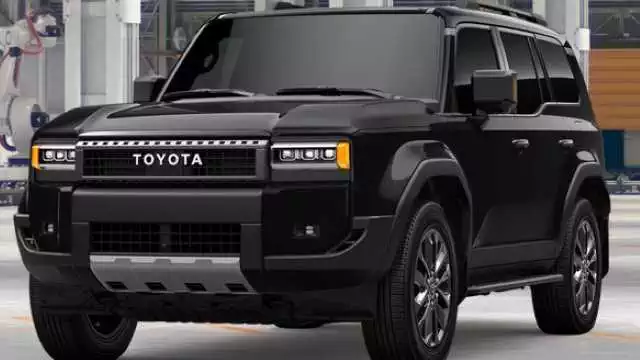
Choosing Self-drive SUV rental Tanzania gives you the freedom to create your own schedule instead of following a fixed group itinerary. You decide when to start driving, where to stop for photographs, how many nights to spend in each destination and whether your journey will focus on wildlife, camping, culture, landscapes or a combination of everything.
A road trip across Tanzania is one of the most exciting ways to experience East Africa. From the open plains of the Serengeti to the dramatic Ngorongoro Highlands, elephant country in Tarangire, the beaches of the Indian Ocean and the quieter wilderness areas of southern Tanzania, the country rewards travelers who want more independence.
Self-drive SUV rental Tanzania However, renting a vehicle for Tanzania is different from hiring an ordinary car for a European or North American road trip. Tanzania contains excellent paved highways, rough gravel roads, seasonal tracks, steep highland routes and remote national parks. Vehicle choice therefore matters.
For a city journey between Dar es Salaam and established towns, a normal SUV may sometimes be adequate. For a serious Tanzania self-drive safari covering places such as Serengeti National Park, Ngorongoro, Tarangire, Lake Manyara or remote camping areas, a genuine high-clearance 4WD is normally the better option.
This guide explains everything travelers should consider when organizing a Tanzania car rental. It covers vehicle types, Land Cruiser rental, 4×4 safari vehicles, rooftop tents, rental costs, driving documents, insurance, fuel, national parks, road conditions, popular routes, camping, navigation, safety and self-drive itinerary planning.
Whether you are planning a seven-day Northern Circuit safari or a longer East Africa overland adventure, the objective is simple: choose a reliable vehicle, understand the route and prepare properly before leaving the main road.
Why Choose Self-drive SUV rental Tanzania?
The biggest advantage of Self-drive SUV rental Tanzania is independence.
A traditional guided safari normally operates according to an agreed itinerary. Your professional driver-guide controls the vehicle while you concentrate on wildlife viewing and photography. This remains an excellent way to experience Tanzania.
Self-driving offers something different.
Instead of traveling according to someone else’s timetable, your road trip becomes part of the adventure. You can leave Arusha early in the morning, stop at viewpoints along the Great Rift Valley, spend additional time around Mto wa Mbu, continue toward Karatu and change the rhythm of the journey according to your interests.
Independent travel can be particularly attractive for couples, photographers, experienced overlanders and families who enjoy private road trips.
Privacy is another advantage. There is no need to share the vehicle with travelers outside your group. Conversations, music, rest stops, photography breaks and driving times remain entirely within your control.
Self-drive SUV rental Tanzania can also make it easier to mix different accommodation styles. You might camp for several nights, stay at a comfortable lodge near Ngorongoro, use a tented camp in Serengeti and then finish at a hotel near Arusha.
The freedom is valuable, but independence also brings responsibility. You become responsible for navigation, fuel, park procedures, vehicle inspection, punctures, road conditions and daily driving times.
That is why choosing a reputable Tanzania safari car rental company matters just as much as choosing the route.
What Is the Difference Between an SUV and a True 4×4?
This distinction is one of the most important things to understand before renting a vehicle in Tanzania.
The term SUV covers a wide range of vehicles. Some SUVs have good ground clearance and all-wheel-drive capability but are mainly designed for paved roads and relatively easy gravel roads.
A proper safari 4×4 is different.
It should normally provide genuine four-wheel-drive capability, strong suspension, good ground clearance, suitable tyres and enough durability for corrugated roads, mud, loose gravel and long distances.
Vehicles frequently used for Tanzania safaris include Toyota Land Cruiser models, Toyota Prado variants and specially converted safari Land Cruisers.
If your journey remains around Dar es Salaam, Arusha or other cities and mostly follows major highways, you might not need a heavy-duty safari vehicle.
If Serengeti, Ngorongoro, Tarangire, remote campsites or wet-season routes appear on your itinerary, choosing a proper 4WD becomes much more important.
A cheap soft-roader is not a bargain when it becomes stuck several kilometers from assistance.
The best rental decision therefore starts with the itinerary rather than the daily rental price.
Best Vehicles for Self-drive SUV rental Tanzania
Choosing the right vehicle can determine whether your road trip feels comfortable or exhausting.
A vehicle that works perfectly for two people traveling between Arusha and comfortable lodges may not suit four travelers carrying camping equipment for two weeks.
Toyota Land Cruiser for Self-drive SUV rental Tanzania
The Toyota Land Cruiser remains one of the most recognizable safari vehicles in East Africa.
Its popularity is not simply about appearance. Land Cruisers have earned a strong reputation for operating on rough African roads, carrying heavy loads and handling extended safari journeys.
Different models offer different levels of comfort.
A Land Cruiser 70 Series or similar safari-oriented model prioritizes durability and off-road performance. These vehicles are frequently modified with safari roofs, extra fuel capacity and stronger suspension.
A Land Cruiser GX, VX or comparable model often provides additional passenger comfort while retaining excellent 4×4 capability.
Travelers planning Serengeti, Ngorongoro and remote Tanzania safari routes should prioritize mechanical condition over age or luxury.
A well-maintained older Land Cruiser can be considerably more valuable on a difficult road than a newer vehicle that has not been properly prepared.
Toyota Prado Rental Tanzania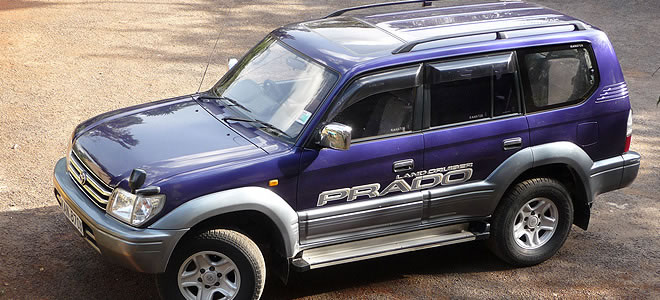
A Toyota Land Cruiser Prado provides an attractive balance between comfort and off-road capability.
It is usually quieter and easier to drive than some traditional safari conversions, making it particularly appealing to couples and travelers combining safari areas with long highway distances.
A Prado can work well for many Northern Circuit routes when appropriately equipped and permitted for the intended roads.
However, always tell the rental company exactly where you plan to drive.
The company should confirm whether that particular vehicle can be used inside every destination on your itinerary rather than assuming that every vehicle marketed as a 4×4 is equally suitable.
Safari Land Cruiser With Pop-Up Roof
Travelers primarily interested in wildlife photography may prefer a converted safari Land Cruiser with a pop-up viewing roof.
Once raised in permitted game-viewing areas, the roof allows passengers to stand and photograph wildlife from a higher position.
The experience is closer to that of a professionally operated safari vehicle.
A pop-top is less important when most of your trip involves highways, towns and normal sightseeing, but it can significantly improve wildlife viewing in destinations such as Serengeti and Tarangire.
Rooftop Tent 4×4 Rental Tanzania
Travelers who enjoy camping can rent a 4×4 equipped with a rooftop tent.
The sleeping platform folds onto the roof rack and opens when you reach the campsite. Depending on the rental package, camping equipment may include bedding, chairs, tables, cooking equipment, water containers, lights and a refrigerator or cooler.
A rooftop tent offers flexibility and creates a classic African overland experience.
However, confirm exactly what the quoted rental package contains.
Two companies advertising a rooftop tent Land Cruiser at different prices may be providing completely different equipment.
Ask about mattresses, pillows, blankets, kitchen equipment, gas, refrigerator capacity, electrical outlets, recovery equipment and campsite requirements.
Manual or Automatic 4×4?
Both manual and automatic safari vehicles are available in East Africa.
Experienced manual drivers often appreciate the control provided by a manual gearbox, particularly on steep or rough terrain.
Automatic vehicles are convenient for travelers who are already managing unfamiliar roads, wildlife and navigation.
The correct choice depends more on driver confidence than on safari tradition.
Do not rent a manual vehicle simply because it costs less if you rarely drive manual cars at home. Learning gear control on a steep Tanzanian track is unnecessary stress.
Likewise, confirm how the four-wheel-drive system works before leaving the rental base.
You should know how to engage four-wheel drive, low range and differential locks if fitted.
A professional handover should explain these systems clearly.
Diesel or Petrol?
Diesel Land Cruisers are extremely common for safari operations because of their torque, durability and fuel characteristics.
Petrol vehicles can offer excellent performance but may consume considerably more fuel depending on engine size, road conditions and driving style.
Fuel cost becomes relevant on a long Tanzania road trip.
Travelers driving hundreds of kilometers across the Northern Circuit should therefore compare total trip cost rather than only the rental rate.
Ask the company for approximate fuel consumption for the exact model being offered.
Do not assume every Land Cruiser has similar consumption.
An older heavy safari conversion carrying rooftop tents and camping equipment may use substantially more fuel than a lighter Prado traveling on highways.
How Much Does Self-drive SUV rental Tanzania Cost?
The cost of Self-drive SUV rental Tanzania varies considerably depending on vehicle model, age, rental duration, season, insurance, modifications and included equipment.
Current online rental listings demonstrate how broad the range can be. Some operators advertise older basic self-drive vehicles from around USD 60 per day, while specialized Land Cruiser campers can be listed around USD 195 per day or more. These are useful market examples rather than fixed Tanzania-wide prices, and actual quotes depend on the vehicle and package.
A simple vehicle without camping equipment will normally cost less than a fully equipped rooftop tent Land Cruiser.
A safari vehicle with pop-up roof, refrigerator, camping kitchen, long-range fuel tanks and recovery equipment should naturally cost more.
Rental duration also influences the rate.
A fourteen-day rental may receive a better daily price than a three-day booking.
Peak safari months can create stronger demand, particularly around Arusha and Kilimanjaro International Airport, so booking early provides a better chance of securing the vehicle category you want.
Look Beyond the Daily Rental Rate
Comparing vehicles only by the advertised daily price is a common mistake.
A cheaper quote can become more expensive if insurance, airport delivery, additional drivers, mileage or camping equipment are charged separately.
A more expensive daily rate might already include unlimited mileage, roadside assistance, comprehensive insurance, camping equipment and airport delivery.
Request a complete written quotation.
The quote should explain the vehicle, rental period, included kilometers or unlimited mileage policy, insurance, excess, taxes, equipment and any one-way or cross-border charges.
Then compare like with like.
Additional Costs of a Tanzania Self-Drive Safari
Vehicle rental is only one part of the safari budget.
Fuel is significant, especially on long Northern Circuit routes.
National park entrance fees are separate from the rental vehicle unless your package specifically states otherwise.
Vehicle entry charges may also apply.
Camping fees, accommodation, food, guide services where required, conservation fees and optional activities must be included in the overall calculation.
Ngorongoro requires particular planning because Conservation Area fees and crater-related vehicle arrangements are separate from normal vehicle rental.
Never build your budget using vehicle price alone.
A realistic Tanzania safari budget should combine transport, fuel, conservation fees, accommodation, meals and activities.
Is Self-Driving Legal in Tanzania?
Yes, visitors can undertake self-drive journeys in Tanzania provided they meet the relevant licensing, vehicle and park requirements.
TANAPA’s current travel guidance specifically acknowledges that travelers can self-drive in many parks with suitable vehicles, while advising visitors to check road conditions, park rules and gate times.
However, “self-drive allowed” should not be interpreted as unrestricted driving.
National parks are protected environments.
Drivers must remain on authorized roads unless specific permission states otherwise, respect wildlife, follow speed limits and exit their vehicles only where permitted.
Official park guidance emphasizes staying on designated tracks, avoiding unnecessary disturbance and observing operational rules.
Individual conservation areas may have additional procedures.
Always verify current requirements for your exact itinerary immediately before travel because entrance systems, fees and operational regulations can change.
Driving Licence Requirements
International visitors should travel with their valid home driving licence and should confirm international driving permit requirements before departure.
Rental companies can impose additional requirements regarding minimum age, driving experience or licence validity.
Do not assume rules are identical across every company.
Send a copy of your licence when requesting a vehicle quotation and ask whether additional documentation is required.
Drivers should also keep their passport or identification available while traveling.
The rental agreement, insurance documents and relevant vehicle documentation should remain with the car.
If more than one traveler intends to drive, each additional driver should be declared before departure.
Allowing an unauthorized driver to operate the vehicle may affect insurance coverage.
Insurance for Tanzania Car Rental
Insurance is one of the most important sections of a rental agreement and one of the most frequently misunderstood.
The words “comprehensively insured” do not automatically mean every possible event is covered without cost.
Ask specifically about the insurance excess.
The excess is the amount you may remain responsible for if damage occurs.
Also ask whether tyres, windscreens, underbody damage, roof damage, water damage, towing, accidents involving animals, single-vehicle accidents and off-road incidents are covered.
Some policies exclude damage resulting from prohibited roads or negligence.
For example, entering deep water against the rental company’s instructions may invalidate coverage.
The same may apply if the driver travels outside permitted areas, drives at prohibited times or allows an unauthorized person to drive.
Read the rental conditions before paying your deposit.
A serious car rental company should be comfortable explaining its insurance terms.
Vehicle Inspection Before Departure
Never begin a remote safari immediately after receiving the keys.
Spend time inspecting the vehicle.
Look at the tyres carefully. Safari travel puts enormous stress on tyres because of stones, corrugations, potholes and sharp surfaces.
Check the spare tyre and make sure you understand how to access it.
Ideally, serious remote-road travel should include adequate puncture support and appropriate tools.
Test the headlights, indicators, air conditioning, power outlets, refrigerator if supplied, windshield wipers and locking system.
Check fluid levels and ask about the vehicle’s recent service history.
Take photographs or video of existing body damage before leaving.
This protects both you and the rental company from misunderstandings when the vehicle is returned.
The handover should also explain the jack, wheel tools, recovery points, 4WD controls and emergency contact procedure.
Self-drive SUV rental Tanzania and National Park Rules
A successful Self-drive SUV rental Tanzania safari depends on respecting conservation rules.
Tanzania’s parks protect wildlife first and accommodate tourism within that framework.
TANAPA’s published guidance tells motorists to stay on authorized roads and tracks, keep noise low, avoid feeding or disturbing wildlife and leave vehicles only in designated areas.
Drivers also need to pay careful attention to gate hours.
Long-distance driving between destinations should be planned so that you are not racing against closing times.
Speed limits inside protected areas are intentionally low.
Wildlife can appear suddenly from grass, woodland or bushes.
Slow driving is not merely about avoiding penalties. It protects animals and improves wildlife viewing.
The driver who rushes through a park often sees less than the driver who travels patiently.
Serengeti Self-Drive Safari
Serengeti National Park is usually the destination that inspires travelers to investigate Tanzania safari car rental.
The landscape is enormous.
Open grasslands stretch toward distant horizons while kopjes, seasonal rivers and woodland support an extraordinary variety of wildlife.
A self-drive Serengeti safari can be deeply rewarding for experienced independent travelers.
It can also be challenging.
Distances are greater than they appear on a map, and road quality changes with weather and traffic.
Corrugations can make apparently short journeys surprisingly slow.
Rain can transform dusty tracks into slippery mud.
Navigation becomes more complicated once you leave the main routes.
For these reasons, Serengeti travel deserves a proper 4×4, sensible daily distances and offline navigation.
Avoid planning an itinerary that requires you to cover large distances every day.
Wildlife viewing works best when you have enough time to stop.
One of the pleasures of self-driving is finding a lion pride, elephant herd or cheetah and having flexibility to observe the scene rather than immediately rushing onward.
Ngorongoro Conservation Area by Rental 4×4
Ngorongoro is different from a conventional national park and should be planned accordingly.
The highlands, crater rim and surrounding conservation landscape involve their own access and vehicle procedures.
A vehicle permit is required for driving within the Crater under applicable conservation-area rules.
Current commercial guidance regarding self-driving on the crater floor is inconsistent, with different sources describing varying guide or ranger requirements. Because these operational procedures can change or be applied differently, confirm the current crater-descent arrangements directly with the responsible authority or your rental/safari operator before travel rather than relying on an old online article.
What is not debatable is the importance of using an appropriate 4WD.
The crater descent, highland gradients and changing weather conditions demand a reliable vehicle and confident driving.
Allow enough time for entrance formalities and avoid treating Ngorongoro as simply another roadside stop.
Tarangire National Park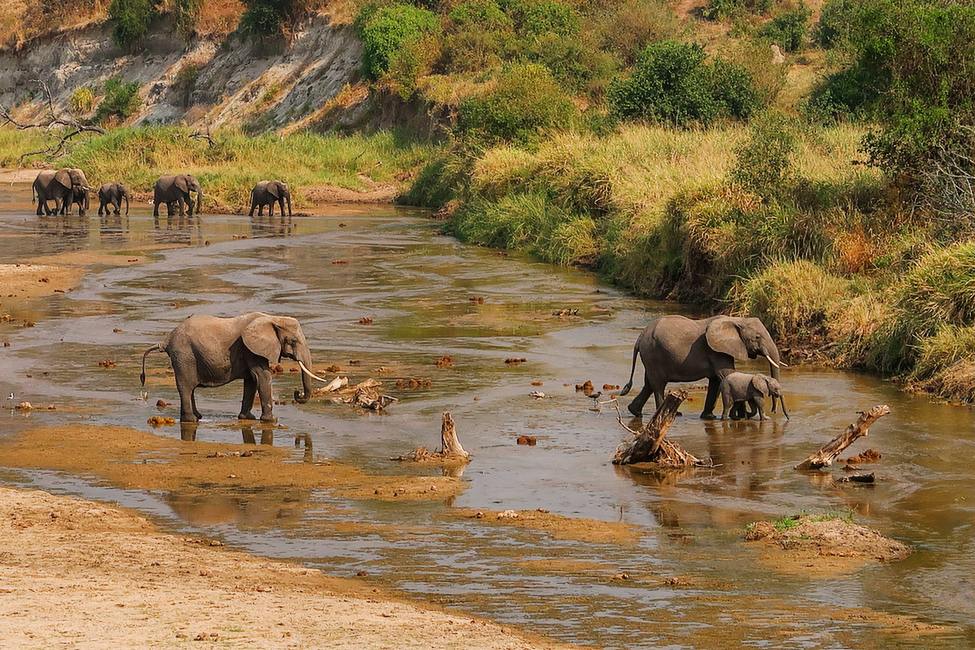
Tarangire is an excellent destination for independent safari travelers.
It lies relatively close to Arusha compared with Serengeti and provides classic East African landscapes dominated by baobabs, river valleys and large wildlife populations.
TANAPA currently recommends 4×4 capability in Tarangire during the wet season, when muddy sections can develop.
This makes Tarangire an excellent introduction to Tanzania self-drive safari conditions before continuing farther into the Northern Circuit.
Plan a full day rather than rushing through the park.
Wildlife sightings frequently develop around the river, and patient driving is rewarded.
Keep a safe distance from elephants.
Never position your vehicle so that an animal feels trapped or separated from the rest of its group.
Lake Manyara National Park
Lake Manyara can fit naturally between Arusha, Tarangire and the Ngorongoro Highlands.
The national park is relatively compact compared with Serengeti.
It combines groundwater forest, open areas, lakeshore habitat and impressive Rift Valley scenery.
TANAPA describes road access from Arusha as approximately 125 kilometers, with the park’s main gate near Mto wa Mbu.
That accessibility makes Lake Manyara particularly attractive near the beginning or end of a self-drive safari.
Karatu, located farther toward Ngorongoro, also provides a useful overnight base with fuel, shops and accommodation.
Arusha National Park
Travelers beginning their journey in northern Tanzania often overlook Arusha National Park.
That can be a mistake.
It offers a relatively manageable introduction to Tanzania’s park environment without requiring the long transfer to Serengeti.
The park combines forest, grassland, crater scenery and Mount Meru landscapes.
It can therefore work well as a first safari day after collecting the rental vehicle.
Beginning with an easier destination also gives you time to become familiar with the vehicle before tackling longer and rougher routes.
Lake Natron Road Trips
Lake Natron attracts travelers interested in dramatic landscapes rather than a conventional Big Five safari.
The region around the lake feels remote and stark, with volcanic scenery dominated by Ol Doinyo Lengai.
Road conditions can vary greatly.
This is precisely the kind of destination where ground clearance, reliable tyres and current local advice matter more than what Google Maps estimates.
Allow generous travel time.
A self-drive adventure should never become a competition to reach the next lodge before darkness.
Southern Tanzania Self-Drive Adventures
Northern Tanzania receives most of the international safari traffic, but adventurous travelers sometimes explore the south.
Mikumi provides relatively accessible wildlife viewing and can be combined with a broader road trip through southern Tanzania.
Nyerere and Ruaha involve more remote logistics.
A long southern circuit requires careful consideration of fuel, road conditions, accommodation and vehicle support.
Travelers venturing into remote areas should discuss their exact route with the rental provider.
A company cannot provide meaningful emergency support if it does not know where the vehicle is expected to travel.
Remote Tanzania rewards preparation.
The goal is not to eliminate adventure; it is to prevent avoidable problems from becoming serious ones.
Western Tanzania and Remote Routes
Western Tanzania contains extraordinary destinations, but distances and logistics become more demanding.
Katavi National Park is one example.
TANAPA specifically recommends four-wheel-drive vehicles for Katavi.
These journeys are more suitable for travelers who already have substantial African self-drive experience.
A first-time visitor who has never driven rough roads may find the Northern Circuit more manageable.
Experienced overlanders, on the other hand, may consider western Tanzania one of the country’s most rewarding road-trip regions.
Best Routes for Self-drive SUV rental Tanzania
The Northern Circuit remains the most practical introduction to Self-drive SUV rental Tanzania because it connects several world-famous destinations in a relatively logical route.
A classic journey begins in Arusha.
From Arusha, travelers can continue to Tarangire before moving toward Lake Manyara and Karatu.
Ngorongoro comes next, followed by Serengeti.
Depending on the itinerary, the return journey can follow the same corridor or include additional nights around the Ngorongoro Highlands.
This route works because services are easier to access than on Tanzania’s most remote circuits.
Fuel, accommodation and food are available at useful intervals.
The landscape also changes constantly.
One day you are driving among Tarangire’s baobabs; another brings you into the green Ngorongoro Highlands; soon afterward you reach the seemingly endless plains of Serengeti.
A Seven-Day Tanzania Self-Drive Route
A seven-day itinerary works best when you resist the temptation to include every destination.
Begin with one night around Arusha after collecting the vehicle.
Use the following day for Tarangire and stay near the park or around Karatu.
Continue through the Lake Manyara region and spend time around the Rift Valley before overnighting in Karatu.
The next stage can focus on Ngorongoro before continuing toward Serengeti.
Spend at least two nights around Serengeti whenever possible.
Returning to Arusha then completes the circuit.
Seven days is enough for a rewarding introduction, but it requires discipline.
Adding too many destinations reduces the amount of time available for game viewing.
A Ten-Day Northern Circuit Road Trip
Ten days creates a much better rhythm.
After arriving in Arusha, spend one or two nights around Tarangire.
Continue toward Lake Manyara and Karatu before allocating sufficient time to Ngorongoro.
From there, enter Serengeti and stay long enough to explore different sectors without constantly repacking.
Additional time makes it possible to plan around wildlife rather than simply around hotel check-in times.
A slower journey also reduces driving fatigue.
That is particularly important for couples where only one person feels comfortable driving the 4×4.
A Two-Week Tanzania Road Trip
Fourteen days opens considerably more possibilities.
You can combine the main Northern Circuit destinations with Lake Natron, additional Serengeti sectors or cultural experiences.
Some travelers finish the road journey in Arusha and fly to Zanzibar.
Others continue overland toward Kenya or build a broader East Africa itinerary.
The important principle is to avoid confusing distance with experience.
Driving 3,000 kilometers does not automatically create a better safari than driving 1,500 kilometers.
The most memorable moments often happen when the vehicle is stationary.
Arusha Car Rental
Arusha is the main starting point for Northern Circuit self-drive safaris.
Its location provides convenient access to Tarangire, Lake Manyara, Ngorongoro and Serengeti.
A wide range of safari rental companies operate in or around the city.
Starting in Arusha also gives travelers a chance to purchase food, water and supplies before entering more remote regions.
If possible, collect your vehicle during daylight.
A daytime handover makes inspection easier and allows you to test the car before beginning a long journey.
Consider spending the first night in Arusha rather than landing at Kilimanjaro International Airport and immediately driving toward a distant park.
International travel is tiring.
A rested driver is a safer driver.
Kilimanjaro Airport Car Rental
Kilimanjaro International Airport, usually abbreviated JRO, is a common arrival point for safari travelers.
Some rental companies can deliver vehicles directly to the airport while others arrange transfers to Arusha.
Compare the cost and practicality of both arrangements.
Airport delivery can save time, but arriving late at night may not be ideal for a detailed vehicle inspection.
If your flight arrives after dark, consider transferring to your hotel and collecting the 4×4 the following morning.
Dar es Salaam Car Rental
Dar es Salaam serves a different road-trip market.
Travelers beginning from Dar may explore the coast, Mikumi, southern Tanzania or inland destinations.
Heavy city traffic can surprise visitors accustomed to quieter roads.
Allow time to become familiar with local driving conditions.
A large safari Land Cruiser can feel cumbersome in dense urban traffic if you have never driven one before.
Once outside the city, road conditions change rapidly depending on the direction and destination.
Driving Side in Tanzania
Tanzania drives on the left-hand side of the road.
Travelers arriving from the United Kingdom, Australia, New Zealand, South Africa and several other countries generally adapt quickly.
Visitors accustomed to right-hand traffic should give themselves time to adjust.
Roundabouts, junctions and overtaking require extra concentration during the first days.
Avoid scheduling your most difficult driving immediately after a long overnight flight.
Tanzania Road Conditions
There is no single answer to the question, “What are roads like in Tanzania?”
Some major highways are paved and straightforward.
Other routes involve gravel, corrugations, stones, dust, mud or deep ruts.
Inside safari regions, road conditions can change within hours.
A track that was dry yesterday can become difficult after heavy rainfall.
This variation explains why local information matters.
Talk to lodge staff, rangers and your rental provider.
Ask about the next day’s road before leaving.
Someone who drove the route yesterday often has more useful information than a map downloaded six months ago.
Dry Season Driving
The long dry period is popular for safaris because wildlife viewing can be excellent and many roads are easier to navigate.
However, dry does not mean smooth.
Corrugated roads can be extremely uncomfortable and hard on vehicles.
Dust also becomes a major factor.
Maintain sufficient distance behind other vehicles.
Following too closely reduces visibility and sends dust directly into the engine and cabin.
Dry-season driving also requires careful tyre management.
Sharp stones can cause punctures even when roads appear straightforward.
Wet Season Driving
Rain changes the character of Tanzania’s roads.
Mud can make tracks slippery.
Low areas can flood.
Ruts become deeper.
Clouds and rainfall can reduce visibility.
The wet season can nevertheless be beautiful.
Landscapes turn green, birdlife flourishes and some destinations receive fewer visitors.
Travelers comfortable with 4×4 driving may enjoy the experience, but the vehicle must be appropriate.
Do not enter deep mud simply because the car has four-wheel drive.
Good off-road driving frequently means avoiding an obstacle rather than proving that the vehicle can cross it.
Driving at Night
Avoid unnecessary night driving.
Animals, pedestrians, cyclists, livestock, motorcycles and poorly illuminated vehicles can be difficult to see.
Inside national parks, driving hours are controlled and night game drives require specific arrangements where available.
Plan each day’s route around daylight.
When Google Maps says the drive will take four hours, do not automatically assume leaving four hours before sunset is enough.
Fuel stops, roadworks, photographs, gate procedures and unexpected road conditions all consume time.
Build a buffer.
Navigation on a Tanzania Self-Drive Safari
Navigation deserves more preparation than simply mounting a phone on the dashboard.
Mobile data disappears in remote areas.
Google Maps can be useful between towns but may not contain every safari track accurately.
Download offline maps before leaving.
A dedicated GPS or specialist African road mapping system can provide an additional layer of security.
Paper maps also remain useful because they provide a broad overview of the route when digital navigation becomes confusing.
Ask your rental company for recommended navigation tools.
If the company operates self-drive vehicles regularly, it should know which mapping products work best for the intended route.
Fuel Planning
Never allow the fuel tank to become unnecessarily low on remote journeys.
Distances between reliable fuel stations can be significant.
Fuel availability may change, particularly outside major towns.
Fill up before entering remote areas.
If the vehicle has dual tanks or a long-range tank, understand how the system works.
Ask whether the fuel gauge represents one tank or the total supply.
Do not carry additional fuel in unsuitable containers.
If your route requires reserve fuel, the rental company should provide safe advice and equipment.
Food and Water
Carry more drinking water than you expect to use.
Safari driving can be hot and dusty.
Unexpected delays can extend a journey by several hours.
Self-catering travelers should buy supplies in major towns before moving into remote areas where selection becomes limited.
If your rental includes a refrigerator, ask whether it operates while the engine is off and how long the auxiliary battery can support it.
A fridge that drains the starter battery overnight creates a very different morning from the one you planned.
Camping Safari Tanzania
Camping transforms a road trip into a much more immersive experience.
Instead of driving back to town at the end of the day, you remain surrounded by the sounds and atmosphere of the landscape.
Public campsites vary considerably.
Some offer showers, toilets and cooking facilities.
Others are more basic.
Special campsites can provide greater isolation but may require additional planning and equipment.
Never assume you can simply pitch a tent wherever you find an attractive place.
Use designated campsites and follow conservation-area requirements.
Camping also demands more disciplined organization.
Food storage, rubbish, lighting and wildlife safety become your responsibility.
Rooftop Tent Versus Ground Tent
Rooftop tents are popular because they pack quickly and keep the sleeping area elevated.
They work particularly well for couples.
The disadvantages are weight and the need to close the tent every time you want to drive the vehicle.
Ground tents provide more flexibility once camp is established but take longer to set up and require suitable ground.
Families may find a combination more practical.
Ask the rental company for photographs of the actual camping configuration.
Marketing images sometimes show a different model from the vehicle eventually supplied.
Lodge-Based Self-Drive Safari
You do not need to camp to enjoy independent driving.
A lodge-based self-drive safari combines the freedom of having your own vehicle with the comfort of permanent accommodation.
This can be ideal for travelers who enjoy driving but prefer a private room, shower and prepared meals at the end of the day.
Lodges can also simplify logistics.
Staff can provide local road information, meals and assistance.
For first-time Tanzania self-drivers, combining lodges with a few carefully chosen camping nights can provide a comfortable introduction to independent safari travel.
Self-Drive Versus Driver-Guide Safari
Neither option is automatically better.
The right choice depends on your experience and priorities.
Self-driving provides independence, privacy and a stronger sense of personal exploration.
A professional driver-guide provides wildlife knowledge, navigation experience and freedom from driving responsibilities.
Guides often notice animals that inexperienced visitors would drive past.
They also understand seasonal wildlife movements, park roads and animal behavior.
Travelers primarily interested in photography may enjoy driving themselves, but they should remember that the driver cannot safely concentrate on the camera and road simultaneously.
Couples with only one confident driver may eventually find that long safari days become tiring.
A hybrid approach is possible.
You can self-drive parts of Tanzania while arranging professional guiding in selected destinations.
Who Should Choose a Self-Drive Safari?
Experienced independent travelers are generally the best candidates.
If you have previously driven in Africa, used a 4×4, changed tyres and navigated remote areas, Tanzania can provide an outstanding road trip.
Confident travelers who enjoy detailed trip planning may also adapt well.
First-time visitors should evaluate their expectations carefully.
If your dream is simply to relax and watch wildlife from sunrise to sunset without thinking about navigation or the vehicle, a driver-guide may provide better value.
If the driving itself is part of the adventure, self-drive becomes much more attractive.
Self-Drive for Couples
A 4×4 road trip can be an excellent experience for couples because it offers privacy and flexibility.
A Prado or five-seat Land Cruiser normally provides abundant space for two travelers and luggage.
If both people can drive, sharing the road reduces fatigue.
Couples interested in camping can also use a two-person rooftop tent without requiring a large vehicle.
Avoid overpacking.
Excess luggage reduces usable interior space and increases vehicle weight.
Soft bags are usually easier to arrange than rigid suitcases.
Self-Drive for Families
Families need additional attention to seating, luggage and safety.
Confirm that appropriate seat belts are available for every passenger.
If child seats are required, arrange them in advance.
A five-seat vehicle can become surprisingly cramped once four people, suitcases, water, food and camera equipment are loaded.
A larger vehicle may therefore provide better value even if the daily price is higher.
Comfort matters during long drives.
Children who are squeezed between luggage for six hours will not care how much money the smaller vehicle saved.
Self-Drive for Photographers
Tanzania is extraordinary for wildlife photography.
The ideal rental vehicle should provide clear viewing angles and enough space for camera equipment.
A pop-up safari roof can be extremely useful.
Window seats are also valuable.
Keep expensive equipment protected from dust.
Changing lenses repeatedly in dusty conditions increases the risk of dirt reaching the camera sensor.
Bring sufficient batteries and charging systems.
A rental vehicle with reliable USB or inverter charging becomes particularly valuable for photographers spending several days away from normal electricity.
Recovery Equipment
The farther you travel from major roads, the more important recovery preparation becomes.
Appropriate equipment may include a jack, wheel tools, towing point and other basic recovery gear suited to the vehicle.
Equipment is only useful if you understand how to use it safely.
Do not attempt dangerous recovery techniques learned from social media videos.
A heavy Land Cruiser can cause serious injury if poorly supported.
When possible, contact the rental company’s support team before attempting anything beyond a simple tyre change.
What Happens if the Rental Car Breaks Down?
Mechanical problems are possible on any long road trip.
The important question is how the company responds.
Before booking, ask who you contact in an emergency.
Ask whether support is available outside normal office hours.
Ask what happens if the vehicle cannot be repaired quickly.
A professional rental company should have a realistic response plan.
Promises of “24-hour support” are only valuable if the operator actually has partners, mechanics or replacement arrangements along the route.
Remote recovery may still require time.
That is another reason to avoid excessively tight itineraries.
Common Mistakes When Renting a Tanzania Safari Vehicle
The first mistake is choosing the cheapest vehicle without investigating its condition or rental terms.
The second is planning unrealistically long driving days.
A third is relying completely on online navigation.
Another frequent problem is failing to understand insurance exclusions.
Travelers also underestimate fuel, park fees and conservation charges when calculating the total trip cost.
Overloading the itinerary causes another problem.
A Tanzania road trip is not improved by changing accommodation every night.
Allow time for landscapes, wildlife and unexpected discoveries.
Finally, do not begin remote travel without inspecting the vehicle.
Fifteen careful minutes at the rental office can prevent hours of frustration later.
Cross-Border Tanzania Car Rental
Tanzania can form part of a longer East African self-drive safari involving Kenya, Uganda or Rwanda.
Cross-border rentals require additional paperwork.
Never drive the vehicle into another country without written authorization from the rental company.
Insurance must cover every country included in the itinerary.
Temporary import procedures and border documentation may also apply.
Tell the company your complete route when requesting the quotation.
A vehicle approved for travel inside Tanzania is not automatically approved for Kenya, Rwanda or Uganda.
One-way rentals can sometimes be arranged but may involve relocation fees.
Tanzania and Kenya Self-Drive
Combining Tanzania and Kenya creates one of Africa’s great overland journeys.
Travelers can potentially connect destinations such as Serengeti, Ngorongoro, Amboseli, Nairobi and the Maasai Mara depending on route, vehicle permissions and border arrangements.
Do not assume that crossing directly between neighboring wildlife areas is possible at any point shown on a map.
Use recognized border crossings and confirm vehicle procedures.
Cross-border itineraries require more planning but can provide an extraordinary variety of landscapes and wildlife.
Tanzania, Rwanda and Uganda Road Trips
Longer East Africa road trips can connect Tanzania with Rwanda and Uganda.
Such itineraries attract travelers interested in combining classic savannah wildlife with mountain gorilla and chimpanzee experiences.
Distances become significant.
A professionally planned route should include realistic overnight stops rather than attempting to cover countries too quickly.
Cross-border vehicle paperwork becomes particularly important.
Universal Ventures Rwanda can assist travelers interested in creating wider East Africa itineraries connecting Rwanda, Uganda, Tanzania and other regional destinations.
Sustainable Self-Drive Travel
Freedom does not mean ignoring the environment.
Remain on designated tracks.
Driving off-road damages vegetation and can disturb breeding or resting wildlife.
Never chase an animal for a photograph.
Keep a respectful distance.
Do not block wildlife movement.
Take rubbish with you and dispose of it correctly.
Avoid unnecessary engine idling around wildlife sightings.
Support locally owned accommodation, guides, restaurants and community experiences where possible.
The privilege of driving through Tanzania’s protected landscapes comes with responsibility.
How to Choose a Tanzania Car Rental Company
Look beyond website design and advertising.
Ask detailed questions.
How old is the vehicle?
When was it last serviced?
What tyres are fitted?
How many spare tyres are supplied?
What does insurance cover?
What is the excess?
Is mileage unlimited?
Where can the vehicle travel?
What happens during a breakdown?
Can the company provide cross-border paperwork?
Does it offer airport delivery?
The quality of the answers usually tells you a great deal about the business.
A reputable rental operator should ask questions about your route too.
If a company offers the same vehicle regardless of whether you plan to drive only around Arusha or deep into Serengeti, that deserves further investigation.
Booking Self-drive SUV rental Tanzania Early
Demand for Self-drive SUV rental Tanzania increases during popular travel periods, particularly for well-equipped Land Cruisers and rooftop-tent vehicles.
Booking early gives you more choice.
This is especially important when you require automatic transmission, multiple rooftop tents, a specific seating configuration or cross-border permission.
Start by sending your dates, passenger numbers, route and preferred vehicle.
A detailed request helps the rental company send an accurate quotation.
After receiving the quote, check inclusions and exclusions carefully before paying.
Keep copies of payment receipts, confirmation documents and emergency contact details.
What Should Be Included in a Safari Rental Vehicle?
The appropriate equipment depends on the route.
At minimum, the vehicle should be roadworthy and supplied with the legally required documentation.
Remote safari travel requires more.
A reliable spare tyre, jack and wheel tools are fundamental.
Long-distance routes may justify additional puncture equipment and fuel capacity.
Camping rentals should provide a clearly documented inventory.
Check every item before departure.
If the contract says four chairs and you receive three, resolve it before leaving rather than after reaching Serengeti.
Preparing for Your First Day
The first day should be easy.
Collect the car, complete the inspection and learn its controls.
Load your luggage thoughtfully.
Place items you need regularly where they are accessible.
Buy water and basic supplies.
Refuel.
Download maps.
Save the company’s emergency number both on your phone and on paper.
Then drive a manageable distance.
This approach is far better than collecting an unfamiliar vehicle after an international flight and immediately attempting an eight-hour safari transfer.
Why Slow Travel Works Better in Tanzania
Tanzania rewards patience.
The country’s size makes ambitious itineraries look tempting on maps.
But rushing creates fatigue.
It also turns every delay into a problem.
Slow travel allows you to enjoy the landscape between famous destinations.
You notice villages, farming areas, escarpments, volcanoes and changes in vegetation that disappear when every day becomes a race to the next lodge.
The same principle applies inside national parks.
A leopard may remain hidden for twenty minutes before moving into view.
Elephants may approach slowly from the woodland.
Lions may suddenly become active after lying still for hours.
Safari is partly the art of waiting.
Frequently Asked Questions About Self-Drive SUV Rental Tanzania
Is Self-drive SUV rental Tanzania possible for international visitors?
Yes. International visitors can undertake self-drive journeys in Tanzania when they meet licensing, rental, insurance and destination requirements. TANAPA currently confirms that self-driving is possible in many national parks with suitable vehicles. Always verify the rules for the specific parks and conservation areas included in your itinerary.
Do I need a 4×4 in Tanzania?
Not for every journey.
Major cities and many highways can be traveled without a heavy-duty safari vehicle.
For Serengeti, remote safari routes, rough roads and wet-season journeys, a high-clearance 4WD is the more appropriate choice.
What is the best vehicle for a Tanzania self-drive safari?
Toyota Land Cruisers are among the most popular choices because they combine high ground clearance, four-wheel-drive capability, durability and widespread familiarity among mechanics and safari operators.
A Toyota Prado can also work well for appropriate routes.
The best vehicle depends on the itinerary, season, passenger count and accommodation style.
Can I rent a Land Cruiser in Arusha?
Yes.
Arusha is Tanzania’s main Northern Circuit safari gateway and has numerous companies offering Land Cruiser rental, Tanzania 4×4 hire and safari vehicle rental.
Vehicles may be available for self-drive or with professional driver-guides.
Can I collect a rental car at Kilimanjaro Airport?
Many rental companies serving northern Tanzania can arrange Kilimanjaro International Airport collection or delivery.
Confirm any delivery fee and the planned handover time before booking.
Can I self-drive in Serengeti National Park?
Independent driving is possible subject to current park entry requirements, vehicle suitability and park regulations.
Use designated tracks, respect speed restrictions and confirm current gate procedures before arrival.
Do I need a guide for Ngorongoro?
Ngorongoro operates under its own conservation authority, and crater access procedures may differ from ordinary national park driving.
Online sources currently contain conflicting statements regarding guide or ranger requirements for self-drivers, so confirm the current rule directly with the responsible authority or your local operator before your trip rather than relying on old blog posts.
Is a rooftop tent worth renting?
A rooftop tent can be an excellent choice for travelers who want a camping safari and enjoy independent travel.
It provides a convenient sleeping platform but adds weight and requires packing before moving the vehicle.
Lodge-based travelers generally do not need one.
Is self-driving Tanzania safe?
A well-planned Tanzania road trip can be undertaken successfully, but safety depends on preparation.
Avoid unnecessary night driving, maintain sensible speeds, use an appropriate vehicle, keep sufficient fuel and water and follow national park rules.
Local road advice is especially important during rainy periods.
How much does a Tanzania 4×4 rental cost?
Rates vary significantly.
Vehicle age, model, rental duration, insurance and camping equipment all affect the price.
Current advertised examples range from relatively basic vehicles around USD 60 per day to specialist equipped overland campers approaching USD 200 per day or more. Always request a quotation for your exact travel dates and route rather than relying on a generic online rate.
Is unlimited mileage important?
It can be valuable for long road trips, but read the policy carefully.
Some contracts genuinely include unlimited mileage while others impose restrictions on certain destinations.
Confirm the rule in writing.
Can I drive from Tanzania to Kenya in a rental car?
Potentially, but only when the rental company authorizes the border crossing and supplies the required paperwork and insurance.
Never take a rental vehicle across an international border without permission.
Can I drive from Tanzania to Rwanda or Uganda?
Cross-border East Africa journeys can be arranged with suitable vehicles and paperwork.
Discuss the full itinerary with the rental company before booking so that insurance and border documents can be prepared correctly.
Should I choose self-drive or hire a driver-guide?
Choose according to the experience you want.
Self-drive offers independence and privacy.
A professional driver-guide provides local knowledge, wildlife interpretation and relief from long driving days.
Travelers can also combine the two approaches.
When should I book my Tanzania rental 4×4?
Book as early as practical if traveling during popular safari months or requiring a specific vehicle configuration.
Well-maintained automatic Land Cruisers, pop-up safari vehicles and rooftop-tent models can have limited availability.
Why Plan Your East Africa Self-Drive Safari With Universal Ventures Rwanda?
A successful road trip requires more than a vehicle.
The route, accommodation, park arrangements and daily distances must work together.
Universal Ventures Rwanda specializes in customized East African travel and can assist travelers planning safari journeys across Rwanda, Uganda, Tanzania and neighboring destinations.
Rather than building a trip around random overnight stops, we can help create a route based on your available time, preferred comfort level and travel interests.
Travelers can request assistance with safari vehicles, accommodation, wildlife experiences, airport transfers, cross-border itineraries and professional driver-guides where required.
This is particularly useful when a journey combines Tanzania with Rwanda or Uganda.
A traveler might begin with a classic Tanzania wildlife safari before continuing toward Uganda or Rwanda for mountain gorilla trekking.
Coordinating vehicles, borders, hotels and activities as one itinerary can remove much of the uncertainty associated with a multi-country East Africa journey.
Final Thoughts on Self-drive SUV rental Tanzania
Self-drive SUV rental Tanzania can turn an ordinary holiday into a genuine African road adventure.
The attraction is easy to understand.
You wake up knowing that the day’s journey belongs to you.
You can spend longer watching elephants in Tarangire, stop for photographs in the Ngorongoro Highlands, change your lunch stop or allow an unexpected wildlife sighting to reshape the afternoon.
That freedom is what makes self-drive travel special.
But successful independent travel depends on preparation.
Choose the vehicle according to the route rather than price alone.
For serious safari driving, prioritize a genuine high-clearance 4WD.
Understand the insurance agreement.
Inspect the vehicle before departure.
Download offline navigation.
Carry sufficient water.
Plan fuel carefully.
Avoid excessive daily driving.
Respect park rules and never take unnecessary risks with wildlife, water crossings, mud or night driving.
Most importantly, give Tanzania enough time.
The Serengeti is not simply somewhere to cross on the way to another destination. Tarangire deserves more than a rushed afternoon. Ngorongoro deserves proper planning. Small towns, highlands, local communities and changing landscapes are part of the journey too.
With a reliable vehicle and a carefully designed itinerary, a Tanzania self-drive safari gives travelers something that is difficult to reproduce on a fixed group tour: complete ownership of the journey.
The road itself becomes part of the safari.
Contact Universal Ventures Rwanda
For Self-drive SUV rental Tanzania, Tanzania safari planning, 4×4 vehicle hire, East Africa road trips, accommodation, guided safaris and customized Rwanda, Uganda, Kenya or Tanzania itineraries, contact Universal Ventures Rwanda.
Universal Ventures Rwanda
Email: info@universalventuresrwanda.com
Telephone / WhatsApp: +250 781 441 853
Address: KK 15 Road, opposite IPRC Main Entrance, Kigali, Rwanda
Website: www.universalventuresrwanda.com
Universal Ventures Rwanda’s current contact page confirms the telephone number, email and Kigali office location.
