

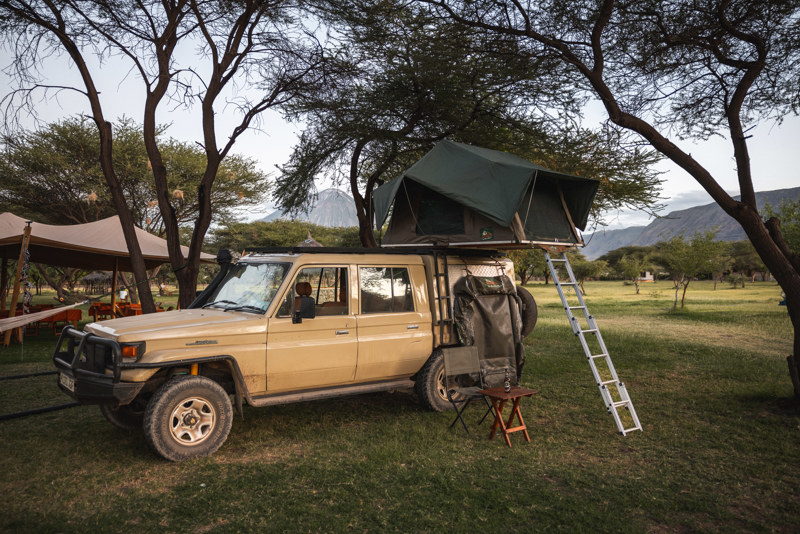
Choosing the best roof-tent car hire company in Uganda is one of the most important decisions when planning an independent camping safari. A dependable rental vehicle gives you the freedom to visit national parks, gorilla-trekking destinations, crater lakes and remote landscapes without following a fixed group-tour schedule.
However, a successful road trip depends on more than hiring a Toyota Land Cruiser with a tent attached to its roof. Vehicle maintenance, camping equipment, insurance, roadside support and transparent rental conditions matter just as much. Therefore, travelers should compare complete rental packages instead of focusing only on the advertised daily price.
Uganda is particularly suitable for an adventurous road trip. For example, travelers can connect Murchison Falls, Kibale Forest, Queen Elizabeth National Park, Bwindi Impenetrable Forest and Lake Mburo in one exciting circuit. Meanwhile, longer itineraries can include Kidepo Valley, Jinja, Lake Bunyonyi or a cross-border extension into Rwanda.
A rooftop-tent vehicle combines transport and mobile accommodation. Consequently, it provides independence, convenience and a closer connection to the country’s remarkable landscapes.
This pillar guide explains how to identify a reliable company, compare safari vehicles, understand rental costs and inspect camping equipment. In addition, it covers insurance, road safety, national parks, suggested itineraries and cross-border travel.
What Makes the Best Roof-Tent Car Hire Company in Uganda?
The best rental company is not necessarily the business advertising the lowest price. Instead, it should provide a mechanically dependable vehicle, a safe rooftop-tent installation, clear insurance and responsive assistance.
A professional Uganda car-rental company should offer:
- Properly maintained 4×4 vehicles
- Quality rooftop tents
- Clean mattresses and bedding
- Complete camping equipment
- Transparent daily rates
- Understandable insurance terms
- Clearly stated security deposits
- Airport or hotel delivery
- Detailed vehicle orientation
- Emergency telephone assistance
- Realistic route recommendations
- Campsite-planning support
- Cross-border documentation where available
- Gorilla and chimpanzee permit assistance
- Written rental terms and conditions
Furthermore, company representatives should answer technical questions before requesting payment. If an operator cannot explain the vehicle, insurance or breakdown procedure, travelers should consider another provider.
Why Hire a Roof-Tent Safari Vehicle in Uganda?
Freedom to create your itinerary
A self-drive safari allows you to decide when to travel and where to stop. For instance, photographers can spend additional time near productive wildlife areas, while birdwatchers can create slower routes through diverse habitats.
Although park opening hours and activity reporting times still apply, the daily program remains flexible. As a result, travelers can enjoy a more personal safari.
Transport and sleeping space in one package
A rooftop-tent vehicle serves as both transportation and accommodation. During the day, the tent remains folded inside a weather-resistant cover. Once you reach an authorized campsite, it unfolds into a raised sleeping area.
Therefore, you do not need to pack and transport a separate conventional tent. In addition, the elevated sleeping platform keeps the mattress away from wet or uneven ground.
Excellent access to national parks
Uganda’s important safari destinations are connected by a mixture of paved roads, gravel routes and park tracks. During the rainy season, some unpaved roads may become muddy or slippery.
A capable 4×4 provides:
- Better ground clearance
- Stronger suspension
- Four-wheel-drive traction
- Space for camping gear
- Improved performance on rough roads
- Greater confidence in remote regions
Nevertheless, four-wheel drive does not make every track passable. Travelers must still use authorized roads, follow local advice and avoid taking unnecessary risks.
Potential savings on accommodation
Camping can reduce accommodation costs, especially during a longer journey. However, the overall budget still includes campsites, fuel, food, park entrance fees and activities.
For that reason, compare the complete safari cost rather than assuming rooftop-tent travel is always the cheapest option.
A stronger connection to nature
Authorized campsites allow travelers to experience Uganda’s landscapes after most day visitors have left. At Lake Mburo, for example, evening sounds spread across the savannah. Meanwhile, the forested highlands near Bwindi can offer cool air and impressive scenery.
Even so, visitors must observe campsite rules. Wildlife may pass near some camping areas, so instructions about food storage and nighttime movement are essential.
How We Assessed the Leading Uganda Roof-Tent Rental Pages
The leading search results for this topic commonly emphasize four-wheel-drive vehicles, camping gear, unlimited mileage, airport delivery and roadside support. In addition, many publish introductory prices for Land Cruiser models.
Current organic competitors include:
| Competitor | Notable strength | Opportunity for improvement |
|---|---|---|
| 4×4 Rooftop Tent Car Uganda | Detailed fleet and starting prices | Travelers should verify insurance wording and exact vehicle inclusions |
| Uganda Self Drive | Dedicated rooftop-tent rental page | More structured equipment and comparison information would help |
| 4×4 Rooftop Tent Car | Strong regional rental positioning | Uganda-specific route planning could be deeper |
| 4×4 Self Drive Uganda | Land Cruisers, kitchen equipment and camping gear | More transparent insurance and inspection guidance would improve trust |
| Self Drive Uganda | Vehicle-specific pricing and optional equipment | Certain prices require confirmation for current travel dates |
| Self Drive Africa | Regional and cross-border vehicle coverage | Less focused on Uganda’s individual destinations |
| iDrive4x4 | Complete vehicle-and-camping bundles | Higher package positioning may not suit every budget |
| Self Drive East Africa | Multiple Land Cruiser models and routes | Page organization and readability could be stronger |
| 4×4 Uganda | Established fleet information and rates | The large amount of information can be difficult to compare |
| Best 4×4 Car Rental Uganda | Commercially focused rooftop-tent offer | Travelers should independently verify new-company claims and conditions |
Because rankings and rental details can change, travelers should request updated quotations. Furthermore, published prices do not always include the tent, camping kit, refrigerator, insurance upgrade or delivery.
Why Universal Ventures Rwanda Is a Strong Regional Booking Option
Universal Ventures Rwanda specializes in customized travel across Rwanda and Uganda. Rather than treating the vehicle as a standalone rental, the team can help connect car hire with the wider safari plan.
Depending on current availability, assistance may include:
- Roof-tent vehicle arrangements
- Uganda self-drive itinerary planning
- Rwanda–Uganda road trips
- Gorilla permit reservations
- Chimpanzee permit arrangements
- Campsite and lodge recommendations
- Airport pickup coordination
- Cross-border planning
- Driver-guide services
- Wildlife safari bookings
- Emergency regional support
This broader approach is especially useful for visitors combining gorilla trekking with a self-drive camping safari. For example, the team can help match a Bwindi campsite to the trekking sector printed on the traveler’s permit.
Most importantly, every quotation should identify the supplied vehicle, rental dates, equipment and exclusions. Accordingly, customers can understand the entire package before confirming it.
Best Vehicles for Roof-Tent Car Hire in Uganda
The ideal vehicle depends on passenger numbers, luggage, travel season and planned destinations. Therefore, travelers should select a model based on suitability rather than appearance alone.
Toyota Land Cruiser Prado with Rooftop Tent
The Toyota Land Cruiser Prado is one of the most practical vehicles for two-person camping safaris. It combines genuine four-wheel-drive capability with comfortable highway performance.
Depending on the model, a Prado may be listed as TX, TZ or another specification. Moreover, both petrol and diesel versions operate in Uganda.
A Prado is usually suitable for:
- Solo travelers
- Couples
- Lake Mburo National Park
- Queen Elizabeth National Park
- Bwindi Impenetrable National Park
- Kibale Forest
- Uganda–Rwanda road trips
- One rooftop tent
Storage space can become limited when the vehicle carries two passengers, food, water and camping equipment. Consequently, travelers should avoid taking excessive luggage.
Land Cruiser GX or LX
A Land Cruiser GX or LX offers strength, interior space and excellent off-road performance. Furthermore, some configurations support two rooftop tents.
These vehicles are particularly suitable for longer journeys because they can carry additional equipment. Nevertheless, passenger comfort depends on the interior modification.
Choose a GX or LX for:
- Two to four travelers
- Extended Uganda safaris
- Rough park tracks
- Cross-border itineraries
- Larger equipment loads
- Manual-transmission drivers
- Double-tent arrangements
Before booking, request photographs of the actual cabin, luggage area and tent installation.
Toyota Land Cruiser V8
The Land Cruiser V8 provides power and comfortable long-distance driving. In addition, automatic transmission is common on many V8 models.
Although the vehicle performs well on challenging roads, fuel consumption may be higher than with a smaller diesel Prado. Therefore, include estimated fuel costs when comparing rental packages.
A V8 can work well for:
- Couples wanting additional comfort
- Small groups
- Long-distance travel
- Automatic-transmission preferences
- One or two rooftop tents
- Uganda–Rwanda safari circuits
Land Cruiser 70 Series
The Land Cruiser 70 Series has a strong reputation in African overland travel. Depending on the specific model, it may appear as a 76, 78 or hardtop configuration.
Its advantages often include:
- Durable construction
- High ground clearance
- Strong suspension
- Large fuel capacity on some models
- Good storage space
- Suitability for remote routes
- Capacity for one or two tents
However, older hardtops may feel less refined than a modern Prado or V8. For this reason, travelers should assess comfort as well as mechanical capability.
Toyota Hilux Double Cab
A Toyota Hilux can provide excellent storage and dependable four-wheel-drive performance. Since luggage can be placed in a covered rear area, the passenger cabin remains less crowded.
Some Hilux vehicles carry one tent, whereas specially designed setups may support two. Even so, safe roof-load and rack specifications must be confirmed.
Toyota RAV4
A RAV4 may be affordable and economical for selected routes. However, it is not the first choice for every rooftop-tent safari.
Before accepting a RAV4, confirm:
- Whether it has genuine four-wheel drive
- Its ground clearance
- Roof-load capacity
- Tent installation
- Tire condition
- Route restrictions
- Rainy-season suitability
- National park access conditions
Although a RAV4 can manage easier roads, a Land Cruiser is generally better for remote parks and a comprehensive Uganda safari.
Uganda Roof-Tent Vehicle Comparison
| Vehicle | Ideal travelers | Main strength | Important limitation |
|---|---|---|---|
| Land Cruiser Prado | 1–2 | Balanced comfort and capability | Limited space with excessive luggage |
| Land Cruiser GX/LX | 2–4 | Strong and spacious | Fuel use and comfort vary |
| Land Cruiser V8 | 2–4 | Power and automatic comfort | Higher fuel consumption |
| Land Cruiser 70 Series | 2–4 | Excellent durability | Older models may feel less refined |
| Toyota Hilux | 2–4 | Good equipment storage | Tent configuration must be verified |
| Toyota RAV4 | 1–2 | Lower rental and fuel costs | Not suitable for every route |
| Extended safari vehicle | 4+ | Passenger and luggage capacity | Larger and harder to maneuver |
Choosing One or Two Rooftop Tents
Most standard rooftop tents accommodate two adults. Accordingly, couples generally need only one unit.
For three or four passengers, the company may provide:
- Two rooftop tents
- One large family rooftop tent
- One rooftop tent and one ground tent
- Two vehicles, each with one tent
The setup should be professionally installed and approved for the vehicle’s roof-load capacity.
Before confirming, ask:
- How many adults can each tent accommodate?
- What is the mattress width?
- Is bedding included?
- Does the tent have insect screens?
- Is the fabric waterproof?
- How long does setup take?
- Can bedding remain inside while folded?
- How are two tents secured?
- Does each unit have a stable ladder?
- Is there enough luggage space for every traveler?
Actual photographs are more useful than generic manufacturer images. Therefore, request pictures of the vehicle being offered.
Soft-Shell and Hard-Shell Rooftop Tents
Soft-shell tents
A soft-shell tent normally folds sideways and travels beneath a waterproof cover. Because its sleeping platform extends beyond the vehicle roof, it often provides good interior space.
Advantages include:
- Spacious mattress
- Broad availability
- Competitive rental prices
- Simple mechanical design
- Suitable capacity for two adults
On the other hand, setup may take slightly longer. The cover and securing straps must also be fastened carefully.
Hard-shell tents
A hard-shell tent opens vertically or at an angle. Consequently, it can be faster to set up.
Potential benefits include:
- Quick opening
- Strong protective shell
- Streamlined travel profile
- Fewer loose support parts
- Convenient setup during short stops
Nevertheless, some hard-shell models have less sleeping width. They may also cost more or be harder to find.
Maintenance remains the most important factor. A clean, waterproof soft-shell tent with reliable hinges is better than a damaged premium unit.
What Should a Fully Equipped Rental Include?
The phrase “fully equipped” can mean different things to different companies. Therefore, the best roof-tent car hire company in Uganda should provide a written inventory.
Sleeping Equipment
A suitable sleeping kit may include:
- Rooftop tent
- Clean foam mattress
- Mattress cover
- Fitted sheet
- Sleeping bags
- Blankets
- Pillows
- Insect screens
- Ladder
- Interior light
- Ground mat
Highland destinations can become cold at night. For instance, Kisoro, Kabale, Bwindi and Mgahinga are generally cooler than Kampala or Murchison Falls.
Consequently, ask whether the supplied bedding is suitable for every destination.
Cooking Equipment
A practical camping kitchen should contain:
- Gas cooker
- Gas cylinder
- Matches or lighter
- Cooking pots
- Frying pan
- Kettle
- Plates
- Bowls
- Cups
- Cutlery
- Cooking spoon
- Sharp knife
- Chopping board
- Washing basin
- Rubbish bags
- Dish towel
Additionally, check whether the gas cylinder is full. On longer trips, ask where a replacement or refill can be obtained.
Camp Furniture
The package should include one chair per traveler and a stable table. Since damaged joints can make folding furniture unsafe, inspect each item during the handover.
Refrigerator or Cool Box
An electric refrigerator can make a long camping safari much easier. However, some companies charge separately for it.
Confirm:
- Whether a fridge is included
- Its capacity
- Whether it works correctly
- How it is powered
- Whether the vehicle has an auxiliary battery
- How long it can operate while parked
- Whether a battery monitor is supplied
Ideally, the refrigerator should use a secondary battery. Otherwise, it may drain the starting battery overnight.
Water Storage
Reusable water containers are helpful for cooking and washing. Nevertheless, the company should explain whether the water provided is safe to drink.
Carry suitable drinking water between reliable supply points. At the same time, avoid overloading the car with unnecessary quantities.
Recovery and Safety Equipment
A safari vehicle should carry:
- Properly inflated spare tire
- Jack
- Wheel spanner
- Warning triangle
- Reflective vest
- Tow strap
- Jumper cables
- Air compressor
- Tire-pressure gauge
- Basic tool kit
- First-aid kit
- Fire extinguisher
- Emergency contact information
For remote routes such as Kidepo, a second spare tire may be worth discussing. Furthermore, travelers should understand how the supplied equipment works.
How Much Does Roof-Tent Car Hire Cost in Uganda?
Prices depend on the vehicle, season, rental duration, equipment and number of tents. Based on publicly marketed rates reviewed in August 2026, many Land Cruiser rooftop-tent offers begin around US$80–US$130 per day.
However, larger or newer vehicles may cost more. A double-tent configuration, refrigerator, comprehensive equipment package or one-way rental can also increase the price.
Published examples include:
- Prado with one tent: often approximately US$85 or more per day
- GX or similar Land Cruiser: commonly around US$100 or more
- V8 with rooftop tent: frequently around US$110 or more
- Land Cruiser 70 Series: often approximately US$120–US$150 or more
- Two-tent vehicles: commonly US$110–US$160 or more
These figures are market indicators, not guaranteed prices. Therefore, request a current quotation based on your exact dates.
Factors That Affect Your Rental Price
The daily rate can change according to:
- Vehicle category
- Vehicle age
- Automatic or manual transmission
- Petrol or diesel engine
- Number of rooftop tents
- Camping equipment
- Refrigerator
- High or low season
- Total rental duration
- Pickup point
- Drop-off location
- Cross-border travel
- Insurance option
- Mileage allowance
- Extra driver
- Airport delivery
Long rentals may receive discounted daily rates. Conversely, short bookings during high season can cost more.
Costs Commonly Excluded
Unless the quotation says otherwise, budget separately for:
- Fuel
- Campsites
- Food
- Park entrance
- Vehicle park fees
- Gorilla permits
- Chimpanzee permits
- Boat safaris
- Ranger-guided activities
- Visa expenses
- Cross-border fees
- One-way drop-off
- Personal travel insurance
- Flights
- Optional excursions
A low daily price can become expensive after multiple additions. Consequently, compare final totals rather than headline rates.
Understanding Uganda Car-Rental Insurance
Insurance should never be treated as a minor detail. Although a company may advertise comprehensive protection, certain damage can remain excluded.
Request written information about:
- Collision damage
- Third-party liability
- Theft
- Insurance excess
- Windscreen damage
- Tire damage
- Wheel damage
- Underbody damage
- Roof damage
- Tent damage
- Water damage
- Towing
- Recovery
- Cross-border validity
- Single-vehicle accidents
What is the insurance excess?
The excess is the amount a renter may remain responsible for after an eligible incident. For example, a US$1,000 excess can mean the renter pays up to that amount before insurance responds.
However, excluded damage may fall outside that limit. Therefore, read the complete rental agreement.
What can invalidate insurance?
Coverage may be affected when a renter:
- Allows an unauthorized driver to use the vehicle
- Drives without the required license
- Enters an unauthorized country
- Uses a prohibited road
- Drives after dark against the contract
- Overloads the vehicle
- Crosses deep water
- Ignores dashboard warnings
- Drives recklessly
- Fails to report an incident
- Continues after serious damage
- Misuses the rooftop tent
If a warning light appears, stop safely and contact the provider. Continuing without advice can cause additional damage.
Security Deposits and Payment Terms
Most car-rental businesses require a refundable security deposit. The amount depends on the vehicle and insurance arrangement.
Before paying, verify:
- Deposit amount
- Accepted payment method
- Currency
- Card or transfer charges
- Conditions for withholding money
- Inspection procedure
- Refund method
- Refund timeline
- Treatment of traffic fines
- Treatment of missing equipment
In addition, obtain a formal invoice that identifies the company, vehicle, service dates and payment terms.
Vehicle Handover Checklist
A detailed handover protects both the renter and the company. Therefore, allow enough time and complete the inspection during daylight.
Inspect the exterior
Record:
- Scratches
- Dents
- Windscreen chips
- Mirror damage
- Light condition
- Tire tread
- Sidewall damage
- Wheel condition
- Roof rack
- Tent cover
- Bumpers
- Number plates
- Fuel level
Take photographs or a continuous video. Afterwards, ensure every visible defect appears on the signed form.
Check the tires
Inspect all road tires and the spare. Furthermore, confirm that the jack and wheel spanner fit the supplied vehicle.
Ask the representative to demonstrate:
- Spare-wheel location
- Jacking points
- Wheel-lock key
- Air compressor
- Tire-pressure gauge
Learn the four-wheel-drive controls
The company should demonstrate:
- High-range four-wheel drive
- Low-range four-wheel drive
- Differential locks, if fitted
- Automatic or manual gear controls
- Parking brake
- Dashboard warning lights
- Hill-descent features, if available
Practice the controls before entering a national park. However, only engage them according to the manufacturer’s and rental company’s instructions.
Open and close the tent
Set up the entire rooftop tent during the handover. In particular, check:
- Ladder locks
- Hinges
- Mattress
- Tent fabric
- Mosquito screens
- Windows
- Support poles
- Protective cover
- Straps
- Zips
- Interior light
After watching the demonstration, repeat the process yourself. As a result, the first campsite setup will be much easier.
Count the camping equipment
Use the written inventory to count every chair, utensil, sleeping bag and tool. Similarly, record any damaged or missing item before departure.
Driving Conditions in Uganda
Uganda’s main highways connect Kampala and Entebbe with many regional towns. Nevertheless, safari routes also involve gravel roads, potholes, mountain approaches and park tracks.
Travelers may encounter:
- Roadworks
- Speed humps
- Gravel
- Corrugated surfaces
- Mud
- Potholes
- Narrow bridges
- Motorcycles
- Pedestrians
- Livestock
- Slow trucks
- Wildlife
- Heavy rain
Because conditions vary, distance alone does not predict travel time. A 200-kilometer transfer may take much longer than expected.
Avoid Unnecessary Night Driving
Whenever possible, arrive before sunset. Night driving can involve unlit vehicles, pedestrians, livestock and hidden road damage.
Moreover, some rental contracts prohibit driving after dark. Ignoring that rule could affect insurance.
An early arrival also gives you time to:
- Locate the campsite
- Select a level parking area
- Open the tent
- Prepare dinner
- Organize equipment
- Attend a safety briefing
Fuel Planning
Fill the tank before entering remote regions. Although fuel stations are widely available in larger towns, smaller facilities may temporarily lack diesel or petrol.
Useful habits include:
- Confirm the fuel type
- Refuel at established stations
- Fill up before national parks
- Monitor consumption
- Keep receipts
- Refuel at half a tank in remote areas
- Ask before carrying additional fuel
- Never store fuel in the passenger cabin
Since a loaded rooftop-tent vehicle is heavier, fuel consumption may rise.
Driving During Rain
Rain can quickly change unpaved road conditions. Therefore, reduce speed and avoid sudden steering or braking.
When approaching mud or standing water:
- Stop at a safe distance
- Assess the route
- Ask park staff for information
- Avoid unknown water depth
- Contact the rental company when uncertain
- Turn around if conditions exceed your experience
Four-wheel drive improves traction but does not eliminate risk. Consequently, cautious decisions remain essential.
Camping Safely in Uganda
Use recognized campsites
A rooftop tent does not allow unrestricted camping. Instead, stay at authorized campsites, lodge camping grounds or designated facilities.
A recognized campsite may provide:
- Toilets
- Showers
- Water
- Security
- Cooking facilities
- Charging points
- Rubbish disposal
- Restaurant access
- Campfire areas
- Wildlife instructions
Since facilities vary, confirm the details before arrival.
Park on level ground
Choose a stable, approved position away from drainage channels, soft soil and unstable branches. Additionally, avoid blocking access roads or other campers.
Secure food
Store food and rubbish according to campsite instructions. Otherwise, smells may attract wildlife.
Never feed animals or leave cooking equipment outside overnight. Even small animals can damage camping supplies.
Follow fire regulations
Ask before lighting a campfire. Some campsites permit fires only in designated places, while others prohibit them completely.
Where fires are allowed, extinguish them fully before sleeping.
Observe wildlife instructions
Wild animals may move near certain campsites. Therefore, avoid walking after dark where camp staff advise against it.
Keep a torch accessible and listen to every briefing. If an animal approaches, remain calm and follow staff instructions.
Best Destinations for a Roof-Tent Safari in Uganda
Lake Mburo National Park
Lake Mburo is a practical first destination after Entebbe or Kampala. Because it lies on the western safari route, it can be combined easily with Bwindi and Queen Elizabeth.
Visitors may see:
- Zebras
- Impalas
- Buffaloes
- Elands
- Warthogs
- Numerous birds
Activities include game drives, boat trips and guided walks. In addition, selected areas offer cycling or horse-riding experiences through licensed providers.
Bwindi Impenetrable National Park
Bwindi protects mountain gorillas and supports one of Uganda’s most important wildlife experiences. However, careful sector planning is essential.
The main trekking sectors are:
- Buhoma
- Ruhija
- Rushaga
- Nkuringo
Your campsite must match the sector printed on the gorilla permit. Otherwise, you may face several hours of difficult driving on trekking morning.
Arrive near the correct briefing point one day early. Consequently, road delays are less likely to cause a missed trek.
Mgahinga Gorilla National Park
Mgahinga lies near Kisoro and the Rwanda border. Although it is Uganda’s smallest national park, it offers dramatic volcanic scenery.
Possible activities include:
- Gorilla trekking
- Golden monkey tracking
- Volcano hiking
- Birdwatching
- Guided forest walks
- Cultural encounters
Highland nights may be cold. Therefore, check the quality and warmth of the supplied bedding.
Queen Elizabeth National Park
Queen Elizabeth combines savannah, wetlands, crater scenery and the Kazinga Channel. As a result, it is one of Uganda’s most varied national parks.
Popular experiences include:
- Kasenyi game drives
- Kazinga Channel boat trips
- Ishasha game drives
- Birdwatching
- Crater routes
- Wildlife photography
Before driving between Ishasha and Bwindi, request an update about road conditions.
Kibale National Park
Kibale is famous for chimpanzees and other primates. Furthermore, the surrounding Fort Portal region features crater lakes and attractive countryside.
Reserve chimpanzee trekking before arrival. Afterwards, spend time exploring community attractions or nearby wetlands.
Murchison Falls National Park
Murchison Falls combines savannah wildlife with the Nile. A typical visit includes a game drive, boat safari and viewpoint near the falls.
Because the protected area is extensive, travelers should confirm:
- Park gate
- Campsite location
- River crossing arrangements
- Activity meeting point
- Estimated travel time
Kidepo Valley National Park
Kidepo is remote and spectacular. However, the journey requires careful planning.
Before visiting, check:
- Road conditions
- Fuel range
- Tire condition
- Spare wheels
- Water supplies
- Food
- Communication coverage
- Campsite availability
- Breakdown assistance
Allow multiple nights in the area. Otherwise, long transfers will dominate the itinerary.
Lake Bunyonyi
Lake Bunyonyi provides a scenic rest stop near Kabale. Some properties can be reached by road, whereas others require a boat.
Request precise arrival instructions because online maps may suggest unsuitable shortcuts.
Jinja and the Nile
Jinja offers Nile scenery, camping properties and organized adventure activities. Additionally, it can be combined with Kampala or used as the first stop on a longer northern route.
Suggested 7-Day Roof-Tent Safari
Day 1: Entebbe
Collect the vehicle and complete the inspection. Afterwards, buy supplies and sleep near Entebbe.
Day 2: Lake Mburo
Drive west and enjoy an afternoon activity where available.
Day 3: Bwindi
Continue to the correct gorilla-trekking sector. Most importantly, arrive before dark.
Day 4: Gorilla trekking
Attend the briefing and join the guided trek. Later, rest at the same campsite.
Day 5: Queen Elizabeth
Travel toward Queen Elizabeth using the route recommended for your sector.
Day 6: Wildlife and boat safari
Take a morning game drive. In the afternoon, join a reserved Kazinga Channel excursion.
Day 7: Return toward Entebbe
Because the drive can be long, avoid booking an early flight. Ideally, add an extra night.
Suggested 10-Day Uganda Camping Safari
- Day 1: Entebbe vehicle handover
- Day 2: Drive to Lake Mburo
- Day 3: Continue to Bwindi
- Day 4: Gorilla trekking
- Day 5: Travel to Queen Elizabeth
- Day 6: Game drive and Kazinga Channel boat trip
- Day 7: Drive to Kibale
- Day 8: Chimpanzee trekking
- Day 9: Return toward Entebbe
- Day 10: Vehicle return and departure
This route balances driving with major activities. Furthermore, it avoids attempting too many distant parks.
Suggested 14-Day Uganda Road Trip
- Day 1: Arrive in Entebbe
- Day 2: Drive to Murchison Falls
- Day 3: Murchison game drive and boat safari
- Day 4: Additional Murchison exploration
- Day 5: Travel to Kibale
- Day 6: Chimpanzee trekking
- Day 7: Fort Portal and crater region
- Day 8: Drive to Queen Elizabeth
- Day 9: Game drive and boat safari
- Day 10: Continue to Bwindi
- Day 11: Gorilla trekking
- Day 12: Lake Bunyonyi or Lake Mburo
- Day 13: Continue toward Entebbe
- Day 14: Return the vehicle
Kidepo should not be added without extending the itinerary. Instead, give the remote northern park several additional days.
Cross-Border Uganda and Rwanda Car Hire
A Uganda–Rwanda road trip can connect Bwindi, Mgahinga and Queen Elizabeth with Kigali, Lake Kivu, Volcanoes National Park or Akagera.
However, international travel requires advance approval.
Confirm:
- Written cross-border permission
- Insurance valid in both countries
- Vehicle-registration documents
- Approved border posts
- Cross-border charges
- One-way drop fees
- Emergency support
- Vehicle-return procedure
- Immigration requirements
- Replacement-vehicle policy
Never assume regional travel is included. Instead, list every country when requesting the quotation.
Gorilla Trekking and Your Rental Itinerary
Gorilla trekking should be reserved before the final route is confirmed. Since permits are limited, availability may determine the travel dates.
Important planning steps include:
- Check permit availability.
- Confirm Bwindi or Mgahinga.
- Identify the trekking sector.
- Reserve a nearby campsite.
- Arrive one day early.
- Confirm the briefing location.
- Carry the required documents.
- Follow ranger instructions.
Useful trekking equipment includes hiking boots, long trousers, a rain jacket, gloves, water and a small backpack.
Common Roof-Tent Rental Mistakes
Choosing only by price
The cheapest offer may have older tires, limited equipment or weak insurance. Therefore, compare the complete service.
Booking an unsuitable vehicle
A small 4×4 may not carry passengers, tents and luggage comfortably. Match vehicle capacity to the actual load.
Ignoring insurance exclusions
Tires, glass, roofs and the underbody may have separate conditions. Read the contract carefully.
Skipping the handover
A rushed orientation can create problems later. Practice the tent and four-wheel-drive controls before leaving.
Planning excessive daily distances
Long transfers reduce time for wildlife and campsite preparation. Instead, create a relaxed schedule.
Depending entirely on online maps
Applications can recommend unsuitable shortcuts. Confirm important roads with the operator or campsite.
Arriving after dark
Late arrival complicates navigation and tent setup. Consequently, aim to reach camp during daylight.
Booking the wrong Bwindi sector
A campsite described as “near Bwindi” may be far from your briefing point. Always check the exact sector.
Driving without approved documentation
An undeclared driver or unauthorized border crossing can invalidate insurance.
Assuming every item is included
Bedding, refrigerators and cooking kits may cost extra. Request a written inventory.
Frequently Asked Questions
Which is the best roof-tent car hire company in Uganda?
The best provider is one that offers a properly maintained 4×4, clean tent, complete equipment, transparent insurance and responsive roadside support. Universal Ventures Rwanda can arrange customized Uganda and Rwanda vehicle packages subject to availability.
How much does a rooftop-tent vehicle cost?
Many advertised Land Cruiser packages begin around US$80–US$130 per day. However, the exact cost depends on the model, season, equipment and rental length.
Is a rooftop tent included in the daily price?
Sometimes. Other companies list the vehicle, tent and equipment separately. Therefore, request a complete quotation.
Which vehicle is best for two travelers?
A Land Cruiser Prado with one rooftop tent is often practical. It provides a useful balance between comfort, space and off-road capability.
Which vehicle is best for four people?
A GX, V8, Hilux or Land Cruiser 70 Series with two approved tents may be suitable. Nevertheless, luggage capacity must also be checked.
Can I collect the vehicle at Entebbe Airport?
Many companies offer airport delivery. Depending on the provider, time and rental length, a delivery charge may apply.
Is unlimited mileage included?
Policies vary. Some providers advertise unlimited mileage, whereas others impose restrictions.
Does the rental include fuel?
Fuel is normally excluded. The contract should state the required return level.
Is camping equipment included?
Many roof-tent rentals include basic equipment. Even so, bedding, chairs, kitchen supplies and refrigerators should be confirmed individually.
Do roof-tent vehicles have refrigerators?
Some do. Others provide an unpowered cool box or charge an additional daily fee.
Is roadside assistance included?
Reputable providers generally offer emergency telephone support. However, towing and recovery expenses may have separate rules.
Can I drive to Rwanda?
Possibly, provided the company supplies written authorization and insurance. Additional fees may apply.
Can I continue to Kenya or Tanzania?
Certain vehicles are available for longer East African safaris. Each country must be approved separately.
Can I hire a driver?
Yes. Travelers who prefer not to self-drive can add a professional driver-guide, subject to availability and cost.
Is wild camping permitted?
Travelers should use authorized campsites. A rooftop tent does not grant permission to camp anywhere.
Is roof-tent camping safe?
It can be safe when travelers use recognized campsites, store food correctly and follow local instructions.
Can I combine campsites and lodges?
Yes. In fact, combining both can provide welcome comfort after long drives or demanding activities.
Do I need a 4×4 in Uganda?
A 4×4 is strongly recommended for national parks, Bwindi approaches, remote regions and wet-season travel.
Is an automatic vehicle available?
Automatic Prado and V8 models may be available. Since supply is limited, request one early.
What happens after a breakdown?
Stop safely and contact the rental provider. The contract should explain roadside assistance, towing and replacement arrangements.
How early should I reserve?
Book early when traveling during popular months or combining the vehicle with gorilla permits. Suitable cars and tents can sell out.
What information is needed for a quotation?
Provide:
- Travel dates
- Number of travelers
- Preferred vehicle
- Automatic or manual preference
- Pickup location
- Return location
- Planned destinations
- Number of tents
- Cross-border plans
- Activity-permit requirements
- Driver-guide preference
Book the Best Roof-Tent Car Hire Company in Uganda
Finding the best roof-tent car hire company in Uganda requires more than comparing advertised rates. A dependable vehicle, correctly fitted tent, complete camping kit and understandable insurance are essential.
Furthermore, reliable communication can make a major difference when road conditions change or mechanical assistance is needed. Travelers should therefore choose a company that provides written terms, realistic advice and regional support.
With the right 4×4, Uganda becomes an exceptional self-drive destination. From Murchison Falls and Kibale to Queen Elizabeth, Bwindi and Lake Mburo, each region adds something different to the journey.
For a customized Uganda roof-tent vehicle, camping itinerary, gorilla safari or Uganda–Rwanda road trip, contact:
Universal Ventures Rwanda
Telephone/WhatsApp: +250 781 441 853
Email: info@universalventuresrwanda.com
Address: KN 15 Road, opposite IPRC Entrance, 1st Floor, SANGWA Plaza, Kigali, Rwanda
Website: Universal Ventures Rwanda
