
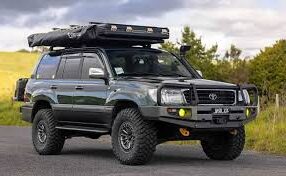
Traveling through Serengeti National Park in your own 4×4 creates one of the most independent safari experiences available in East Africa. Instead of following a fixed lodge itinerary, travelers can combine game drives, scenic road journeys and designated camping locations while carrying much of their accommodation and equipment on the vehicle.
Choosing Roof-tent vehicle hire for Serengeti safaris gives adventurous travelers a practical combination of transportation and mobile accommodation. A suitable Toyota Land Cruiser can carry a rooftop tent, camping equipment, luggage, food, water and other supplies required for a multi-day Tanzania road trip.
Why Choose Roof-Tent Vehicle Hire for Serengeti Safaris?
Serengeti is enormous, and its scale is one of the reasons independent travelers find it so attractive. Wildlife is not concentrated around one single road or viewing location. Lions, elephants, giraffes, buffaloes, cheetahs, leopards and migrating herbivores can appear across different regions of the ecosystem.
Having your own rental 4×4 creates flexibility.
Rather than leaving the park according to a group schedule, you can plan days around the areas you want to explore while respecting park regulations and campsite arrangements.
A Safari Built Around Your Own Pace
Some travelers prefer long morning game drives followed by a slower afternoon. Photographers may want to spend extended periods around a particular wildlife sighting. Others simply enjoy stopping to appreciate the vast landscapes.
A self-drive safari makes these choices easier.
The vehicle becomes the foundation of the trip, while the rooftop tent provides a practical sleeping setup at authorized campsites.
What Is a Roof-Tent Safari Vehicle?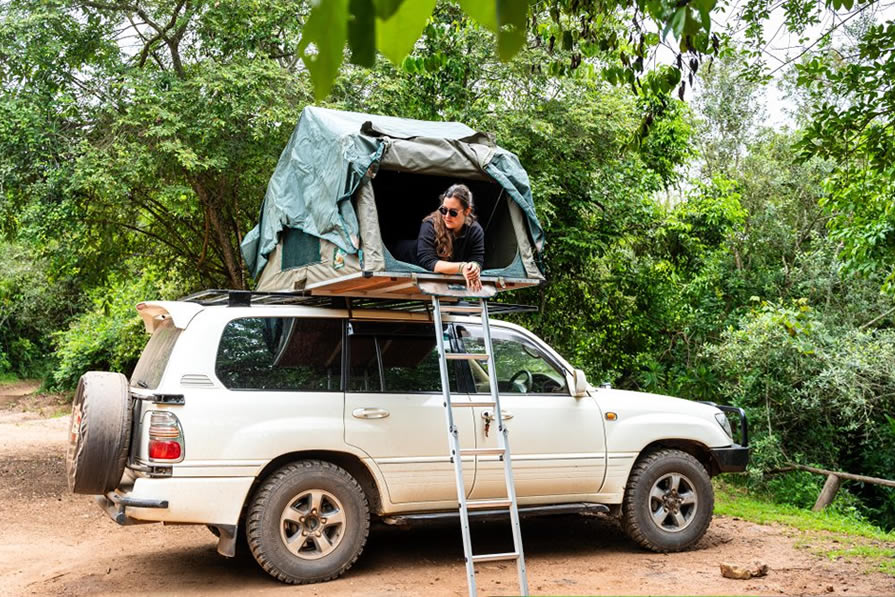
A roof-tent safari vehicle is normally a genuine four-wheel-drive fitted with a strong roof rack and folding tent.
During travel, the tent stays closed above the vehicle. Once you reach camp, it unfolds into an elevated sleeping platform.
A ladder provides access to the tent.
More Than a Car with a Tent
A properly prepared camping vehicle should offer more than sleeping space.
Depending on the rental company, equipment may include a fitted mattress, bedding, chairs, cooking utensils, camping table, refrigerator or cooler, gas stove and water containers.
Some vehicles also feature auxiliary batteries, charging outlets, recovery equipment and multiple spare tires.
The quality of this equipment can significantly influence comfort during a Serengeti road trip.
Why Serengeti Works So Well for Rooftop Camping
Serengeti is one of Africa’s most famous wildlife ecosystems.
Its open plains, woodland regions and seasonal wildlife movements create an environment where road travel forms an important part of the safari experience.
Driving from one region to another is not simply transportation.
The Journey Becomes Part of the Safari
Wildlife can appear throughout the route.
A transfer between two campsites may become a full game drive if elephants cross the road, lions rest beside a track or large herds move across the plains.
That unpredictability makes Roof-tent vehicle hire for Serengeti safaris particularly appealing to travelers who value independence.
Your accommodation travels with you while each driving day remains part of the experience.
Why You Need a Proper 4×4 for Serengeti
Serengeti is not the place to select a vehicle purely because it has the lowest daily rental price.
Road surfaces vary substantially.
Main routes can become deeply corrugated, while smaller tracks may include stones, ruts, dust or mud depending on weather conditions.
Rain Can Change Driving Conditions Quickly
A road that is straightforward during dry weather can become slippery after substantial rain.
Soft surfaces may require four-wheel drive, controlled speed and careful route selection.
Ground clearance is equally important.
A genuine 4×4 Toyota Land Cruiser is generally far better suited to these conditions than a conventional city SUV or crossover.
Best Vehicle for Roof-Tent Vehicle Hire for Serengeti Safaris
Several Land Cruiser models can work well for Serengeti travel.
The ideal choice depends on group size, budget, driving experience and the amount of equipment being carried.
Couples have very different requirements from families of four.
Toyota Land Cruiser Prado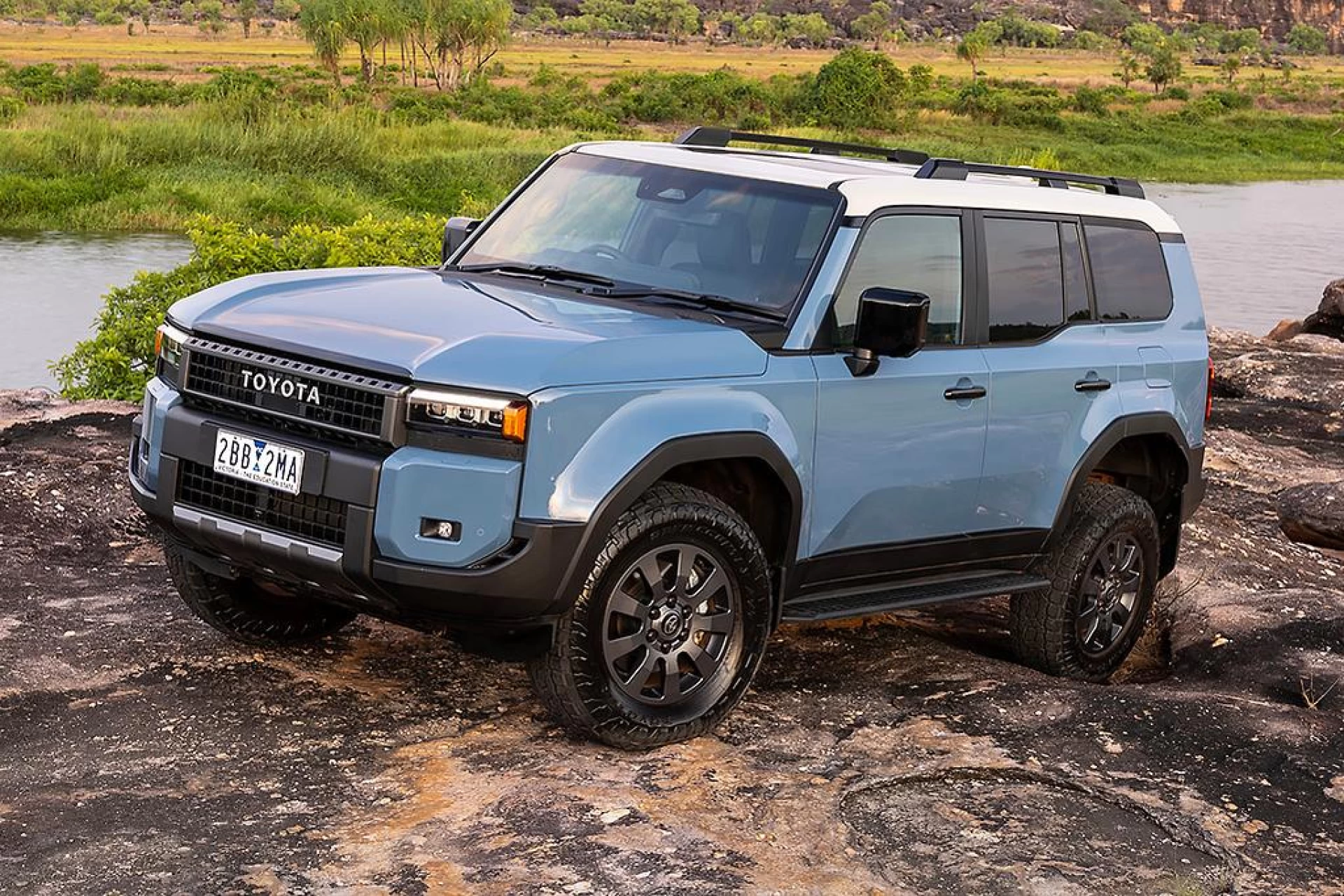
A Prado can suit couples who want comfort and four-wheel-drive capability in one vehicle.
Its cabin is generally pleasant for long road journeys, while interior space can accommodate luggage and camping supplies for two travelers.
With one rooftop tent, it becomes a practical compact safari setup.
Toyota Land Cruiser 70 Series
Travelers planning rugged routes often consider the Land Cruiser 70 Series.
This platform has a long reputation for demanding African conditions.
Long-wheelbase versions provide useful storage space and can carry substantial camping equipment.
The ride may feel more utilitarian than a luxury SUV, but durability is the main attraction.
Toyota Land Cruiser V8
A V8 Land Cruiser provides strong power and a comfortable interior.
For travelers combining Serengeti with long highway sections, this can make driving particularly pleasant.
Fuel consumption should be considered carefully.
A large engine can increase total safari costs over a long itinerary.
Land Cruiser Prado vs 70 Series for Serengeti
The Prado generally appeals to travelers prioritizing comfort.
A 70 Series often attracts those who place greater emphasis on rugged overland capability.
Neither option is automatically superior.
Match the Vehicle to the Route
A couple following established Northern Circuit roads may be very comfortable in a Prado.
Travelers extending into more demanding areas may prefer the additional ruggedness of a 70-series vehicle.
Vehicle condition remains more important than the model name.
Good tires, strong suspension and proper servicing can matter more than choosing the theoretically toughest Land Cruiser.
Automatic vs Manual Tanzania 4×4 Rental
Transmission preference should reflect your actual driving experience.
Automatic vehicles can make long safari days easier because the driver has fewer tasks to manage.
Manual transmissions appeal to travelers who already drive them confidently.
Do Not Learn on Safari
Tanzania is not the ideal destination for learning manual transmission.
Unfamiliar roads already require additional concentration.
Using a gearbox you understand allows greater attention to remain on wildlife, track conditions and navigation.
Comfortable driving improves safety.
Diesel vs Petrol Safari Vehicles
Diesel Land Cruisers remain popular for overland travel.
They often provide good low-speed torque and can be efficient relative to large petrol engines.
Petrol vehicles can feel smooth and powerful.
Fuel Economy Matters
Instead of choosing purely by engine type, ask the rental company for realistic fuel consumption.
Multiply that figure by the approximate distance of your itinerary.
A small difference in fuel consumption can become significant across a long Serengeti, Ngorongoro and Tarangire road trip.
Single Rooftop Tent for Two Travelers
Couples typically need one double rooftop tent.
This configuration keeps the vehicle relatively simple while preserving storage space.
Request the actual mattress dimensions before booking.
Sleeping Comfort Matters
A tent can look large in promotional photographs and feel very different once two people and their bedding are inside.
Mattress thickness should also be considered.
Long safaris become considerably more enjoyable when the sleeping setup is comfortable.
Double Rooftop Tent Vehicles
Groups of three or four may require two rooftop tents.
Some Land Cruisers can carry separate sleeping units on a heavy-duty roof system.
This creates more privacy than placing several adults in one family tent.
Extra Weight Changes the Vehicle
Two tents, additional passengers and more camping equipment increase vehicle weight.
Storage also becomes more important.
The rental company should recommend a vehicle that can comfortably accommodate the complete load rather than simply adding another tent to the smallest available 4×4.
Family Roof-Tent Vehicle Hire for Serengeti
Families need to think beyond sleeping capacity.
Children, luggage, food, water and camping gear can fill a vehicle quickly.
A larger Land Cruiser may provide much better comfort over long distances.
Keep Family Driving Days Reasonable
Adults may tolerate long transfers more easily than children.
Build a slower itinerary with regular stops.
Arriving at camp early gives families enough time to set up, prepare dinner and relax before darkness.
What Should Be Included with a Serengeti Roof-Tent Rental?
Rental packages vary widely.
A quotation should therefore state exactly what is included.
Never assume that equipment shown in website photographs automatically comes with the rental.
The Rooftop Tent
The tent should be clean, weather-resistant and securely mounted.
A fitted mattress is normally expected.
Check zippers, windows, mesh screens, ladders and straps during handover.
Understanding how everything works before leaving Arusha prevents frustration later.
Bedding for Serengeti Camping
Bedding arrangements differ among rental companies.
Some provide sheets and pillows, while others include sleeping bags or blankets.
Night temperatures can vary.
Prepare for Cool Nights
Parts of northern Tanzania, especially higher-altitude areas around Ngorongoro, can feel surprisingly cool.
Travelers should not pack only for daytime heat.
Comfortable bedding and warm clothing can make campsite evenings much more enjoyable.
Camping Chairs and Table
A rooftop tent solves sleeping accommodation.
Comfort outside the tent depends on the remaining equipment.
Folding chairs make a considerable difference after a long game drive.
A Stable Table Is Valuable
Cooking and eating become much easier with a proper table.
Check whether enough chairs are supplied for everyone in the vehicle.
Furniture should be durable enough for repeated use on uneven ground.
Cooking Equipment for Serengeti Camping
Self-catering allows travelers to reduce restaurant dependence.
A practical kitchen setup usually includes a stove, pots, frying pan, plates, mugs and utensils.
Complex meals are unnecessary.
Keep Food Simple
Rice, pasta, eggs, vegetables, bread, fruit and other easy meals work well.
Plan according to refrigeration capacity.
Long journeys between supermarkets require thoughtful provisioning before entering remote safari areas.
Why a Camping Fridge Is Important
A powered refrigerator can be one of the most useful additions to a Serengeti camping vehicle.
Hot daytime conditions can make food storage difficult without refrigeration.
Cold drinking water is also welcome after long dusty drives.
Ask About the Battery System
The fridge needs power while the vehicle is parked.
Some camping Land Cruisers have auxiliary batteries specifically for this purpose.
Ask how long the fridge can operate with the engine off and how the system recharges.
Protecting the primary starting battery is essential.
Water Storage for Serengeti Road Trips
Water should be planned conservatively.
Every traveler needs sufficient drinking water.
Cooking and cleaning increase the total requirement.
Carry More Than the Minimum
Unexpected delays can occur.
Road conditions may slow progress or a planned supply stop may not work out.
Maintaining an extra reserve gives travelers a valuable safety margin.
Spare Tires and Wheel-Changing Equipment
Punctures are a realistic possibility on rough safari roads.
The vehicle should carry a usable spare tire and appropriate tools.
Remote routes may justify carrying two spares.
Inspect Every Spare Tire
A spare wheel is useless if it is already damaged or flat.
Check pressure during vehicle handover.
Locate the jack and wheel spanner before leaving the rental base.
Recovery Equipment for Tanzania Safari Roads
More remote itineraries may include tow straps, a shovel or additional recovery tools.
Equipment requirements depend on route and season.
Travelers should not carry complicated recovery systems they do not understand.
Ask for a Demonstration
If a rental company supplies specialized equipment, request instructions.
Knowing how to use basic tools before a problem occurs is far easier than trying to learn under pressure.
How Much Does Roof-Tent Vehicle Hire for Serengeti Safaris Cost?
Rental prices vary by company, model, season and equipment.
Larger Land Cruisers generally cost more than compact alternatives.
Multiple rooftop tents can also increase the rate.
Longer Rentals May Offer Better Daily Value
A two-week hire may receive a lower daily rate than a short rental.
Ask for a quotation based on exact travel dates.
Comparing generic website rates rarely gives the full picture.
Understanding the Real Serengeti Self-Drive Cost
The rental price represents only one part of the safari budget.
Fuel is another major expense.
National-park entry, vehicle charges and campsite fees must also be included.
Add Food and Logistics
Camping reduces accommodation costs but does not eliminate daily expenses.
Food, drinking water and occasional restaurant meals still need to be budgeted.
Airport delivery, additional drivers or special equipment may also carry charges.
Why the Cheapest Rental Can Cost More
A very low rate can become expensive once exclusions are added.
Camping equipment may be charged separately.
Mileage restrictions can create additional fees.
Airport delivery might also increase the total.
Mechanical Reliability Has Value
A breakdown during an expensive national-park itinerary can cost far more than the amount saved on the original rental.
Choose value rather than the lowest headline number.
Strong maintenance and dependable support are worth paying for.
Insurance for Roof-Tent Vehicle Hire for Serengeti Safaris
Insurance should be examined carefully.
Different rental companies offer different levels of coverage.
Understand the excess or deductible before paying.
Ask About Specific Damage
Windscreens, tires, underbody components and rooftop equipment may have separate conditions.
Water damage can also be excluded.
Never assume that the phrase “insured vehicle” means every possible type of damage is covered.
Security Deposit Requirements
Many companies require a refundable security deposit.
The amount and payment method should be provided before vehicle collection.
Ask how long refunds usually take.
Record Existing Damage
Photograph scratches, dents and damaged trim during handover.
Include the roof rack and tent.
A clear record protects both renter and vehicle owner if questions arise later.
Roadside Assistance in Tanzania
Good roadside support deserves significant weight when comparing rental companies.
Serengeti is far from major urban repair centers.
A mechanical problem can therefore require coordination.
Understand the Emergency Procedure
Save emergency contacts offline.
Ask whether support operates after normal office hours.
Travelers should also understand what happens if the original vehicle cannot continue the journey.
Unlimited Mileage for Serengeti Car Rental
Unlimited mileage can simplify long road trips.
Travelers do not need to calculate every detour.
Nevertheless, the term should be read carefully.
Geographic Restrictions May Still Apply
A rental may offer unlimited kilometers while prohibiting specific roads or countries.
Discuss your itinerary openly with the rental provider.
Written approval is particularly important for remote or cross-border routes.
Arusha as the Gateway to Serengeti
Arusha is the most common starting point for northern Tanzania safaris.
The city provides supermarkets, fuel, accommodation and tourism services.
Travelers can prepare thoroughly before entering the safari circuit.
Complete the Vehicle Handover Carefully
Do not schedule a rushed departure.
Inspect the vehicle, open the tent and verify camping equipment.
A proper handover can take time, especially when several travelers need instruction.
Kilimanjaro Airport Roof-Tent Vehicle Collection
Travelers flying into Kilimanjaro International Airport can arrange delivery or transfer to the rental company’s base.
Ask whether airport collection is included.
Late international arrivals deserve special planning.
Consider an Overnight Before Driving
Fatigue increases risk.
Spending the first night near Arusha or Kilimanjaro allows travelers to begin fresh.
The following morning can then be used for inspection, provisioning and route preparation.
Arusha to Tarangire with a Roof-Tent Vehicle
Tarangire often makes a logical first major safari stop.
Its landscapes differ substantially from Serengeti and feature extensive baobab scenery.
Wildlife viewing can be excellent.
Avoid Rushing Through Tarangire
Travelers sometimes treat the park as a quick stop before Ngorongoro.
Allow enough time to explore.
Self-drive travel is most rewarding when destinations receive proper attention.
Lake Manyara and Karatu Stopovers
The Lake Manyara and Karatu area fits naturally into a Northern Circuit road trip.
Karatu provides fuel, shops and accommodation options.
It can also serve as a useful place to reorganize supplies.
Restock Before More Remote Areas
Check drinking water and food.
Refuel the Land Cruiser.
Review tire condition after earlier rough roads.
Small preventative checks reduce the chance of problems later.
Ngorongoro Before Serengeti
Many road trips continue through the Ngorongoro region before entering Serengeti.
The highlands offer dramatic scenery and cooler temperatures.
Driving conditions can also differ from the open plains.
Keep Warm Clothing Accessible
Morning and evening conditions may feel cold.
Do not bury jackets at the bottom of the vehicle.
Appropriate layers make stops and campsite evenings more comfortable.
Entering Serengeti National Park
Arrival in Serengeti is a major moment on any Tanzania road trip.
The landscape gradually opens, and the sense of scale becomes obvious.
Self-drive visitors should already understand current park entry procedures.
Carry Required Documents
Keep passports, permits and rental documents organized.
Digital copies can provide backup.
However, travelers should confirm which documents must be physically presented.
Central Serengeti Self-Drive Safari
The Seronera region is one of the best-known parts of Serengeti.
Permanent water and varied habitats support wildlife throughout much of the year.
This makes central Serengeti an important area for many first-time visitors.
Give Central Serengeti More Than One Day
Wildlife sightings change from hour to hour.
A multi-night stay allows travelers to explore several roads rather than rushing through the region.
Early morning and late afternoon game drives can be particularly rewarding.
Northern Serengeti with a Rooftop Tent
Northern Serengeti offers a different atmosphere.
Seasonal migration movements attract substantial attention during certain periods.
Distances become important when planning campsites.
Do Not Chase Wildlife Reports Recklessly
Current sightings can be useful.
However, avoid creating excessively long driving days simply to reach a reported herd.
Wildlife moves, and road conditions can slow progress.
Western Serengeti Road Trips
The western corridor provides another dimension to Serengeti.
Seasonal wildlife movements influence visitor patterns.
Travelers exploring this region should plan fuel and camping carefully.
Check Seasonal Relevance
Not every area offers the same experience throughout the year.
Current local information helps determine where additional driving is worthwhile.
Flexibility remains one of the advantages of a self-drive vehicle.
Southern Serengeti and Ndutu
The southern ecosystem becomes particularly famous during the calving period.
Wide plains can hold enormous concentrations of wildlife when conditions are favorable.
Road surfaces can change quickly after rain.
Black Cotton Soil Requires Caution
Certain soils become extremely slippery when wet.
A capable 4×4 helps, but driver judgment matters more.
Avoid unnecessary risks if local advice suggests conditions are difficult.
Great Migration with a Self-Drive 4×4
The Great Migration is dynamic.
Herds do not follow tourism calendars perfectly.
Rainfall and grazing influence movement.
Flexibility Is a Major Advantage
Roof-tent vehicle hire for Serengeti safaris allows travelers to adjust their movements within the practical limits of campsite bookings and park regulations.
Current reports can guide decisions.
However, no itinerary should depend entirely on seeing the migration at one exact location.
Wildlife You Can See in Serengeti
Serengeti is far more than wildebeest.
Lions are one of the park’s major attractions.
Cheetahs, leopards, elephants, buffaloes and giraffes also occur.
Smaller Wildlife Matters Too
Hyenas, jackals, warthogs and antelope contribute to the ecosystem.
Birdlife is equally impressive.
Slowing down allows travelers to notice far more than the largest animals.
Serengeti Game-Drive Etiquette
Self-driving creates freedom, but that freedom comes with responsibility.
Do not block roads around sightings.
Respect other vehicles.
Give Animals Space
Never pressure wildlife for a photograph.
Follow park rules regarding road use and stopping.
Responsible behavior protects both animals and visitors.
Can You Camp Anywhere in Serengeti?
No.
A rooftop tent does not provide permission to sleep wherever you want.
Use authorized campsites.
Camping Regulations Matter
Protected areas operate under specific rules.
These regulations help protect wildlife and maintain visitor safety.
Plan each overnight stop before beginning the day’s drive.
Public Campsites in Serengeti
Public campsites can provide one of the more affordable ways to stay inside the park.
Facilities are generally practical rather than luxurious.
Travelers should confirm what is available at their chosen site.
Be Self-Sufficient
Do not assume every campsite provides food or extensive services.
Carry enough drinking water and supplies.
A roof-tent vehicle works best when travelers can operate independently.
Special Campsites in Serengeti
Special campsites can provide greater privacy and a stronger wilderness atmosphere.
They may offer fewer permanent facilities.
Costs and reservation procedures can differ.
Isolation Requires Better Preparation
Travelers need sufficient food, water and equipment.
Wildlife awareness becomes particularly important.
Follow all instructions from park authorities.
Wildlife Around Serengeti Campsites
Animals may move through unfenced camping areas.
This is part of the experience and must be respected.
Do not leave food exposed.
Never Approach Wildlife at Camp
An elephant beside your vehicle is not an invitation to move closer.
Stay calm and give animals space.
Follow advice from campsite personnel whenever available.
Food Storage at Wildlife Campsites
Food smells can attract animals.
Keep supplies secured inside the vehicle or suitable storage.
Clean cooking equipment after use.
Manage Waste Carefully
Never leave rubbish around camp.
Dispose of waste according to park procedures.
Responsible food management reduces wildlife problems and keeps campsites cleaner for everyone.
Nighttime Safety at Serengeti Campsites
After dark, visibility is limited.
Use a strong headlamp.
Avoid wandering far from your vehicle.
Listen Before Moving Around
Wildlife can be nearby even when you cannot see it.
If there is uncertainty, remain close to the vehicle.
Safety should always take priority over convenience.
Is a Rooftop Tent Safe in Serengeti?
Rooftop tents are widely used for safari camping.
They provide an elevated sleeping platform and keep the sleeping area away from ordinary ground moisture.
However, they are not a substitute for wildlife awareness.
Elevation Does Not Remove Risk
Animals can still move around the vehicle.
Follow campsite rules.
Keep food secured and avoid unnecessary movement after dark.
How to Set Up a Rooftop Tent
Modern folding tents are generally straightforward.
The exact process depends on the model.
Practice during vehicle handover.
Set Up Before Darkness
Arriving at camp while there is still daylight makes everything easier.
Travelers can position the vehicle, inspect surroundings and organize cooking equipment before sunset.
A relaxed setup improves the entire evening.
Choosing a Level Parking Position
A relatively level surface improves sleeping comfort.
Avoid obvious drainage channels.
Think about how rainwater might move if weather changes overnight.
Consider Morning Departure
Park in a way that makes leaving straightforward.
Do not block other campers.
A little planning at arrival saves effort the following morning.
Rooftop Tent Setup in Wind
Wind can make elevated tents noisier.
Secure every strap and support according to the manufacturer’s design.
Do not improvise modifications.
Check Weather Conditions
If severe weather is expected, follow rental-company and campsite guidance.
Proper setup is essential.
Damaged fabric or unsecured equipment can create larger problems.
Packing the Tent Each Morning
Bedding may be able to remain inside some tents.
Other models require different packing arrangements.
Learn the correct procedure.
Check Every Strap
Before driving away, walk around the vehicle.
Confirm that covers and fasteners are secure.
Corrugated roads can place substantial strain on exterior equipment.
Driving Serengeti Corrugations
Corrugated roads are tiring for both travelers and vehicles.
Speed should reflect conditions.
Driving aggressively increases the risk of tire and suspension damage.
Protect the Vehicle
Reduce speed before severe sections.
Listen for unusual noises.
Periodic visual inspections are sensible during long rough-road days.
Driving in Dust
Dry-season tracks can produce large amounts of dust.
Leave sufficient distance behind other vehicles.
Close windows when necessary.
Protect Electronics
Cameras and laptops deserve particular care.
Keep unused equipment inside protective bags.
Fine dust can enter small openings remarkably easily.
Serengeti Driving During Rain
Rain can change road conditions quickly.
Tracks that were firm earlier may become slippery.
Standing water should be treated cautiously.
Do Not Assume Every Puddle Is Shallow
Depth and underlying surface can be difficult to judge.
When uncertain, seek local advice.
Avoid risking the vehicle merely to maintain a planned route.
Avoiding Night Driving
Driving after dark should generally be avoided.
Visibility is reduced, and wildlife may be harder to detect.
National-park movement rules may also limit driving times.
Plan Campsites Conservatively
Leave enough time for unexpected wildlife stops.
Do not plan arrival exactly at sunset.
A good itinerary contains a buffer.
Navigation Inside Serengeti
Offline digital maps can be useful.
Download them before entering areas with limited mobile coverage.
GPS should support rather than replace good judgment.
Carry Additional Navigation
A paper map or second device provides useful backup.
Remain on authorized roads.
Never create shortcuts across protected terrain.
Mobile Coverage in Serengeti
Coverage can be inconsistent.
Do not rely on continuous internet access.
Keep essential information available offline.
Save Important Contacts
Rental-company numbers, campsite details and emergency information should be stored locally on your phone.
A screenshot can be useful when internet access disappears.
Fuel Planning for Serengeti
Fuel management requires discipline.
Fill up at reliable opportunities.
Do not deliberately run the tank near empty.
Build a Reserve into Your Plan
Game drives create additional kilometers.
Unexpected route changes can also increase fuel consumption.
A reserve gives travelers more flexibility and reduces unnecessary stress.
Fuel Consumption of Rooftop-Tent Land Cruisers
A fully loaded vehicle can consume more fuel than expected.
Roof equipment increases aerodynamic drag.
Rough roads also affect efficiency.
Use Realistic Figures
Ask for actual safari consumption estimates.
Manufacturer laboratory figures rarely reflect a loaded camping vehicle traveling on corrugated roads.
Conservative budgeting is wiser.
Food Shopping Before Serengeti
Arusha and larger towns are the best places for major provisioning.
Buy enough food for the expected period between reliable shops.
Keep meals simple.
Do Not Overbuy Perishables
Refrigerator capacity is limited.
Dry goods and shelf-stable products are useful.
Balance convenience with storage space.
Drinking Water
Carry plenty of potable water.
Hot weather and long game drives increase consumption.
Do not rely on finding bottled water at every campsite.
Refill Early
Top up supplies when dependable sources are available.
Waiting until water is almost finished creates unnecessary risk.
Photography from a Self-Drive Land Cruiser
Independent travel is especially attractive to photographers.
You can spend more time at suitable sightings.
Windows and vehicle positions can provide useful shooting angles.
Bring a Beanbag
A camera beanbag can stabilize longer lenses on windows.
Keep equipment away from dust whenever possible.
Battery charging should also be considered before entering the park.
Charging Cameras and Phones
Camping vehicles may provide USB sockets or an inverter.
Ask what is included.
High-powered devices can place additional demand on electrical systems.
Carry Power Banks
Portable batteries provide valuable backup.
Charge equipment while driving when appropriate.
Avoid discovering at sunset that every camera battery is empty.
Binoculars for Serengeti Safaris
Binoculars significantly improve wildlife viewing.
Not every animal approaches the road.
Good optics allow travelers to observe behavior from a respectful distance.
One Pair per Traveler Is Ideal
Sharing works, but individual binoculars reduce frustration.
They are particularly valuable for birdwatching and distant predators.
What to Wear on a Serengeti Camping Safari
Lightweight clothing works well during warm days.
Neutral colors are practical.
Layers help adapt to changing temperatures.
Pack Something Warm
Early mornings can feel cool.
Ngorongoro can be significantly colder.
A fleece or light jacket deserves space in the vehicle.
Headlamps for Camping
A headlamp keeps both hands free.
This makes cooking, organizing equipment and climbing the tent ladder easier.
Carry spare batteries.
Bring Backup Lighting
A small lantern is useful around the table.
Red-light modes can help preserve night vision.
Reliable lighting improves campsite safety.
Toilets and Showers at Campsites
Facilities vary.
Some campsites provide basic toilets and showers.
Others are more limited.
Set Expectations Correctly
A Serengeti camping safari emphasizes location and wildlife rather than luxury bathrooms.
Travelers who require additional comfort can mix camping nights with lodges.
Combining Camping and Lodges
A mixed itinerary often works extremely well.
Several nights in a rooftop tent can be followed by a lodge stay.
This gives travelers access to showers, restaurants and laundry.
Comfort Can Improve Longer Trips
A lodge night can provide a useful reset.
Camping then feels exciting again rather than exhausting.
This balance is particularly effective on two-week itineraries.
Seven-Day Serengeti Rooftop-Tent Safari
Seven days requires careful focus.
Trying to include every northern Tanzania attraction creates excessive driving.
Choose priorities.
Keep the Route Compact
Arusha, Ngorongoro and selected Serengeti areas can form the core.
Tarangire may be added depending on timing.
Spend enough nights in Serengeti to justify the drive.
Ten-Day Serengeti Self-Drive Safari
Ten days creates much more flexibility.
Travelers can include Tarangire, Ngorongoro and several Serengeti nights without rushing every transfer.
Restocking opportunities can be incorporated.
Allow Flexible Wildlife Time
Additional days let travelers respond to sightings and conditions.
A self-drive itinerary should have room to breathe.
That flexibility is part of its value.
Two-Week Tanzania Roof-Tent Safari
Fourteen days is an excellent duration for the Northern Circuit.
Multiple-night stays become easier.
Driving fatigue decreases.
Slow Travel Improves Wildlife Viewing
Extra days should not automatically mean more destinations.
Use additional time to explore fewer areas properly.
Quality generally beats quantity.
Three-Week Tanzania Overland Safari
Three weeks opens the possibility of broader exploration.
Travelers can combine northern Tanzania with Lake Natron or other regions depending on conditions.
Longer rentals may also provide improved daily pricing.
Build in Rest Days
Continuous driving becomes tiring.
A quiet day in one location can restore energy.
Overland travel is more enjoyable when every day is not a race.
Best Time for Roof-Tent Vehicle Hire for Serengeti Safaris
The best period depends on interests.
Dry conditions appeal to travelers concerned about road difficulty.
Green-season landscapes can be exceptionally beautiful.
Wildlife patterns also change throughout the year.
Migration Interests Influence Timing
Travelers focused on the Great Migration should research general seasonal movement.
Even then, nature does not follow exact dates.
Flexible expectations are essential.
Dry-Season Serengeti Self-Drive
Dry weather can make many routes easier.
Wildlife may concentrate around reliable water sources.
Dust becomes a major factor.
Book Early
Popular periods can create high demand for Land Cruisers and campsites.
Families needing two tents should reserve particularly early.
Specific vehicle configurations are limited.
Green-Season Roof-Tent Safari
Green landscapes create striking photography.
Visitor numbers may differ from peak periods.
Rain brings additional road challenges.
Choose the Vehicle Carefully
Good tires become even more important.
Drivers should be comfortable adjusting routes when conditions change.
Adventure should never become unnecessary risk.
Serengeti Safari for Couples
A couple can travel efficiently with one rooftop tent.
Camping equipment takes less space than for larger groups.
Fuel and vehicle costs can be shared.
A Great Adventure for Two
Cooking together and setting up camp become part of the experience.
Couples should both understand basic vehicle and tent operation.
Sharing responsibilities reduces fatigue.
Serengeti Honeymoon with a Rooftop Tent
Adventurous honeymooners can create a memorable combination of wilderness and privacy.
Camping nights offer direct connection with the landscape.
Luxury does not need to disappear entirely.
Add Selected Lodge Nights
A comfortable lodge after several camping nights can feel particularly special.
This mixed approach can also cost less than using premium accommodation throughout the safari.
Solo Roof-Tent Vehicle Hire for Serengeti Safaris
Solo self-drive offers complete independence.
The traveler controls every decision.
Costs are higher per person because rental and fuel are not shared.
Manage Fatigue Carefully
There is no second driver.
Keep transfer days reasonable.
Regular breaks become especially important.
Serengeti Family Camping Safaris
Families can enjoy self-drive travel when the setup matches their needs.
Choose enough sleeping space.
Plan sufficient storage.
Keep Children Comfortable
Long drives should be broken into manageable sections.
Snacks, water and shade matter.
The best family safari is rarely the one covering the greatest distance.
Self-Drive vs Hiring a Driver-Guide
Self-driving gives travelers control.
A driver-guide provides local road knowledge and removes driving pressure.
Both styles have advantages.
Experience Should Guide the Decision
Travelers comfortable with 4×4 road trips may love self-drive freedom.
Others will enjoy the safari more with a professional behind the wheel.
Choose the option that reduces stress.
First-Time Africa Self-Drive Travelers
Serengeti can be an exciting first African road trip for well-prepared travelers.
It should not be approached casually.
Road conditions and wildlife environments differ from ordinary rental-car travel.
Start Conservatively
Choose a well-supported route.
Avoid extreme distances.
Learn the vehicle properly before entering remote areas.
Confidence grows quickly with sensible preparation.
Cross-Border Roof-Tent Vehicle Hire
Some travelers combine Tanzania with Kenya, Rwanda or Uganda.
This requires specific rental-company authorization.
International vehicle travel should never be assumed.
Paperwork Must Be Prepared
Insurance, customs documentation and letters of authority may be necessary.
Tell the rental provider every country you plan to visit.
Written confirmation protects everyone.
Tanzania to Kenya Self-Drive Safari
Tanzania and Kenya create a natural safari combination.
Travelers may want to connect Serengeti with the wider East African ecosystem.
Vehicle logistics can be more complicated than personal travel arrangements.
Check Return Conditions
A Tanzania vehicle may need to return to its original country.
One-way international arrangements can be expensive.
Plan the car before booking a complex flight itinerary.
Tanzania to Rwanda Road Trip
Rwanda provides a completely different landscape.
Travelers can combine Serengeti game drives with mountain gorilla trekking in Volcanoes National Park.
The wildlife contrast is exceptional.
Give the Journey Enough Time
Tanzania and Rwanda should not be rushed.
Long road distances require realistic planning.
Alternatively, travelers may return the rental and fly between countries.
Tanzania to Uganda Overland Adventure
Uganda adds chimpanzees, gorillas and additional savannah parks.
Experienced travelers may enjoy a longer multi-country expedition.
Cross-border rental conditions become extremely important.
Consider a Wider East Africa Itinerary
Rwanda can also be included.
This creates a journey combining Serengeti, primates and diverse landscapes.
Allow several weeks rather than attempting to compress everything into a short holiday.
How to Compare Serengeti Vehicle Rental Companies
Start with vehicle condition.
Then compare included camping equipment.
Insurance should receive equal attention.
Look Beyond Website Photographs
Ask about the actual model you will receive.
Request current vehicle images if necessary.
Understand mileage, roadside support and security deposits.
Transparency is one of the strongest indicators of a good rental experience.
Questions to Ask Before Booking
Find out whether the vehicle model is guaranteed.
Confirm transmission and fuel type.
Ask exactly which camping equipment is supplied.
Clarify the Financial Terms
Understand insurance excess and deposit requirements.
Check additional-driver fees.
Request information about airport delivery, mileage and cancellation policies.
Clear answers make companies easier to compare.
Common Mistakes with Serengeti Roof-Tent Hire
Booking purely by price is a frequent mistake.
Poor route planning creates another problem.
Travelers also underestimate fuel and driving time.
Skipping the Vehicle Inspection
Never rush away from Arusha.
Test the tent.
Inspect tires.
Verify camping equipment.
The handover is one of the most important parts of the rental.
Another Common Mistake: Driving Too Far
Online maps can create unrealistic expectations.
Safari-road speeds differ from highway speeds.
Wildlife stops add time.
Shorter Days Are Better
Arrive at camp before dark.
Leave space for unexpected sightings.
A slower safari usually produces stronger memories.
Responsible Self-Drive Safari Travel
Stay on authorized roads.
Respect wildlife.
Dispose of rubbish properly.
Support local communities where possible.
Protect Serengeti
Independent travelers share responsibility for conservation.
A vehicle gives access to remarkable places.
Use that access carefully.
Roof-Tent Vehicle Hire for Serengeti Safaris and Conservation
Park fees contribute to protected-area management and conservation.
Responsible tourism also creates economic incentives for maintaining wildlife habitats.
Travelers should understand that a low-impact safari requires cooperation.
Follow Every Park Rule
Road restrictions protect fragile ecosystems.
Speed limits reduce wildlife risk.
Camping regulations help manage human activity.
Respecting these rules improves Serengeti for future visitors.
Frequently Asked Questions About Serengeti Roof-Tent Vehicle Hire
The questions below cover common concerns raised by travelers planning independent Tanzania safaris.
Can I Rent a Roof-Tent Vehicle for Serengeti?
Yes. Equipped 4×4 vehicles are available for Tanzania self-drive safaris, subject to rental-company conditions and current park requirements.
Which Vehicle Is Best for Serengeti?
Toyota Land Cruisers are among the most practical choices because of their ground clearance, durability and four-wheel-drive capability.
Do I Need a 4×4?
A capable 4×4 is strongly recommended for Serengeti travel, particularly when road conditions become rough or wet.
Can I Sleep Inside Serengeti?
Travelers can stay at authorized campsites according to applicable park booking and camping regulations.
Can I Camp Anywhere with a Rooftop Tent?
No. Rooftop tents do not create permission for unrestricted camping.
Is Camping Equipment Included?
It depends on the rental company. Request a complete equipment inventory before paying.
Does the Tent Include a Mattress?
Most rooftop-tent setups include a fitted mattress, although bedding policies vary.
Are Serengeti Park Fees Included in Car Hire?
Normally, park and conservation fees are separate unless the rental package specifically states otherwise.
Is Fuel Included?
Fuel is generally the renter’s responsibility.
Is Unlimited Mileage Available?
Some companies offer unlimited mileage, but geographic restrictions may still apply.
Can I Hire from Arusha?
Yes. Arusha is one of the main starting points for Northern Circuit roof-tent safaris.
Can the Vehicle Be Delivered to Kilimanjaro Airport?
Many rental providers can arrange airport delivery or transfers, sometimes for an additional fee.
Can I Rent an Automatic Land Cruiser?
Automatic vehicles may be available. Book early when transmission choice is important.
Can I Use a V8 Land Cruiser?
Yes. A V8 provides strong performance, although fuel consumption should be included in your budget.
Is a Prado Suitable for Serengeti?
A properly maintained Prado can work well on established Serengeti routes when conditions are appropriate.
Can Families Use Rooftop Tents?
Yes. Family tents or dual-tent setups can accommodate larger groups depending on the vehicle.
Is Rooftop Camping Safe Around Lions?
Camping in wildlife areas requires strict adherence to park and campsite safety procedures. Never approach animals or leave food unsecured.
Can Animals Enter Campsites?
Wildlife can move through unfenced areas. Travelers must remain alert and follow local instructions.
Do Serengeti Campsites Have Showers?
Facilities vary. Some public campsites provide basic amenities, while other sites can be more limited.
Can I Cook at Camp?
Cooking is possible at appropriate campsites. Food should always be stored securely.
Can I Drive During the Rainy Season?
Yes, but roads may become considerably more difficult. A capable vehicle and flexible planning are essential.
Can I Cross into Kenya?
Potentially, but only with permission and appropriate cross-border vehicle documents.
Can I Take the Vehicle to Rwanda or Uganda?
Some rentals permit wider East Africa travel. This needs to be arranged in advance.
How Many Days Should I Spend in Serengeti?
Several nights are recommended. A longer stay allows travelers to explore more than one region without rushing.
How Long Should the Whole Northern Circuit Take?
Ten to fourteen days provides a comfortable timeframe for many self-drive itineraries combining Serengeti with other northern Tanzania destinations.
Is a Self-Drive Safari Cheaper Than a Lodge Safari?
Camping can reduce accommodation expenses, although vehicle, fuel, park and campsite costs remain significant.
Do I Need Off-Road Driving Experience?
Experience helps, particularly during wet conditions or on remote tracks. Less confident travelers may prefer a professional driver.
Is Roadside Assistance Important?
Yes. Strong support is particularly valuable when traveling far from major towns.
Should I Book My 4×4 Early?
Advance booking is wise during popular periods, especially when you require a particular vehicle or multiple rooftop tents.
Why Arrange Roof-Tent Vehicle Hire for Serengeti Safaris with Universal Ventures Rwanda?
Planning an East Africa self-drive journey involves more than reserving a Land Cruiser.
Vehicle choice must fit the route, group size and travel season.
Cross-border paperwork may also become important.
One Journey Across East Africa
Universal Ventures Rwanda can assist travelers planning safari arrangements that connect Tanzania with Rwanda, Uganda and other East African destinations.
This is particularly useful for travelers combining Serengeti wildlife with gorilla trekking.
Combine Serengeti with Rwanda Gorilla Trekking
Serengeti and Volcanoes National Park offer two completely different wildlife experiences.
Tanzania delivers open savannah and classic game drives.
Rwanda provides forest trekking and encounters with mountain gorillas.
Create a Diverse Wildlife Journey
A well-designed itinerary can include both.
Travelers can experience lions, elephants and wildebeest before continuing toward one of Africa’s most iconic primate experiences.
Transport and permit logistics should be arranged early.
Combine Serengeti with Uganda Gorilla Trekking
Uganda provides another excellent extension.
Bwindi Impenetrable National Park and Mgahinga offer mountain gorilla trekking.
Kibale adds chimpanzee experiences.
Build Enough Time into the Itinerary
Multi-country journeys should not become endurance tests.
Allow reasonable travel days.
Spend enough time in each destination to justify the distance.
Final Guide to Roof-Tent Vehicle Hire for Serengeti Safaris
Choosing Roof-tent vehicle hire for Serengeti safaris creates a level of independence that traditional group tours cannot always provide. Your vehicle becomes transportation, storage and accommodation while giving you greater control over your daily safari schedule.
The most successful trips begin with the right vehicle.
A properly maintained Toyota Land Cruiser, suitable tires and functional four-wheel-drive system matter more than choosing the cheapest advertisement.
Prioritize the Complete Rental Package
Look carefully at camping equipment.
A good rooftop tent should be supported by useful furniture, cooking equipment, water storage and appropriate sleeping gear.
A refrigerator can add substantial convenience.
Recovery equipment and usable spare tires provide additional confidence on remote roads.
Calculate the Total Safari Cost
Daily rental price is only the beginning.
Fuel, park entrance, vehicle fees, camping charges, food and optional equipment all contribute to the complete budget.
Insurance and security-deposit conditions should also be understood before departure.
Give Serengeti Enough Time
Do not rush the park.
Central Serengeti alone can justify several days.
Travelers interested in northern, western or southern areas need additional time.
Wildlife viewing becomes more rewarding when the itinerary leaves room for unexpected sightings.
Respect the Road Conditions
Corrugations, mud and dust are normal parts of Tanzania safari travel.
Adjust speed accordingly.
Allow extra driving time.
Avoid unnecessary night travel.
Listen to current local advice when rain affects roads.
Camp Responsibly
Use authorized campsites.
Secure food.
Respect wildlife.
Keep the environment clean.
A rooftop tent offers freedom, but that freedom depends on responsible behavior inside protected areas.
Enjoy the Independence
Ultimately, the greatest attraction of Roof-tent vehicle hire for Serengeti safaris is the ability to experience Tanzania as a journey rather than a sequence of hotel reservations.
You wake up inside one of the world’s great wildlife regions, pack your mobile camp and start another day of exploration.
The road ahead may bring elephants, lions, vast herds or simply an extraordinary landscape.
That uncertainty is part of what makes a Serengeti self-drive adventure unforgettable.
Contact Universal Ventures Rwanda
For customized Roof-tent vehicle hire for Serengeti safaris, Tanzania 4×4 rental arrangements and East Africa safari planning, contact Universal Ventures Rwanda.
We can assist travelers planning Tanzania self-drive routes, multi-country adventures, Rwanda gorilla trekking extensions, Uganda safaris and personalized East Africa itineraries.
Universal Ventures Rwanda
Address: KK 15 Road, BRGD Building – Opposite IPRC Entrance, Kigali, Rwanda
Email: info@universalventuresrwanda.com
Call / WhatsApp: +250 781 441 853