
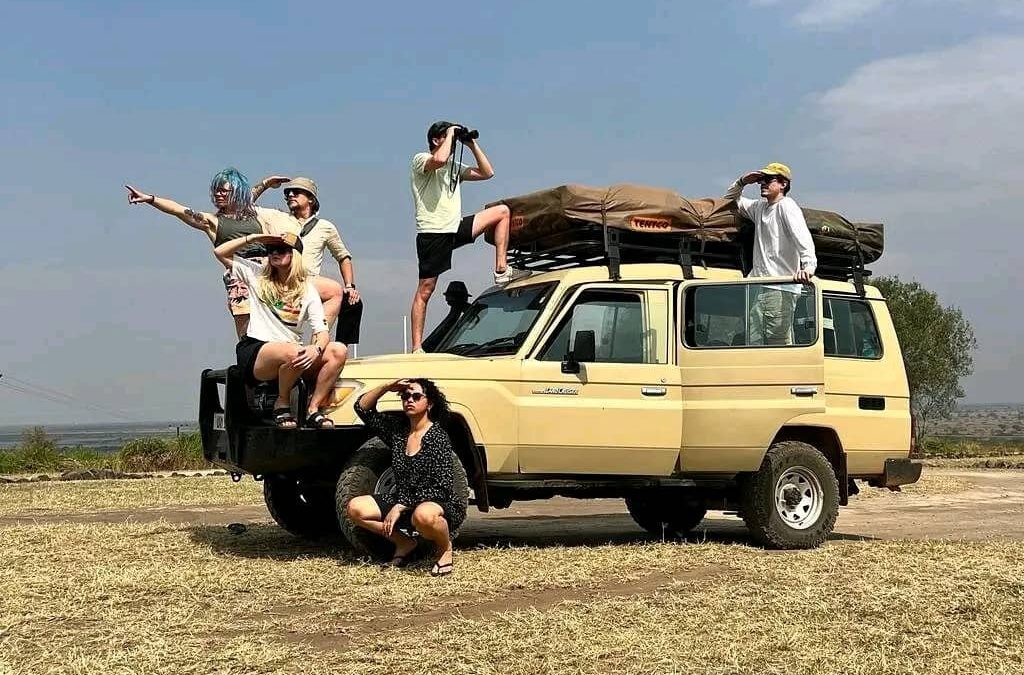
A Self-drive 4×4 rental East Africa adventure gives travelers one of the most flexible ways to discover Rwanda, Uganda, Kenya and Tanzania. Instead of following a fixed group-tour schedule, you control the road, the stops, the daily pace and the places that deserve more of your time. A reliable four-wheel-drive vehicle can take you from modern East African capitals to mountain landscapes, rainforest regions, remote safari lodges, lakeshores and some of Africa’s greatest wildlife destinations.
East Africa rewards travelers who slow down enough to experience the journey between the famous attractions. Flying may save time, but driving reveals changing landscapes, farming communities, mountain roads, roadside towns, valleys and open savannahs that form an important part of the region.
Why Choose Self-Drive 4×4 Rental East Africa?
Freedom remains the strongest reason to choose a self-drive journey.
A private rental vehicle allows you to start the morning when you want, stop at viewpoints that interest you and adjust the route without constantly coordinating with a larger tour group. Photographers can spend more time around productive wildlife areas. Couples gain privacy. Families can schedule breaks around children rather than fixed transfer times.
East Africa also suits overland travel because several completely different safari environments can fit into one regional itinerary.
Rwanda combines rolling hills, volcanic landscapes, mountain gorillas, rainforest and Big Five wildlife. Uganda adds gorilla trekking, chimpanzees, savannah parks, crater regions and the River Nile. Kenya offers the Rift Valley, the Maasai Mara, Amboseli, Tsavo and Indian Ocean destinations. Tanzania completes the picture with Tarangire, Ngorongoro, the Serengeti and many less-traveled wilderness areas.
The right Self-drive 4×4 rental East Africa arrangement can connect these experiences without forcing you to fly between every destination.
Good preparation still matters. Travelers need an appropriate vehicle, realistic distances, adequate insurance, correct border documents and dependable roadside support.
Independence works best when preparation sits behind it.
Self-Drive East Africa Is About More Than Renting a Car
An ordinary car rental moves you from one place to another.
A safari rental becomes part of the journey.
Road conditions can range from smooth highways to gravel, mountain roads, deeply corrugated tracks and muddy national park routes. A vehicle therefore needs more than comfortable seats and air conditioning.
Ground clearance matters.
Tire condition matters.
Reliable suspension matters.
A functional spare wheel matters.
Roadside assistance matters.
When camping, roof capacity, electrical systems and storage matter too.
A professional East Africa self-drive arrangement should therefore match the vehicle to the route instead of simply offering whichever model happens to be cheapest.
Travelers should explain their full itinerary before booking. A one-week Rwanda lodge trip requires a different setup from a month-long camping expedition through Rwanda, Uganda, Kenya and Tanzania.
Choosing the Best 4×4 Rental for an East Africa Safari
Start with passenger numbers.
Two travelers can comfortably use vehicles that would feel restrictive for four adults with luggage. Families need enough space for passengers, bags, snacks and equipment. Photographers often carry additional cases, lenses and charging equipment.
Next, consider accommodation style.
Lodge-based travelers generally carry less equipment. Campers need room for tents, chairs, tables, cooking equipment, water and food.
Terrain comes next.
A mostly paved route does not demand the same vehicle capability as remote national parks or long cross-border journeys.
Finally, consider journey length.
A compact vehicle may feel comfortable during a weekend. Interior space becomes more important after two or three weeks on the road.
The cheapest daily price should never be the only factor in a Self-drive 4×4 rental East Africa decision.
Choose a vehicle that you will still appreciate after several hundred kilometers.
Toyota Land Cruiser Rental East Africa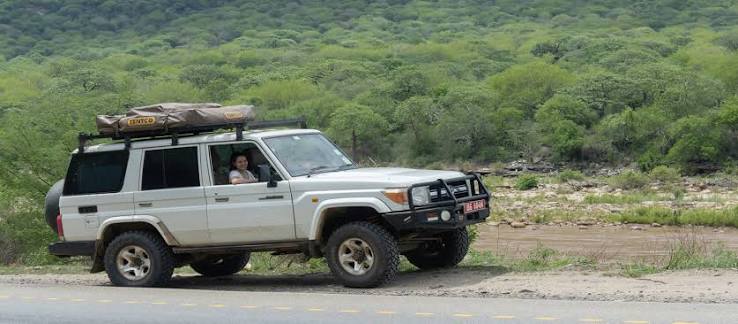
Few vehicles have become as closely associated with African safari travel as the Toyota Land Cruiser.
Its popularity comes from a combination of durability, high ground clearance, strong four-wheel-drive systems and widespread mechanical familiarity across the region.
Different Land Cruiser models serve different travel styles.
A Toyota Land Cruiser Prado offers a comfortable option for couples and small families. Hardtop Land Cruisers suit more demanding routes. Safari-configured models may include pop-up viewing roofs, while appropriate expedition vehicles can carry rooftop tents.
The Land Cruiser name alone does not tell you everything you need to know.
Ask for the exact model.
Confirm whether the vehicle uses an automatic or manual transmission.
Check luggage capacity.
Find out whether the quoted passenger number assumes minimal luggage.
Ask how many spare wheels come with the vehicle.
For long journeys, these practical details matter more than the photograph in the advertisement.
Toyota Land Cruiser Prado for Self-Drive East Africa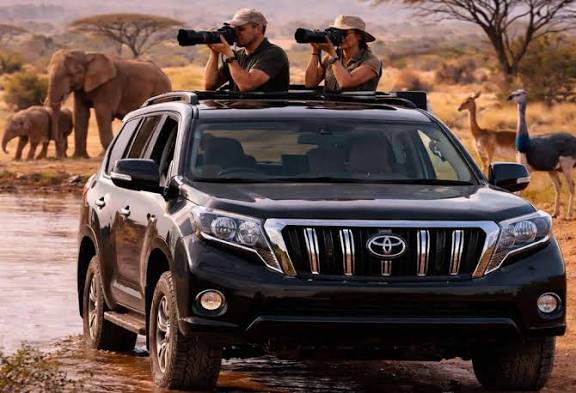
The Prado strikes a useful balance between safari capability and everyday comfort.
Travelers who normally drive modern SUVs often adapt to it quickly. Good interior comfort makes longer transfers easier, while its clearance and four-wheel-drive system allow it to handle many established safari routes.
Couples using lodges frequently find the Prado ideal.
Small families may also appreciate it.
Luggage requires attention, however. Four travelers with large rigid suitcases can reduce interior comfort quickly.
Soft-sided travel bags normally work better for safari road trips because they fit around irregular storage spaces.
A Prado also makes sense for travelers who want to combine Kigali, national parks and cross-border journeys without using a larger expedition-style vehicle.
Hardtop Land Cruiser for Rough Safari Roads
A hardtop Land Cruiser focuses more strongly on rugged travel.
These vehicles often suit travelers who prioritize durability over luxury.
High clearance, a strong chassis and practical cargo capacity make them useful on rough roads and longer expeditions.
An appropriate hardtop can also support rooftop camping equipment.
Travelers considering several countries should look closely at this category because long-distance journeys expose vehicles to more varied road conditions.
Comfort still matters. Before choosing a hardtop only because it looks adventurous, ask about seats, air conditioning, luggage arrangement and transmission.
A vehicle should be robust without making every paved-road transfer uncomfortable.
Toyota RAV4 for Budget Self-Drive Safaris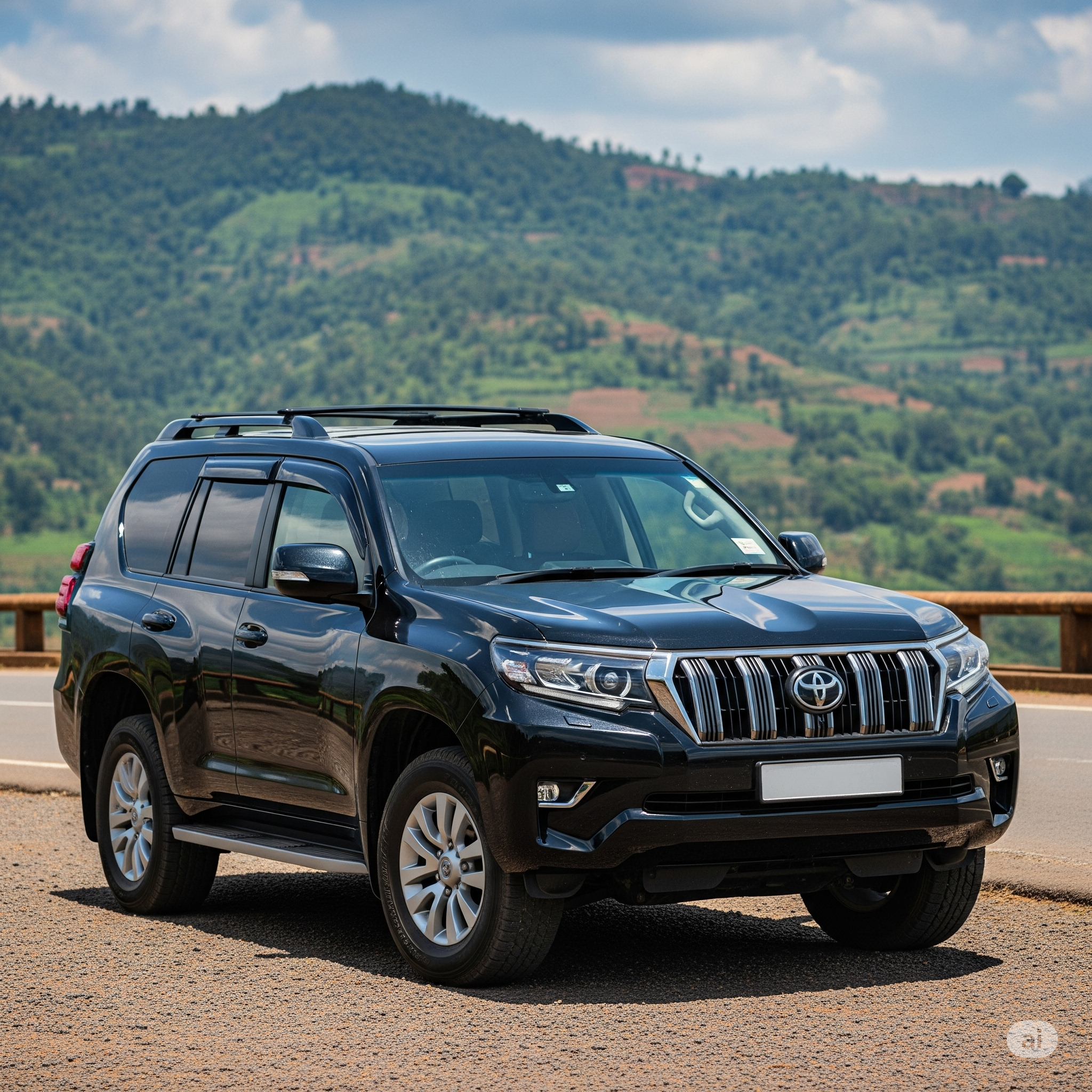
Not every route requires a Land Cruiser.
A Toyota RAV4 or similar compact 4WD can provide excellent value for travelers following relatively straightforward itineraries.
The vehicle normally consumes less fuel than a large Land Cruiser. It also feels easy to handle in cities and on paved highways.
For two travelers using lodges, a smaller SUV may reduce the total cost of the trip without sacrificing essential comfort.
Limitations become more important as terrain gets harder.
Ground clearance usually sits below that of a dedicated safari Land Cruiser. Luggage capacity is lower. Heavy rooftop camping setups may not suit every configuration.
Before selecting a RAV4, show the rental company your route.
Do not choose purely according to price and discover later that the most difficult part of the itinerary requires a different vehicle.
Safari Vehicles With Pop-Up Roofs
Wildlife viewing becomes easier when a vehicle includes a well-designed safari roof.
A pop-up roof allows passengers to stand safely inside the vehicle while observing animals from an elevated position.
This arrangement creates excellent viewing angles in open savannah destinations.
Photographers also gain flexibility when using long lenses.
Several passengers can view wildlife without competing for one side window.
Travelers should distinguish a pop-up viewing roof from a rooftop tent.
A pop-up roof helps with game viewing.
A rooftop tent provides sleeping accommodation.
Some rental descriptions can make these features sound similar, so confirm the exact setup before booking.
Self-Drive 4×4 Rental East Africa With Rooftop Tent
Camping creates one of the most adventurous versions of an East African road trip.
A rooftop tent allows travelers to carry sleeping accommodation directly above the vehicle.
At the campsite, the tent opens into an elevated sleeping platform that passengers reach using a ladder.
The system saves valuable interior room.
It also removes the need to search for flat ground every evening.
Couples particularly enjoy rooftop setups because one tent can provide a simple mobile camp.
Families or groups may need two tents or another arrangement.
Before booking Self-drive 4×4 rental East Africa with a rooftop tent, ask the company to confirm the tent’s capacity, mattress size, ladder arrangement and maximum load.
The vehicle and roof rack need to support the full system safely.
Camping Equipment for an East Africa Road Trip
The rooftop tent represents only one part of a camping package.
A useful setup may include bedding, chairs, a table, cooking equipment, plates, utensils, water containers and a gas cooker.
Some vehicles also carry refrigerators.
Ask for a complete inventory rather than relying on the words “full camping gear.”
Every rental operator defines that phrase differently.
A traveler expecting a refrigerator may discover that the standard package only contains a cooler box. Another traveler may assume sleeping bags come with the tent when only a mattress appears in the package.
Clarifying equipment before arrival helps prevent unnecessary shopping during the first day of the trip.
During vehicle handover, open the tent yourself.
Practice closing it.
Check the chairs.
Test the cooker.
Turn on the refrigerator.
The first time you learn the system should not be at an unfamiliar campsite after sunset.
Why Dual-Battery Systems Help Camping Safaris
Electrical equipment creates additional demands on camping vehicles.
A refrigerator, campsite lighting, phones, cameras and other electronics can consume power while the engine remains off.
A dual-battery system helps separate those demands from the main starting battery.
The setup can protect the vehicle from becoming impossible to start after a long night at camp.
Ask how the batteries operate before departure.
Understand which outlets use the auxiliary system.
If the vehicle carries a refrigerator, check how long it can operate when the engine remains switched off.
Travel photographers should pay particular attention because camera batteries, laptops and other equipment add further demand.
Self-Drive Safari Versus Safari With a Driver-Guide
Self-driving and guided travel each offer advantages.
A self-drive safari provides independence, privacy and control.
A professional driver-guide provides local knowledge and removes navigation responsibilities.
Guides understand wildlife behavior, park layouts and changing road conditions. They can also help communicate locally and adjust routes when circumstances change.
Travelers do not always need to choose one option for the entire holiday.
A mixed safari often works extremely well.
Use a Self-drive 4×4 rental East Africa vehicle for transportation between regions. Hire a specialist guide inside selected national parks. Join organized gorilla or chimpanzee activities. Return to independent driving afterward.
This combination gives travelers freedom while preserving access to expertise.
Self-Drive 4×4 Rental East Africa From Kigali
Kigali makes an excellent starting point for a regional road trip.
Rwanda’s relatively compact geography allows travelers to become comfortable with a rental vehicle before entering larger neighboring countries.
International visitors can spend their first night in Kigali and begin driving the next morning.
That arrangement makes more sense than collecting an unfamiliar vehicle immediately after a long overnight flight and starting a major transfer while tired.
From Kigali, travelers can drive east toward Akagera National Park, north toward Volcanoes National Park, west toward Lake Kivu or south toward Nyungwe.
A regional journey can later continue into Uganda.
Starting gradually helps drivers understand the vehicle, local traffic and road environment.
Self-Drive Rwanda by 4×4
Rwanda offers one of East Africa’s most manageable road-trip circuits.
Distances between major tourism regions remain reasonable compared with larger neighboring countries.
The variety is remarkable.
Kigali provides culture, restaurants and urban services.
Akagera brings savannah wildlife.
Volcanoes National Park introduces mountain scenery and primate trekking.
Lake Kivu adds lakeside relaxation.
Nyungwe offers rainforest, chimpanzees and dramatic southwestern landscapes.
A rental vehicle makes it possible to connect these regions without relying on fixed transfers.
Travelers still need to plan carefully because Rwanda’s hilly terrain can reduce average speed.
Mountain bends, cyclists, pedestrians and local traffic demand patience.
4×4 Self-Drive in Akagera National Park
Akagera gives independent travelers a chance to experience a traditional savannah safari within Rwanda.
The park combines hills, woodland, grasslands, lakes and wetland environments.
Game-drive tracks vary according to season and recent weather.
A high-clearance four-wheel drive provides useful flexibility.
Travelers can move according to wildlife activity rather than following a rigid group schedule.
Stopping longer at a good sighting often becomes one of the greatest benefits of self-driving.
Local guides can still add considerable value.
They know wildlife behavior and understand areas where animals have recently appeared.
Using your own rental vehicle with a local guide can combine independence with expertise.
Driving From Kigali to Volcanoes National Park
The road toward Volcanoes National Park takes travelers into Rwanda’s northern highlands.
As elevation increases, volcanic scenery begins to dominate the horizon.
Musanze and the surrounding areas provide the main accommodation base for gorilla and golden monkey activities.
Travelers planning a trek should stay near the park the previous night.
Early morning reporting times make this far more comfortable than attempting a pre-dawn drive from Kigali.
A self-drive vehicle then remains available for local exploration, accommodation transfers and the continuation toward Lake Kivu or Uganda.
Gorilla Trekking on a Self-Drive Safari
A road trip and gorilla trekking combine naturally.
The vehicle gives you independence before and after the activity, while the official trekking system manages the forest experience itself.
Travelers must secure appropriate permits.
Permit availability can influence the whole itinerary, so arrange important trekking dates before confirming non-refundable road-trip components.
After trekking, avoid scheduling a demanding transfer unless the distance remains short.
Gorilla encounters can involve several hours of hiking.
Travelers often appreciate a relaxed afternoon afterward.
A successful Self-drive 4×4 rental East Africa itinerary leaves space around major experiences instead of treating every day like a transport challenge.
Lake Kivu by Self-Drive Vehicle
Lake Kivu provides a natural change of pace after mountain and wildlife activities.
Travelers can explore different parts of the lake depending on the wider route.
The drive itself reveals western Rwanda’s mountainous scenery.
A lakeside stop works particularly well between Volcanoes National Park and southwestern Rwanda.
Instead of racing between activities, spend time beside the water.
Boat trips, coffee experiences and relaxed evenings can balance physically demanding trekking days.
Self-drive travel makes these slower transitions much easier to incorporate.
Nyungwe Road Trip
Southwestern Rwanda offers another completely different environment.
Nyungwe’s forest landscapes appeal to travelers interested in primates, hiking and rainforest scenery.
The road journey through western and southern Rwanda forms part of the experience.
Travel times may feel longer than the distance suggests because of mountain roads.
Plan conservatively.
Arriving before darkness gives travelers time to check into their accommodation and prepare for early activities.
Chimpanzee experiences require organization, so the itinerary should align accommodation and meeting points properly.
Uganda Self-Drive 4×4 Safari
Uganda creates a natural extension to a Rwanda road trip.
The country covers a larger area, which means travelers need more time between destinations.
Western Uganda contains many of its major tourism regions.
Bwindi and Mgahinga provide mountain gorilla trekking.
Queen Elizabeth National Park offers savannah wildlife, crater landscapes and the Kazinga Channel.
Kibale attracts travelers interested in chimpanzees.
Lake Mburo provides a convenient stop along southern routes.
Farther north, Murchison Falls combines wildlife with the River Nile.
Each region has a distinct character, which makes Uganda especially rewarding for road travel.
Self-Drive 4×4 Rental East Africa for Bwindi
Bwindi requires careful planning because different gorilla trekking sectors sit around different parts of the forest.
Travelers should never choose a lodge based only on the phrase “near Bwindi.”
The correct accommodation needs to match the trekking sector.
Road access also varies.
Mountain terrain and rain can make a proper 4WD valuable.
Travelers entering Uganda from Rwanda can often reach southwestern Uganda without going anywhere near Kampala first.
This geographical advantage makes a Rwanda-Uganda itinerary particularly efficient.
Share the exact permit location with the rental or safari company before finalizing the route.
Lake Bunyonyi on a Rwanda-Uganda Road Trip
Lake Bunyonyi provides an attractive place to slow down in southwestern Uganda.
Travelers often include it before or after gorilla trekking.
The landscape offers a major contrast to savannah safari areas.
A relaxed lake stay can also help break up a longer itinerary.
Self-driving gives visitors the flexibility to decide whether the lake becomes a short stop or a multi-night stay.
Road conditions approaching individual properties vary, so ask accommodation providers for current access advice.
Queen Elizabeth National Park Self-Drive Safari
Queen Elizabeth National Park fits naturally into a western Uganda road trip.
Travelers can move north from Bwindi toward the park and continue later toward Kibale.
Game drives introduce open wildlife landscapes after forest trekking.
The Kazinga Channel adds a water-based safari experience.
Different sections of the park offer different environments.
Allow enough time to explore rather than treating Queen Elizabeth as a single overnight stop.
Wildlife activity changes throughout the day.
Early starts and slower afternoons can produce better experiences than constant driving.
Kibale and Chimpanzee Trekking by 4×4
Kibale adds another important primate destination to a Uganda road trip.
Visitors can drive independently to the region and join organized chimpanzee trekking activities.
Nearby wetlands and community experiences can justify an additional night.
Arrive before the evening if a morning trek sits on the next day’s schedule.
A long transfer followed by an early forest activity creates unnecessary fatigue.
A strong self-drive itinerary balances driving with experiences rather than placing one immediately on top of another.
Murchison Falls Self-Drive Road Trip
Murchison Falls sits farther north than Uganda’s southwestern safari circuit.
Travelers need more time to include it comfortably.
The park rewards that extra distance with broad savannah landscapes, wildlife and the Nile.
Boat experiences add another perspective.
A regional journey can continue north after Kibale or approach Murchison earlier in the itinerary and work south.
Flight plans and vehicle drop-off arrangements often determine the most efficient direction.
Avoid needless backtracking whenever one-way rental logistics allow a better route.
Cross-Border Rwanda and Uganda Self-Drive Safari
Rwanda and Uganda form one of East Africa’s strongest two-country road-trip combinations.
The countries sit close together while offering complementary experiences.
A journey may begin in Kigali, continue to Akagera and Volcanoes National Park and then cross into Uganda.
From there, travelers can explore Bwindi, Queen Elizabeth, Kibale and additional destinations.
Finishing in Entebbe may make more geographical sense than returning all the way to Kigali.
One-way rental arrangements can make this possible.
Always tell the rental provider about international travel before collecting the vehicle.
Cross-border permission should form part of the booking from the beginning.
Changing Driving Sides Between Rwanda and Uganda
Rwanda drives on the right side of the road.
Uganda drives on the left.
The change requires concentration immediately after crossing the border.
Drivers should take particular care at roundabouts, junctions and turns, where old habits can appear automatically.
Avoid crossing the border when extremely tired.
The first hour in the new country deserves full attention.
Travelers uncomfortable with changing driving sides can use a professional driver for selected sections.
Kenya Self-Drive 4×4 Safari
Kenya offers an enormous range of road-trip possibilities.
Nairobi acts as the main gateway for many international travelers.
From the city, routes can move through the Rift Valley, toward famous wildlife areas or eventually toward the Indian Ocean coast.
Lake Naivasha provides a useful early stop.
The Maasai Mara delivers one of the region’s best-known wildlife experiences.
Amboseli creates spectacular elephant viewing and mountain scenery.
Tsavo connects inland safari routes with coastal Kenya.
Northern Kenya offers more adventurous possibilities for travelers with enough time and preparation.
Kenya’s size makes realistic scheduling essential.
Self-Drive 4×4 Rental East Africa for the Maasai Mara
The Maasai Mara attracts travelers from around the world, but self-driving requires preparation.
Access roads vary.
Heavy rain can change conditions substantially.
Camp and lodge locations cover a wide area.
Two accommodations described as being “in the Maasai Mara area” may require very different access routes.
Ask your accommodation provider for current directions.
Do not rely solely on a mapping app.
Inside wildlife areas, local guiding can greatly improve game viewing.
A guide can join your experience without taking away the independence of the overall road trip.
Lake Naivasha Road Trip
Lake Naivasha provides a gentler transition from Nairobi into a Kenya safari.
Travelers can use it as a short break or a multi-night destination.
The area provides opportunities for boat activities, walking experiences and relaxing lodge stays.
Its location also helps divide longer road-trip circuits.
Instead of driving directly from one major park to another, travelers can use Naivasha to slow down.
That approach reduces fatigue and adds variety.
Amboseli 4×4 Safari
Amboseli works well within southern Kenya road trips.
Open landscapes create excellent wildlife-viewing conditions.
Elephants form one of the park’s major attractions.
When the weather cooperates, Mount Kilimanjaro provides a dramatic backdrop.
Amboseli can fit into itineraries linking Nairobi, Tsavo or Tanzania.
A capable 4WD gives travelers flexibility when conditions change after rainfall.
Wildlife viewing should always remain the priority over rushing toward the next destination.
Tsavo and the Kenya Coast
Tsavo offers a logical connection between inland safari travel and Kenya’s Indian Ocean coast.
The park’s large scale means travelers should understand where their accommodation sits before planning driving times.
A road trip can then continue toward Mombasa or nearby coastal regions.
Combining wildlife with several beach nights creates a useful change of pace after days of driving.
Travelers can also investigate one-way vehicle arrangements if returning the car to the starting city would consume unnecessary time.
Tanzania Self-Drive Safari
Tanzania contains some of East Africa’s greatest road-trip landscapes.
The northern circuit remains particularly popular.
Arusha provides the main gateway.
Tarangire, Lake Manyara, the Ngorongoro region and Serengeti National Park create a natural safari sequence.
Road conditions demand preparation.
Long gravel sections and corrugations can place significant stress on vehicles.
Rain can turn tracks muddy.
Distances inside protected areas also exceed what many first-time visitors expect.
This is a destination where vehicle reliability matters enormously.
Self-Drive 4×4 Rental East Africa for Tanzania
A robust rental vehicle gives travelers the capability needed for varied Tanzanian terrain.
Tires deserve close attention.
Suspension condition matters.
Spare wheels matter.
Drivers should understand the four-wheel-drive system before entering difficult roads.
Accommodation location also affects the route dramatically.
Do not simply tell a rental company that you plan to visit “the Serengeti.”
Explain which parts of the ecosystem you intend to reach.
A vehicle appropriate for simple northern-circuit highways may face very different demands during deeper park exploration.
Tarangire Self-Drive Safari
Tarangire offers a strong beginning or end to Tanzania’s northern circuit.
The destination has its own distinctive landscapes and wildlife character.
Self-driving allows travelers to explore at their own pace within park rules.
Morning and afternoon game drives can reveal different activity.
Avoid treating the park merely as somewhere to pass through on the way to more famous destinations.
A slower itinerary gives each park its own identity.
Lake Manyara and the Rift Valley
Lake Manyara fits naturally between Arusha and the Ngorongoro highlands.
The broader region offers dramatic Rift Valley scenery.
Travelers can use it as a stop between longer safari sections.
Road conditions on main access routes may differ significantly from smaller tracks around accommodation.
Confirm directions before leaving the highway.
This habit becomes increasingly important across East Africa.
Ngorongoro Highlands by 4×4
The Ngorongoro highlands introduce cooler elevations and dramatic landscapes.
Road conditions can change according to weather.
Travelers should check current access requirements while planning.
A route through the highlands often connects Lake Manyara with the Serengeti.
Resist the temptation to overload the day.
Scenic stops and road conditions affect travel time.
Allowing extra time makes the journey more enjoyable.
Serengeti Self-Drive Safari
The Serengeti demands respect for scale.
The ecosystem extends over a huge area, and wildlife distribution changes seasonally.
Travelers should select accommodation according to the areas they genuinely want to explore.
A lodge that looks ideal online may sit many hours from another part of the park.
Self-driving can work well for experienced safari travelers, but local knowledge offers significant value.
Hiring a guide for selected days may help travelers make better use of limited time.
The goal is not to prove that every kilometer was driven independently.
The goal is to enjoy the wildlife.
Kenya and Tanzania Cross-Border 4×4 Rental
Kenya and Tanzania combine naturally in safari planning, but rental rules determine whether one vehicle can cover both countries.
The rental provider needs to approve international use.
Insurance must remain valid.
Vehicle authorization and other border documentation need to match the route.
Confirm the intended border crossing before paying for the booking.
Do not assume every rental company allows every vehicle into every country.
Regional self-driving works best when border planning begins at the quotation stage.
Cross-Border Self-Drive 4×4 Rental East Africa
Cross-border travel represents one of the greatest advantages of regional car hire.
One vehicle can potentially connect several countries, reducing the need to repeatedly unpack and change transport.
However, international travel creates additional responsibilities.
The rental agreement needs to permit each country.
The driver needs appropriate vehicle documents.
Insurance coverage needs to remain valid.
Rental companies may prepare authorization based on the specific countries listed in the booking.
Travelers should therefore finalize the general route before departure.
Spontaneously adding another country can create legal or insurance problems.
Travel Documents for an East Africa Road Trip
Personal and vehicle documentation should receive equal attention.
Travelers need passports and any required immigration permissions for the countries on the itinerary.
Driving licence requirements depend on destination and nationality.
An International Driving Permit may be useful or required for some travelers.
Check the latest official requirements before departure.
Vehicle documentation comes from the rental provider.
Ask which originals or copies need to remain in the vehicle.
Keep documents organized and easy to access at border posts.
Digital backups can help, but travelers should not rely entirely on one phone.
One-Way Car Rental East Africa
A one-way rental can dramatically improve a regional route.
Consider a journey that starts in Kigali and explores western Uganda before finishing in Entebbe.
Returning the vehicle to Kigali could require an additional long drive.
A one-way arrangement removes that backtracking.
Rental companies normally charge for vehicle repositioning, but the fee should be compared with extra fuel, another hotel night and the value of the traveler’s time.
The same principle can apply to longer regional itineraries.
A carefully designed Self-drive 4×4 rental East Africa journey should follow geographical logic whenever possible.
Multi-Country Self-Drive Safari
Rwanda, Uganda, Kenya and Tanzania can form an extraordinary extended road trip.
Travelers need enough time.
Attempting four countries in a short holiday creates repeated border crossings, long transfer days and minimal time in the destinations themselves.
Rwanda and Uganda make a natural combination.
Kenya and Tanzania form another.
With several weeks available, travelers can potentially connect the wider circuit.
Select fewer destinations and experience them properly.
A road trip becomes memorable because of what happens between the driving days, not because of the number of country stamps collected.
How Long Do You Need for an East Africa Road Trip?
A Rwanda-only road trip can work well within one week.
Adding southwestern Uganda requires additional time.
A deeper Uganda safari can easily justify two weeks.
Kenya or northern Tanzania each deserve meaningful time when several parks are involved.
Combining multiple countries should expand the itinerary rather than compress each destination.
Rest days also matter.
Driving every day eventually turns an adventure into work.
Spend several nights in selected locations.
Leave the vehicle parked occasionally.
Slow travel often delivers the experiences people remember most clearly.
Understanding Driving Times in East Africa
Kilometers alone do not determine driving time.
Road quality plays a major role.
Traffic can transform urban sections.
Mountain roads reduce average speed.
National park tracks require patient driving.
Border procedures add uncertainty.
Rain can slow an entire region.
Navigation apps help with basic planning, but local advice often provides a more realistic estimate.
When somebody familiar with the area says a journey requires six hours, do not plan an important activity five hours after departure simply because your mapping application shows a shorter estimate.
Build breathing room into the schedule.
Why Self-Drive Travelers Should Avoid Night Driving
Daylight makes unfamiliar roads much easier to manage.
At night, pedestrians can become harder to see.
Cyclists and motorcycles may use limited lighting.
Animals can enter the road unexpectedly.
Potholes become harder to judge.
Rural accommodation becomes more difficult to locate.
An itinerary that repeatedly forces night driving usually contains too much.
Leave earlier or shorten the route.
Arriving before dark allows time to settle into the accommodation and enjoy the destination.
East Africa Road Navigation
Digital navigation has made self-driving much easier.
Google Maps and offline mapping applications provide useful support across many major routes.
Drivers should still use judgment.
An app may choose a minor road because it appears slightly shorter.
Local residents may know that the road becomes unsuitable after rain.
Remote lodges often provide specific directions for good reasons.
Save those instructions before leaving an area with reliable internet.
Download offline maps.
Carry charging cables.
A power bank offers useful backup.
Technology should support local knowledge rather than replace it.
Fuel Planning With Self-Drive 4×4 Rental East Africa
Fuel consumption changes according to vehicle type, load and terrain.
A large Land Cruiser uses more fuel than a compact SUV.
Rooftop tents and camping gear add weight.
Rough roads increase consumption.
Slow game drives produce different efficiency from highway driving.
Ask the rental company about realistic fuel consumption for the actual vehicle.
Refuel before entering remote regions.
Do not wait until the warning light appears simply because another station appears on an online map.
Keeping a reasonable reserve reduces unnecessary stress.
Long-Range Fuel Tanks
Some expedition vehicles carry additional fuel capacity.
Long-range tanks can help travelers cover remote sections more confidently.
Drivers should understand the system before departure.
Ask how fuel moves between tanks.
Confirm total usable capacity.
Never assume that an advertised tank size equals the amount of fuel you can safely consume before refueling.
Carrying separate reserve fuel requires approved containers and proper storage.
Follow the rental company’s advice.
Fuel should never be stored casually inside the passenger compartment.
Water Storage for Camping Trips
Water planning matters during remote journeys.
Camping vehicles may include jerry cans or integrated water storage.
Travelers should understand whether the water is intended for drinking, washing or both.
Refill at reliable locations.
Carry bottled or treated drinking water when necessary.
Do not allow containers to run completely empty before searching for the next supply.
Water becomes particularly important if mechanical trouble delays the journey.
A simple reserve can make an unexpected roadside wait far more comfortable.
Insurance for East Africa Self-Drive Rental
Insurance terms deserve careful reading.
The phrase “insured vehicle” does not mean every possible incident comes with zero financial responsibility.
Rental agreements may include an excess or deductible.
Certain types of damage may carry exclusions.
Travelers should ask about tires, windscreens, roof damage and underbody damage.
Water damage deserves particular attention.
Driving into deep floodwater can cause severe mechanical failure.
Cross-border users also need insurance that applies in every approved country.
Do not leave these questions until vehicle collection.
Ask before paying the rental deposit.
Responsible Driving Protects Your Insurance
Many rental problems begin with avoidable decisions.
Slow down on rough roads.
Avoid deep water when you cannot judge its depth.
Do not ignore serious dashboard warnings.
Use the correct fuel.
Follow instructions for four-wheel-drive systems.
Stay on authorized roads.
Contact the rental company when something feels wrong rather than continuing until a small problem becomes major damage.
A responsible driver protects both the vehicle and the itinerary.
Inspecting Your 4×4 Before Departure
Never rush the handover.
Walk around the vehicle.
Record existing body damage.
Photographs and short videos provide an easy record.
Inspect every tire.
Check tread depth visually.
Find the spare wheel.
Remote expeditions may benefit from two spares.
Locate the jack and wheel wrench.
Test indicators and headlights.
Check air conditioning.
Try the charging outlets.
Adjust mirrors and seats.
If anything looks uncertain, ask before leaving.
Learning the Four-Wheel-Drive System
A capable 4WD only helps when the driver understands it.
Rental vehicles use different systems.
Some operate full-time four-wheel drive.
Others require manual engagement.
Low range may involve a specific process.
Differential locks serve particular situations.
Ask the rental representative for a demonstration.
Practice before reaching a difficult track.
Drivers should not wait until the vehicle becomes stuck before learning what the dashboard controls mean.
Tires and Safari Road Conditions
Tires work hard on safari routes.
Sharp stones, potholes and corrugations create more stress than normal urban driving.
Check them regularly.
Look for sidewall damage.
Pay attention after hitting a significant pothole.
Ask the rental provider about recommended pressures.
Do not randomly change pressure based on advice intended for a different vehicle.
A Land Cruiser carrying rooftop tents and camping equipment requires different consideration from an empty compact SUV.
Handling a Tire Puncture
Move to a safe location.
Keep the vehicle on stable ground if possible.
Use hazard lights or warning equipment when traffic creates risk.
Apply the parking brake.
Follow the correct jacking procedure.
Never place yourself beneath a vehicle supported only by a jack.
Once you install the spare, arrange a repair as soon as practical.
Continuing deep into remote territory without another functioning spare reduces your margin of safety.
Roadside Assistance for Self-Drive East Africa
Strong roadside support distinguishes a professional rental company from a simple vehicle supplier.
Ask which number operates during emergencies.
Find out whether assistance works at night.
Cross-border travelers should understand what happens outside the company’s home country.
Rental providers may use partner mechanics in different regions.
That system can work well when clearly organized.
Save emergency numbers offline.
Also store the contact details for each night’s accommodation.
Communication makes unexpected situations much easier to manage.
What to Do if Your Rental Vehicle Breaks Down
Mechanical problems can happen even with good preparation.
If the vehicle develops a serious warning light, unusual noise or loss of performance, stop somewhere safe when possible.
Contact the rental company.
Explain exactly what happened.
Send photographs or video if useful.
Share your location accurately.
Avoid authorizing major repairs without speaking to the vehicle owner.
Inside a national park, remain conscious of wildlife.
Follow park procedures and avoid wandering away from the vehicle in dangerous areas.
Quick communication often prevents a manageable problem from becoming a major disruption.
Unlimited Mileage and Long-Distance Rentals
East Africa road trips accumulate distance quickly.
Point-to-point transfers only tell part of the story.
Game drives add kilometers.
Scenic detours add kilometers.
Restaurant journeys add kilometers.
Searching for wildlife can add substantial distance.
An unlimited-mileage package gives travelers more freedom.
If the rental includes a mileage limit, estimate total use generously.
Ask how much excess kilometers cost.
A low advertised daily rate can become less attractive when mileage charges appear later.
Long-Term Self-Drive 4×4 Rental East Africa
Travelers spending several weeks in the region should request long-term rates.
Do not simply multiply a short rental rate by thirty days.
Longer hires may use different pricing structures.
Vehicle maintenance also becomes more relevant.
Ask whether the car will require servicing during the journey.
Find out where service can take place.
Discuss tire replacement policies.
Long-distance travelers should also include rest days.
A regional road trip feels much better when some days involve no driving at all.
How Much Does Self-Drive 4×4 Rental East Africa Cost?
There is no single daily rate that accurately describes this market.
Vehicle type changes the cost.
A compact RAV4 differs from a Land Cruiser Prado.
An expedition hardtop differs from a safari vehicle.
Rooftop tents and camping equipment add value.
Cross-border documents may affect the package.
One-way rental creates repositioning costs.
Season and rental duration can also influence pricing.
Instead of asking only for the cheapest daily vehicle, request the total price for your actual route.
A complete quotation allows meaningful comparison.
Cheap Rental Versus Good Safari Value
Saving money makes sense.
Choosing a weak vehicle or poor support system does not.
The cheapest rental loses its advantage if worn tires cause delays.
Incomplete border paperwork can interrupt an international trip.
Poor roadside assistance can turn a minor breakdown into a lost safari day.
Missing camping equipment may force travelers to buy supplies they expected to receive.
Compare the whole package.
A slightly higher rate can represent better value when it includes reliable equipment, clear insurance and dependable support.
Best Time for a Self-Drive East Africa Safari
East Africa offers worthwhile travel throughout the year.
Conditions still change by season and region.
Drier periods generally make unpaved roads easier.
Dust can become intense.
Wildlife may concentrate around water in some destinations.
Popular seasons often bring stronger accommodation demand.
Greener periods produce beautiful landscapes and dramatic photographic conditions.
Rain may make some roads harder.
Mud can affect national park tracks.
The best timing depends on your priorities.
A gorilla-focused Rwanda-Uganda trip may follow different logic from a wildlife-focused Kenya-Tanzania road trip.
Rainy-Season 4×4 Driving
Rain does not automatically prevent self-drive travel.
It does require greater caution.
Reduce speed when surfaces become slippery.
Use four-wheel-drive systems appropriately.
Avoid aggressive steering.
Do not enter deep water when you cannot assess the conditions.
Floodwater can hide damaged roads.
Moving water can shift a vehicle.
Water entering an engine can cause severe damage.
If local drivers, park staff or the rental provider advises another route, follow that advice.
A delayed arrival is better than a recovery operation.
Dry-Season Self-Drive Conditions
Dry weather reduces mud but introduces dust, loose gravel and corrugations.
Leave more space behind other vehicles.
Dust can destroy visibility within seconds.
Slow down before blind sections.
Corrugated roads also encourage some drivers to increase speed in search of a smoother ride.
Excess speed creates additional risk.
Drive according to conditions and rental-company guidance.
Inspect tires periodically during long rough-road sections.
National Park Driving Rules
National parks protect wildlife and ecosystems.
Independent travelers need to follow the same rules as guided vehicles.
Respect speed limits.
Stay on permitted roads.
Give animals space.
Never block wildlife movements for photographs.
Do not feed animals.
Remain inside the vehicle wherever authorities require it.
Elephants deserve particular caution.
Allow them enough room to move naturally.
Self-driving gives you control over your time, not permission to ignore park regulations.
Self-Drive Safari for Wildlife Photographers
Photographers often gain enormous value from a private vehicle.
A shared safari may need to leave a sighting because other guests want to continue.
A private rental lets the photographer remain longer within park rules.
Vehicle configuration matters.
Pop-up roofs improve shooting angles.
Large windows help with long lenses.
A beanbag often proves more useful than a tripod inside the vehicle.
Dust protection also matters.
Keep cameras covered when driving through dry regions.
Carry backup storage and enough battery capacity.
Self-Drive 4×4 Rental East Africa for Couples
Couples have excellent flexibility.
A compact SUV may suit a short lodge trip.
A Prado gives additional room.
A Land Cruiser with a rooftop tent supports a full camping adventure.
Two travelers can divide road responsibilities effectively.
One drives.
The other handles navigation, accommodation communication and border documents.
Keeping luggage light improves comfort.
A road trip becomes easier when travelers can access essential items without unloading half the vehicle.
Family Self-Drive Safari
Families often appreciate private transport because they control the day’s pace.
Parents can stop when children need a break.
Food, extra clothing and entertainment remain nearby.
Vehicle capacity requires careful thought.
A model advertised for five passengers may become uncomfortable once luggage fills the remaining space.
Discuss child seating requirements before arrival.
Keep transfer days reasonable.
Children generally enjoy safaris more when the itinerary includes swimming, lodge time and shorter game drives between long travel days.
Solo East Africa Self-Drive Travel
Solo road travel offers maximum independence.
It also means one person handles every responsibility.
No second driver can take over when fatigue appears.
Navigation requires greater preparation.
Mechanical issues can feel more demanding.
A solo traveler should therefore keep driving days conservative.
Share arrival expectations with accommodation providers.
Remain in regular contact with the rental company during remote sections.
Using local guides for particular parks can provide both expertise and company.
Lodge-Based Self-Drive Safari
Travelers do not need to camp to enjoy a self-drive experience.
A rental 4×4 works perfectly well for lodge-to-lodge travel.
This arrangement offers freedom during the day while providing prepared meals, permanent beds and private bathrooms at night.
Lodge-based travel also reduces vehicle load.
Couples, families and first-time road trippers often prefer this style.
A safari-configured vehicle with a pop-up roof can still provide excellent wildlife viewing.
The car becomes transportation and game-drive platform rather than accommodation.
Combining Rooftop Camping and Lodges
A mixed itinerary creates variety.
Camp for several nights in scenic wilderness locations.
Then stay at a lodge for laundry, restaurant meals and an easy evening.
Alternating formats reduces camping fatigue.
Weather also becomes easier to manage.
Travelers do not need to use a rooftop tent every night simply because the vehicle includes one.
Use camping where it enhances the journey.
Choose a lodge where comfort adds more value.
Rooftop Camping Safety
Always use authorized campsites.
Follow local instructions.
Do not leave food outside.
Secure rubbish.
Understand whether the campsite has fences.
Ask about nighttime movement before walking away from the vehicle.
Keep a flashlight accessible.
Know where bathroom facilities sit before darkness.
Wild animals remain wild regardless of how comfortable the campsite feels.
A rooftop tent provides elevated sleeping space, but it does not remove the need for responsible behavior.
Packing for an East Africa 4×4 Safari
Pack for flexibility.
Soft bags work better than large hard-shell cases in most safari vehicles.
Bring lightweight clothing that can layer.
Savannah destinations may feel hot during the day, while high-altitude areas can become cool in the morning and evening.
Carry waterproof protection.
Comfortable walking shoes help with trekking.
Keep sunscreen and insect repellent accessible.
Store personal medication securely.
Reusable water bottles reduce waste.
Protect passports and important documents from rain and dust.
Photographers should prepare additional storage and charging solutions.
Food Planning for Camping Safaris
Major cities and towns provide good opportunities to buy supplies.
Restock before entering remote areas.
Plan simple meals.
After a long game drive, complicated cooking rarely feels appealing.
A refrigerator can support fresh food, but capacity remains limited.
Use dry goods intelligently.
Carry snacks that tolerate heat.
Keep drinking water separate from general washing water.
Local markets can also add interest to the journey while supporting communities along the route.
Responsible Self-Drive Tourism
Independent road travel creates a direct connection with local communities.
Drive slowly through towns and villages.
Give cyclists room.
Respect pedestrians.
Do not throw rubbish from the vehicle.
Ask before photographing people closely.
Support locally operated accommodation, restaurants and guides.
Inside wildlife areas, stay on authorized tracks.
Avoid disturbing animals for photographs.
Keep unnecessary noise low.
The freedom of self-driving comes with responsibility toward the places that make the journey worthwhile.
Common Self-Drive 4×4 Rental East Africa Mistakes
Overplanning causes many problems.
Travelers sometimes attempt too many parks and countries in too little time.
Driving then dominates the holiday.
Choosing a vehicle purely on price creates another common mistake.
Ignoring insurance details can lead to unpleasant surprises.
Some travelers also rely completely on navigation apps.
Others rush the vehicle handover and discover equipment problems later.
Night driving often becomes the final consequence of an unrealistic itinerary.
Most of these problems disappear when travelers simplify the route and prepare thoroughly.
Plan the Route Before Choosing the Vehicle
The itinerary should determine the car.
A short lodge trip requires different equipment from a month-long camping journey.
A multi-country route needs cross-border authorization.
A remote road trip requires stronger recovery preparation.
A one-way journey needs vehicle repositioning.
If you book a vehicle first and design the trip afterward, you may discover that the selected car does not suit the final route.
Start with travel priorities.
Build the geographical sequence.
Then request the appropriate Self-drive 4×4 rental East Africa vehicle.
How to Book Self-Drive 4×4 Rental East Africa
Begin with your dates.
Decide how many people will travel.
Identify the countries you want to visit.
Choose major national parks and activities.
Decide whether you prefer lodges, rooftop camping or a combination.
Determine the most logical pickup and drop-off locations.
Then request a detailed vehicle quotation.
Ask about mileage.
Review insurance.
Confirm cross-border permissions.
Check camping equipment.
Understand roadside assistance.
Read payment and cancellation conditions.
A clear booking process creates a smoother road trip.
Why Kigali Works Well as a Starting Point
Kigali provides travelers with useful services before departure.
International flights arrive close to hotels, restaurants and shopping options.
Rwanda’s compact tourism circuit helps drivers become familiar with the vehicle gradually.
A traveler can begin with Akagera or Volcanoes National Park before moving into more demanding regional routes.
Those heading into Uganda can build an efficient south-to-north journey.
When one-way arrangements allow it, the safari can finish in Entebbe instead of returning to Rwanda.
That approach saves valuable travel time.
Suggested Rwanda and Uganda Self-Drive Route
A well-paced journey can begin in Kigali before traveling east toward Akagera National Park.
After wildlife viewing, return through central Rwanda and continue toward Volcanoes National Park.
Gorilla or golden monkey activities can follow.
From northern Rwanda, cross into southwestern Uganda.
Bwindi or Mgahinga then provides another primate region.
Continue toward Queen Elizabeth National Park.
Move later toward Kibale.
With sufficient time, add Murchison Falls.
The itinerary can finish around Entebbe.
This sequence follows geography rather than repeatedly backtracking.
Suggested Kenya and Tanzania Road Trip
A longer Kenya-Tanzania journey can begin in Nairobi.
Lake Naivasha makes a useful early stop before larger wildlife destinations.
Travelers may include the Maasai Mara before repositioning toward southern Kenya.
Amboseli then creates a natural step toward the Tanzania region when border arrangements allow.
After crossing, the journey can continue toward Arusha, Tarangire, the Ngorongoro highlands and the Serengeti.
Exact routing depends on vehicle permissions and seasonal priorities.
Allow enough time.
This should be a safari, not a competition to cross two countries quickly.
Four-Country East Africa Self-Drive Adventure
Travelers with several weeks can consider a larger regional journey.
Kigali provides one possible starting point.
Rwanda introduces compact road travel and primate experiences.
Uganda follows naturally to the north.
Kenya adds Rift Valley landscapes and famous wildlife regions.
Tanzania completes the route with enormous savannah ecosystems.
A journey on this scale requires careful rental arrangements.
Cross-border paperwork, insurance, maintenance and one-way logistics all become more important.
The result can be extraordinary when travelers give the itinerary enough time.
Frequently Asked Questions About Self-Drive 4×4 Rental East Africa
Is Self-Drive 4×4 Rental East Africa Suitable for First-Time Visitors?
Yes, confident international drivers can enjoy self-drive travel in East Africa when they choose realistic routes and suitable vehicles. Rwanda provides a particularly manageable introduction because major attractions lie within relatively practical distances. Larger countries require additional time and preparation.
Do I Need a 4×4 for an East Africa Safari?
Not every paved route requires four-wheel drive. Safari travel often includes national park tracks, rural roads and changing weather conditions, so a proper 4WD provides greater flexibility and ground clearance.
Which Vehicle Is Best for an East Africa Self-Drive Safari?
Toyota Land Cruisers remain highly popular. A Prado can suit lodge-based couples and families, while hardtop or expedition models work better for more demanding routes. Compact SUVs may suit simpler itineraries.
Can I Rent a Toyota Land Cruiser With a Rooftop Tent?
Yes, suitable Land Cruisers can carry rooftop camping systems. Confirm tent capacity, camping equipment and roof configuration before booking.
What Does a Camping 4×4 Usually Include?
Packages vary. Travelers should ask specifically about tents, mattresses, bedding, chairs, tables, cooking equipment, water storage and refrigeration.
Can I Drive a Rental Car From Rwanda to Uganda?
Cross-border journeys can be arranged when the rental provider authorizes the vehicle and prepares suitable documentation and insurance. Confirm this before the rental begins.
Can I Drive Through Rwanda, Uganda, Kenya and Tanzania With One Rental Vehicle?
Some rental arrangements support multi-country travel. Each country must form part of the approved itinerary, and vehicle documentation needs to cover the route.
Can I Start in Kigali and Finish in Entebbe?
A one-way rental may allow this arrangement. It can make a Rwanda-Uganda itinerary significantly more efficient.
Which Side of the Road Does Rwanda Drive On?
Rwanda drives on the right.
Which Side of the Road Do Uganda, Kenya and Tanzania Use?
Uganda, Kenya and Tanzania drive on the left. Travelers crossing from Rwanda should pay particular attention immediately after entering the neighboring country.
Can I Self-Drive Inside National Parks?
Many parks allow independent driving under their applicable rules. Large or complicated wildlife areas may become easier and more rewarding with a local guide.
Can I Drive Myself to Gorilla Trekking?
Yes. A rental vehicle can take you to accommodation near the trekking region. Gorilla trekking itself requires an appropriate permit and follows official park procedures.
Is a RAV4 Good Enough for East Africa?
A RAV4 can work well for selected lodge-based routes and travelers carrying light luggage. A larger Land Cruiser offers better capability for demanding roads, heavy camping equipment and long remote journeys.
Is a Prado Good for East Africa Self Drive?
Yes. The Land Cruiser Prado offers a strong combination of comfort, luggage space and four-wheel-drive capability.
Is Rooftop Camping Safe?
It can provide an excellent experience when travelers stay at authorized campsites and follow local wildlife-safety instructions.
Should I Choose Automatic or Manual Transmission?
Choose the transmission you drive confidently. Difficult road conditions already demand concentration, so a familiar gearbox often improves comfort and safety.
Is Unlimited Mileage Important?
It can offer significant value on long safaris. Game drives and local exploration add considerable distance beyond the direct transfers shown on a route map.
Does Rental Insurance Cover Every Type of Damage?
Not necessarily. Read the rental contract and ask about exclusions, excess amounts and cross-border coverage.
What Should I Inspect Before Taking the Vehicle?
Check tires, spare wheels, tools, lights, air conditioning, charging outlets and existing body damage. Campers should also test the rooftop tent and other equipment.
Should I Drive at Night in East Africa?
Major night driving is best avoided where possible. Daylight makes road hazards, navigation, pedestrians and animals easier to see.
What Happens if the Vehicle Breaks Down?
Contact the rental provider and follow its roadside-assistance process. Inform the company early rather than continuing to drive a vehicle showing serious mechanical symptoms.
Can I Hire a Guide While Using My Own Rental 4×4?
Yes. Many independent travelers add local guides in selected national parks while continuing to drive themselves between destinations.
Is Self-Drive Cheaper Than a Guided Safari?
It can be, especially for some groups and longer journeys, but price should not be the only reason to self-drive. Independence and flexibility remain the strongest advantages.
How Many Hours Should I Drive Per Day?
There is no universal limit. Road type, activities, traffic and daylight all matter. A good itinerary avoids repeated extremely long driving days.
How Far in Advance Should I Book?
Specialized Land Cruisers and rooftop camping vehicles can become limited during popular travel periods. Earlier booking provides more choice.
Can Universal Ventures Rwanda Help Plan the Route?
Yes. Universal Ventures Rwanda can help travelers combine vehicle arrangements with safari planning, accommodation and selected activities depending on the itinerary.
Why Book With Universal Ventures Rwanda?
A successful road trip requires more than a reliable vehicle.
The route needs to make sense.
Accommodation should match realistic travel times.
Gorilla trekking needs to align with the correct destination and dates.
Cross-border travel needs preparation.
National park activities should fit the driving schedule.
Universal Ventures Rwanda can help travelers coordinate these different parts of an East African safari.
Our Rwanda base makes Kigali a natural starting point for Rwanda road trips and Rwanda-Uganda combinations.
Travelers can request assistance with suitable 4WD arrangements, safari itinerary planning, accommodation, gorilla trekking, chimpanzee experiences, wildlife activities and other elements of a tailor-made trip.
Those who want independence can keep the journey self-drive.
Visitors who prefer extra support can add professional driver-guides for selected sections.
The goal is to create the right balance between freedom and organization.
Final Guide to Self-Drive 4×4 Rental East Africa
East Africa deserves to be experienced slowly enough to notice how dramatically the landscape changes.
A morning can begin among Rwanda’s volcanic highlands.
Another day can lead through Uganda’s green countryside toward a forest filled with primates.
Kenya opens onto immense savannah landscapes.
Tanzania can make even experienced safari travelers appreciate the scale of African wilderness.
Driving connects these experiences in a way that flying cannot.
The road itself becomes part of the safari.
A carefully planned Self-drive 4×4 rental East Africa journey gives travelers freedom while retaining the support needed for a successful adventure.
Choose the vehicle according to the route rather than the lowest advertised rate.
Inspect it before departure.
Understand insurance.
Confirm international permissions.
Carry enough water and fuel for remote sections.
Avoid unnecessary night driving.
Listen to local advice.
Allow extra time.
Most importantly, resist the temptation to rush.
The strongest self-drive itineraries rarely cover the greatest number of destinations. They create enough time for unexpected wildlife encounters, beautiful roads, relaxed afternoons and places that turn out to be better than expected.
That is the real advantage of independent East African travel.
Book Your Self-Drive 4×4 Rental East Africa Adventure
Universal Ventures Rwanda can help you plan an East African road trip tailored to your dates, group size, travel style and preferred destinations.
Whether you need a safari-ready 4WD, Toyota Land Cruiser, lodge-based road trip, rooftop camping adventure, Rwanda self-drive holiday, Rwanda-Uganda journey or wider East Africa safari planning, contact us with your proposed route.
Include your arrival date, departure date, number of travelers, countries you want to visit, preferred pickup location, preferred drop-off location and whether you need camping equipment.
Universal Ventures Rwanda
Telephone / WhatsApp: +250 781 441 853
Email: info@universalventuresrwanda.com
Website: www.universalventuresrwanda.com
Address: KK 15 Road, Opposite IPRC Main Entrance, BGRD Building, Kigali, Rwanda
A dependable vehicle gives you mobility. A sensible itinerary gives you time. Combining both can turn a Self-drive 4×4 rental East Africa holiday into one of the most memorable ways to explore Rwanda, Uganda, Kenya and Tanzania.