
Uganda is one of Africa’s most rewarding destinations for an independent road trip. Its landscapes change dramatically within relatively short distances. Travellers can drive from the shores of Lake Victoria to rolling tea plantations, tropical forests, volcanic highlands and wildlife-rich savannahs.
A self-drive safari makes these contrasting destinations feel like parts of one connected adventure. Instead of following a rigid group schedule, you can choose where to stop, how long to stay and which attractions deserve more time.
For travellers who value freedom and adventure, Land Cruiser roof-tent hire Uganda provides an excellent combination of transport and accommodation. A properly equipped Toyota Land Cruiser can handle paved highways, gravel roads, mountainous routes and many national park tracks. Meanwhile, a rooftop tent gives you a comfortable sleeping area that can be opened at an authorized campsite within minutes.
However, renting a 4×4 camper involves more than choosing a vehicle and collecting the keys. You must compare vehicle models, camping equipment, rental insurance, mileage policies, road assistance and security deposits. You also need a realistic itinerary that accounts for Uganda’s road conditions and national park regulations.
This comprehensive guide explains everything you should know before booking a Land Cruiser with a roof tent in Uganda. It covers vehicle selection, rental prices, campsite planning, road safety, safari routes, fuel, equipment, wildlife precautions and responsible camping.
Prices, park fees and regulations can change. Therefore, always request updated written information from your rental company and confirm current national park charges before making payment.
What Is Land Cruiser Roof-Tent Hire in Uganda?
Land Cruiser roof-tent hire is a rental service that combines a four-wheel-drive Toyota Land Cruiser with a folding tent attached to the vehicle’s roof rack. Depending on the vehicle and rental package, it may have one tent for two people or two tents for a family or small group.
During the day, the tent remains folded inside a protective cover. When you reach your campsite, you park on level ground, remove the cover and unfold the tent. A ladder provides access to the sleeping platform, while the mattress normally stays inside the tent during the journey.
This arrangement transforms the Land Cruiser into a compact mobile safari camp. Travellers do not need to carry a traditional ground tent or search for lodge accommodation every night. Nevertheless, they must still use authorized campsites or obtain permission from the landowner.
A fully equipped Uganda 4×4 camper may include: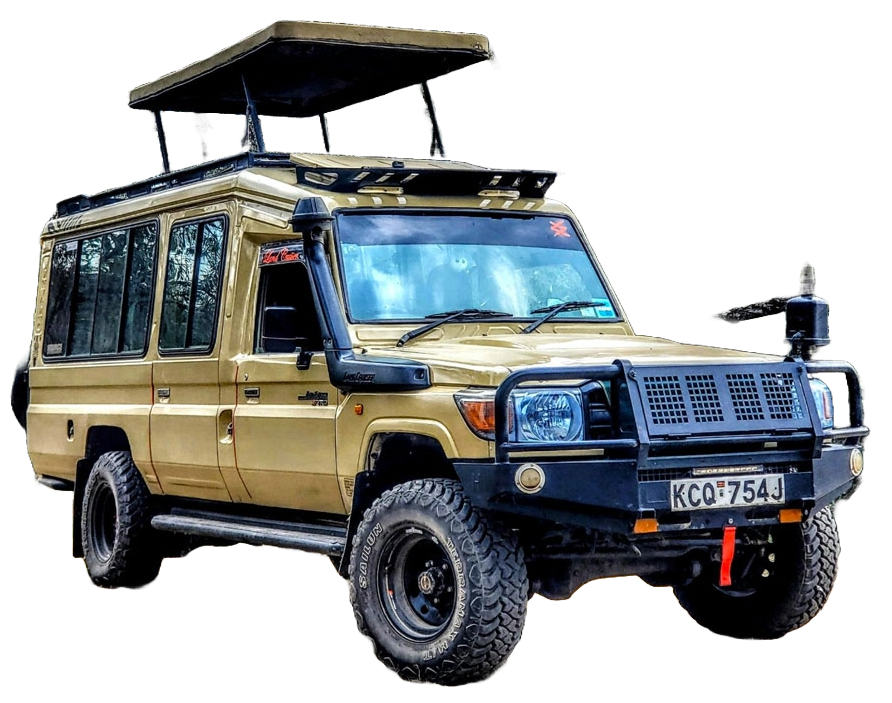
- A rooftop tent and mattress
- Sheets, pillows and blankets
- Camping chairs and a table
- A gas stove and cooking gas
- Plates, cups and cutlery
- Cooking pots and utensils
- A refrigerator or cool box
- Water containers
- Camp lighting
- A spare tyre and vehicle tools
- Basic recovery equipment
- A first-aid kit
- A fire extinguisher
The phrase “fully equipped” does not have one universal meaning. One rental company may include bedding, cooking equipment and a refrigerator, while another may charge separately for these items. Always request a complete inventory before confirming your reservation.
Land Cruiser camping vehicles can generally be hired in two ways: self-drive or with a professional driver-guide.
A self-drive rental gives you full responsibility for navigation, vehicle care and daily timing. It suits experienced and confident travellers who enjoy independent road trips.
A rental with a driver-guide offers additional local knowledge. The guide manages the driving, helps interpret wildlife behaviour and understands local roads and park procedures. This option can be particularly valuable for first-time visitors or travellers with limited experience driving in East Africa.
Some travellers choose a combination of both. They drive themselves between destinations but hire an authorized local guide for selected game drives or activities.
Why Choose Land Cruiser Roof-Tent Hire Uganda?
The biggest advantage of Land Cruiser roof-tent hire Uganda is flexibility. Travellers can design a safari around their interests instead of following a fixed group itinerary.
If you particularly enjoy a national park, you can arrange more time there. If bad weather affects a planned route, you may be able to change direction. You can also combine public campsites, private camps, budget guesthouses and occasional lodge stays.
Greater freedom during your Uganda safari
A self-drive Land Cruiser gives you control over departure times, refreshment stops and sightseeing. You can stop at viewpoints, markets and smaller attractions that may not be included in a standard safari package.
This flexibility is especially useful for photographers, birdwatchers and slow travellers. Wildlife sightings cannot be scheduled precisely. Having your own vehicle allows you to wait patiently without worrying about another group’s timetable.
However, freedom does not mean ignoring park rules or travelling without preparation. National park opening times, campsite reservations and activity permits still influence the itinerary.
Access to remote safari destinations
Many of Uganda’s main towns are connected by paved roads. Nevertheless, national park tracks, campsite access roads and rural routes may be unsealed.
Conditions can change after heavy rain. A road that was dry and firm in the morning may become slippery later in the day. Ruts, loose gravel, potholes and washed-out sections are also possible.
A capable Land Cruiser offers better ground clearance, stronger construction and more appropriate suspension than a normal road car. Many models also have low-range four-wheel drive for difficult conditions.
Four-wheel drive does not make every road safe. Drivers must still follow local advice, avoid flooded tracks and turn around when conditions exceed their experience.
Accommodation travels with you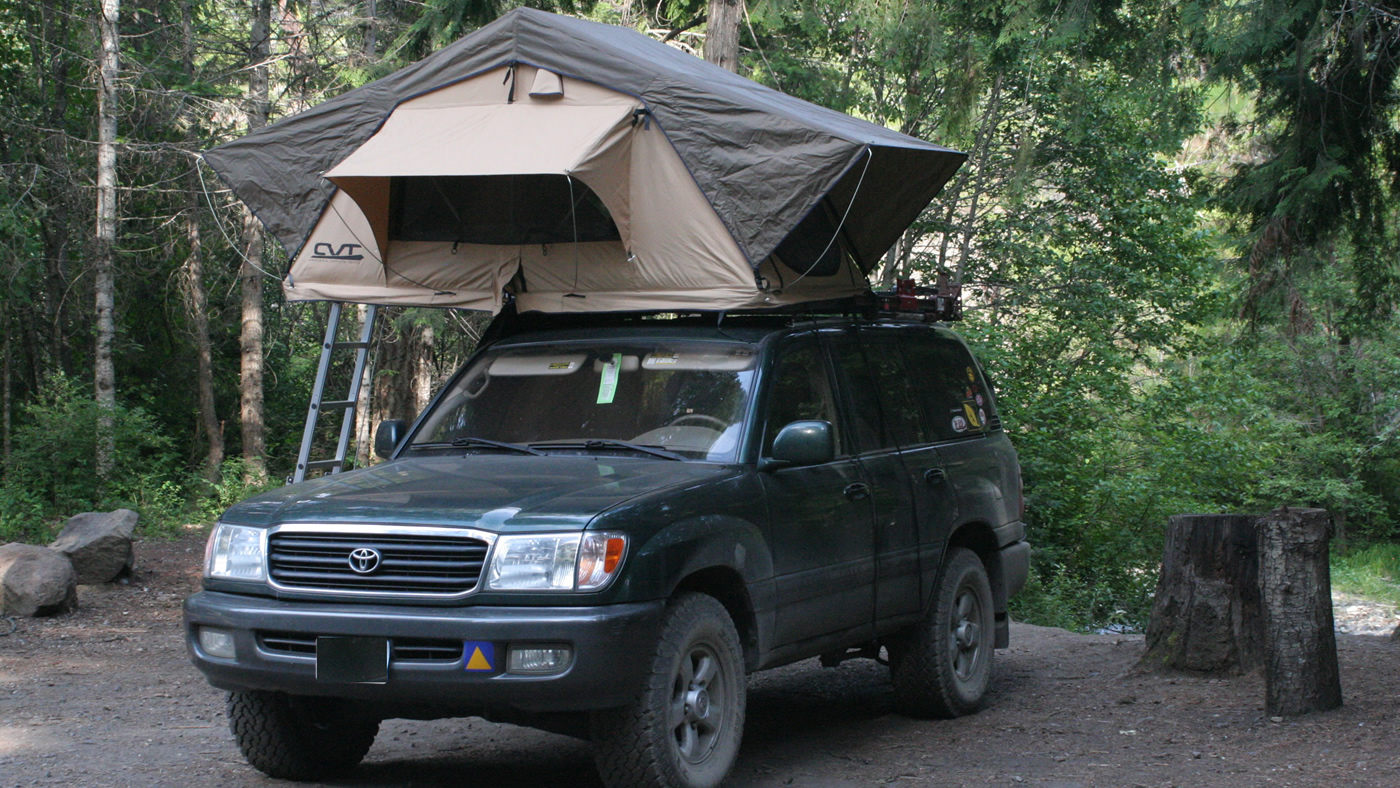
A roof tent reduces the time required to build and pack a campsite. Once you become familiar with the setup, many models can be opened quickly.
The elevated sleeping platform helps keep bedding away from mud, standing water and some ground insects. It also provides a comfortable mattress that does not need to be inflated each evening.
Because the accommodation remains attached to the vehicle, packing in the morning can be straightforward. This is useful when leaving early for a game drive or travelling to a trekking briefing.
A closer connection with nature
Camping creates a different safari atmosphere from staying in a conventional hotel. Evenings become part of the wildlife experience rather than simply the period between two game drives.
At an authorized campsite, travellers may hear birds, insects and distant wildlife. They can watch the landscape change at sunset and enjoy clear skies away from city lights.
This experience comes with responsibility. Wildlife can move through unfenced camps, and travellers must obey the campsite’s safety instructions. Food must be stored securely, rubbish must be removed, and walking after dark may be restricted.
Potential savings on accommodation
Roof-tent camping can cost less than staying in safari lodges every night. The savings are usually more noticeable when two or more people share the vehicle and equipment.
Self-catering can also reduce restaurant expenses. Travellers can prepare breakfast, pack lunch and cook a simple dinner at campsites where cooking is permitted.
However, a camping safari is not automatically a low-cost holiday. Vehicle hire, fuel, park fees, permits, insurance and activities remain important expenses. A premium expedition Land Cruiser can also have a high daily rental rate.
The strongest reasons to choose a roof-tent safari are independence, access and the camping experience—not simply the cheapest possible price.
Choosing the Best Land Cruiser for a Uganda Camping Safari
Toyota produces several vehicles under the Land Cruiser name. Rental companies may also modify them with safari roofs, storage systems, refrigerators and extra fuel capacity.
Before booking, ask for the exact vehicle model rather than accepting a general description such as “Toyota 4×4.”
The right option depends on:
- The number of travellers
- The amount of luggage
- Your proposed route
- The number of roof tents
- Your transmission preference
- Your driving experience
- Your comfort expectations
- The length of the rental
- Your total budget
Toyota Land Cruiser Prado with a roof tent
The Toyota Land Cruiser Prado is a popular choice for couples and solo travellers. It provides a comfortable interior while maintaining strong four-wheel-drive performance.
A Prado with one double roof tent generally works well for two adults. It offers enough space for a standard camping kit, soft luggage and basic food supplies.
The Prado is usually easier to handle in urban traffic than a long safari vehicle. Its cabin may also feel more familiar to travellers who normally drive SUVs.
Storage space can become limited when carrying four passengers, two roof tents and a complete camping kit. Families should ask to see the luggage configuration before booking.
Do not assume that every advertised seat can be used comfortably once the vehicle is fully loaded. The rental company should confirm the legal seating capacity and safe roof-load arrangement.
Land Cruiser 70 Series
The Land Cruiser 70 Series is known for durability and load-carrying ability. Various versions are available, including hardtops, station wagons and pickup-based camping conversions.
A long-wheelbase Land Cruiser can carry:
- A larger refrigerator
- Camping drawers
- Additional water
- Recovery equipment
- Two roof tents
- Photography equipment
- More food and luggage
This makes it suitable for longer Uganda self-drive safaris and remote routes such as Kidepo Valley National Park.
The main disadvantage is that some 70 Series models feel more utilitarian than a Prado. The ride may be firmer, and older vehicles may have basic interiors.
Condition matters more than age alone. A professionally maintained older Land Cruiser can be more reliable than a newer vehicle with poor maintenance.
Ask for current photographs, recent service information and tyre details. You should also confirm whether the vehicle has air-conditioning, power steering and charging points.
Land Cruiser hardtop
A Land Cruiser hardtop provides excellent storage capacity and robust construction. It is commonly used for safari operations and remote travel.
Some hardtops have standard passenger seating, while others have customized interiors. Storage drawers, water tanks and refrigerators may be built into the rear section.
A hardtop can be ideal for two travellers carrying substantial equipment. It may also support a two-tent arrangement when the roof rack is designed and certified for the load.
Because configurations vary considerably, request photographs showing:
- Passenger seating
- Luggage storage
- Roof-tent placement
- Refrigerator access
- Cooking equipment
- Spare-wheel position
- Water storage
Extended safari Land Cruiser
Extended safari Land Cruisers are frequently used for guided wildlife tours. They offer more passenger space and may include a pop-up viewing roof.
Some rental companies provide extended vehicles with rooftop tents. These can work well for families and small groups, but they are longer and heavier than normal SUVs.
A larger vehicle requires more space to turn and park. It may also consume more fuel. Drivers should be comfortable judging its width and length before entering narrow roads.
If wildlife photography is a priority, ask whether opening the roof tents interferes with the game-viewing roof or luggage system.
Manual or Automatic Land Cruiser?
Both manual and automatic Land Cruisers are available in Uganda, although selection depends on the rental company.
An automatic vehicle is often the easier option for travellers unfamiliar with:
- Driving on the left
- Kampala traffic
- Steep roads
- Busy roundabouts
- Slow-moving trucks
- Stop-and-start urban conditions
Because the driver does not need to manage a clutch, more attention can be given to traffic and navigation.
A manual Land Cruiser may offer excellent control on hills and difficult roads when driven by someone experienced. Manual vehicles can sometimes have lower rental prices or better availability.
Drivers should not choose a manual merely to save money if they are not confident using one. A Uganda safari is not the ideal environment in which to learn manual transmission.
Confirm whether the vehicle has high-range and low-range four-wheel drive. During the handover, ask the rental representative to demonstrate how the system works.
Petrol or Diesel Land Cruiser?
Diesel engines are common in safari vehicles because they generally provide good pulling power and fuel range. They can be practical for long-distance routes and heavily loaded vehicles.
Petrol Land Cruisers may provide smoother acceleration but can use more fuel, especially when carrying roof tents and camping equipment.
Fuel type should not be the only consideration. Vehicle condition, maintenance, tyres and roadside assistance are equally important.
Never put petrol into a diesel vehicle or diesel into a petrol vehicle. Confirm the correct fuel during the handover and check for a label near the fuel cap.
Choosing the Right Roof-Tent Configuration
A standard double roof tent normally accommodates two adults. However, dimensions vary, so ask for the internal length and width.
One large tent may work for two adults and a small child if the manufacturer permits it, but separate sleeping spaces may be more comfortable.
Four adult travellers generally need:
- Two double roof tents on one suitable vehicle
- A larger family tent designed for the group
- One roof tent and one ground tent
- Two vehicles with one tent each
The number of advertised sleeping spaces must match the safe roof-load limit. A vehicle should not carry additional tents simply because there appears to be enough physical space.
Side-opening and rear-opening tents
Side-opening roof tents unfold beside the vehicle. They need sufficient space on the chosen side and may include an entrance awning.
Rear-opening tents unfold behind the vehicle. This design can be convenient, but it must not block access to the kitchen or luggage.
Ask the rental company to demonstrate the complete campsite arrangement. Check whether doors and storage compartments remain accessible once the tent is open.
Roof-tent comfort and weather protection
A good rooftop tent should have:
- A supportive mattress
- Strong zips
- Screened ventilation openings
- An intact rainfly
- A stable ladder
- Secure hinges
- Reliable cover straps
- Weather-resistant fabric
Ventilation helps manage heat and condensation. Mesh screens allow airflow while reducing insects inside the sleeping area.
Uganda’s southwestern highlands can become cool at night. Travellers camping near Bwindi, Mgahinga or the Rwenzori foothills should request appropriate blankets or sleeping bags.
Rain can occur even during generally drier travel periods. The tent must be waterproof, but it should also allow ventilation while the rainfly is attached.
Practise Opening the Roof Tent Before Departure
The rental handover should include a complete roof-tent demonstration. Do not simply watch the representative open it.
Every driver should practise:
- Removing the protective cover
- Releasing the securing straps
- Extending the ladder
- Unfolding the tent
- Adjusting the ladder safely
- Installing any window supports
- Checking the platform locks
- Folding the tent correctly
- Keeping fabric away from hinges
- Securing the cover for travel
Ask which items can remain inside when the tent is folded. Overfilling the tent may damage hinges, fabric or the protective cover.
Before driving each morning, walk around the vehicle and verify that every strap is secure. A loose cover can flap in the wind, damage the tent or create a road hazard.
What Should a Fully Equipped Uganda 4×4 Camper Include?
The equipment supplied with Land Cruiser roof-tent hire Uganda differs between companies. A written inventory helps travellers compare offers and identify missing items at pickup.
Sleeping equipment
The sleeping package should include:
- Roof tent
- Mattress
- Clean sheets or mattress liners
- Pillows
- Blankets or sleeping bags
- Rainfly
- Mosquito-screened openings
Ask whether bedding is included in the daily rate. Some rental companies provide the mattress but charge separately for linen and sleeping bags.
Cooking equipment
A practical kitchen kit should provide:
- Gas stove
- Gas cylinder or cartridges
- Lighter or matches
- Saucepan
- Frying pan
- Kettle
- Plates and bowls
- Cups
- Cutlery
- Cooking spoon
- Sharp knife
- Chopping board
- Washing basin
- Cleaning cloth
Check that the gas supply is full or sufficient for the expected rental period. Ask where replacements can be purchased.
Cooking equipment should be clean and complete. Count plates, cups and utensils during the handover and record anything missing.
Refrigerator or cool box
A refrigerator is extremely helpful on a long self-drive safari. It can keep drinks, dairy products and fresh food cool between supply stops.
Many camping Land Cruisers use a dual-battery system. One battery starts the vehicle, while the auxiliary battery powers the refrigerator and accessories.
Ask how long the fridge can operate without the engine running. Learn how to monitor the battery and what to do if the system switches off.
A cool box may be suitable for a short journey, but it requires regular ice. Ice may not be consistently available on remote routes.
Camping furniture
The rental should provide one chair for each traveller and a stable table. Inspect hinges, legs and fabric before leaving.
The table should be suitable for food preparation without becoming unstable. Chairs should fold securely and fit inside the designated storage area.
Water storage
Water may be stored in portable containers or a fixed vehicle tank. Ask whether it is intended for drinking or only for washing.
Carry treated drinking water from a trusted source when there is any uncertainty. Keep an emergency reserve separate from the daily supply.
Vehicle safety and recovery equipment
At minimum, the Land Cruiser should have:
- A properly inflated spare tyre
- A suitable jack
- A wheel spanner
- A warning triangle
- A fire extinguisher
- A first-aid kit
- Basic vehicle tools
For remote routes, useful additions may include:
- A second spare tyre
- Tyre-pressure gauge
- Portable compressor
- Tow strap
- Shovel
- Traction boards
- Work gloves
Recovery equipment can cause injury or vehicle damage when used incorrectly. Ask the rental company to explain the approved recovery points and when you should call for assistance instead.
Land Cruiser Roof-Tent Hire Uganda Prices
The cost of Land Cruiser roof-tent hire Uganda depends on the vehicle model, travel season, rental duration, number of tents, insurance package and included camping equipment.
As a broad planning estimate, a self-drive 4×4 with one rooftop tent may cost approximately USD 90 to USD 180 or more per day. Larger expedition vehicles, newer Land Cruisers and two-tent configurations may cost more.
These figures should only be used for preliminary budgeting. Rental rates change according to availability, exchange rates, vehicle condition and additional services. Always request a written quotation for your exact travel dates.
A low advertised daily rate does not necessarily represent the best deal. Some companies quote a basic vehicle price and add separate charges for camping equipment, insurance, extra kilometres or airport delivery.
Factors that influence the rental price
Several elements determine the final cost of a Uganda 4×4 camper rental.
Vehicle model
A Toyota Land Cruiser Prado may cost less than a long-wheelbase expedition Land Cruiser. Newer automatic vehicles can also have higher rates than older manual models.
The price may increase when the vehicle includes:
- Two rooftop tents
- An electric refrigerator
- Dual batteries
- A built-in water tank
- Camping drawers
- An awning
- Additional spare tyres
- Advanced recovery equipment
- Extra fuel capacity
Travel season
Demand normally increases during popular travel periods. Vehicles with rooftop tents may sell out early during the generally drier months and around major holidays.
Travelling outside the busiest periods can sometimes produce lower rates. However, lower prices should be balanced against possible rain and more challenging road conditions.
Rental duration
Many rental companies offer reduced daily rates for longer bookings. A three-week rental may therefore have a lower daily price than a five-day hire.
Ask whether the discount is calculated automatically or negotiated separately. Also check whether free delivery, additional equipment or unlimited mileage becomes available for longer rentals.
Number of rooftop tents
A single-tent vehicle usually costs less than a Land Cruiser carrying two tents. The second tent adds equipment, weight and setup complexity.
For four adults, compare the price of one two-tent vehicle with two single-tent vehicles. Two vehicles cost more in fuel and park vehicle charges, but they provide additional space and flexibility.
Self-drive or driver-guide
A self-drive rate covers the vehicle and listed equipment. A driver-guide arrangement normally adds the guide’s daily professional fee.
The quotation may also need to cover:
- Guide accommodation
- Guide meals
- Park entry
- Activity fees
- Transport to the pickup location
- Cross-border allowances
Ask whether these costs are included or paid separately.
Insurance package
Basic insurance may be included in the rental rate, but it can carry a substantial excess. Optional insurance may reduce the renter’s financial responsibility after an approved claim.
Premium cover can increase the daily cost. Nevertheless, it may offer better value than accepting a very high excess without understanding the risk.
Extra costs to include in your safari budget
The rental rate is only one part of the total holiday cost. A realistic Uganda self-drive safari budget should include:
- Fuel
- Campsite fees
- National park entrance fees
- Vehicle entrance charges
- Self-drive or guiding charges where applicable
- Gorilla or chimpanzee permits
- Boat trips and guided activities
- Food and drinking water
- Mobile data
- Laundry
- Occasional lodge accommodation
- Parking
- Tips
- Cross-border documentation
- Emergency funds
National park and permit prices are set for specific validity periods. Do not rely on an old blog post or expired tariff document. Confirm current charges for the month of travel.
Mileage policies
Some Uganda car rental companies include unlimited kilometres. Others provide a daily allowance and charge for additional distance.
A limited allowance may be sufficient for a short trip around Lake Mburo, Queen Elizabeth or Bwindi. It may become expensive on a longer circuit that includes Murchison Falls or Kidepo Valley.
Calculate the expected route distance and add a reasonable allowance for:
- Game drives
- Shopping trips
- Fuel stops
- Campsite access roads
- Route diversions
- Navigation errors
- Unexpected road closures
Ask whether kilometres are calculated per day or across the entire rental. A total allowance is generally more flexible because driving distances vary from one day to another.
Security deposit
Most rental companies require a refundable security deposit. The amount depends on the vehicle and insurance package.
Before paying, confirm:
- The deposit amount
- The accepted payment method
- The currency used
- Whether a card is charged or only authorized
- When the deposit will be released
- Which deductions may be made
- How disputed damage is handled
Photograph the vehicle and equipment during the handover. Make sure every existing scratch, dent or damaged item appears on the inspection form.
How to Compare Uganda Self-Drive Rental Quotes
Comparing only the daily rental price can be misleading. One quotation may include comprehensive camping equipment and unlimited mileage, while another may cover only the vehicle.
Create a simple comparison using the same categories for each company.
Confirm the exact vehicle
Ask for:
- Toyota model
- Approximate model year
- Manual or automatic transmission
- Diesel or petrol engine
- Number of passenger seats
- Number of seat belts
- Number and size of rooftop tents
- Luggage capacity
- Air-conditioning
- Four-wheel-drive system
Determine whether the company guarantees the advertised model or reserves the right to provide a similar vehicle.
A replacement can be acceptable when it offers equal or better capacity. However, a small SUV should not replace a Land Cruiser if the confirmed route requires the larger vehicle.
Examine the equipment list
Compare the number and condition of:
- Mattresses
- Bedding sets
- Chairs
- Tables
- Cooking utensils
- Gas supplies
- Water containers
- Fridges
- Power outlets
- Spare tyres
- Recovery tools
Ask whether photographs show the actual vehicle or only an example. If the vehicle is not available for inspection before the rental date, request a recent inventory report.
Check the kilometre allowance
Unlimited mileage provides predictable budgeting. Nevertheless, it may be reflected in a higher daily rate.
If kilometres are limited, ask:
- How many kilometres are included?
- What is the cost per additional kilometre?
- Is the allowance daily or cumulative?
- Are game-drive kilometres included?
- Does cross-border travel have a separate limit?
Review pickup and return conditions
Find out where the vehicle can be collected. Some rental companies operate from Kampala, while others offer delivery to Entebbe International Airport or a nearby hotel.
Confirm whether airport delivery is free or charged separately. A late-night arrival may require a hotel stay followed by vehicle collection the next morning.
Daylight collection is preferable because it gives you time to inspect the Land Cruiser and practise using the rooftop tent.
Check the return time carefully. Returning the vehicle several hours late may result in another full day’s charge.
Understand the cancellation policy
The rental contract should explain what happens if you cancel, shorten or postpone the trip.
Look for:
- Deposit refund conditions
- Cancellation deadlines
- Date-change fees
- No-show charges
- Early-return policies
- Vehicle-substitution terms
- Force-majeure provisions
Remember that third-party services may follow different rules. Gorilla permits, campsites and national park activities may not have the same cancellation policy as the vehicle.
Evaluate roadside support
Reliable support is especially important on a long self-drive safari. Ask practical questions instead of accepting a general promise of “24-hour assistance.”
Find out:
- Who answers the emergency telephone?
- Is support available at night?
- Can a mechanic reach remote areas?
- Does the company have partner garages outside Kampala?
- When is a replacement vehicle provided?
- Who pays for accommodation during a mechanical delay?
- Which recovery costs are covered?
- What happens outside Uganda?
A reputable rental company should distinguish normal mechanical failure from damage caused by careless or prohibited driving.
Insurance for Land Cruiser Roof-Tent Hire Uganda
Insurance conditions require careful attention when arranging Land Cruiser roof-tent hire Uganda. Do not assume that “comprehensive insurance” covers every kind of damage.
Request the insurance summary and complete rental terms before paying the deposit.
Third-party insurance
Third-party insurance generally covers approved claims involving damage or injury caused to another person. It may not cover damage to the rented Land Cruiser.
Ask whether third-party cover is legally included and whether the rental agreement provides additional protection for the vehicle.
Comprehensive vehicle insurance
Comprehensive insurance may cover the rental vehicle under specified circumstances. However, the renter usually remains responsible for an excess.
For example, if the agreement carries an excess of USD 1,500, the renter may have to pay up to that amount following an accepted claim.
The exact amount and procedure must appear in writing.
Common insurance exclusions
Rental insurance frequently excludes certain types of damage. Possible exclusions include:
- Tyres and wheels
- Windscreen and other glass
- Underbody damage
- Roof and roof-rack damage
- Rooftop-tent damage
- Interior damage
- Water damage
- Incorrect fuel
- Lost keys
- Driving after dark
- Unauthorized drivers
- Prohibited roads
- Off-road driving
- Reckless or negligent use
- Driving under the influence
- Failure to report an incident
Some policies exclude single-vehicle incidents or rollover damage. Others may cover them only under an additional insurance package.
Ask specific questions rather than relying on a policy’s marketing name.
Roof-tent damage
The rooftop tent is an expensive item and may be treated as camping equipment rather than part of the insured vehicle.
Clarify whether insurance covers damage caused by:
- Low branches
- Incorrect folding
- Torn fabric
- Broken ladders
- Wind
- Failure to secure the cover
- Driving with the tent partly open
Follow the setup demonstration carefully. If strong winds make opening the tent unsafe, ask the campsite about alternative accommodation.
Personal travel insurance
Vehicle insurance does not replace personal travel insurance. Visitors should arrange suitable cover for their health, belongings and planned activities.
A travel policy may need to cover:
- Medical treatment
- Emergency evacuation
- Trip interruption
- Delayed luggage
- Theft
- Trekking
- Hiking
- Safari activities
- Remote destinations
Read the policy conditions and seek professional advice when necessary.
Inspecting the Land Cruiser at pickup
Before accepting the vehicle, inspect:
- Body panels
- Bumpers
- Paintwork
- Windscreen
- Side windows
- Mirrors
- Headlights
- Indicators
- Tyres
- Wheel rims
- Roof rack
- Rooftop tents
- Ladder
- Seats
- Dashboard
- Doors and locks
- Camping equipment
Record existing damage with photographs or video. Include the date and make sure the vehicle registration can be identified.
Test the following before departure:
- Brakes
- Horn
- Lights
- Indicators
- Wipers
- Air-conditioning
- Refrigerator
- Charging points
- Door locks
- Four-wheel-drive controls
- Tent zips
- Gas stove
If a problem is discovered, record it on the handover form. Do not rely only on a spoken acknowledgment.
Driving Requirements in Uganda
Uganda drives on the left side of the road. Most rental Land Cruisers therefore have the steering wheel on the right.
Overtaking normally takes place on the right. Travellers from countries that drive on the opposite side should allow time to become comfortable.
Driving licence
Drivers must carry a valid licence accepted for use in Uganda. Depending on the licence’s issuing country and language, an international driving permit or official translation may be required.
Ask the rental company to confirm the documentation before travel. The company may also impose its own minimum age and driving-experience rules.
Do not wait until pickup to discover that a licence is unacceptable.
Authorized drivers
Every person who may drive should be named in the rental agreement. Allowing an unauthorized person to drive can invalidate insurance.
Some companies include one driver and charge for additional drivers. Provide licence copies in advance where requested.
Seat belts and child seats
Every passenger should use an available seat belt. Children need an appropriate restraint for their age and size.
Ask whether child seats are available and whether they can be installed securely in the chosen vehicle. Do not assume that every safari conversion has the same seat-belt arrangement as a standard passenger car.
Speed and road conditions
Obey posted speed limits and reduce speed further when necessary. Villages, schools, markets, motorcycles, livestock, cyclists and pedestrians require particular care.
National parks have separate rules. Uganda Wildlife Authority guidance has included restrictions on speed, off-track driving and travelling in parks at night. Confirm current regulations at the entrance gate.
A low speed improves wildlife viewing and reduces dust, tyre damage and collision risk.
Avoid night driving
Plan to arrive at the campsite before sunset. Night driving presents additional hazards, including:
- Poorly lit vehicles
- Pedestrians
- Motorcycles
- Livestock
- Wildlife
- Roadworks
- Potholes
- Glare from headlights
- Limited emergency support
Arriving early also provides time to select a suitable pitch, learn the campsite layout and open the tent in daylight.
Police and roadside checks
Keep the following documents accessible:
- Driving licence
- Rental agreement
- Vehicle registration documents
- Insurance information
- Rental authorization
- Passport copy
- Cross-border documents where applicable
Remain calm and respectful during a roadside check. Follow official procedures and request a receipt for any formal payment.
Uganda Road Conditions
Uganda’s road network includes modern paved highways, busy urban roads, gravel routes and remote national park tracks.
Travel time cannot be estimated from distance alone. A relatively short journey may take several hours because of traffic, construction, towns or road conditions.
Kampala and Entebbe traffic
Traffic around Kampala can be slow, particularly during morning and evening periods. Entebbe–Kampala travel time varies considerably.
Avoid planning a long western transfer immediately after collecting the vehicle. A first night near Entebbe or Kampala can provide time to rest, purchase supplies and become familiar with the Land Cruiser.
When returning for an international flight, leave a generous time allowance. Road delays can affect even well-planned journeys.
Main highways
Major destinations such as Mbarara, Kabale, Fort Portal, Jinja and Gulu are connected by important road routes. Many sections are paved, but construction and surface quality can change.
Expect:
- Slow trucks
- Frequent towns
- Pedestrians
- Motorcycles
- Speed controls
- Roadworks
- Occasional potholes
- Informal roadside activity
Maintain a safe following distance and avoid risky overtaking.
Gravel and rural roads
Unsealed roads may be smooth in dry weather and difficult after rain. Corrugations can affect steering and vehicle control if approached too quickly.
Loose gravel reduces braking performance. Slow down before bends and avoid sudden steering movements.
Water-filled potholes can be deeper than they appear. Do not enter standing water when the road surface cannot be assessed.
Mountain roads
Routes around Kabale, Kisoro, Bwindi and Mgahinga contain bends and steep sections. Drivers may encounter cyclists, pedestrians and slow vehicles.
Select a lower gear before a long descent. Continuous heavy braking can cause overheating. Maintain enough distance from the vehicle ahead to stop safely.
Cloud, mist and rain can reduce visibility. If conditions become poor, stop at a safe location rather than forcing the schedule.
National park tracks
Park tracks vary by destination, sector and season. Rangers and campsite managers are valuable sources of current information.
A track may close because of flooding, bridge damage, wildlife activity or maintenance. Respect barriers and instructions.
Do not leave designated tracks to avoid mud or approach an animal. Off-track driving damages habitat and may result in penalties.
Book Your Land Cruiser Roof-Tent Safari with Universal Ventures Rwanda
A self-drive camping safari gives you the freedom to explore East Africa at your own pace. However, the success of the journey depends on having a reliable vehicle, suitable camping equipment and a carefully planned itinerary.
Universal Ventures Rwanda can help you arrange a customized Land Cruiser roof-tent safari in Uganda, Rwanda or across both countries. Whether you are planning a short gorilla trekking adventure, a family camping holiday or an extended East African road trip, our team can help coordinate the essential details.
Our travel services include:
- Land Cruiser and 4×4 rental arrangements
- Self-drive and driver-guided safari options
- Roof-tent camping equipment
- Customized Uganda and Rwanda itineraries
- Gorilla and chimpanzee permit assistance
- National park and campsite reservations
- Airport pickups and drop-offs
- Cross-border safari planning
- Hotel, lodge and campsite bookings
- Emergency travel support
Before confirming your trip, we will help you choose a suitable vehicle based on your group size, preferred route, travel duration and accommodation style. We can also advise you about driving distances, national park requirements and the best places to camp.
Start Planning Your Uganda Self-Drive Safari
If you are ready to experience the freedom of Land Cruiser roof-tent hire Uganda, contact Universal Ventures Rwanda for a personalized quotation.
Please include the following information in your enquiry:
- Your proposed travel dates
- Number of travellers
- Preferred pickup and return locations
- Number of rooftop tents required
- Self-drive or driver-guided preference
- Destinations you would like to visit
- Whether you plan to cross an international border
- Activities such as gorilla or chimpanzee trekking
Our team will use this information to recommend a suitable Land Cruiser, camping arrangement and itinerary.
Contact Universal Ventures Rwanda
Universal Ventures Rwanda
Address: KN 15 Road, opposite the IPRC main entrance, First Floor, Sangwa Plaza, Kigali, Rwanda
Telephone and WhatsApp: +250 781 441 853
Email: info@universalventuresrwanda.com
Website: www.universalventuresrwanda.com
Contact us today and let our experienced team help you plan a safe, flexible and memorable Uganda road trip. From your vehicle and rooftop tent to gorilla permits, campsites and cross-border logistics, Universal Ventures Rwanda can organize every essential part of your journey.