
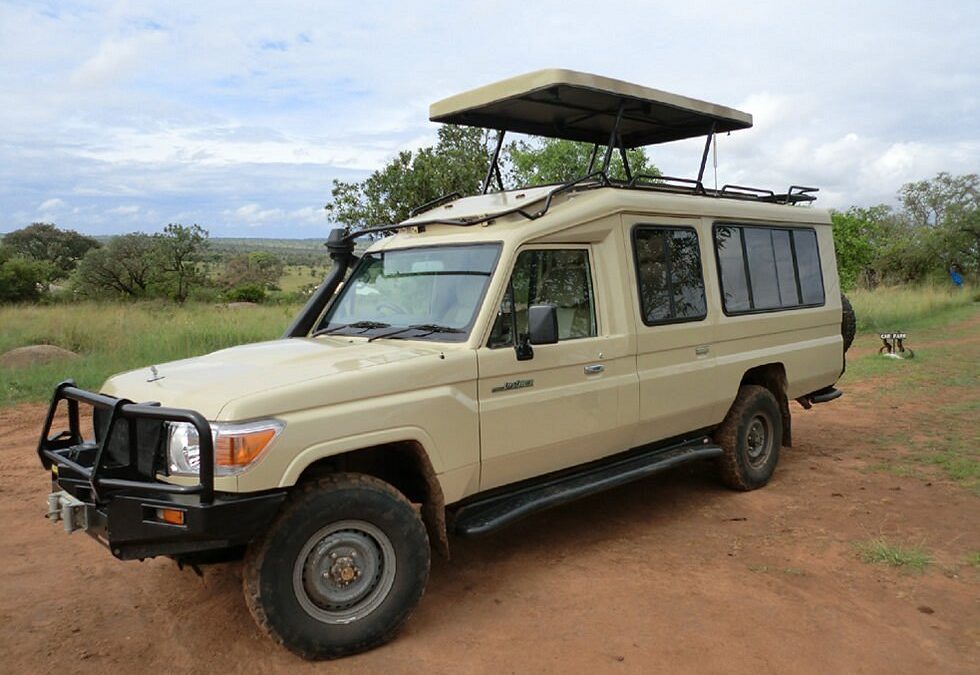
Affordable Roof-Top Tent Car Hire Uganda
Affordable roof-top tent car hire in Uganda combines transportation and mobile accommodation in one safari package. Instead of paying separately for a vehicle and a lodge every night, travelers can rent a properly equipped four-wheel-drive vehicle, sleep at recognized campsites and prepare some of their own meals. This arrangement can lower the total cost of a longer Uganda road trip while giving travelers greater control over their schedule.
Roof-top tent vehicles are especially popular for journeys through Murchison Falls National Park, Kibale National Park, Queen Elizabeth National Park, Bwindi Impenetrable National Park, Lake Bunyonyi and Lake Mburo National Park. They can also be arranged for cross-border trips linking Uganda with Rwanda, Kenya or Tanzania, provided the rental company supplies the necessary authorization, insurance and vehicle documents.
Finding the lowest advertised daily price should not be the only goal. A genuinely affordable rental should include a mechanically reliable vehicle, suitable insurance, essential camping equipment and dependable emergency assistance. A cheap vehicle becomes expensive when important items are excluded or mechanical problems interrupt the journey.
Self-drive rentals must be booked and operated by adults who meet the rental company’s minimum age, driving-licence, experience and insurance requirements. Travelers who do not meet those requirements should use a properly licensed adult driver-guide.
Why Choose a Roof-Top Tent Vehicle in Uganda?
A roof-top tent converts a safari vehicle into a practical mobile camp. The tent is mounted above the vehicle and opened at an authorized campsite. This design keeps the sleeping area away from wet ground and provides a more organized camping setup than carrying a separate ground tent.
The arrangement offers freedom, but it does not mean travelers can camp anywhere. Visitors should use designated campsites, lodge camping areas and other approved locations. National parks regulate where visitors may stop, drive and stay overnight.
A roof-top tent safari works best for travelers who enjoy road trips, simple outdoor accommodation and preparing some meals themselves. It is less suitable for visitors who prefer daily housekeeping, private bathrooms, restaurant dining and fully managed lodge services.
Combining Transport and Accommodation
The main financial advantage comes from combining two expenses. The daily rental provides the vehicle, while the roof-top tent becomes the traveler’s accommodation at campsites.
Camping fees still apply, and some campsites charge separately for park entry, showers, electricity or cooking facilities. Even so, the combined vehicle-and-tent approach can cost less than renting a 4×4 and booking a midrange lodge every night.
The greatest savings normally appear on longer itineraries. A one- or two-day rental may include delivery, cleaning and preparation charges that reduce its value. A trip lasting seven days or longer gives travelers more time to benefit from the mobile setup.
Greater Route Flexibility
A roof-top tent vehicle allows travelers to adjust the pace of the safari, subject to campsite availability, permit dates and park regulations.
Visitors can spend additional time in a destination, begin game drives early and travel between Uganda’s national parks without returning to a fixed hotel base. However, gorilla permits, chimpanzee permits and popular campsites should still be reserved in advance.
Flexibility does not remove the need for a realistic itinerary. Uganda is larger than many first-time visitors expect, and road journeys can take longer than estimated. Rain, unpaved roads, park gates and wildlife sightings may affect the schedule.
Access to Remote Safari Destinations
Many Ugandan attractions lie beyond the main cities. A capable four-wheel-drive vehicle provides better access to national parks, forest lodges and rural campsites.
The vehicle should match the intended route. A basic compact car may be cheaper, but it can be unsuitable for muddy tracks, steep lodge roads or remote park sections. A properly maintained 4×4 generally provides better value because it reduces access problems and the risk of becoming stranded.
Types of Roof-Top Tent Vehicles in Uganda
Rental companies offer different Toyota Land Cruiser models, pickup trucks and other four-wheel-drive vehicles. The right choice depends on the number of travelers, luggage, route and desired comfort.
Toyota Land Cruiser Prado With Roof-Top Tent
A Toyota Land Cruiser Prado 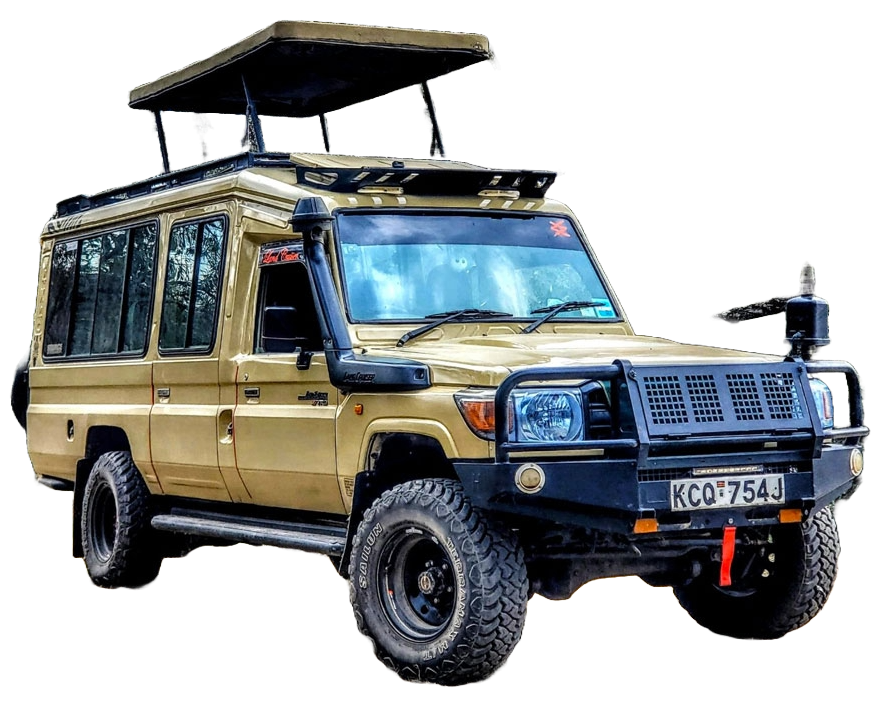 is a common choice for two travelers. It offers a balance between road comfort, four-wheel-drive capability and fuel consumption.
A single roof-top tent normally accommodates two adults, although actual dimensions differ. Travelers should request the tent measurements rather than relying on the phrase “two-person tent.”
A Prado can be suitable for Bwindi, Queen Elizabeth National Park, Lake Mburo, Kibale and Murchison Falls when it is properly maintained and fitted with appropriate tires.
Land Cruiser Hardtop
A Land Cruiser Hardtop provides stronger expedition capacity and additional luggage space. It is suitable for longer itineraries, difficult roads and travelers carrying more camping equipment.
Hardtop vehicles may use manual transmission, so the renter should be comfortable with the specific vehicle. Fuel use may be higher than with a smaller model, but the durability and storage capacity can justify the difference.
Travelers should check whether the vehicle has rear passenger seats, side-facing benches or a customized safari layout. Seating comfort matters during long road transfers.
Land Cruiser V8 With Roof-Top Tent
A Land Cruiser V8 offers greater power and comfort. It may accommodate one or two roof-top tents depending on the roof system and vehicle design.
This option is useful for families or groups, but it is normally more expensive to rent and operate. Fuel consumption can also increase the total safari cost.
The lower daily price of a smaller vehicle may therefore provide better overall value for two people. A V8 becomes more cost-effective when its capacity is shared by several eligible travelers.
Double-Cab Pickup With Roof-Top Tent
A double-cab pickup provides a separate cargo area for tents, cooking equipment and luggage. It can be a practical choice for camping itineraries.
The storage area should be covered and weather-resistant. Travelers should confirm that food, electronics and soft luggage will remain protected from rain and dust.
Pickup handling differs from an SUV, especially when heavily loaded. The rental company should explain tire pressure, cargo limits and four-wheel-drive operation during the handover.
One Tent or Two Roof-Top Tents
A single roof-top tent generally works for one or two adults. Two tents may be needed for a family or small group.
Vehicle capacity and tent capacity are separate considerations. A vehicle with five seats may not have enough comfortable roof-top sleeping space for five people.
Ask how many people each tent is designed to accommodate and how the tents are positioned. Two large tents add weight and may affect vehicle handling, clearance and fuel use.
What Should Be Included in a Roof-Top Tent Rental?
The advertised rental price can be misleading when essential camping items are charged separately. Request a written inventory before comparing quotations.
Sleeping Equipment
The tent package may include a mattress, pillows, sleeping bags, sheets or blankets. However, inclusions differ significantly.
Confirm whether bedding is included, freshly cleaned and appropriate for the expected nighttime temperatures. Higher-altitude areas around Bwindi, Mgahinga, Kisoro and Lake Bunyonyi can feel cool after dark.
Inspect the tent fabric, zippers, ladder and mattress during the vehicle handover. Small defects should be documented before departure.
Cooking Equipment
A full camping package may include a gas stove, fuel bottle, cooking pots, frying pan, kettle, plates, cups, utensils, knife, cutting board and washing basin.
Do not assume that cooking gas or fuel is included simply because a stove is supplied. Ask how much is provided and where approved refills can be obtained.
Cooking should take place only in designated campsite areas. Food should be stored securely, and nothing should be left where wildlife can reach it.
Chairs and Camping Table
Foldable chairs and a camping table make meal preparation and rest more comfortable.
Check that the furniture is stable, clean and suitable for the number of travelers. Lightweight equipment is convenient but should still be strong enough for repeated use.
Refrigerator or Cooler
Some vehicles include an electric refrigerator, while others provide a cooler box. A refrigerator can be useful on a longer journey, but it depends on the vehicle’s auxiliary power system.
Ask whether the refrigerator can operate when the engine is off and whether the vehicle has a second battery. An improperly managed refrigerator can drain the starting battery.
A cooler is simpler but requires regular ice purchases. Availability can be limited on remote routes.
Water Storage
The camping package should include suitable water containers. Travelers need water for drinking, cooking and basic campsite use.
Drinking water should come from a safe source. A general water container used for washing should not automatically be treated as safe drinking-water storage.
Recovery and Safety Equipment
A safari vehicle should carry a spare tire, jack, wheel spanner and basic emergency equipment. More remote itineraries may require additional recovery tools.
Travelers should understand what equipment is included and how roadside assistance works. They should not attempt repairs or recoveries beyond their training and rental agreement; contacting the company or an authorized professional is safer.
A first-aid kit and fire extinguisher may also be supplied. Verify their presence and condition during handover.
Understanding Roof-Top Tent Car-Hire Prices
Publicly advertised roof-top tent rental rates in Uganda vary widely. Some operators advertise basic vehicle prices from approximately USD 70 per day, while more comprehensive 4×4 camping packages can exceed USD 100 or USD 150 per day. These figures should be treated only as market references because the final price depends on the vehicle, rental duration, season, insurance, tent configuration and included equipment.
A very low advertisement may cover only the vehicle. The roof-top tent, bedding, refrigerator, camping equipment, airport delivery, border documents and insurance upgrades may be additional.
Request one complete quotation showing the total cost for the entire rental period.
Factors Affecting the Daily Rate
Longer rentals often receive lower daily rates because vehicle preparation and administration costs are spread across more days.
Peak travel periods may attract higher prices or reduced availability. June through September and the Christmas–New Year period are popular for Uganda safaris.
A vehicle with two tents costs more than one with a single tent. Larger Land Cruisers also generally cost more than compact 4×4 models.
Cross-border travel may introduce additional documentation, insurance or relocation costs. One-way rental arrangements can also attract a vehicle-return fee.
Fuel Costs
Fuel is normally paid by the renter unless the quotation specifically says otherwise.
A larger vehicle may offer more comfort but consume considerably more fuel. When comparing two options, calculate the expected fuel use across the entire route rather than examining only the daily rental price.
Long routes to Kidepo Valley or Murchison Falls require a larger fuel budget than a short southwestern circuit.
Fuel stations become less frequent in remote areas. The adult driver should follow the rental company’s recommended refueling points and avoid allowing the tank to become dangerously low.
Campsite Fees
The rental price normally does not include campsite charges. These vary according to location, facilities and whether the campsite lies inside a protected area.
A basic campsite may provide toilets and showers, while a lodge campsite may also offer restaurant access, electricity, security and common areas.
Park entry fees and vehicle entry fees can apply in addition to the campsite price. Travelers should include these charges in the total safari budget.
Insurance and Security Deposit
Rental quotations should explain the insurance coverage, deductible or excess and excluded circumstances.
Standard insurance may not cover damage caused by unauthorized drivers, prohibited roads, negligent use, driving after dark or travel outside the permitted countries.
A refundable security deposit may be required. The conditions for returning it should appear in the rental agreement.
The adult renter should read the agreement carefully and ask questions before signing. Insurance language is more important than a small difference in the advertised daily price.
Self-Drive or Vehicle With a Driver-Guide?
A roof-top tent vehicle can be rented for self-drive travel or supplied with a professional driver-guide.
Self-Drive Roof-Top Tent Rental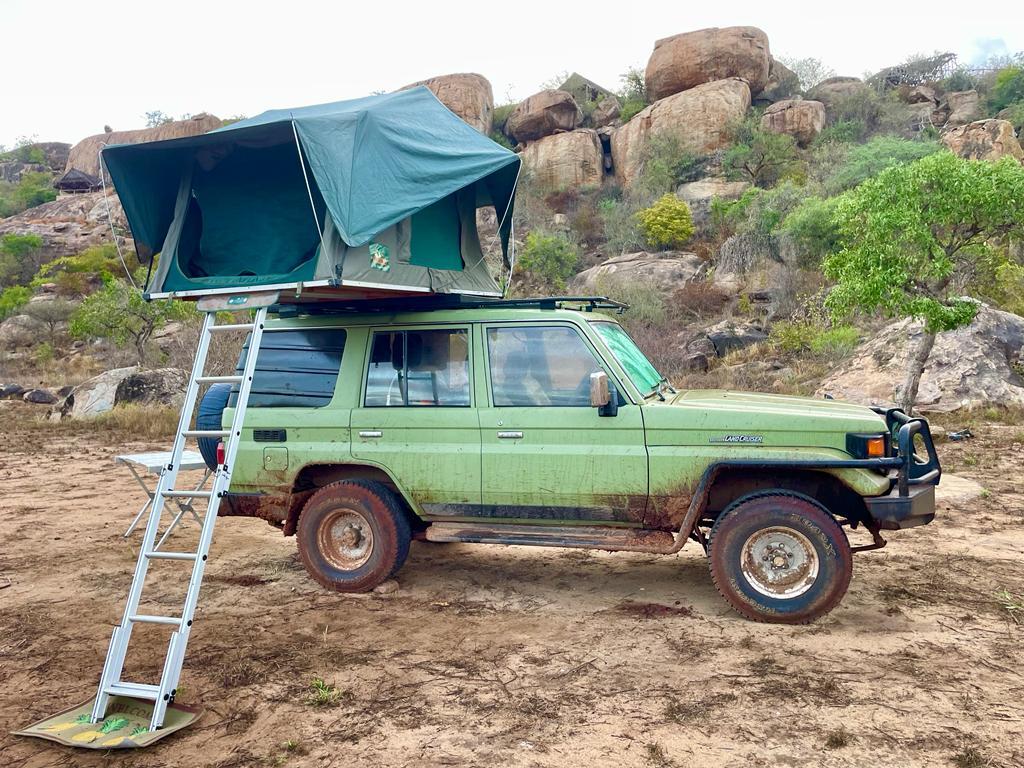
Self-drive travel offers privacy and control over daily timing. It is suitable for eligible adults who have the required driving licence, meet the rental company’s minimum age and experience requirements, and are comfortable driving a four-wheel-drive vehicle on unfamiliar roads.
The renter is responsible for navigation, fuel planning, campsite timing and following park rules. Driving after dark should generally be avoided because of pedestrians, animals, limited lighting and unpredictable road conditions.
Self-drive travelers should carry offline maps and maintain contact with the rental provider. Mobile coverage can be inconsistent in remote areas.
Roof-Top Tent Vehicle With a Driver-Guide
Hiring a driver-guide increases the cost but simplifies the journey. The guide manages navigation, road conditions, park procedures and daily timing.
This option is valuable for first-time visitors, photographers, families and travelers who want to focus on the safari rather than driving.
The driver’s accommodation and meals should be addressed in the quotation. Some campsites provide guide facilities, while others require separate arrangements.
Only an eligible, properly licensed adult should operate the rental vehicle. Travelers who do not meet the company’s age, licence or insurance requirements should select the driver-guide option.
Best Routes for Roof-Top Tent Car Hire in Uganda
The itinerary should balance driving time, campsite availability and scheduled wildlife permits.
Southwestern Uganda Camping Route
A compact southwestern circuit can include Lake Mburo, Queen Elizabeth National Park, Bwindi, Lake Bunyonyi and Mgahinga.
This route works well for travelers interested in gorillas, savannah wildlife and lakes. Gorilla permits must be booked before the vehicle itinerary is finalized because the assigned Bwindi sector determines the route.
Travelers beginning in Kigali can enter through Katuna or Cyanika. Cross-border permission for the rental vehicle must be confirmed in advance.
Western Uganda Primate Route
A western Uganda route can combine Kibale National Park, Queen Elizabeth National Park and Bwindi.
This journey includes chimpanzee tracking, game drives, a Kazinga Channel boat safari and gorilla trekking.
Campsites should be reserved near each destination. Travelers should avoid scheduling a long road transfer immediately before a fixed morning primate activity.
Murchison Falls and Western Uganda Circuit
A longer trip can connect Murchison Falls, Kibale, Queen Elizabeth, Bwindi and Lake Mburo.
This route requires at least ten to fourteen days for comfortable pacing. Trying to complete it in one week would involve excessive driving.
The road journey becomes part of the experience, but rest days and shorter stages improve safety and enjoyment.
Kidepo Valley Road Trip
Kidepo Valley National Park lies in northeastern Uganda and requires a long journey.
A roof-top tent vehicle can suit the route, but travelers need excellent planning, a reliable 4×4 and confirmed fuel and campsite arrangements.
First-time self-drive visitors should discuss the route with the rental company and consider professional driver support. Remote conditions can make assistance slower than in southwestern Uganda.
Camping Near Uganda’s National Parks
Travelers must use approved campsites rather than stopping anywhere that appears convenient.
National Park Campsites
Some parks provide campsites inside or near protected areas. These can offer excellent access to early game drives.
Facilities may be simple. Travelers should confirm water, toilets, showers, electricity, security and cooking rules.
Wild animals may move through unfenced areas. Visitors must obey campsite instructions, store food securely and never leave the vehicle or tent against staff guidance.
Lodge Campsites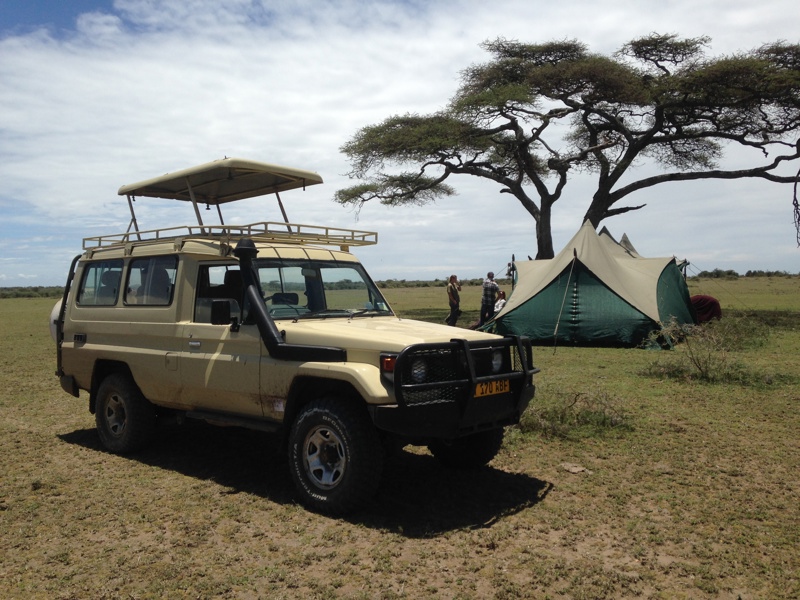
Some safari lodges provide designated camping areas. These may offer access to showers, toilets, restaurants, charging facilities and security.
Lodge campsites can cost more than basic public sites but may provide better comfort and support.
Reservations are advisable during popular travel months.
Community Campsites
Community-operated campsites can provide local income and meaningful cultural connections.
Travelers should use established sites and follow photography, waste and community-conduct guidelines.
How to Find Affordable Roof-Top Tent Car Hire Uganda
Start by requesting complete quotations from established rental companies. Every company should receive the same travel dates, number of passengers, route and equipment request.
Compare the total rental cost rather than the headline daily rate. Confirm the vehicle model, transmission, tent size, bedding, cooking set, refrigerator, insurance, deposit and emergency assistance.
Recent independent reviews can provide insight into vehicle condition and support quality. Pay particular attention to reviews describing how a company responded when a mechanical problem occurred.
The cheapest quotation may not provide the best value. A well-maintained vehicle with transparent insurance and reliable assistance is usually more affordable than a cheaper vehicle that causes delays or unexpected expenses.
Book for a Longer Period
Longer rentals may qualify for a reduced daily rate.
Ask whether weekly or monthly pricing is available. However, do not extend the journey solely to obtain a discount. Fuel, campsites and park fees continue to accumulate.
Travel Outside Peak Dates
Vehicle availability may improve outside the busiest months.
Shoulder-season travel can also provide quieter campsites, although rain may increase road difficulty. A capable four-wheel-drive vehicle becomes particularly important during wet conditions.
Select the Right Vehicle Size
Two travelers may not need an extended Land Cruiser with two tents. A smaller suitable 4×4 can reduce rental and fuel costs.
A larger group should avoid choosing an undersized vehicle. Insufficient seating and luggage space create discomfort and can affect safe handling.
Limit One-Way and Cross-Border Charges
Returning the vehicle to the collection point usually costs less than a one-way rental.
Cross-border travel provides excellent flexibility, but permits and insurance may increase the price. Include other countries only when they add genuine value to the itinerary.
Cook Selected Meals
Preparing breakfast, lunch and occasional dinner can reduce restaurant expenses.
Travelers should still buy safe food, store it securely and follow campsite cooking rules. Supporting local restaurants and community businesses can also form part of a responsible safari.
Questions to Ask the Rental Company
Before confirming affordable roof-top tent car hire in Uganda, ask for the exact vehicle model and registration details. Confirm whether the transmission is manual or automatic and whether the vehicle has working four-wheel drive.
Request the tent dimensions, camping inventory and photographs of the actual vehicle where possible. Establish whether bedding, cooking gas, refrigerator, chairs, table and water containers are included.
The quotation should explain insurance, security deposit, mileage limits, authorized countries and additional-driver rules. It should also state what happens after a breakdown, accident, flat tire or mechanical warning.
Ask whether airport delivery, collection, vehicle cleaning and border documents cost extra. Finally, confirm the cancellation and refund terms before payment.
Roof-Top Tent Safety and Responsible Camping
The tent should be opened only after the vehicle is parked securely at an approved campsite. The adult renter should follow the company’s demonstration and confirm that the ladder and tent locks are properly positioned.
The vehicle should not be moved while the tent is open. Equipment must be packed securely before driving.
Food should never be kept in an open tent where wildlife can reach it. Campsite staff instructions take priority, especially in areas visited by elephants, hippos, primates or other wild animals.
Travelers should avoid leaving food waste, plastic or cooking materials behind. Waste must be disposed of through the campsite’s approved system.
Driving off designated park roads damages habitat and can lead to penalties. Wildlife should never be followed aggressively or blocked for photographs.
Book Roof-Top Tent Car Hire With Universal Ventures Rwanda
Universal Ventures Rwanda can assist travelers seeking a four-wheel-drive vehicle, roof-top tent camping arrangement or guided Uganda road trip. Services can be tailored for journeys beginning in Kigali and continuing to Bwindi, Mgahinga, Queen Elizabeth National Park, Kibale, Lake Bunyonyi or other Ugandan destinations.
Rental and safari arrangements are subject to driver eligibility, vehicle availability, insurance conditions and cross-border authorization. Travelers should provide their intended dates, number of passengers, preferred vehicle, planned route and whether they require a professional driver-guide.
Contact Universal Ventures Rwanda by email at info@universalventuresrwanda.com or by telephone and WhatsApp at +250 781 441 853.
The office is located at KN 15 Road, opposite IPRC Main Entrance, 1st Floor, Sangwa Plaza, Kigali, Rwanda. More information is available at www.universalventuresrwanda.com.
Conclusion
Affordable roof-top tent car hire in Uganda can reduce accommodation costs while giving travelers greater freedom to explore the country’s national parks, forests and lakes. The best rental is not necessarily the one with the lowest advertised price. It is the package that combines an appropriate four-wheel-drive vehicle, dependable insurance, complete camping equipment and reliable support.
Travelers should calculate the full cost, including fuel, campsites, park fees, insurance, border documents and optional equipment. They should also match the vehicle to the number of passengers and the intended route.
A roof-top tent journey works particularly well for longer road trips through Murchison Falls, Kibale, Queen Elizabeth, Bwindi and Lake Mburo. Shorter routes can begin in Kigali and concentrate on Mgahinga, southern Bwindi, Lake Mutanda and Lake Bunyonyi.
With an eligible adult driver, careful route planning and responsible campsite use, a roof-top tent vehicle can provide a flexible and cost-conscious way to experience Uganda.