

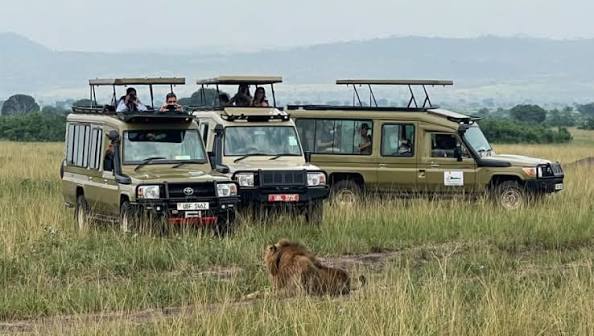
Roof-tent car hire for Uganda safaris offers freedom, privacy and flexibility. Instead of following a fixed group-tour schedule, you decide when to leave, where to stop and how long to stay at each destination. You can wake up near a national park, prepare breakfast beside your vehicle and begin your next adventure without packing and unpacking at a different hotel every night.
Uganda is one of Africa’s most rewarding destinations for an independent road trip. Its landscapes change dramatically within relatively short distances, taking travellers from the green shores of Lake Victoria to wildlife-rich savannahs, tropical rainforests, volcanic highlands and the remote plains of Kidepo Valley. With a reliable four-wheel-drive vehicle and a comfortable rooftop tent, you can explore these destinations at your own pace while keeping transport and accommodation together.
However, a successful Uganda self-drive safari requires proper planning. Travellers need the right vehicle, suitable camping equipment, realistic driving times, confirmed campsites, national park reservations and a clear understanding of road conditions. A rooftop tent does not replace responsible preparation. Rather, it gives well-prepared travellers an adventurous and practical way to discover the Pearl of Africa.
This complete guide explains how rooftop-tent vehicle rental works, which vehicle to choose, what equipment should be included, where to camp, how much to budget and how to plan the best Uganda road-trip itinerary. It also covers gorilla trekking, wildlife viewing, border crossings, safety, fuel, insurance and responsible camping.
Quick Information About Roof-Tent Car Hire in Uganda
| Item | Essential information |
|---|---|
| Recommended vehicle | Toyota Land Cruiser, Toyota Hilux or another reliable 4×4 |
| Sleeping setup | Hard-shell or soft-shell rooftop tent with mattress |
| Best for | Couples, friends, photographers, campers and independent travellers |
| Driving side | Left-hand side |
| Main arrival airport | Entebbe International Airport |
| Popular starting points | Entebbe, Kampala or Kigali |
| Main safari areas | Murchison Falls, Queen Elizabeth, Bwindi, Kibale, Lake Mburo and Kidepo |
| Best general travel periods | June–September and December–February |
| Important equipment | Spare tyres, jack, tools, water storage, cooking kit and recovery gear |
| Gorilla trekking areas | Bwindi Impenetrable and Mgahinga Gorilla national parks |
| Advance reservations | Vehicle, gorilla permit, campsites and selected park activities |
| Emergency planning | Local SIM card, offline maps and rental-company support number |
What Is Roof-Tent Car Hire for Uganda Safaris?
Roof-tent car hire combines a rental vehicle with a folding or hard-shell tent mounted securely on the vehicle’s roof rack. When you reach your campsite, you park on reasonably level ground, open the tent and use a ladder to enter the sleeping area. Most tents contain a built-in mattress, ventilation windows, mosquito netting and a waterproof outer cover.
A complete rental package may also include camping chairs, a table, cooking equipment, water containers, bedding, lighting, a refrigerator or cool box, recovery tools and spare tyres. The exact contents differ between companies. Therefore, travellers should always request a written equipment inventory before paying a deposit.
Some vehicles carry one rooftop tent for two people. Larger setups may have two tents or a combination of a rooftop tent and ground tent. Families should confirm the weight capacity, sleeping dimensions and suitability of the ladder before booking.
The vehicle remains your main form of transport throughout the safari. Consequently, you do not need to carry and assemble a traditional ground tent at every stop. The elevated sleeping platform also keeps the mattress away from wet ground, mud and many crawling insects.
Nevertheless, travellers must use designated campsites. A rooftop tent does not make it acceptable to camp on the roadside, inside an unapproved national park area or on private land without permission.
Why Choose Roof-Tent Car Hire for Uganda Safaris?
Freedom to Create Your Own Itinerary
A self-drive Uganda safari gives you greater control over your schedule. You can leave Kampala early, stop at the Ziwa Rhino Sanctuary region, continue toward Murchison Falls and spend the evening at a campsite near the park. On another day, you might pause at a crater-lake viewpoint or local market instead of driving directly to the next lodge.
This freedom is particularly valuable for birdwatchers, photographers and returning visitors who want more time in specific locations. Uganda has more than 1,000 recorded bird species, diverse primates and ten national parks managed by the Uganda Wildlife Authority. The country rewards travellers who move slowly and observe carefully.
Transport and Accommodation in One Package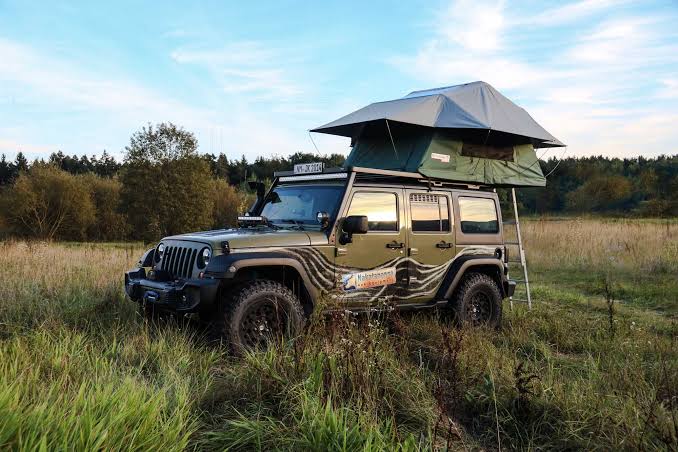
Rooftop camping combines two major safari expenses. Your vehicle carries you between destinations and provides your sleeping platform. You will still pay campsite fees, park charges, permits, fuel and food, but you can reduce the number of hotel or lodge nights.
The savings depend on the vehicle, travel season, route, group size and camping style. A premium Land Cruiser with two rooftop tents may cost more than a basic vehicle. However, it may also provide additional space, stronger off-road performance and greater comfort.
Closer Connection to Nature
Camping allows travellers to experience Uganda beyond scheduled game drives. You may hear birds at sunrise, watch the landscape change as daylight fades and prepare dinner under a clear sky. In organised campsites near protected areas, the natural surroundings become part of the accommodation experience.
This does not mean approaching wild animals or ignoring campsite instructions. Uganda’s wildlife must be observed responsibly. Campers should follow all ranger guidance, keep food secure and avoid walking around unfamiliar campsites after dark.
Access to Remote Destinations
Several of Uganda’s most impressive destinations are far from Kampala and Entebbe. Kidepo Valley National Park, for example, requires a long journey through northern Uganda. Bwindi’s gorilla trekking sectors are reached through winding highland roads. Ishasha, Semuliki and some crater-lake regions also involve unpaved routes.
A well-maintained 4×4 gives travellers more confidence on these roads, particularly when surfaces become muddy or uneven. It also provides extra ground clearance for ruts, stones and drainage channels.
A More Personal Safari Experience
Private car rental lets couples, families and small groups travel without sharing a vehicle with strangers. You choose your departure times, music, stops and daily pace. You can also combine camping nights with lodge stays, creating a journey that includes both adventure and comfort.
Is a Rooftop-Tent Safari Right for You?
Rooftop camping is ideal for travellers who enjoy independent travel, outdoor living and practical problem-solving. It suits people who can follow directions, manage basic camping equipment and adapt when weather or road conditions change.
It may not be the best choice for everyone. Consider a fully guided or lodge-based safari if you:
- Are uncomfortable driving long distances on unfamiliar roads.
- Do not want to cook or organise camping equipment.
- Have difficulty climbing a rooftop-tent ladder.
- Prefer private bathrooms and full hotel services every night.
- Have limited time and need a tightly managed itinerary.
- Plan to travel mainly during periods of heavy rain.
- Are unfamiliar with four-wheel-drive vehicles and remote-area travel.
A driver-guide can also be combined with a rooftop camping vehicle. This arrangement allows travellers to enjoy the camping experience while a professional manages navigation, driving and many logistical decisions.
Choosing the Best Vehicle for a Uganda Rooftop Safari
The vehicle is the foundation of a successful self-drive holiday. A low rental price is not valuable if the car is unreliable, poorly maintained or unsuitable for the route.
Toyota Land Cruiser
The Toyota Land Cruiser is one of the most popular vehicles for East African safaris. It is known for strong suspension, good ground clearance, durability and widespread mechanical familiarity.
A Land Cruiser is particularly suitable for longer circuits that include Bwindi, Queen Elizabeth, Murchison Falls, Kidepo or cross-border travel. Depending on the model, it may have enough space for passengers, luggage, food, water and camping equipment.
Common rental options include the Land Cruiser Prado, Land Cruiser V8 and extended safari-style models. Each has different luggage capacity, fuel consumption and passenger comfort. Travellers should ask for the actual vehicle model rather than accepting a general promise of a “Land Cruiser or similar.”
Toyota Hilux
A Toyota Hilux double-cab pickup can be a practical choice for two to four travellers. Its rear load area provides useful space for equipment, particularly when covered by a secure canopy.
The Hilux performs well on many unpaved roads and may be more economical than a large safari Land Cruiser. However, rear-seat and luggage arrangements should be checked carefully. A fully loaded pickup can become cramped if several passengers carry large suitcases.
Land Rover and Other 4×4 Vehicles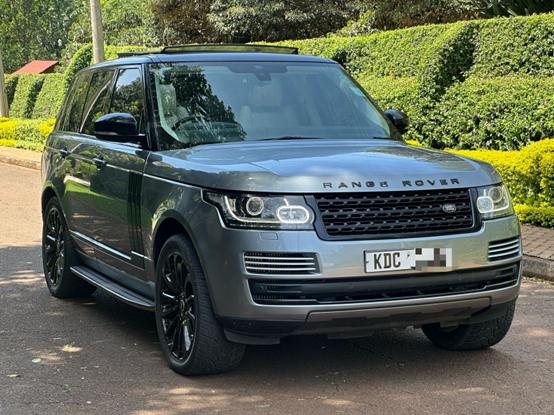
Some rental fleets include Land Rover Defenders, Mitsubishi Pajeros, Nissan Patrols or other four-wheel-drive vehicles. These may be suitable when correctly maintained and equipped.
The brand alone should not determine your decision. Vehicle condition, service history, tyre quality, recovery equipment and local support are more important than appearance.
Manual or Automatic Transmission
Automatic vehicles are easier for many international visitors, especially in Kampala traffic or on steep roads. Manual vehicles may offer more direct control, but drivers should already be comfortable using a manual gearbox.
Do not learn manual driving during a safari. Uganda’s traffic, hills and changing road surfaces require full concentration.
Diesel or Petrol
Many safari vehicles use diesel because diesel engines often provide good torque and practical fuel economy. Petrol vehicles can still be suitable, but fuel range should be considered when planning remote routes.
Ask the rental provider about the vehicle’s approximate consumption, fuel-tank capacity and recommended fuel type. Carrying spare fuel may be restricted or require appropriate containers, so discuss remote-route requirements with the supplier.
One Rooftop Tent or Two?
One tent generally accommodates two adults, although dimensions vary. Two rooftop tents may work for a family or group, but they increase weight and can affect vehicle height and handling.
Before confirming, ask:
- What are the internal dimensions of each tent?
- What is the maximum recommended weight?
- Is bedding included?
- How thick is the mattress?
- Does the tent have mosquito screens?
- Is the cover waterproof?
- Can the tent be opened by one person?
- How much time does setup take?
- Is there an awning for shade or rain?
- Are children permitted to sleep in the rooftop tent?
Pop-Up Roof Safari Vehicles
A rooftop tent should not be confused with a pop-up safari roof. A pop-up roof opens during game drives so passengers can stand and photograph wildlife. Some rental vehicles have both a rooftop tent and viewing features, while others do not.
If photography is important, ask whether the vehicle has a pop-up roof, large windows or another approved viewing design. Never stand through an open roof while the vehicle is moving.
Essential Equipment for Roof-Tent Car Hire for Uganda Safaris
A professional rental company should provide more than a vehicle and tent. The camping and recovery inventory determines how comfortably and safely you can travel.
Rooftop-Tent Equipment
Your sleeping setup should include:
- A secure rooftop tent.
- Built-in or removable mattress.
- Clean mattress protector.
- Pillows, sheets and blankets or sleeping bags.
- Stable access ladder.
- Waterproof rain cover.
- Mosquito-screened openings.
- Ventilation panels.
- Functional zips and fasteners.
- Interior or portable light.
Inspect the tent before departure. Open it fully and ask the company representative to demonstrate setup and closing procedures. Check for damaged fabric, missing poles, loose roof mounts and broken zips.
Cooking Equipment
A standard camping kitchen may include:
- Gas stove.
- Gas cylinder.
- Lighter or matches in waterproof storage.
- Cooking pots and frying pan.
- Plates and bowls.
- Cups or mugs.
- Knives, forks and spoons.
- Cutting board.
- Kitchen knife.
- Serving spoon.
- Bottle and can openers.
- Washing basin.
- Dishwashing liquid and sponge.
- Food-storage containers.
- Kettle.
Confirm whether the gas cylinder is full. You should also understand how to connect and shut off the stove safely. Use cooking equipment outdoors in a ventilated area, away from dry grass and tent fabric.
Water Storage
Safe water planning is essential. The vehicle should have sturdy, clean and tightly sealed water containers. Drinking water should be purchased from reliable sources or treated appropriately.
Carry enough water for drinking, cooking and basic washing, with an additional emergency reserve. Requirements depend on temperature, route length, group size and campsite facilities.
Refrigerator or Cool Box
A powered refrigerator makes longer camping trips more convenient. It helps keep vegetables, dairy products and other foods cool. Ask whether the fridge runs from a secondary battery and whether the vehicle has a system that prevents it from draining the starting battery.
A cool box is simpler but requires regular ice. Ice may not be consistently available outside larger towns.
Tables, Chairs and Shade
A folding table and camping chairs greatly improve mealtimes. An awning provides shade during hot afternoons and cover during light rain.
Check that all legs, locks and joints work properly. Broken furniture is difficult to replace once you are far from Kampala or Entebbe.
Vehicle Recovery Equipment
Your vehicle should carry:
- At least one usable spare tyre, preferably two for remote journeys.
- Jack suitable for the vehicle.
- Wheel spanner.
- Tyre-pressure gauge.
- Tow rope or rated recovery strap.
- Warning triangle.
- Basic toolkit.
- Jumper cables.
- Tyre repair kit.
- Air compressor.
- Shovel.
- Traction aids when appropriate.
- Fire extinguisher.
- First-aid kit.
Recovery equipment is useful only when travellers know its limitations. If a vehicle becomes deeply stuck, damaged or unsafe to move, contact the rental company instead of risking injury or further damage.
Navigation and Communication
Carry both online and offline navigation tools. Mobile coverage is available in many areas but may be weak inside parks, valleys and remote northern regions.
Download offline maps before departure. Keep a paper map as a backup and save important coordinates, including campsites, park gates, fuel stations and medical facilities.
You should also have:
- A local SIM card.
- Charging cables.
- USB vehicle charger.
- Power bank.
- Rental-company emergency number.
- Campsite contact details.
- Uganda Wildlife Authority contacts.
- Copies of your passport, insurance and rental agreement.
How to Inspect Your Uganda Roof-Tent Rental Vehicle
Never rush the handover. Set aside enough time to inspect the vehicle, learn the equipment and record existing damage.
Exterior Inspection
Walk around the vehicle and photograph:
- Body panels.
- Windscreen.
- Windows.
- Mirrors.
- Lights.
- Bumpers.
- Roof rack.
- Rooftop tent.
- Wheels and tyres.
- Existing scratches or dents.
Make sure all damage appears on the inspection form. Photographs should show the date and vehicle registration where possible.
Tyres
Tyres are especially important on a Uganda road trip. Check the tread, sidewalls and pressure. Cracks, bulges, exposed material and badly worn tread are warning signs.
Inspect the spare tyre as carefully as the tyres already on the road. Confirm that the jack and wheel spanner fit the vehicle.
Engine and Fluid Check
Ask the representative to show you:
- Engine-oil dipstick.
- Coolant reservoir.
- Brake-fluid reservoir.
- Windscreen-washer container.
- Battery location.
- Fuse box.
- Fuel-cap release.
- Four-wheel-drive controls.
Check for warning lights after starting the engine. If a warning light remains on, ask for a clear explanation and correction before leaving.
Four-Wheel-Drive System
Understand how to engage four-wheel drive and low range. Systems vary between vehicles. Some must be engaged while stationary, while others permit specific changes at low speed.
Use low range only when conditions require it. Incorrect use can damage the drivetrain. Ask the rental provider for a practical demonstration.
Tent Demonstration
Open and close the rooftop tent yourself while the representative watches. This reveals whether any part is difficult, damaged or missing.
Confirm that the tent is completely secured before driving. An incorrectly closed tent can be damaged by wind or branches.
Equipment Inventory
Count every item against the written inventory. Photograph the equipment before loading. This helps prevent disagreements when returning the vehicle.
Test Drive
Take a short test drive to check:
- Braking.
- Steering.
- Gear changes.
- Clutch, if applicable.
- Air conditioning.
- Wipers.
- Indicators.
- Reversing visibility.
- Unusual sounds.
- Dashboard instruments.
Report concerns immediately. Do not accept verbal promises that a serious mechanical issue is “normal.”
Understanding Uganda’s Roads
Uganda has a growing network of paved highways connecting major cities and tourism regions. Nevertheless, many roads leading to campsites, park gates and remote attractions are unpaved.
Paved Highways
Major routes can be busy with trucks, buses, motorcycles, pedestrians and livestock. Road surfaces may change unexpectedly because of construction, potholes or damaged shoulders.
Avoid assuming that a paved road allows consistently high speed. Villages, speed humps and traffic can increase journey times considerably.
Unpaved Roads
Gravel and earth roads vary with season and maintenance. During dry periods, dust and corrugations may be the main challenges. During wet periods, mud, standing water and slippery slopes can slow progress.
Reduce speed before potholes and corrugated sections. Driving quickly can damage tyres, suspension, camping equipment and roof-rack mounts.
Mountain Roads
Routes around Bwindi, Mgahinga, Kabale and Kisoro include steep climbs, sharp corners and limited visibility. Use lower gears on descents and leave sufficient space between vehicles.
Never rely entirely on navigation-app journey times in mountainous areas. A distance that looks short on a map can take several hours.
Driving in Kampala
Kampala traffic can be intense, especially during morning and evening peak periods. Motorcycles move between lanes, minibuses stop frequently and road layouts may be unfamiliar.
If possible, collect your vehicle after peak traffic or request delivery in Entebbe. Travellers who are not confident in city traffic can arrange a driver for the first day and begin self-driving outside Kampala.
Driving at Night
Night driving should be avoided whenever possible. Roads may have limited lighting, and drivers can encounter pedestrians, bicycles, livestock, motorcycles, stopped vehicles and unmarked hazards.
Plan to reach your campsite before sunset. Early arrival also gives you time to register, choose an appropriate parking position and set up the tent in daylight.
Driving Rules and Documents
Uganda drives on the left. The driver sits on the right side of most locally registered vehicles.
Travellers should confirm current licence requirements with the rental company and relevant authorities before arrival. Depending on nationality and trip duration, an international driving permit may be required alongside the original national driving licence.
Carry the following:
- Original valid driving licence.
- International driving permit where required.
- Passport or approved identification.
- Vehicle rental agreement.
- Vehicle registration documents supplied by the owner.
- Insurance documentation.
- Cross-border authorisation if leaving Uganda.
- Emergency contact information.
Uganda’s Ministry of Works and Transport provides official transport and driving-licence services through its online portal. Requirements can change, so confirm them before travel rather than depending on an old blog post.
Drivers should obey posted limits, wear seat belts and avoid using a handheld phone while driving. Never drive after consuming alcohol. A safari route can involve wildlife, steep roads and unpredictable traffic, so full concentration is necessary.
Insurance for a Uganda Self-Drive Safari
Insurance conditions vary widely. Before booking, request the full policy wording or rental terms.
Questions to Ask
Ask whether the rental includes:
- Third-party insurance.
- Collision damage protection.
- Theft protection.
- Windscreen cover.
- Tyre cover.
- Rooftop-tent and camping-equipment cover.
- Recovery or towing.
- Cross-border cover.
- Personal accident cover.
- Emergency medical evacuation.
Excess or Deductible
The excess is the amount you may have to pay when damage occurs. A low rental rate may come with a high excess.
Ask whether the excess applies once per rental or separately to each incident. You should also understand how the security deposit is collected and returned.
Common Exclusions
Rental insurance may exclude damage caused by:
- Unauthorised drivers.
- Driving outside approved areas.
- Speeding or reckless driving.
- Incorrect fuel.
- Driving while intoxicated.
- Water crossings.
- Driving at night.
- Roof or underbody impact.
- Unauthorised border crossings.
- Ignoring warning lights.
- Continuing to drive after a mechanical problem develops.
Read the conditions carefully. If something is unclear, request a written explanation.
Travel Insurance
Vehicle insurance does not replace personal travel insurance. Travellers should obtain suitable cover for medical treatment, evacuation, trip interruption, baggage, missed connections and planned activities such as gorilla trekking.
Best Time for a Rooftop-Tent Safari in Uganda
Uganda can be visited throughout the year. Weather differs between regions, and rainfall does not always follow a fixed schedule.
June to September
These months are generally popular for wildlife safaris and gorilla trekking. Many routes are comparatively dry, although rain remains possible in forest and mountain regions.
Demand can be high, so travellers should reserve vehicles, gorilla permits and popular campsites well in advance.
December to February
This is another popular period for road trips. Conditions are often suitable for game drives and camping, particularly in savannah regions.
Warm daytime temperatures make shade and water planning important.
March to May
This period commonly receives heavier rainfall. Roads can become muddy, especially around remote campsites and forested highlands.
The landscape is beautifully green, and some destinations may feel less crowded. However, travellers should allow more time and use a capable 4×4.
October and November
Rainfall can increase during these months, although conditions vary. Flexible itineraries are valuable because a difficult road may require a slower approach or an alternative route.
Weather and Rooftop-Tent Comfort
Even during warmer months, nights can be cool in Bwindi, Kisoro, Kabale and other high-altitude areas. Pack warm layers and confirm that suitable bedding is included.
Savannah destinations can be much hotter. Good tent ventilation, shade and adequate drinking water become essential.
Where to Go on a Uganda Roof-Tent Safari
Uganda Wildlife Authority manages ten national parks, including Bwindi Impenetrable, Mgahinga Gorilla, Queen Elizabeth, Murchison Falls, Kibale, Lake Mburo, Kidepo Valley, Semuliki, Mount Elgon and Rwenzori Mountains national parks. Each provides a different safari experience.
Murchison Falls National Park
Murchison Falls is one of Uganda’s most famous wildlife destinations. The Nile passes through a narrow rocky gorge before continuing through the park. Visitors can combine game drives with a boat trip, birdwatching and viewpoints around the falls.
The park is home to elephants, giraffes, buffaloes, antelopes, hippos, crocodiles and many bird species. Lions and leopards are also present, although sightings are never guaranteed.
A rooftop-tent safari usually includes camping inside or near the conservation area. Travellers should confirm which gates and river crossings are operating before finalising the route.
Allow enough time for the journey from Kampala or Entebbe. Adding a night near Ziwa or Masindi can make the drive more comfortable.
Queen Elizabeth National Park
Queen Elizabeth National Park is well positioned for travellers combining wildlife viewing with Kibale and Bwindi. Its landscapes include savannah, wetlands, crater areas and the Kazinga Channel.
Popular activities include game drives and boat trips. The Ishasha sector is known for tree-climbing lions, although wildlife sightings depend on natural movement and conditions.
Several campsites and budget accommodations operate around the park. Confirm whether your campsite is fenced and what rules apply after dark.
Bwindi Impenetrable National Park
Bwindi is Uganda’s leading gorilla trekking destination. The forest is divided into different trekking sectors, including Buhoma, Ruhija, Rushaga and Nkuringo. Your permit determines where you must report, so book accommodation and camping near the correct sector.
Do not assume you can stay in Buhoma when your permit is for Rushaga. Driving between sectors can take several hours because of mountainous roads.
Gorilla permits are controlled through the Uganda Wildlife Authority and should be arranged through authorised channels. UWA advises travellers to follow official purchasing procedures for gorilla and chimpanzee permits. Permit rates, promotions and conditions can change, so verify the applicable tariff before publishing or booking.
On trekking day, leave the rooftop tent at your campsite and arrive at the briefing point on time. Carry suitable footwear, rain protection, water and lunch. Follow ranger instructions throughout the experience.
Mgahinga Gorilla National Park
Mgahinga lies in southwestern Uganda near Kisoro and the borders with Rwanda and the Democratic Republic of Congo. The park offers gorilla trekking, golden monkey experiences and volcanic scenery.
It can be included in a circuit through Lake Bunyonyi, Kisoro and Bwindi. Its highland location means nights may be cold, so warm bedding is essential.
Kibale National Park
Kibale is famous for primate experiences, particularly chimpanzee tracking. The surrounding region also contains crater lakes, community tourism projects, wetlands and tea-growing landscapes.
Campsites around Fort Portal and Kibale provide useful bases for self-drive travellers. Reserve chimpanzee permits early, particularly during popular travel periods.
Lake Mburo National Park
Lake Mburo is conveniently located between Kampala and southwestern Uganda. It works well as the first or final national park on a longer road trip.
The park is known for zebras, impalas, buffaloes, elands, giraffes and birdlife. Depending on current availability and regulations, visitors may join game drives, boat trips, guided walks or other authorised activities.
Because Lake Mburo is relatively accessible, it is a good location for travellers becoming familiar with their vehicle and camping setup.
Kidepo Valley National Park
Kidepo is remote, dramatic and memorable. Its open landscapes, mountain backdrops and comparatively low visitor numbers make it attractive to adventurous road trippers.
However, the journey is long. Travellers need a mechanically sound 4×4, realistic fuel planning, reliable navigation and sufficient food and water. A spare travel day is valuable.
Do not plan Kidepo as a rushed extension to a short safari. It deserves several nights, especially considering the driving time required.
Semuliki National Park
Semuliki offers lowland forest, birdlife and geothermal attractions. Roads in the wider region may be affected by rain, so ask for current local advice.
Semuliki combines naturally with Fort Portal, Kibale and the Rwenzori region.
Mount Elgon National Park
Mount Elgon in eastern Uganda provides hiking, waterfalls and highland scenery. It can be combined with Jinja and Sipi Falls.
Campers should prepare for cooler temperatures and rain. Mountain activities may require guides, permits and specialised planning beyond normal vehicle camping.
Rwenzori Mountains National Park
The Rwenzori Mountains are a serious hiking and mountaineering destination. A rooftop-tent car is useful for reaching the region, but multi-day mountain expeditions require approved guides, appropriate equipment and dedicated arrangements.
Casual safari equipment is not sufficient for high-altitude trekking.
Jinja and the Source of the Nile Region
Jinja is a popular stop between Kampala and eastern Uganda. Travellers can enjoy river views, cultural experiences and organised outdoor activities.
Choose licensed activity providers and follow their safety instructions. A campsite beside the Nile can be a relaxing beginning or conclusion to a longer safari circuit.
Lake Bunyonyi
Lake Bunyonyi is surrounded by steep terraced hills near Kabale. It provides a peaceful stop before or after gorilla trekking.
The final access road to some campsites may be steep or narrow. Confirm whether your vehicle can reach the property or whether you should park elsewhere and use a boat transfer.
Suggested 7-Day Uganda Roof-Tent Safari
Day 1: Entebbe to Lake Mburo National Park
Collect the vehicle, complete the inspection and drive toward Lake Mburo. Stop for supplies before reaching the park region.
Arrive before sunset, register at the campsite and practise opening the rooftop tent while there is still daylight.
Day 2: Lake Mburo to Lake Bunyonyi
Join an early approved activity in Lake Mburo before continuing toward Kabale and Lake Bunyonyi.
The journey becomes more scenic as you enter southwestern Uganda. Camp near the lake and enjoy a quiet evening.
Day 3: Lake Bunyonyi to Bwindi
Drive to the sector listed on your gorilla permit. Do not rely only on the park name; confirm the specific reporting location.
Buy any last supplies before reaching the forest region. Settle into an established campsite near the trekking headquarters.
Day 4: Gorilla Trekking in Bwindi
Attend the morning briefing and join your assigned ranger-guided trek. Return to the campsite afterward.
Avoid scheduling a long drive on the same afternoon. Trekking duration varies, and weather can affect forest conditions.
Day 5: Bwindi to Queen Elizabeth National Park
Travel toward Queen Elizabeth National Park. If your route passes through Ishasha, allow time for a careful game drive where authorised.
Continue to your reserved campsite and follow all wildlife-safety instructions.
Day 6: Queen Elizabeth National Park
Spend the day exploring the park through authorised game drives and a pre-booked boat experience.
Return to camp before dark and prepare for the following day’s journey.
Day 7: Queen Elizabeth to Entebbe or Kampala
Leave early and drive toward Entebbe or Kampala. If your international flight departs that evening, build in a generous time margin.
A safer option is to spend a final night in Entebbe and return the vehicle the following morning.
Suggested 10-Day Uganda Self-Drive Camping Safari
Day 1: Entebbe or Kampala to Lake Mburo
Collect supplies and drive to Lake Mburo National Park.
Day 2: Lake Mburo to Bwindi
Continue through southwestern Uganda to the sector named on your gorilla permit.
Day 3: Gorilla Trekking
Complete your gorilla trekking experience and spend a second night near Bwindi.
Day 4: Bwindi to Queen Elizabeth
Drive through the highlands or Ishasha region, depending on your route and campsite.
Day 5: Queen Elizabeth National Park
Enjoy a game drive and scheduled boat trip.
Day 6: Queen Elizabeth to Kibale
Travel through the crater-lake region toward Kibale.
Day 7: Chimpanzee Tracking
Join your confirmed chimpanzee experience and explore an approved community or wetland attraction.
Day 8: Kibale to Murchison Falls Region
This is a long transfer. Leave early and avoid continuing after dark.
Day 9: Murchison Falls National Park
Take a game drive and boat excursion, subject to current schedules and reservations.
Day 10: Murchison Falls to Entebbe
Return through Masindi and central Uganda. Consider adding an extra night if your flight schedule is tight.
Suggested 14-Day Uganda Roof-Tent Adventure
A two-week itinerary provides a better balance between driving and exploration:
- Entebbe arrival and vehicle handover.
- Entebbe to Jinja.
- Jinja and Nile region.
- Jinja to Sipi Falls.
- Sipi Falls to northern Uganda.
- Continue to Kidepo Valley.
- Kidepo Valley National Park.
- Second day in Kidepo.
- Kidepo to Murchison Falls region.
- Murchison Falls National Park.
- Murchison Falls to Kibale.
- Kibale chimpanzee experience.
- Kibale to Lake Mburo.
- Lake Mburo to Entebbe.
Adding Bwindi and Queen Elizabeth to the same two-week trip is possible, but it creates more driving. Travellers who want gorilla trekking, Kidepo and several savannah parks should ideally consider 17 to 21 days.
Gorilla Trekking With a Roof-Tent Rental Car
Gorilla trekking is often the centrepiece of a Uganda safari. Combining it with a camping vehicle can reduce accommodation costs while maintaining a flexible road-trip experience.
Reserve the Permit Before Planning the Route
Your gorilla permit is tied to a date and location. Secure the permit before booking campsites and finalising the driving schedule.
Uganda Wildlife Authority publishes official tariffs and permit-management guidance. At the time of planning, consult the current UWA rate page because fees, low-season arrangements and booking conditions may change.
Stay Near the Correct Sector
Bwindi’s sectors are not interchangeable. A campsite near Buhoma is not necessarily convenient for a trek starting in Rushaga, Ruhija or Nkuringo.
Request written confirmation showing:
- Trekking date.
- National park.
- Trekking sector.
- Traveller names.
- Permit status.
- Reporting time.
- Reporting point.
Arrive One Day Early
Do not plan to drive from Kampala or Entebbe on the morning of your trek. Arrive near the trekking centre the previous afternoon.
This protects you from delays caused by traffic, roadworks, weather or navigation errors.
Prepare for Highland Conditions
The forest region can be cool and wet. Pack:
- Waterproof jacket.
- Long trousers.
- Long-sleeved shirt.
- Strong walking footwear.
- Gardening-style gloves if recommended.
- Small backpack.
- Drinking water.
- Packed lunch.
- Sun protection.
- Camera with spare battery.
- Warm clothing for the campsite.
Porter services may be available and can provide practical support while contributing income to surrounding communities.
Camping Inside and Near Uganda’s National Parks
Camping arrangements differ between destinations. Some sites are inside protected areas, while others are on private land outside the gates.
Public Campsites
Public campsites tend to provide basic facilities. Depending on the location, these may include shared toilets, showers, water access and a designated cooking area.
Travellers should not assume hot water, electricity or reliable mobile coverage.
Private Campsites
Private campsites may offer restaurants, charging points, Wi-Fi, hot showers or swimming pools. Facilities and prices vary considerably.
Ask whether rooftop-tent vehicles are accepted. Some properties describe themselves as camps but cater mainly to permanent safari tents rather than independent campers.
Wild Camping
Wild camping is generally not recommended. It may be unsafe, environmentally damaging or prohibited.
Use established campsites and obtain permission before staying on community or private land. Inside national parks, follow Uganda Wildlife Authority instructions and camp only in authorised areas.
Campsite Questions to Ask
Before arrival, confirm:
- Is advance booking required?
- Are rooftop tents accepted?
- Is the campsite inside or outside the park?
- Is the site fenced?
- Are toilets and showers available?
- Is drinking water available?
- Can campers cook?
- Is firewood provided or permitted?
- Is there electricity?
- Is there a restaurant?
- What time does the gate close?
- Are there wildlife restrictions after dark?
- Is payment made by cash, card or mobile money?
Food Planning for a Uganda Camping Safari
Uganda’s towns and cities provide markets, supermarkets, bakeries and restaurants. Remote campsites may have limited supplies, so shop before leaving larger centres.
Useful Camping Foods
Practical foods include:
- Rice.
- Pasta.
- Oats.
- Bread.
- Eggs.
- Beans and lentils.
- Tinned vegetables.
- Fresh fruit.
- Potatoes.
- Tomatoes and onions.
- Peanut butter.
- Nuts.
- Tea and coffee.
- Long-life milk.
- Biscuits.
- Cooking oil.
- Salt and spices.
- Bottled or treated drinking water.
Choose food according to available refrigeration. Do not store perishable items for long periods in an unreliable cool box.
Buying Local Produce
Local markets can be excellent places to buy bananas, pineapples, avocados, tomatoes and other fresh produce. Carry small denominations and ask permission before photographing people.
Supporting local businesses helps distribute tourism income beyond major lodges and parks.
Protecting Food
Store food in sealed containers inside the vehicle. Do not leave it in the open or inside an unattended ground-level bag.
Never feed monkeys, baboons or other wildlife. Feeding changes animal behaviour and can create dangerous conflicts.
Campfire Cooking
Campfires may be restricted, particularly during dry periods. Use designated fireplaces only and follow campsite instructions.
A gas stove is usually cleaner, faster and more predictable. Keep it away from tent fabric and dry vegetation.
Fuel Planning
Fuel stations are available in Uganda’s cities and larger towns. Availability becomes less predictable on remote routes.
Good Fuel Practices
- Begin long travel days with a full tank.
- Refuel before entering remote regions.
- Use established fuel stations where possible.
- Confirm whether your vehicle uses diesel or petrol.
- Watch the fuel gauge rather than relying on estimated range.
- Ask the rental company about approved fuel containers.
- Do not carry fuel in drinking-water containers.
- Keep fuel away from food and cooking equipment.
Remote Routes
Kidepo and some northern or border regions require particularly careful planning. Ask for current information because fuel availability, road conditions and travel times can change.
How Much Does Roof-Tent Car Hire in Uganda Cost?
Rental prices depend on the vehicle, season, rental duration, equipment, insurance, pickup location and whether a driver is included.
Instead of comparing only the advertised daily rate, calculate the complete trip cost.
Vehicle-Rental Costs
Your quotation may include:
- 4×4 vehicle.
- Rooftop tent.
- Camping equipment.
- Insurance.
- Airport transfer.
- Additional driver.
- Roadside support.
- Unlimited or limited mileage.
- Cross-border paperwork.
Ask whether taxes are included.
Additional Safari Costs
Budget separately for:
- Fuel.
- Campsites.
- National park entrance.
- Vehicle entrance.
- Gorilla or chimpanzee permits.
- Boat trips.
- Ranger-guided activities.
- Food and drinking water.
- Local SIM card.
- Laundry.
- Tips.
- Visa fees where applicable.
- Travel insurance.
- Cross-border charges.
- Emergency reserve.
Park Fees
Uganda Wildlife Authority publishes conservation tariffs for national parks and activities. Rates can differ for foreign non-residents, foreign residents, East African citizens, vehicles and specific experiences.
Because tariff periods change, use the official UWA rate card when preparing a final budget. Avoid relying on screenshots or undated third-party tables.
Sample Budget Structure
| Expense | How to calculate |
| Vehicle | Daily rate × rental days |
| Camping equipment | Included or separate daily charge |
| Fuel | Route distance ÷ estimated consumption |
| Campsites | Nightly price × number of nights |
| Park entrance | Applicable rate × people × days |
| Vehicle entrance | Applicable vehicle charge |
| Permits | Current official rate × participants |
| Activities | Boat trips, guides and other reservations |
| Food | Daily food allowance × travellers |
| Insurance | Included cover plus optional upgrades |
| Emergency reserve | Additional amount for unexpected changes |
A longer rental may qualify for a lower daily rate. However, never sacrifice vehicle condition, insurance or support to obtain the cheapest offer.
Cheap Roof-Tent Car Hire Versus Good-Value Car Hire
Travellers frequently search for cheap 4×4 rental in Uganda. Price matters, but an unusually low rate may exclude essential services.
A good-value rental should provide:
- A properly maintained vehicle.
- Safe tyres and functional spare tyres.
- Secure roof-rack installation.
- Clean camping equipment.
- Clear insurance conditions.
- Honest mileage policy.
- Emergency telephone support.
- Practical vehicle handover.
- Written cross-border permission where required.
- Transparent charges.
A cheap vehicle can become expensive if it breaks down, causes you to miss a gorilla trek or leaves you paying for recovery that was not covered.
Compare complete packages rather than headline prices.
Roof-Tent Car Hire From Entebbe
Entebbe is a convenient starting point because it contains Uganda’s main international airport. Beginning here can help travellers avoid central Kampala traffic on the first day.
Possible first-night options include Entebbe itself, Lake Mburo, Jinja or a stop on the way to Murchison Falls, depending on arrival time.
Do not begin a long drive immediately after an overnight flight. Rest first, inspect the vehicle carefully and buy supplies before leaving.
Roof-Tent Car Hire From Kampala
Kampala provides a wider range of supermarkets, equipment shops, repair services and accommodation. It may be useful for travellers spending time in the capital before beginning the safari.
Ask whether the supplier’s office is in central Kampala or on the outskirts. Transfer time from Entebbe International Airport varies with traffic.
Uganda Safari From Kigali With a Rooftop Tent
Starting in Kigali can be convenient for southwestern Uganda, particularly Bwindi, Mgahinga, Lake Bunyonyi and Queen Elizabeth National Park.
A cross-border itinerary requires:
- Rental-company permission.
- Correct vehicle documentation.
- Insurance valid in both countries.
- Immigration compliance.
- Border charges where applicable.
- Permission for all drivers.
- Realistic border-processing time.
Never take a rental vehicle across an international border without written authorisation.
A Kigali starting point can reduce the driving time to some gorilla trekking sectors compared with travelling from Entebbe. It also allows travellers to combine Rwanda and Uganda in one East African road trip.
Cross-Border Rooftop-Tent Safaris
Some travellers combine Uganda with Rwanda, Kenya or Tanzania. Cross-border vehicle rental is possible with selected suppliers, but it needs advance preparation.
Documents
Depending on the route and vehicle, documentation may include:
- Vehicle registration.
- Owner’s authorisation.
- Cross-border insurance.
- Temporary import or customs paperwork.
- Driver’s licence.
- International driving permit.
- Passport and visa documentation.
- Rental agreement listing permitted countries.
One-Way Rentals
One-way rental between Kigali and Entebbe may be available for an additional relocation charge. Confirm the exact return location, date, time and fuel policy.
Border Planning
Border opening hours, visa rules and health requirements may change. Check official immigration information shortly before travel.
Uganda operates an official electronic visa and permit application system. Travellers should use the government portal and avoid unofficial websites that imitate visa services.
Safety Tips for Roof-Tent Car Hire for Uganda Safaris
Plan Conservative Driving Days
Do not create an itinerary based only on distance. Road surface, traffic, mountains, park gates, rain and sightseeing stops all affect travel time.
A shorter, slower itinerary is usually more enjoyable than a rushed route covering every national park.
Avoid Driving After Dark
Reach your campsite early enough to set up in daylight. If delays make this impossible, call the campsite and rental company for advice.
Keep Valuables Secure
Store passports, money, electronics and important documents discreetly. Lock the vehicle when leaving it and avoid displaying expensive equipment unnecessarily.
Follow Park Rules
Stay on authorised roads, respect gate times and follow ranger instructions. Do not leave the vehicle where exiting is prohibited.
Wildlife can behave unpredictably. Keep a safe distance and never position your vehicle between an animal and its young.
Do Not Keep Food in the Tent
Food smells can attract animals. Store supplies securely in the vehicle or in facilities provided by the campsite.
Check the Vehicle Daily
Each morning, look for:
- Soft or damaged tyres.
- Fluid leaks.
- Loose rooftop-tent straps.
- Damaged roof-rack mounts.
- Warning lights.
- Unusual engine sounds.
- Low fluid levels.
- Missing equipment.
A quick inspection can identify a small problem before it becomes a serious breakdown.
Respect Weather Conditions
Heavy rain can transform an easy road. If you cannot judge the depth of water or stability of a surface, do not proceed blindly.
Ask local drivers, rangers or the rental company for an alternative.
Keep Emergency Contacts Available
Save contact numbers on more than one phone and carry a written copy. Share your route with the rental company or a trusted contact.
Health Preparation
Consult a qualified travel-health professional before departure. Requirements and recommendations depend on your origin, itinerary, health history and current conditions.
Carry personal medication in its original packaging, together with enough supplies for the trip.
What to Pack for a Uganda Rooftop Camping Safari
Clothing
Pack:
- Lightweight shirts.
- Long-sleeved top.
- Long trousers.
- Shorts for appropriate settings.
- Warm fleece.
- Waterproof jacket.
- Comfortable walking shoes.
- Strong trekking footwear.
- Sandals or camp shoes.
- Hat.
- Socks.
- Sleepwear.
- Swimwear where relevant.
Choose modest, practical clothing for community visits.
Camping Accessories
Useful personal items include:
- Headlamp.
- Spare batteries.
- Reusable water bottle.
- Quick-drying towel.
- Insect repellent.
- Sunscreen.
- Hand sanitiser.
- Toiletries.
- Laundry bag.
- Small daypack.
- Dry bags.
- Earplugs.
- Power bank.
- Travel adapter.
Photography Equipment
Bring:
- Camera.
- Appropriate lenses.
- Spare batteries.
- Memory cards.
- Dust protection.
- Rain cover.
- Beanbag for vehicle photography.
- Lens-cleaning cloth.
Do not use drones without the required permits and approvals. Drone rules can involve aviation, security and wildlife authorities.
Documents
Carry printed and digital copies of:
- Passport.
- Visa.
- Driving licence.
- International driving permit.
- Rental agreement.
- Insurance.
- Permit confirmations.
- Campsite bookings.
- Flight details.
- Emergency contacts.
Responsible and Sustainable Camping
A rooftop-tent safari should protect the landscapes that make Uganda special.
Leave No Waste
Take all rubbish to an approved disposal point. Do not bury plastic, tins, glass or sanitary products.
Carry reusable shopping bags and water containers where practical.
Protect Water Sources
Do not wash dishes, vehicles or clothes directly in lakes and rivers. Use designated washing areas and environmentally considerate products.
Stay on Existing Roads
Off-road driving damages vegetation and can disturb wildlife. Follow marked tracks and ranger directions.
Support Local Communities
Purchase food and crafts locally, hire recognised community guides and use established tourism services.
Ask before photographing people, homes, cultural ceremonies or children.
Respect Wildlife
Never feed animals, play recorded calls to attract birds without expert guidance or pressure wildlife for a photograph.
Maintain a respectful distance and allow animals to move freely.
Manage Noise
Keep voices and music low, especially at night. Other travellers and nearby communities also deserve a peaceful environment.
Common Mistakes to Avoid
Booking the Cheapest Vehicle Without Inspection
An attractive online price does not show tyre condition, maintenance quality or insurance coverage. Request current vehicle information and inspect everything before departure.
Planning Excessive Daily Distances
Uganda looks smaller on a map than it feels on the road. Slow traffic, mountains and unpaved roads add time.
Include rest days and two-night stays.
Arriving at Campsites After Dark
Late arrival makes navigation, registration and tent setup harder. It may also violate park-gate or campsite rules.
Forgetting the Gorilla Trekking Sector
Booking accommodation in the wrong Bwindi sector can cause major logistical problems. Confirm your permit location before reserving a campsite.
Depending Entirely on Mobile Internet
Download maps, save coordinates and carry written information. Network coverage can be unreliable in remote areas.
Carrying Too Much Luggage
Soft bags fit into safari vehicles more easily than large hard suitcases. Pack only what you need and leave space for food, water and camping equipment.
Ignoring Roof Height
A vehicle with a rooftop tent is taller than an ordinary car. Watch for low branches, car-park barriers and building entrances.
Leaving the Tent Open Before a Game Drive
Always close and secure the rooftop tent before moving the vehicle, even for a short distance.
Skipping a Final-Night Buffer
Returning from a remote park on the same day as an international flight creates unnecessary risk. Spend the last night in or near Entebbe when possible.
How to Choose a Reliable Uganda Car-Rental Company
Look for Clear Communication
A reputable supplier should answer questions about the vehicle, insurance, equipment, roadside support and payment terms.
Be cautious if important details remain verbal.
Request Vehicle Details
Ask for:
- Make and model.
- Transmission.
- Fuel type.
- Seating capacity.
- Luggage capacity.
- Tent type.
- Tent dimensions.
- Recent vehicle photographs.
- Number of spare tyres.
- Equipment inventory.
The exact vehicle may change because of maintenance or operational needs. If substitution is allowed, the agreement should explain what constitutes an equivalent vehicle.
Check Support Coverage
Ask what happens if:
- The vehicle breaks down.
- A tyre is damaged.
- The battery fails.
- You lose a key.
- The rooftop tent is damaged.
- You are delayed near a border.
- The vehicle cannot continue.
A strong support plan is particularly important for Kidepo and other remote destinations.
Review Payment Terms
Understand:
- Deposit amount.
- Final-payment deadline.
- Accepted payment methods.
- Bank or card charges.
- Security deposit.
- Cancellation conditions.
- Refund timing.
- Currency conversion.
- Late-return fees.
Confirm Included Kilometres
Some rental agreements provide unlimited mileage, while others set a daily or total limit.
A cross-country Uganda safari can cover substantial distances, so mileage charges matter.
Read Reviews Carefully
Look for consistent comments about maintenance, customer service and breakdown support. One short review does not provide enough evidence.
Focus on how the company handled problems, not only on whether every journey was problem-free.
Frequently Asked Questions
Do I Need a 4×4 for a Uganda Safari?
A 4×4 is strongly recommended for an itinerary involving national parks, remote campsites, Bwindi, Kidepo or travel during rainy periods. Some main highways are paved, but final access roads can be rough, muddy or steep.
Is Roof-Tent Camping Safe in Uganda?
It can be safe when travellers use recognised campsites, maintain a suitable vehicle and follow wildlife, park and campsite rules. Avoid unauthorised roadside camping and do not walk around wildlife areas after dark.
Can I Camp Anywhere With a Rooftop Tent?
No. Camp at approved campsites or on private land where you have permission. Inside national parks, use designated camping areas and follow Uganda Wildlife Authority regulations.
Can I Drive Myself Inside Uganda’s National Parks?
Self-driving is permitted on authorised roads in several parks, subject to applicable entry rules and local instructions. Some activities require rangers or guides. Check current requirements at the park gate.
Can I Combine Gorilla Trekking With a Rooftop-Tent Safari?
Yes. Many travellers drive to Bwindi or Mgahinga, stay at an established campsite and attend a pre-booked gorilla trek. Your campsite must be near the sector stated on your permit.
How Early Should I Book a Rooftop-Tent Vehicle?
Book several months ahead if travelling during popular periods or requiring a specific vehicle. Gorilla permits and well-equipped 4×4 vehicles can become unavailable before campsites do.
Can I Collect a Vehicle at Entebbe International Airport?
Many rental companies provide airport delivery or transfers. Confirm whether there is an additional charge and where the vehicle handover will take place.
Can I Start in Kigali and Finish in Entebbe?
Selected companies offer one-way or cross-border rental arrangements. Written permission, valid insurance and correct vehicle documents are essential.
Is an International Driving Permit Required?
Requirements depend on your licence and circumstances. Confirm with the rental company and official authorities before departure. Carry your original driving licence even when using an international permit.
How Many People Fit in a Rooftop Tent?
Most standard tents are designed for two adults. Larger models may accommodate more, but weight limits and dimensions must be checked.
Are Rooftop Tents Comfortable?
A good tent with a quality mattress can be comfortable. Comfort also depends on bedding, ventilation, weather and campsite level. Highlands may be cold, while savannah destinations can be warm.
Does the Rental Include Camping Equipment?
Some packages include a full kitchen, refrigerator, bedding, chairs, table and water containers. Others include only the tent. Request a detailed inventory.
What Happens if the Vehicle Breaks Down?
Contact the rental company immediately. The response may involve telephone support, a local mechanic, recovery or a replacement vehicle. Coverage depends on your agreement and location.
Should I Carry Cash?
Carry an appropriate amount of cash in small denominations because not every campsite, market or fuel station accepts cards. Keep it secure and separate from your main documents.
Are Uganda Gorilla Permits Included in Car Hire?
Usually not. Permits are separate unless the quotation explicitly says otherwise. Ask for written confirmation and official permit details.
Can Children Join a Rooftop-Tent Safari?
Families can use selected rooftop-tent vehicles, but parents must consider ladder access, sleeping capacity, child seats, travel distances and campsite facilities. Gorilla trekking has a minimum age requirement, so verify current rules before planning.
What Is the Best Uganda Self-Drive Route for First-Time Visitors?
A practical first route combines Lake Mburo, Bwindi, Queen Elizabeth and Kibale. It provides wildlife, primates, scenery and manageable connections without the long journey to Kidepo.
Is Uganda Suitable for Solo Self-Drive Travel?
Experienced independent travellers can drive alone, but they should plan conservatively, avoid night driving and maintain regular communication. A driver-guide may be a better option for people unfamiliar with African road conditions.
Can I Mix Camping and Lodge Accommodation?
Yes. Many travellers camp for several nights and book a lodge after a long drive or gorilla trek. This combination provides adventure without requiring camping every night.
Does a Rooftop Tent Protect Me From All Wildlife?
No. The elevated tent provides a sleeping platform, but it does not remove the need to follow wildlife-safety rules. Keep food secure, remain inside after dark where instructed and never approach animals.
A Practical Booking Process
Step 1: Decide Your Travel Dates
Choose your approximate travel period and number of days. Consider rainfall, permit availability and your preferred destinations.
Step 2: Select a Realistic Route
Prioritise two to four regions rather than trying to cover the entire country. Add rest days and avoid consecutive long drives.
Step 3: Reserve Gorilla and Chimpanzee Permits
If primate trekking is essential, check permit availability before making non-refundable arrangements.
Step 4: Request a Vehicle Quotation
Provide:
- Travel dates.
- Number of travellers.
- Pickup and return locations.
- Preferred transmission.
- Planned route.
- Border crossings.
- Number of rooftop tents.
- Camping-equipment requirements.
- Need for a driver-guide.
Step 5: Review Inclusions
Compare the complete package, including insurance, mileage, camping inventory, tax, roadside support and cross-border fees.
Step 6: Confirm Campsites
Reserve sites near popular parks and near the correct Bwindi trekking sector.
Step 7: Prepare Documents
Arrange your visa, driving documents, insurance and health requirements using official information.
Step 8: Complete a Detailed Handover
Inspect the car, test the equipment, record damage and practise opening the tent.
Step 9: Travel Conservatively
Refuel early, drive during daylight and communicate when your route changes.
Step 10: Return the Vehicle Correctly
Follow the agreed fuel, cleaning and return-time conditions. Complete a joint inspection and obtain confirmation that the vehicle was returned.
Why Book Your Uganda Rooftop-Tent Safari With Universal Ventures Rwanda?
Universal Ventures Rwanda organises customised safaris, self-drive support, vehicle hire, gorilla trekking tours and cross-border travel in Rwanda and Uganda. Our local knowledge helps travellers match the right vehicle to the right route instead of choosing a car based only on its daily price.
We can assist with:
- 4×4 rooftop-tent vehicle hire.
- Uganda self-drive safari planning.
- Kigali, Kampala and Entebbe vehicle arrangements.
- Rwanda–Uganda cross-border itineraries.
- Gorilla permit assistance.
- Chimpanzee permit assistance.
- Campsite and lodge reservations.
- Airport pickup and drop-off.
- Professional driver-guides.
- Emergency logistical support.
- Family, couple and small-group safaris.
- Camping-and-lodge combination tours.
- Tailor-made East African road trips.
Every itinerary should reflect the travellers’ available time, interests, driving experience and preferred comfort level. A couple planning a relaxed Bwindi and Queen Elizabeth trip needs a different setup from photographers driving to Kidepo for several weeks.
When requesting a quotation, send your travel dates, group size, preferred pickup point, intended parks and whether you need one or two rooftop tents. We will help you develop a practical route and explain what is included.
Contact Universal Ventures Rwanda
Universal Ventures Rwanda
Address: Kigali, Rwanda
Telephone/WhatsApp: +250 781 441 853
Email: info@universalventuresrwanda.com
Website: universalventuresrwanda.com
Contact Universal Ventures Rwanda for personalised roof-tent car hire for Uganda safaris, Uganda gorilla trekking journeys, Rwanda–Uganda self-drive holidays and guided East African adventures.
Final Thoughts on Roof-Tent Car Hire for Uganda Safaris
Uganda is made for travellers who value variety. In one journey, you can watch giraffes crossing open savannah, follow chimpanzees through tropical forest, drive between volcanic highlands and sit beside a quiet lake at sunset.
A rooftop-tent vehicle gives you the freedom to connect these experiences in a personal way. It combines transport, accommodation and adventure while allowing you to travel beyond conventional lodge circuits.
The best trip is not necessarily the one covering the greatest distance. It is the one built around a reliable vehicle, a manageable route, confirmed permits, suitable campsites and enough time to appreciate each destination.
Choose your vehicle carefully. Inspect it before departure. Understand the insurance. Follow park rules. Avoid night driving. Keep food secure. Respect communities and wildlife. Most importantly, allow Uganda’s roads and landscapes to shape the journey rather than rushing from one attraction to another.
With good preparation and dependable local support, roof-tent car hire for Uganda safaris can provide one of the most flexible, memorable and rewarding ways to explore the Pearl of Africa.
