

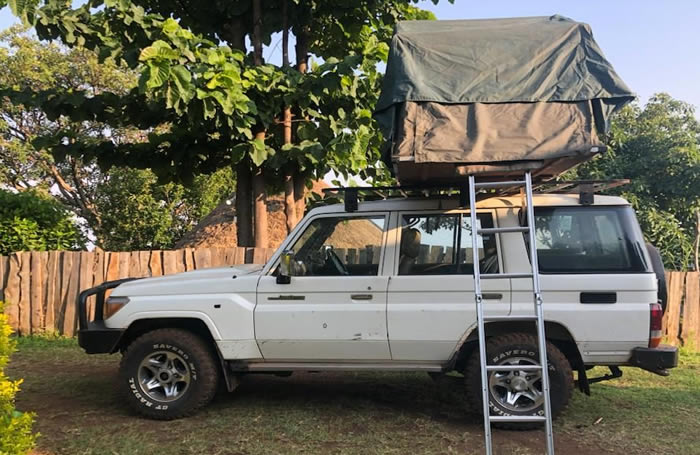
A Tanzania camping car rental roof-top tent adventure gives travelers one of the most independent and exciting ways to explore East Africa. Instead of following the timetable of a traditional safari, you travel in your own fully equipped 4×4, carry your accommodation with you, prepare meals at camp, and wake up close to some of Africa’s greatest wilderness areas.
Tanzania is particularly well suited to this style of travel. The country combines famous safari destinations such as Serengeti National Park, Ngorongoro Conservation Area, Tarangire National Park and Lake Manyara with less-traveled regions including Ruaha, Nyerere, Lake Natron and the western parts of the country.
A properly equipped rooftop-tent vehicle changes the experience completely. Your rental car becomes transportation, luggage storage, kitchen and bedroom in one mobile safari setup.
However, a successful Tanzania self-drive camping safari requires more preparation than an ordinary road trip. Distances can be long, park roads can be rough, fuel stations become less frequent in remote regions, mobile coverage is not guaranteed everywhere, and weather can transform an easy dirt road into a challenging track.
This complete guide explains how Tanzania camping car rental roof-top tent trips work, which vehicles are best, what camping equipment you should expect, where you can travel, how to plan a Serengeti road trip, what to budget for, and how to prepare for an independent Tanzania safari.
Whether you are planning a one-week Northern Circuit holiday, a two-week Tanzania camping safari or a longer East African overland journey through Rwanda, Uganda, Kenya and Tanzania, careful preparation is the key to making the experience enjoyable.
What Is Tanzania Camping Car Rental Roof-Top Tent Travel?
A Tanzania camping car rental roof-top tent package combines a safari-capable 4×4 vehicle with a tent permanently mounted to a strong roof rack.
The tent remains folded while you are driving. At your campsite, you park the vehicle on reasonably level ground, unfold the tent, extend its ladder and prepare your sleeping area.
Most rooftop tents contain a built-in mattress, meaning travelers do not have to assemble a traditional ground tent every evening.
Depending on the vehicle and configuration, a rental may have one rooftop tent for two travelers, a larger family tent, or two separate rooftop tents for groups of three or four.
This makes rooftop camping especially attractive to couples, photographers, adventurous families, friends and independent travelers who want more freedom than a conventional guided safari normally provides.
The vehicle itself is equally important. Tanzania’s safari circuits include paved highways, gravel roads, corrugated tracks, steep sections, dust, mud and remote park roads. For serious safari travel, a capable four-wheel-drive vehicle is normally the most practical option.
Toyota Land Cruisers are particularly common because they are built for difficult terrain and are widely used throughout East Africa.
Why Choose a Tanzania Camping Car Rental with Roof-Top Tent?
Freedom is the main reason.
Traditional safaris normally operate according to a prearranged program. A driver-guide collects you, follows an itinerary and transfers you between lodges or tented camps.
That arrangement is excellent for many visitors, especially first-time safari travelers. But independent travelers sometimes want more flexibility.
With a rooftop-tent rental, you control much more of the journey.
You decide when to start driving. You can stop for photographs when something catches your attention. You can spend several nights around Serengeti rather than rushing between destinations. You can prepare breakfast before sunrise and begin exploring early.
Your accommodation travels with you.
This can also make camping trips easier to organize because you do not need a different hotel or lodge at every stop. You still need to reserve appropriate campsites where required, but your sleeping setup remains familiar throughout the journey.
There is also something special about finishing a safari day at camp.
You park the Land Cruiser, unfold the tent, arrange the chairs and table, prepare dinner and watch the African sky darken around you. The experience feels very different from returning to a conventional hotel room.
Tanzania Camping Car Rental Roof-Top Tent vs Traditional Safari
Neither option is automatically better. They suit different travelers.
A traditional guided safari offers convenience. Your professional guide handles the driving and usually understands wildlife behavior, park routes and local conditions. You can concentrate on photography and wildlife observation instead of navigation.
A Tanzania camping car rental roof-top tent safari gives you greater independence.
You control the route and daily rhythm, but you also accept more responsibility. You must manage navigation, fuel, camping equipment, food, road conditions and the vehicle.
For experienced African road-trip travelers, this responsibility can be part of the adventure.
For someone visiting Africa for the first time, a rental with a professional driver-guide can provide a useful middle ground. You can still use a rooftop tent and enjoy camping while leaving difficult driving and navigation to someone familiar with Tanzania.
Best 4×4 Vehicles for Rooftop Tent Camping in Tanzania
Choosing the correct vehicle is one of the most important decisions of the entire trip.
Price should not be the only consideration.
The cheapest rental is not necessarily the cheapest safari if the vehicle is unsuitable for the planned route, consumes excessive fuel or experiences avoidable mechanical problems.
Toyota Land Cruiser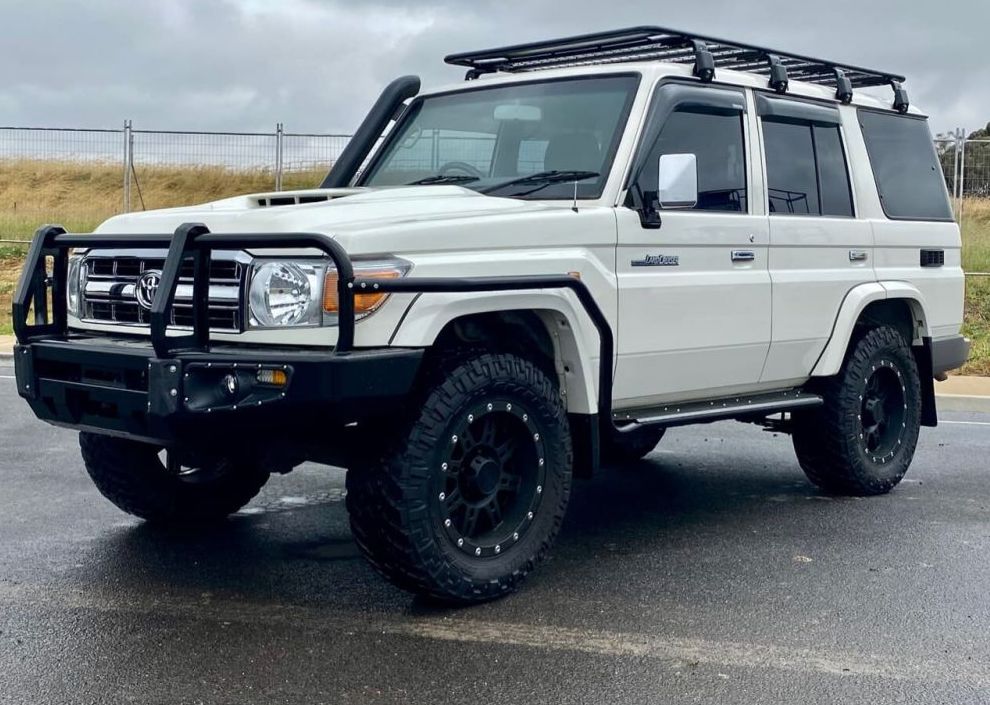
The Toyota Land Cruiser is one of the most popular vehicles for Tanzania self-drive safaris.
Its combination of ground clearance, durability, four-wheel-drive capability and strong suspension makes it suitable for long safari journeys.
Different Land Cruiser models and configurations are available.
A couple may prefer a relatively compact Land Cruiser with one double rooftop tent, while a family or group may require a long-wheelbase vehicle carrying two tents.
For remote travel, ask specifically about the vehicle’s mechanical condition, tires, spare wheel, jack, recovery equipment and service history.
Toyota Land Cruiser Hardtop
A Land Cruiser Hardtop can be particularly useful for serious overland trips.
Its boxier design provides useful interior storage, while the strong platform can accommodate camping equipment and rooftop tents.
It is a good choice for travelers carrying significant luggage, water, food and safari equipment.
Toyota Hilux
The Toyota Hilux is another strong option for independent travel.
Its pickup configuration can provide practical storage for camping gear, and four-wheel-drive versions are capable of handling many Tanzanian safari routes.
A Hilux with a rooftop tent can work especially well for couples or small groups that want a balance between capability and manageable vehicle size.
Toyota Prado
A Toyota Prado can provide additional comfort on longer road sections.
It may be suitable for Northern Circuit itineraries and mixed lodge-and-camping trips, depending on its setup and the conditions of the intended route.
The important point is not simply the vehicle badge.
Before accepting any rental, confirm that the actual vehicle has suitable tires, adequate ground clearance, a functioning 4WD system and enough payload capacity for passengers, luggage, fuel, water and camping equipment.
Single, Double and Family Rooftop Tents
The tent arrangement should match your group size.
For two travelers, a single double rooftop tent is usually the simplest arrangement.
Three or four travelers may use a larger family rooftop tent or two separate rooftop tents.
Two tents provide more privacy and can make sleeping arrangements easier for friends or families with older children.
Always ask for the internal sleeping dimensions rather than relying only on phrases such as “double” or “family.”
Two adults who are comfortable in a standard rooftop tent may find the same space restrictive when traveling with a child.
Also consider luggage.
A vehicle that technically seats five people may not be comfortable for five people once suitcases, food, drinking water, chairs, cooking equipment and other safari supplies are loaded.
Comfort matters on a safari where you may spend several hours inside the vehicle every day.
What Should Be Included with a Tanzania Rooftop Tent Rental?
A well-equipped camping rental should provide much more than a vehicle and tent.
Exact equipment differs between companies, so request a complete written inventory before paying your deposit.
The sleeping setup normally includes a rooftop tent, mattress and suitable bedding or a clearly explained bedding arrangement.
For cooking, many operators provide a camping stove, gas cylinder, pots, frying pan, kettle, plates, bowls, cups, cutlery, kitchen knife, cutting board and basic washing equipment.
Camping furniture often consists of folding chairs and a table.
Water storage also matters. A strong water container or jerry can becomes especially useful when staying at basic campsites.
A refrigerator or powered cooler adds considerable convenience, particularly during longer safaris.
Vehicle equipment deserves even closer attention. Check that the car carries a jack, wheel spanner, spare tire, basic tool kit and suitable recovery equipment.
Travelers heading into remote areas should also confirm whether the company provides an air compressor, tire-pressure gauge, tow rope, shovel and additional spare tire.
Never assume that every rental automatically includes these items.
Inspecting Your Rooftop Tent Before Departure
Do not collect the keys and immediately leave for Serengeti.
Instead, spend a little time inspecting the complete camping system before starting your journey.
First, have the rental representative demonstrate how to open and close the rooftop tent. After the demonstration, practice the process yourself so you feel confident using it at camp.
Inspect the ladder carefully and make sure it locks securely.
Next, examine the tent fabric, zippers, mattress and rain cover. Confirm that everything closes properly and that you understand how to secure the tent before driving.
Practice setting up the table, chairs and cooking equipment as well.
When the vehicle includes a refrigerator, switch it on and confirm that it works correctly.
You should also understand how the auxiliary electrical system operates and whether you can safely use electrical equipment while the engine is off.
Finish the inspection by checking the tires, including the spare, and locating the jack and wheel-changing tools.
Before leaving the rental location, make sure you understand the vehicle’s four-wheel-drive controls.
A short equipment demonstration before departure can prevent hours of frustration later in the safari.
How to Choose a Tanzania Camping Car Rental Company
A reliable rental company should provide more than a vehicle and a set of keys.
Start by evaluating how clearly the company communicates before you make a booking.
Find out exactly which vehicle model and configuration you will receive.
Check its age, general condition and rooftop-tent setup. You should also confirm the complete list of camping equipment included in the price.
Insurance deserves careful attention as well. Find out what the policy covers, whether an excess applies and which types of damage remain the renter’s responsibility.
Next, confirm the mileage policy and roadside-assistance arrangements.
Reliable operators should clearly explain what happens if the vehicle develops a mechanical problem during the trip and whom you should contact in an emergency.
Cross-border travelers need additional information. Confirm whether the company allows travel into neighboring countries and whether it can prepare the required vehicle documents in advance.
One-way rentals may also be possible, although additional relocation charges can apply.
Finally, discuss vehicle collection, return procedures and route-planning support.
Clear answers to these questions usually tell you much more about an operator than the advertised daily rental price.
Best Places for Tanzania Camping Car Rental Roof-Top Tent Adventures
Tanzania is enormous, so trying to see everything in one trip is rarely sensible.
A better strategy is to select a region and explore it properly.
For most first-time visitors, the Northern Safari Circuit is the natural starting point.
Tanzania Camping Car Rental Roof-Top Tent for the Northern Circuit
The Northern Circuit combines several of Tanzania’s most famous wildlife destinations within a relatively logical road-trip route.
Most journeys begin in Arusha.
From there, travelers can visit Tarangire National Park, Lake Manyara, the Ngorongoro highlands and Serengeti National Park.
This route offers an extraordinary range of scenery.
One day you may be watching elephants among Tarangire’s baobabs. A few days later you could be descending toward Ngorongoro Crater before continuing across open landscapes toward Serengeti.
Because these destinations are popular, campsite planning is important, particularly during peak safari periods.
Arusha
Arusha is the main starting point for many Northern Tanzania safaris.
It is a practical place to collect your rental car, purchase food, organize cash, buy drinking water and complete final preparations.
Do your major supermarket shopping before heading toward remote areas.
This is also a good time to confirm fuel strategy, park reservations and emergency contact details.
Tarangire National Park
Tarangire is an excellent first safari destination.
The park is known for broad landscapes, baobab trees and impressive wildlife viewing.
It works well at the beginning or end of a Northern Circuit journey because of its position relative to Arusha and the Ngorongoro region.
Spend enough time here rather than treating Tarangire merely as a stop between larger attractions.
Lake Manyara
Lake Manyara can be incorporated between Tarangire and the Ngorongoro highlands.
The wider area also provides opportunities to restock food and supplies before heading deeper into the safari circuit.
Ngorongoro Conservation Area
Ngorongoro is one of Tanzania’s signature safari destinations.
Camping around the highlands can be dramatically different from camping in warmer lowland areas.
Temperatures can become surprisingly cool, particularly at night and early in the morning.
Pack warm clothing even if the rest of your Tanzania itinerary is expected to be hot.
Serengeti National Park
For many travelers, Serengeti is the highlight of a Tanzania camping car rental roof-top tent journey.
The park’s enormous landscapes are ideal for travelers who appreciate slow exploration.
Instead of trying to cover every region, choose your Serengeti area according to the season, wildlife priorities and length of your trip.
Central Serengeti is a major wildlife area and a useful component of many first-time itineraries.
Other areas become particularly important at different stages of the Great Migration.
The key is to avoid planning a route based purely on the map. Distances inside safari parks can take considerably longer than expected.
Rooftop Tent Camping and the Great Migration
The Great Migration is one of the world’s most famous wildlife events, but it should not be treated as a single event happening in one place.
Large numbers of wildebeest and zebra move through the Serengeti-Mara ecosystem according to seasonal conditions, rainfall and grazing.
This means your route should depend on when you travel.
Rather than asking, “Where is the migration?” ask, “Which Serengeti region is most appropriate for my travel dates?”
Migration movements are natural and cannot be guaranteed at a precise location months in advance.
A flexible self-drive itinerary can therefore be useful.
However, flexibility does not mean ignoring campsite reservations and park regulations. During popular periods, accommodation and camping arrangements may still need to be organized in advance.
Southern Tanzania Self-Drive Camping
Travelers with more time can consider Tanzania’s southern safari regions.
Ruaha National Park and Nyerere National Park provide a different experience from the Northern Circuit.
Distances are substantial and road conditions can be more demanding.
These routes are therefore better suited to travelers comfortable with independent African road trips or those traveling with a knowledgeable driver.
A Southern Circuit rooftop-tent safari can be exceptionally rewarding because it offers a stronger feeling of remoteness.
But remoteness requires preparation.
Fuel planning, water, food, vehicle condition and emergency support become even more important.
Lake Natron and Remote Tanzania Camping
Lake Natron is attractive to travelers looking for dramatic scenery and a route away from the most conventional safari circuit.
Road conditions can vary, and navigation requires preparation.
It can be incorporated into longer Northern Tanzania itineraries, but travelers should avoid underestimating travel times.
Remote destinations are exactly where a good rental company becomes valuable.
Reliable local support is worth more than saving a small amount on the daily rental rate.
Tanzania Rooftop Tent Rental from Arusha
Arusha is generally the most convenient starting point for a Northern Circuit camping safari.
A typical itinerary can travel from Arusha toward Tarangire, Lake Manyara, Ngorongoro and Serengeti before returning.
Renting from Arusha minimizes unnecessary driving when your safari focuses on northern parks.
It also makes provisioning straightforward.
When comparing Arusha rental companies, ask whether airport delivery, hotel delivery or collection is available.
Travelers arriving at Kilimanjaro International Airport should also confirm whether vehicle delivery or transfer to Arusha is included or charged separately.
Tanzania Rooftop Tent Rental from Dar es Salaam
Dar es Salaam is a more logical starting point for many southern itineraries.
Travelers interested in Nyerere, Mikumi or Ruaha may find it more practical than collecting a vehicle in northern Tanzania.
Dar es Salaam can also serve longer cross-country itineraries, but the distances should not be underestimated.
Driving all the way from Dar es Salaam toward Serengeti requires much more time than starting from Arusha.
Choose the pickup city according to your actual safari route rather than the cheapest advertised vehicle price.
Self-Drive Tanzania Safari Road Conditions
Road conditions vary enormously.
Major highways between towns may be paved and relatively straightforward.
Inside parks and remote regions, conditions change.
You may encounter corrugations, rocks, loose gravel, sand, potholes, steep slopes and mud.
During rainy periods, certain surfaces can become significantly more difficult.
Driving speed should therefore be based on conditions rather than the theoretical speed limit.
One of the biggest mistakes on an African road trip is attempting to cover too much distance in one day.
A route that appears short on a digital map can take much longer because of wildlife stops, park procedures, road conditions and the need to drive cautiously.
Build time into the itinerary.
Dry Season vs Rainy Season for Tanzania Rooftop Camping
Season affects both the safari and the driving experience.
The dry season is popular because many routes are easier to drive and wildlife viewing can be excellent.
It is also a busy period in famous destinations such as Serengeti and Ngorongoro.
The wetter months can transform the landscape.
Grass becomes greener, skies can be dramatic and some areas feel less crowded.
However, rain creates additional challenges for independent drivers.
Mud, slippery tracks and waterlogged surfaces require more caution.
If traveling during a wetter period, discuss your intended route with the rental company before departure and ask for current road information.
Tanzania Camping Car Rental Roof-Top Tent Cost
There is no single fixed price for a Tanzania rooftop-tent rental.
Rates depend on the vehicle, rental duration, travel season, tent configuration, camping equipment, insurance, pickup location and whether the journey is self-drive or includes a driver.
A fully equipped Land Cruiser naturally costs more than a small vehicle without camping equipment.
Current specialist operators advertise camping-ready vehicles at different price points, with some premium fully equipped overland Land Cruisers beginning around the mid-US$100s per day, while final rates vary according to season, vehicle and setup.
Do not compare rentals based only on the headline daily rate.
A cheaper quotation may exclude important equipment or services.
Ask for the complete cost.
This should clarify the vehicle, rooftop tent, camping equipment, insurance, mileage policy, taxes where applicable, roadside assistance, additional driver charges, cross-border authorization, one-way fees and security deposit.
Park entrance fees, campsite charges, fuel, food and personal expenses are normally separate travel costs unless your package specifically states otherwise.
How to Budget for a Tanzania Self-Drive Camping Safari
Think of your total safari cost in several parts.
The first is the vehicle.
The second is camping equipment if it is not already included.
The third is fuel.
The fourth is park and conservation fees.
The fifth is camping.
Then you have food, drinking water, optional activities, international travel and personal expenses.
This is why comparing a rooftop-tent safari with a lodge safari purely on the rental price is misleading.
You need to compare the total trip.
Camping can still offer excellent value, particularly for travelers who enjoy preparing their own meals and would otherwise book expensive safari accommodation.
But the strongest reason to choose rooftop camping should be the experience and flexibility, not simply the assumption that it is always the cheapest possible holiday.
Fuel Planning in Tanzania
Never allow your fuel level to become unnecessarily low in remote areas.
Fill the tank when you have a good opportunity rather than waiting until it is almost empty.
Ask the rental company about the expected fuel range of your specific vehicle.
A heavily loaded Land Cruiser driving on rough tracks can consume considerably more fuel than a small passenger car on a highway.
Route planning should identify reliable refueling points.
For remote itineraries, discuss whether additional approved fuel storage is necessary.
Do not carry fuel casually or in unsuitable containers.
Food for a Rooftop Tent Safari
One of the pleasures of camping is preparing your own meals.
You do not need complicated cooking.
Simple meals are easier after a long safari day.
Before leaving a major town, buy drinking water, breakfast ingredients, fruit, snacks, pasta or rice, vegetables, coffee or tea and other easy-to-store food.
If your vehicle includes a refrigerator, you can carry a wider range of fresh products.
Keep food properly stored.
In wildlife areas, never leave food scattered around camp.
Follow campsite instructions regarding food, rubbish and wildlife.
Drinking Water
Carry more drinking water than you expect to use.
Water is required not only for drinking but also for cooking and basic camp tasks.
Do not depend on finding bottled water at every remote campsite.
Refill whenever you have a reliable opportunity.
A combination of bottled drinking water and a larger water container can work well for longer trips.
Camping Safely Around Wildlife
Camping in Tanzania can put you much closer to nature than a hotel stay.
That is part of the attraction, but it also requires discipline.
Wild animals should never be approached or fed.
Do not leave food outside your vehicle or tent.
Keep your campsite clean.
After dark, be aware of your surroundings and follow instructions from campsite staff or park authorities.
Never assume that an animal is harmless because it appears calm.
Large herbivores can be dangerous, and predators are wild animals rather than tourist attractions.
Your rooftop tent provides an elevated sleeping space, but it does not remove the need for responsible behavior.
Can Lions Reach a Rooftop Tent?
Travelers frequently ask this question because camping in wildlife areas feels very different from sleeping inside a lodge.
The more useful question is how to behave correctly at an official campsite.
Follow park and campsite rules, keep food secured, avoid wandering unnecessarily after dark and listen to local staff.
Do not attempt to photograph wildlife from dangerously close distances simply because you are near your vehicle.
A safari is safest when travelers respect animals and maintain appropriate distance.
Never Wild Camp Where Camping Is Not Allowed
Having a rooftop tent does not mean you can stop anywhere and sleep.
Protected areas operate according to specific rules, and camping must take place at permitted locations.
Serengeti, for example, has designated camping arrangements rather than unrestricted roadside camping.
Confirm your campsites before entering remote park areas.
The same principle applies elsewhere.
A rooftop tent gives you mobility, not permission to ignore local regulations or private property.
Public Campsites vs Special Campsites
Tanzania offers different camping experiences.
Public campsites are generally shared with other travelers and provide a more affordable, social experience.
Facilities vary.
Special campsites offer a more exclusive wilderness atmosphere but can involve different booking requirements and costs.
Your choice depends on budget, comfort expectations and the type of experience you want.
Travelers who are new to African camping may feel more comfortable beginning with established campsites before considering more remote arrangements.
Rooftop Tent vs Ground Tent in Tanzania
Both can work, but they provide different experiences.
A rooftop tent is fast to set up and keeps the sleeping platform elevated.
The built-in mattress is convenient, and your sleeping area remains attached to the vehicle.
A ground tent can offer more flexibility around camp and may be appropriate for larger groups.
However, it normally requires more setup and packing.
For road trips where you change camps frequently, the convenience of a rooftop tent becomes particularly noticeable.
Rooftop Tent vs Campervan
Traditional campervans are common in destinations with developed paved-road camping networks.
Tanzania’s safari environment is different.
A proper 4×4 with a rooftop tent combines off-road capability with compact camping accommodation.
That is one reason Land Cruisers and Hilux vehicles are so popular.
For a route involving Serengeti, Ngorongoro or remote safari tracks, vehicle capability is usually more important than having a large motorhome-style interior.
Is Tanzania Self-Drive Safe?
A Tanzania self-drive safari can be an excellent experience when planned responsibly.
The greatest practical risks often come from driving decisions rather than wildlife.
Avoid excessive speed.
Do not plan unnecessary night driving.
Give yourself enough time to reach camp before darkness.
Be particularly cautious on unfamiliar gravel roads.
Keep adequate fuel and water.
Make sure your rental company provides clear emergency procedures.
Most importantly, choose an itinerary appropriate to your experience.
Someone who has never driven on rough African roads should not begin with an extremely remote expedition simply because a 4×4 is available.
Avoid Driving at Night
Plan to complete long transfers during daylight.
Night driving creates unnecessary complications.
Visibility is reduced, road hazards are harder to identify and animals or pedestrians may be difficult to see.
Your itinerary should therefore include realistic travel times.
If reaching the next campsite requires rushing for several hours, the itinerary is too ambitious.
Reduce the distance rather than increasing your speed.
Navigation for a Tanzania Self-Drive Safari
Do not depend on one navigation system.
Offline maps are useful because mobile internet may not always be available.
Download maps before leaving major towns.
Ask your rental company for route information and current recommendations.
GPS coordinates for campsites can be particularly helpful.
However, digital navigation should complement local advice rather than replace it.
A map application may identify a road without understanding its current condition.
Mobile Network and Communication
Mobile coverage is good in many populated areas but should not be assumed in remote safari regions.
Tell someone your planned route.
Keep your rental company’s emergency numbers accessible offline.
A portable power bank is useful for phones and small electronics.
If your trip involves particularly remote regions, ask whether the vehicle or rental company provides additional communication options.
What Happens If the Vehicle Breaks Down?
This should be discussed before signing the rental agreement.
Ask what roadside assistance actually means.
Does the company have support in Tanzania?
Who do you contact after hours?
What happens if the vehicle cannot be repaired immediately?
Who pays for towing if the problem is caused by mechanical failure?
What happens if a tire is damaged?
Clear answers are important.
A low rental price becomes irrelevant if you are stranded for two days without effective support.
Insurance for Tanzania Car Rental
Read the insurance terms rather than assuming “insured” means every possible problem is covered.
Ask about excess or deductible amounts.
Check whether tires, windscreen, underbody, water damage, single-vehicle incidents and off-road driving have special conditions.
Understand what roads you are permitted to use.
If you intend to cross an international border, obtain written authorization in advance.
Do not wait until reaching the border to discover that the rental agreement prohibits taking the vehicle outside Tanzania.
Security Deposit
Many rental companies require a security deposit.
Ask how much it is, how it is paid and when it is released.
Inspect the vehicle with the rental representative and record existing damage.
Photograph the exterior, wheels, windscreen and interior.
Also document the camping equipment.
This protects both the traveler and the rental company from disagreements when the vehicle is returned.
Driving License Requirements
Confirm current driving-license requirements before traveling.
Depending on your home license and rental conditions, an International Driving Permit may be recommended or required alongside your original license.
Carry the documents specified by the rental company and relevant authorities.
Do not rely on screenshots of important travel documents if originals are required.
Tanzania Camping Car Rental Roof-Top Tent for Couples
A rooftop-tent safari is particularly well suited to adventurous couples.
One Land Cruiser with a double rooftop tent provides a compact setup without requiring multiple rooms or tents.
Couples can combine camping with occasional lodge nights.
This hybrid style works extremely well.
For example, spend several nights camping around the major parks, then book a comfortable lodge halfway through the itinerary for a proper rest, laundry and longer shower.
You do not need to choose between 100% camping and 100% hotels.
Tanzania Rooftop Tent Safari for Families
Families can also enjoy rooftop camping, but vehicle and tent selection becomes more important.
Ask about sleeping capacity, not merely seating capacity.
A family of four needs enough room for four people plus luggage, food, water and camping gear.
Two rooftop tents may provide better comfort than trying to fit everyone into one sleeping space.
Parents should also consider how children will use the rooftop-tent ladder.
Safari driving days should be shorter when traveling with younger family members.
A slower itinerary is usually a better family itinerary.
Tanzania Rooftop Tent Safari for Photographers
Photographers benefit greatly from flexible safari travel.
Wildlife photography often rewards patience.
A lion may be sleeping when you arrive but become active later.
Elephants may slowly approach a water source.
The light may improve dramatically toward sunset.
Independent travel allows photographers to manage time differently from travelers following a strict group schedule.
However, photography equipment adds luggage.
Consider charging requirements, dust protection and secure storage.
A vehicle with adequate electrical capacity and interior storage is especially valuable.
Best Length for a Tanzania Camping Safari
Seven days is enough for a focused trip, but it requires careful route selection.
Ten to fourteen days is more comfortable for travelers wanting to explore the Northern Circuit without constantly moving.
Two to three weeks opens the possibility of slower exploration or adding more remote regions.
Do not measure a safari by the number of parks visited.
A ten-day trip covering four areas properly can be more rewarding than a ten-day trip attempting to visit eight destinations.
Wildlife travel benefits from time.
Sample 7-Day Tanzania Rooftop Tent Itinerary
A practical short trip can focus entirely on Northern Tanzania.
Day one can be used for arrival in Arusha, vehicle collection, equipment inspection and shopping.
The following days can include Tarangire and the Ngorongoro region before continuing toward Serengeti.
Because seven days is limited, avoid trying to include distant destinations simply to make the itinerary look bigger.
Allow enough time for the return journey.
Sample 10-Day Tanzania Self-Drive Camping Safari
Ten days creates a better rhythm.
Begin in Arusha and spend meaningful time in Tarangire.
Continue through the Lake Manyara or Karatu region.
Explore Ngorongoro before traveling into Serengeti.
Spend multiple nights in Serengeti rather than treating the park as a one-night destination.
Return gradually toward Arusha.
This schedule gives travelers time for morning and afternoon wildlife viewing without making every day a long transfer.
Sample 14-Day Tanzania Rooftop Tent Safari
Two weeks is an excellent duration for a first major Tanzania road trip.
You can travel more slowly through Tarangire, Ngorongoro and Serengeti and potentially add Lake Natron or another region depending on road conditions and season.
Rest days become possible.
That matters.
Driving, setting up camp, preparing food and spending full days searching for wildlife can be tiring.
A slower day every few days keeps the trip enjoyable.
Cross-Border Tanzania, Rwanda and Uganda Self-Drive Safaris
Travelers with more time may want to combine Tanzania with Rwanda or Uganda.
This creates an extraordinary East African journey.
Tanzania provides vast savannahs and famous wildlife areas.
Rwanda and Uganda add mountain gorilla trekking, primate experiences, lakes and dramatically different landscapes.
A long overland trip might combine Tanzania’s Serengeti ecosystem with Uganda’s national parks and gorilla trekking in Bwindi Impenetrable National Park, or continue toward Rwanda for Volcanoes National Park.
However, cross-border rentals require additional preparation.
Vehicle authorization, insurance, entry requirements, border documentation and one-way arrangements should all be confirmed before departure.
Never assume that a vehicle rented in Tanzania can automatically enter every neighboring country.
Combining Tanzania Safari with Rwanda Gorilla Trekking
This is one of the strongest East African wildlife combinations.
Tanzania offers classic Big Five safari landscapes, while Rwanda provides access to mountain gorilla trekking in Volcanoes National Park.
Travelers can explore Tanzania by 4×4 before connecting to Rwanda, depending on their transport arrangement.
Universal Ventures Rwanda can help travelers plan Rwanda extensions including gorilla trekking, golden monkey trekking, Akagera National Park, Lake Kivu and other experiences.
This allows you to turn a Tanzania camping adventure into a broader East African wildlife holiday.
Combining Tanzania with Uganda Gorilla Trekking
Uganda is another excellent extension.
Bwindi Impenetrable National Park and Mgahinga Gorilla National Park provide gorilla trekking opportunities, while Kibale is famous for chimpanzee experiences.
For overland travelers, the combination creates a dramatic transition from Tanzania’s open savannahs to the greener landscapes of Uganda’s western region.
Again, cross-border vehicle rules need to be confirmed well before travel.
What to Pack for Tanzania Rooftop Camping
Pack lightly but intelligently.
Comfortable safari clothing, sturdy closed shoes, a warm layer, waterproof jacket, sun protection and a headlamp are particularly useful.
Bring personal medication and a basic travel first-aid kit.
Binoculars significantly improve wildlife viewing.
A reusable water bottle is practical.
Charging cables, power banks and adapters should be packed somewhere easy to reach.
Dust is a major consideration on safari.
Use protective bags for cameras, laptops and sensitive electronics.
Warm clothing is especially important around higher-altitude locations such as the Ngorongoro highlands.
Clothing for a Self-Drive Safari
Neutral, comfortable clothing works well.
There is no need to dress as if you are participating in an expedition every day.
Lightweight shirts and trousers are useful in warm weather.
Carry warmer layers for mornings and evenings.
A hat and sunglasses help with sun exposure.
Pack clothes that can handle dust.
When camping, practical clothing is usually more valuable than fashion.
Sleeping Comfort in a Rooftop Tent
Rooftop tents are more comfortable than many first-time campers expect, particularly when they include a quality built-in mattress.
However, sleeping comfort depends on preparation.
Park the vehicle on reasonably level ground.
Keep the tent properly ventilated.
Use appropriate bedding for nighttime temperatures.
Do not leave setup until complete darkness if you are unfamiliar with the tent.
After a few nights, opening and closing the tent becomes part of the daily safari routine.
Toilets and Showers at Tanzania Campsites
Facilities vary significantly.
Some campsites provide established toilets and showers.
Others are basic.
This is part of camping travel.
Ask about facilities when planning each campsite if showers and toilets are important to you.
Travelers expecting hotel-level facilities every night may be happier combining campsites with lodges.
Camping should be chosen because you enjoy the experience, not because you feel obligated to prove how adventurous you are.
Keeping the Vehicle Organized
Organization makes a huge difference on a long road trip.
Keep cooking equipment together.
Store frequently used items where they can be reached without unloading the entire vehicle.
Separate food from dirty equipment.
Keep emergency tools accessible.
Do not bury the jack underneath several suitcases.
A simple daily routine helps.
Pack the tent first, secure camping furniture, check the campsite for rubbish, confirm doors and storage compartments are closed, and then inspect the vehicle before driving.
Daily Vehicle Checks
You do not need mechanical experience to perform a simple daily inspection.
Begin by looking at the tires every morning and checking for obvious signs of damage or low pressure.
Next, look beneath the vehicle for unusual leaks.
Pay attention to dashboard warning lights when starting the engine and listen for unfamiliar sounds while driving.
When something feels or sounds wrong, contact the rental company before continuing a long distance.
Rough safari roads place considerable stress on vehicles, so a brief inspection each morning can prevent a small problem from developing into a serious one.
Common Mistakes on Tanzania Self-Drive Safaris
The first major mistake is planning too much.
Travelers look at the map and assume they can cover Tanzania like a small European country.
They cannot.
The second mistake is choosing a vehicle based only on price.
The third is failing to understand insurance.
The fourth is leaving campsite planning until the last minute during busy periods.
The fifth is carrying insufficient water or fuel.
The sixth is driving too quickly on rough roads.
And one of the most avoidable mistakes is beginning a long journey without learning how the rooftop tent and vehicle equipment actually work.
How to Choose a Tanzania Camping Car Rental Company
A good rental company should do more than hand over a key.
Look for clear communication before booking.
Ask detailed questions.
What exact vehicle will you receive?
How old is it?
What tent is installed?
What camping equipment is included?
What insurance applies?
Is mileage limited?
What happens during a breakdown?
Is 24-hour assistance available?
Can the vehicle cross borders?
Are one-way rentals possible?
Where can the vehicle be collected and returned?
Can the company help with route planning?
A company that answers these questions clearly is generally more useful than one that simply advertises the lowest daily rate.
Why Roadside Support Matters
This is especially important in Tanzania.
A rental company can maintain its vehicles carefully and mechanical issues can still occur.
Punctures happen.
Batteries fail.
Rough roads reveal weaknesses.
The important question is how the company responds.
For remote safari travel, support should be part of your purchasing decision.
Saving USD 10 or USD 20 per day is not worthwhile if you have no reliable assistance when something goes wrong hundreds of kilometers from the rental office.
One-Way Tanzania Car Rental
One-way rental can make certain itineraries significantly more efficient.
For example, travelers may want to collect a vehicle in one city and return it somewhere else rather than driving the same route back.
Availability depends on the rental company and often involves a relocation charge.
Request the fee before booking.
Sometimes paying a one-way charge saves enough travel time to justify the additional cost.
Long-Term Tanzania 4×4 Rental
Travelers planning several weeks in East Africa should ask about long-term rental pricing.
Daily rates may become more competitive for longer bookings.
Long-term renters should pay particular attention to servicing arrangements.
If the vehicle will cover thousands of kilometers, ask whether scheduled maintenance may be required during the rental period and how it will be handled.
Self-Drive or Driver-Guide?
There is no universal answer.
Choose self-drive if you enjoy navigation, are comfortable managing the vehicle and genuinely want independence.
Choose a driver-guide if your main priority is wildlife viewing and you do not want to spend time thinking about roads, navigation or mechanical matters.
A driver-guide is particularly valuable for travelers with limited time.
Local guides know how to interpret wildlife behavior and can often make a short safari more productive.
Camping does not require self-driving. You can rent an equipped vehicle and still travel with a driver.
Is Rooftop Camping Good for First-Time Visitors to Africa?
It can be, provided the itinerary is sensible.
Start with a well-traveled region such as the Northern Circuit rather than immediately planning an expedition into the most remote areas.
Use established campsites.
Choose a reputable vehicle.
Allow extra time.
Avoid night driving.
Listen to local advice.
The objective is not to make the safari unnecessarily difficult.
The objective is to enjoy the freedom of independent travel while managing the risks responsibly.
Is Tanzania Camping Car Rental Roof-Top Tent Worth It?
For the right traveler, absolutely.
A Tanzania camping car rental roof-top tent trip combines transportation, accommodation and adventure in a way few conventional holidays can match.
You can wake before sunrise, climb down from your tent, make coffee beside your 4×4 and prepare for another day exploring Tanzania.
You can spend hours crossing open landscapes rather than moving between airports and hotels.
You can travel with a sense of independence while still using established campsites and protected-area infrastructure.
But rooftop camping is not a luxury lodge experience.
You will encounter dust.
You will pack and unpack equipment.
You will cook some of your own meals.
You will occasionally have basic bathroom facilities.
You may have to change a tire.
For many travelers, those are not disadvantages. They are part of what makes the trip memorable.
Best Time to Book Tanzania Camping Car Rental Roof-Top Tent
Book early if you are traveling during popular safari periods.
The number of properly equipped 4×4 vehicles is limited compared with ordinary city rental cars.
Family rooftop-tent configurations and high-quality Land Cruisers can be particularly sought after.
Early booking also gives you more time to coordinate campsites and park arrangements.
Do not wait until flights are booked and then assume that the exact vehicle configuration you need will automatically be available.
Frequently Asked Questions About Tanzania Rooftop Tent Car Rental
Do I need a 4×4 for a Tanzania camping safari?
For serious safari routes involving national parks and rough tracks, a capable 4×4 is strongly recommended. Road conditions vary with destination and season, and an ordinary passenger car is not designed for many safari environments.
How many people can sleep in a rooftop tent?
Standard tents commonly accommodate two people, while family or double-tent configurations can accommodate larger groups. Always confirm the exact sleeping dimensions and weight limits with the rental provider.
Can I rent a Land Cruiser with two rooftop tents?
Yes. Some camping vehicles can be configured with two rooftop tents, making them suitable for families or groups of three to four travelers.
Can I drive myself in Serengeti?
Self-drive travel is possible when relevant park rules, entry requirements and rental conditions are followed. Travelers should be comfortable navigating rough safari roads and should plan campsites, fuel and routes carefully.
Can I camp anywhere in Serengeti?
No. Camping must follow the applicable protected-area regulations and use approved camping arrangements. A rooftop tent does not allow unrestricted wild camping.
Is camping cheaper than staying in safari lodges?
It can reduce accommodation expenses considerably, particularly for longer trips, but travelers must consider the entire cost including vehicle rental, park fees, campsite fees, fuel, food, equipment and insurance.
Is a rooftop tent safe around wildlife?
Rooftop tents are widely used for safari camping, but travelers must still follow wildlife and campsite safety rules. Food should be stored securely, animals should never be fed or approached, and campsite instructions must be respected.
Can I rent a rooftop-tent car with a driver?
Yes, depending on the rental company. This can be an excellent compromise for travelers who want the camping experience without handling all the driving and navigation themselves.
Can I drive a Tanzania rental vehicle into Rwanda or Uganda?
Potentially, but only when the rental company authorizes international travel and the necessary documentation and insurance have been arranged. Cross-border permission should always be confirmed before booking.
Where is the best place to start a Tanzania self-drive safari?
Arusha is generally the most practical starting point for the Northern Circuit, including Tarangire, Ngorongoro and Serengeti. Dar es Salaam may be more convenient for southern destinations.
How long should I rent a Tanzania camping vehicle?
Seven days can work for a compact route, while ten to fourteen days provides a much better pace for a Northern Circuit safari. Longer rentals are ideal for cross-border or more remote expeditions.
Do rooftop-tent rentals include cooking equipment?
Many fully equipped camping rentals include basic kitchen and camping equipment, but inclusions differ between companies. Request a complete inventory before booking.
Should I reserve campsites before arriving?
Advance planning is strongly recommended, particularly inside popular protected areas and during busy travel periods.
Is Tanzania suitable for family rooftop camping?
Yes, provided the vehicle, sleeping configuration and itinerary are appropriate for the children’s ages. Families generally benefit from shorter driving days and spacious two-tent configurations.
Can I combine camping with lodge accommodation?
Yes. In fact, this is one of the best ways to travel. A few lodge nights between camping sections provide opportunities to rest, shower comfortably, recharge equipment and reorganize luggage.
Planning Your Tanzania Rooftop Tent Adventure
A successful self-drive safari begins long before you start the engine.
Begin by choosing a realistic route based on your available travel time and the season.
After selecting the route, choose a vehicle capable of handling the expected road conditions and carrying your passengers, luggage and camping equipment comfortably.
Next, confirm your rooftop-tent sleeping arrangement and carefully review the rental contract and insurance conditions.
Reserve necessary campsites in advance, particularly when traveling during popular safari periods.
Your route should include realistic daily driving distances, suitable fuel stops and convenient places to replenish food and drinking water.
Before departure, download offline navigation and save important campsite locations and emergency contacts.
Carry enough water for unexpected delays and learn how to operate the rooftop tent before leaving the rental base.
Most importantly, leave some flexibility in your schedule.
African road trips rarely become memorable because travelers followed every minute of an itinerary perfectly. The best moments often happen when you have enough time to stop for elephants crossing the road, watch giraffes moving across the horizon, remain beside an interesting wildlife sighting or enjoy the evening sky from your campsite.
Final Thoughts: Tanzania Camping Car Rental Roof-Top Tent
A Tanzania camping car rental roof-top tent safari offers far more than transportation between Tanzania’s national parks.
It creates a completely different style of travel in which your 4×4 becomes your transport, camping base and gateway to some of East Africa’s greatest wilderness areas.
The experience provides tremendous freedom, but successful self-drive travel also requires good preparation.
Rather than choosing the cheapest available vehicle, select a dependable 4×4 that suits your intended route. Review the camping equipment carefully, plan manageable driving distances and learn how to use the rooftop tent before departure.
Respect wildlife and follow all national park and campsite regulations throughout the journey.
Whenever possible, complete long-distance driving during daylight and keep enough fuel, water and food for the route ahead.
Reliable roadside support should also form part of your rental decision.
With the right preparation, travelers can explore Tarangire’s baobab landscapes, cross the Ngorongoro highlands, spend several days searching for wildlife in Serengeti and continue toward less-traveled parts of Tanzania.
Those planning a longer East African adventure can extend the journey into Rwanda and Uganda for gorilla trekking, chimpanzee tracking, Big Five safaris and additional cultural experiences.
Ultimately, a Tanzania camping car rental roof-top tent journey transforms Tanzania from a collection of safari destinations into one unforgettable African road trip.
Plan Your Tanzania & East Africa Safari with Universal Ventures Rwanda
Universal Ventures Rwanda helps travelers arrange customized East African safari experiences, including Rwanda gorilla trekking, Uganda gorilla safaris, Tanzania safari extensions, cross-border journeys, private 4×4 transport and tailor-made wildlife itineraries.
Whether you are planning a Tanzania camping car rental roof-top tent adventure, a Tanzania-Rwanda safari combination or a longer journey through Tanzania, Rwanda and Uganda, our team can help you develop an itinerary around your travel dates, group size, preferred level of comfort and safari interests.
Universal Ventures Rwanda
Address: Kigali, Rwanda
Email: info@universalventuresrwanda.com
Phone / WhatsApp: +250 781 441 853
Website: Universal Ventures Rwanda
Contact us for customized Tanzania and East Africa safari planning, 4×4 travel arrangements, gorilla trekking extensions and private cross-border safari itineraries.
